Kerala · Indian Cuisine
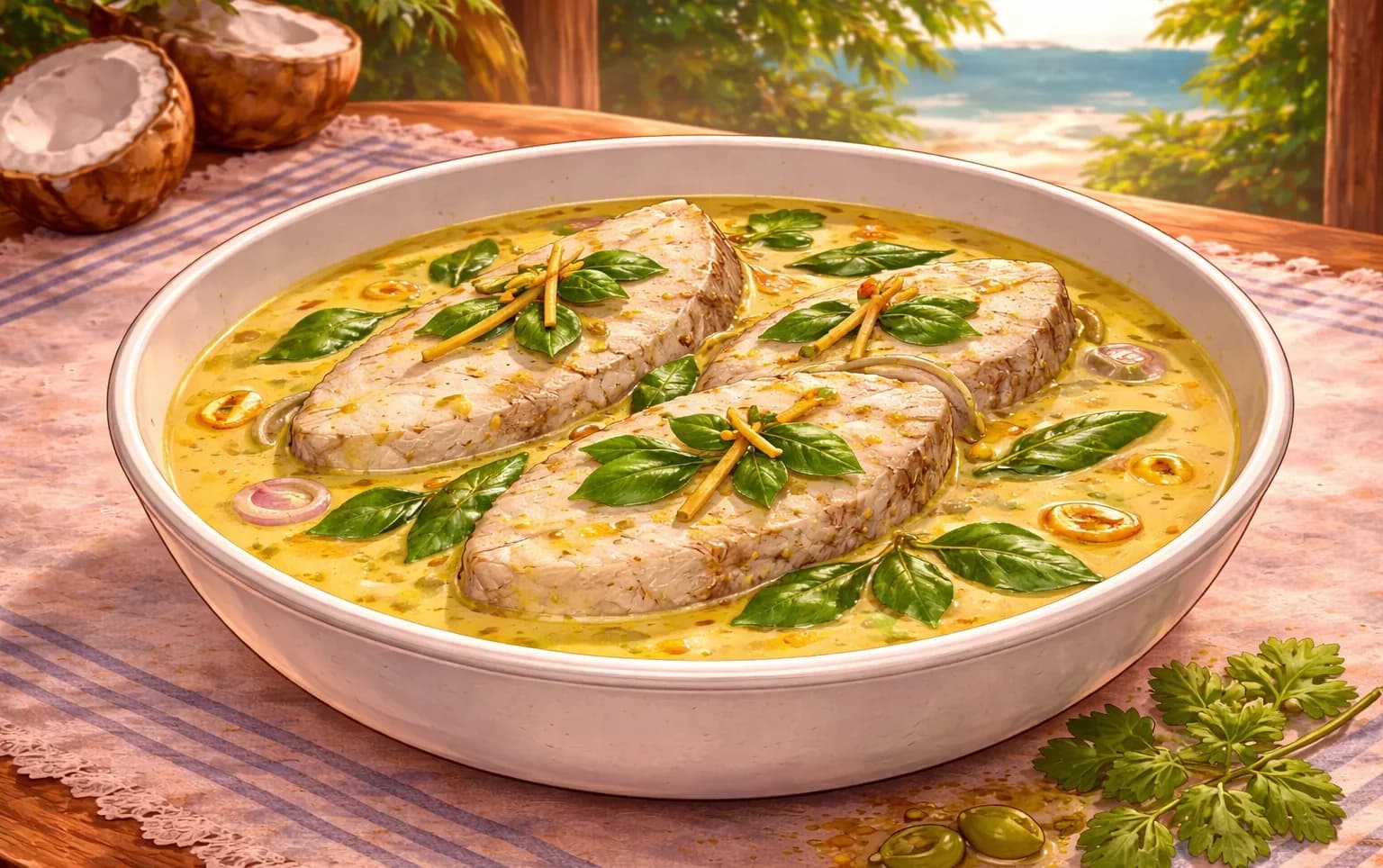
Fish Moilee
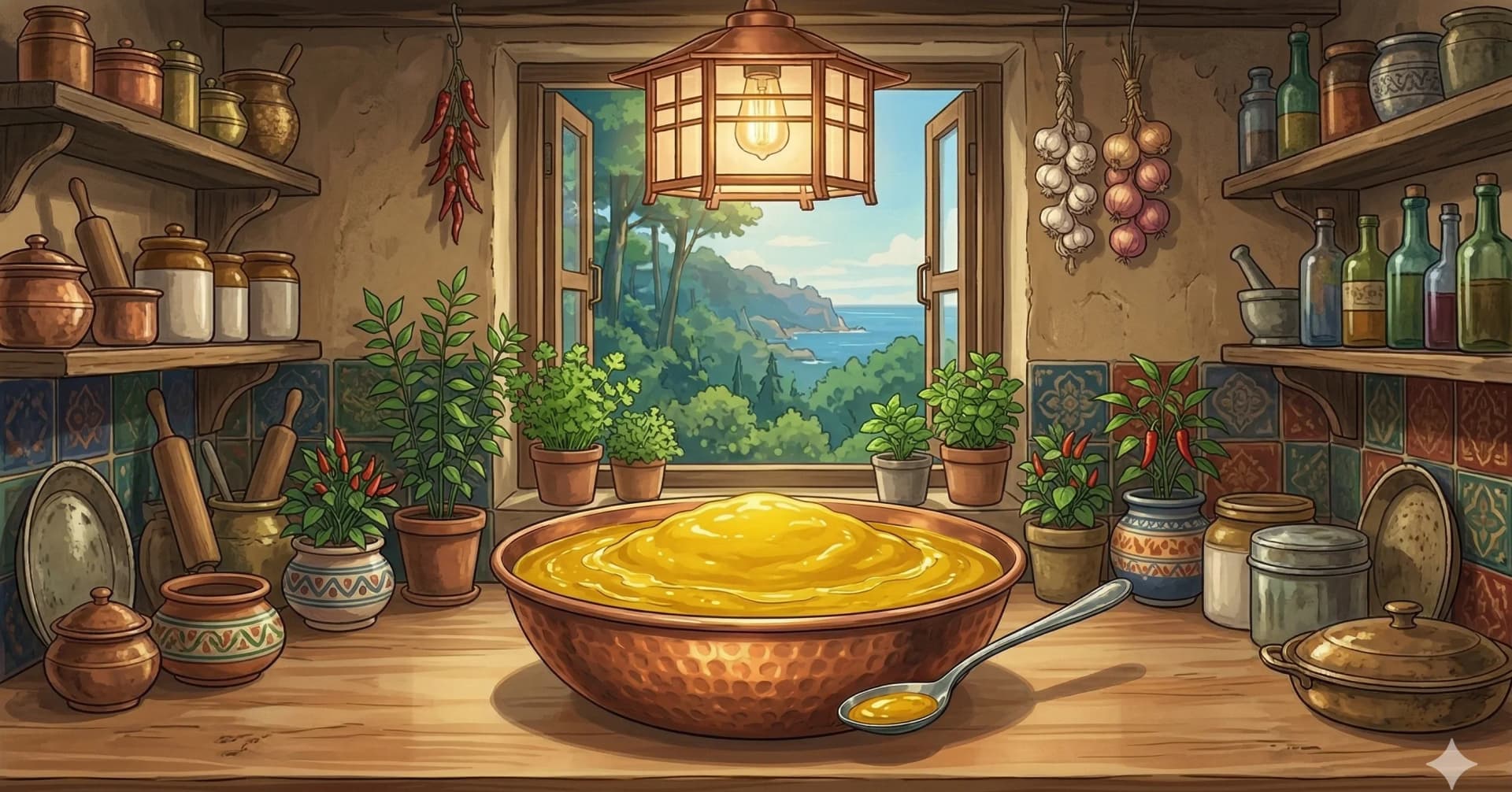
Delicate fish fillets poached in a golden coconut milk and turmeric broth
There is a quiet elegance to fish moilee that sets it apart from Kerala's bolder fish curries. Where a fish mappas or meen curry delivers aggressive spice and the tang of raw tamarind or kokum, moilee is gentle. The broth is pale gold from turmeric, rich from coconut milk, barely spiced with green chilli. The fish sits in it like something protected, poached rather than simmered, the flesh white and clean against the yellow of the sauce.
Moilee traces its origins to the Syrian Christian community of Kerala, and the name likely derives from the Portuguese word "molho," meaning sauce or braise, a linguistic trace of the colonial encounter between the Malabar Coast and Portuguese traders in the sixteenth century. The dish sits at the intersection of two culinary traditions: the Portuguese technique of gentle poaching and the Kerala instinct for coconut milk and curry leaves.
What makes moilee work as a home recipe is its simplicity and speed. There is no spice paste to grind, no masala to cook down. The onions are softened rather than browned, the coconut milk is added in two stages (thin first to build the broth, thick at the end to enrich it), and the fish poaches in the liquid for barely five minutes. The entire dish can be on the table in under forty minutes, and it tastes as though it took much longer.
The single most important practical point is not to stir the fish once it goes into the broth. Swirl the pan gently if you must, but a spoon dragged through poaching fish will break it apart. Let the coconut milk do the work.
At a Glance
Yield
Serves 4
Prep
15 minutes
Cook
25 minutes
Total
40 minutes
Difficulty
Easy
Ingredients
- 1¼ lbfirm white fish fillets (seer fish, kingfish, halibut, or cod), cut into pieces roughly 5 cm by 7 cm, about 2 cm thick
- 1⅛ tspturmeric
- ⅔ tspsalt
- 2 tbspcoconut oil (or neutral oil)
- 1⅔ tspmustard seeds
- ¾ cupfresh curry leaves (about 2 sprigs)
- 5½ ozonion (about 1 onion), thinly sliced into half-moons
- 2½ tbspfresh ginger, cut into thin matchsticks
- 3green chillies, slit lengthwise (seeds left in for heat, removed for milder)
- 1⅛ tspturmeric
- ⅞ cupthin coconut milk (second extraction, or 200 ml water mixed with 50 ml coconut cream)
- ⅞ cupthick coconut milk (first extraction, or a full-fat can)
- ⅔ tspsalt
- 1 tbspcoconut oil, to finish
- ½ cupfresh coriander, roughly chopped (optional)
Method
- 1
Season the fish. Pat the fish pieces dry. Rub with turmeric (½ teaspoon) and salt (¾ teaspoon). Set aside on a plate for 10 minutes while you prepare the broth. This brief seasoning allows the turmeric to penetrate the surface of the fish and firms the flesh slightly, which helps it hold together during poaching.
- 2
Start the tempering. Heat the coconut oil (30 ml) in a wide, shallow pan over medium heat. When the oil is warm, add the mustard seeds (5 g). Wait for them to begin popping, then add the curry leaves (2 sprigs). They will crackle and spit for a few seconds. Stand back and let the sputtering subside.
- 3
Soften the onions. Add the sliced onions (150 g) and stir to coat in the oil. Cook over medium-low heat for 6 to 8 minutes, stirring occasionally, until the onions are soft and translucent but not browned. Moilee relies on gentle, sweet onion flavor, not the caramelized depth of a darker masala.
- 4
Add ginger and chillies. Add the ginger matchsticks (15 g) and slit green chillies (3). Stir for 1 minute until the ginger is fragrant. Add the turmeric (½ teaspoon) and stir for 30 seconds to coat the onions evenly in the golden color.
- 5
Build the broth with thin coconut milk. Pour in the thin coconut milk (200 ml) and the salt (¾ teaspoon). Bring to a gentle simmer over medium heat. Let this simmer for 3 to 4 minutes. The broth should be a pale, translucent gold. Taste and adjust salt if needed. The broth at this stage should be well-seasoned, as the fish will dilute the flavors slightly.
- 6
Poach the fish. Gently lower the fish pieces into the simmering broth, arranging them in a single layer. Do not stack or overlap the pieces. Spoon a little broth over any fish that is not fully submerged. Reduce the heat to low, cover the pan, and poach for 4 to 5 minutes. The fish is done when it turns opaque throughout and flakes easily when pressed gently with a finger. Do not stir. Do not flip the pieces. The gentle heat of the covered pan will cook the fish through without agitation.
- 7
Add thick coconut milk. Remove the lid. Pour the thick coconut milk (200 ml) around the fish, not directly onto it. Swirl the pan gently to incorporate the thick coconut milk into the broth. The sauce will turn creamy and opaque. Let it warm through over very low heat for 2 to 3 minutes. Do not let the coconut milk boil. Boiling causes the fat to separate from the milk solids, producing a greasy, broken sauce.
- 8
Check the seasoning and finish. Taste the broth. Adjust salt if needed. The flavor should be gentle, coconut-forward, with a clean turmeric warmth and a background hum of green chilli heat. Remove from heat. Drizzle the finishing coconut oil (1 tablespoon) over the surface. Scatter coriander leaves if using.
- 9
Rest briefly. Let the moilee sit for 2 to 3 minutes off the heat before serving. This allows the fish to absorb a little more of the broth and the flavors to settle.
Key Ingredient Benefits
Coconut milk is the backbone of this dish and much of Kerala cuisine. It provides medium-chain triglycerides (MCTs), which research suggests are metabolized differently from long-chain fatty acids, potentially being used more readily for energy. The fat content of coconut milk is predominantly saturated, which remains a topic of ongoing nutritional research. In the Kerala dietary tradition, coconut in its various forms (oil, milk, grated flesh) has been consumed daily for centuries.
Turmeric provides the golden color and a gentle, earthy warmth. It contains curcumin, a compound extensively studied for potential anti-inflammatory properties. Research suggests that curcumin's bioavailability is enhanced by the presence of piperine (from black pepper) and fat, both of which are present in this dish through the coconut milk. Turmeric has been used in Ayurvedic medicine for millennia.
Green chillies provide capsaicin, which research associates with potential metabolic and digestive benefits. In this dish, the chillies are slit but left whole, releasing their heat gradually into the broth rather than dispersing it aggressively. This technique produces a gentler, more background heat.
Why This Works
The two-stage addition of coconut milk is the structural technique behind moilee. Thin coconut milk (the second extraction, with lower fat content) can be simmered and even boiled without breaking. It forms the cooking liquid in which the fish poaches, providing flavor without richness. Thick coconut milk (the first extraction, high in fat) is added at the end and must not boil. This staging gives the dish both a flavorful poaching liquid and a rich, creamy finish without any risk of the sauce splitting.
Not stirring the fish during poaching is not merely a suggestion. Fish proteins are delicate, and the connective tissue that holds the flakes together breaks down rapidly in hot liquid. Agitation during this process tears the flesh apart. The covered pan creates a gentle, even heat environment that cooks the fish from all sides simultaneously, including the top surface through steam, eliminating the need to flip.
The finishing drizzle of raw coconut oil serves the same purpose as in many Kerala dishes: it provides the volatile, grassy aroma of uncooked coconut oil as a top note. Cooking would drive off these compounds.
Substitutions & Variations
Fish selection: The ideal fish is firm-fleshed and will not fall apart during poaching. Seer fish (surmai) and kingfish are traditional in Kerala. Good substitutes include halibut, cod, mahi-mahi, or sea bass. Avoid very delicate fish like sole or tilapia, which will disintegrate.
Prawn moilee: Replace the fish with 500 g of large prawns (shell on or off). Prawns cook faster, so reduce the poaching time to 3 minutes. The shells, if left on, add flavor to the broth.
Egg moilee: Hard-boil 8 eggs, peel, and score the surface lightly with a knife. Add to the broth in place of fish and simmer for 5 minutes. A common variation in Kerala Christian households.
Richer version: Some versions include a teaspoon of ground black pepper added with the turmeric. This pushes the dish slightly away from its gentle character but adds warmth.
Serving Suggestions
Fish moilee is classically served with appam (the lace-edged fermented rice pancake with a soft, spongy center) in Kerala Christian households. The slightly sweet, pillowy appam soaks up the coconut broth beautifully. It is also excellent with idiappam (string hoppers), plain steamed rice, or Kerala parotta. At a broader table, moilee works alongside a sharper, more aggressively spiced dish such as a dry fish fry or a vegetable thoran, where its gentleness provides contrast.
Storage & Reheating
Fish moilee is best eaten fresh, on the day it is made. The fish continues to cook in the residual heat of the broth and will become dry if stored and reheated. If you must store it, refrigerate for up to 1 day and reheat very gently over the lowest possible heat, adding a splash of coconut milk to refresh the broth. Do not boil. The broth itself (without the fish) can be made a day ahead and the fish poached fresh when ready to serve.
Cultural Notes
Meen molee (മീൻ മൊളീ, also spelled fish moilee or meen moilee) is the Kerala Syrian Christian fish curry built around coconut milk, turmeric, ginger, green chilies, curry leaves, and a final flourish of fresh tomato slices added late. The dish is one of the foundational preparations of the Kerala Syrian Christian community, which traces its history to the arrival of St. Thomas the Apostle on the Malabar Coast in the first century CE and which has maintained distinctive food traditions blending indigenous Kerala cooking with Portuguese, Arab, and Jewish influences from centuries of maritime contact.
The dish is mild rather than aggressive. The heat is gentle, the spicing restrained, and the coconut milk provides a sweet creamy backdrop that lets the fish flavor stay forward. Firm white-fleshed fish (kingfish, pomfret, seer fish, or grouper) is cut into thick steaks, dusted lightly with turmeric and salt, and pan-seared briefly to firm up the flesh. The base curry is built from sliced onions softened in coconut oil with ginger, garlic, green chilies, curry leaves, and turmeric, then thinned with thick coconut milk (first extract) and brought to a gentle simmer. The seared fish is added, the heat drops to very low, and the curry simmers for eight to ten minutes until the fish flakes cleanly. Quartered fresh tomatoes go in for the last two minutes.
The dish has a specific historical association with the Kerala Syrian Christian community of central Kerala (around Kottayam, Thiruvalla, and Pala), where it appears at family Sunday lunches alongside appam or steamed rice. The Portuguese influence on the dish is partial: the use of vinegar in some traditional preparations and the introduction of tomatoes both reflect Portuguese contact (the Portuguese arrived in Kerala in 1498 with Vasco da Gama and established trading posts that lasted into the seventeenth century), while the underlying coconut-and-curry-leaf foundation is unmistakably Kerala. The pairing with appam is the canonical breakfast or brunch combination at Kerala Syrian Christian homes, and the dish has spread through the Malayali diaspora to Gulf states and Western countries as one of the most accessible Kerala preparations for non-Kerala cooks to attempt.
Nutrition Facts
Calories: 440kcal (22%)|Total Carbohydrates: 9.7g (4%)|Protein: 32.8g (66%)|Total Fat: 32g (41%)|Saturated Fat: 26.2g (131%)|Cholesterol: 75mg (25%)|Sodium: 151mg (7%)|Dietary Fiber: 0.7g (3%)|Total Sugars: 4.9g
You Might Also Like
Ratings & Comments
Ratings & Comments
Ratings
Share your thoughts on this recipe.
Sign in to rate and comment