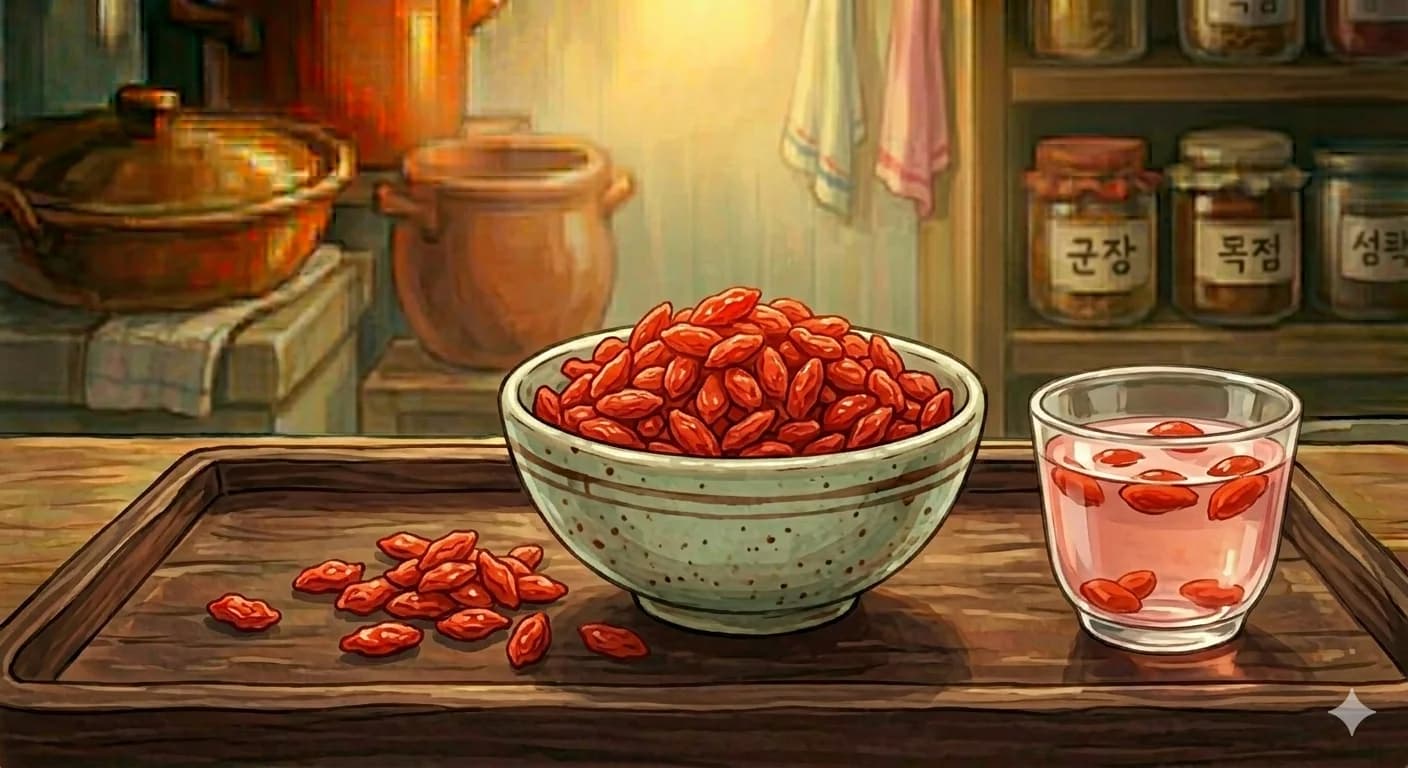
Goji Berries
Also known as: Wolfberry, Gou Qi Zi, Lycium barbarum, 枸杞
Goji berries — small, bright red-orange dried fruits with a flavor somewhere between a cranberry and a cherry tomato — are one of the most recognizable ingredients in Traditional Chinese Medicine and have become a global symbol of health-oriented eating.
The dried berries have a pleasant, mildly sweet taste with a slight tanginess and a soft, chewy texture. They are not intensely flavored on their own, which is precisely why they work so well as a supporting ingredient in soups, teas, congees, and braises.
In Chinese kitchens, goji berries have been a quiet workhorse for centuries — tossed into simmering pots of bone broth, scattered over stir-fried greens, or steeped with chrysanthemum flowers in a soothing tea. Their role is as much about tradition and perceived nourishment as it is about flavor.
Key facts at a glance:
- Dried fruit of the Lycium barbarum plant — native to northwestern China
- Mildly sweet with slight tang — not intensely flavored, a versatile supporting ingredient
- TCM superfood — classified as a liver and kidney yin tonic
- Rich in zeaxanthin — a carotenoid associated with eye health
- Over 2,000 years of documented use in Chinese medicine and cooking
Flavor Profile
Origin
Ningxia, China, Northwestern China, Tibet, Mongolia
Traditional Medicine Perspectives
Traditional Chinese Medicine
Goji berry (Gou Qi Zi) is classified as sweet and neutral, entering the Liver, Kidney, and Lung meridians. It is used to nourish liver and kidney yin, brighten the eyes, and enrich the blood. It is one of the most commonly prescribed tonic herbs and appears in classical formulas for blurred vision, dizziness, lower back soreness, and general debility. It is considered gentle enough for long-term daily use.
Modern Scientific Research
Goji berries are notably rich in zeaxanthin, a carotenoid that accumulates in the retina and is associated with macular health. A 90-day randomized trial published in Optometry and Vision Science found that daily goji berry supplementation increased plasma zeaxanthin levels and protected against macular hypopigmentation.
Goji berries contain more zeaxanthin per gram than almost any other food source.
The berries also contain Lycium barbarum polysaccharides (LBPs), which have shown immunomodulatory and antioxidant activity in laboratory and animal studies. They are a good source of beta-carotene, vitamin C, and various B vitamins.
While marketed aggressively as a superfood, the clinical evidence in humans remains modest — most studies are small-scale or preclinical. The traditional practice of consuming them regularly as part of a varied diet is more evidence-based than mega-dosing.
Cultural History
Goji berries have been harvested and used in China for over two thousand years, with the Ningxia region in northwestern China producing the most prized varieties. The name "goji" is a Western approximation of the Mandarin gǒuqǐ (枸杞).
In Chinese culture, goji berries are associated with longevity and vitality. The famous Tang dynasty poem about the "well of goji" tells of a village where everyone who drank from the goji-infused water lived to extraordinary old age. Whether legend or aspiration, the association has persisted for millennia.
Goji berries are one of the most frequently used ingredients in Traditional Chinese Medicine — they appear in more classical formulas than almost any other herb.
In the early 2000s, goji berries were rebranded as a Western "superfood," marketed with exaggerated health claims. The traditional Chinese understanding is more measured — they are a gentle tonic, not a miracle cure.
Culinary Uses
Toss a small handful of dried goji berries into simmering soups, broths, and congees during the last 20–30 minutes of cooking. They soften and release a gentle sweetness that rounds out savory flavors without making the dish taste sweet.
Steep with chrysanthemum flowers and rock sugar for the classic goji-chrysanthemum tea, one of the most popular wellness drinks in China. Add to stir-fried vegetables — particularly leafy greens — for color contrast and a touch of sweetness.
Their role in Chinese cooking is as much about tradition and perceived nourishment as it is about flavor.
Use in sweet soups and desserts alongside jujubes, lotus seeds, and snow fungus. In modern applications, goji berries work well in trail mixes, granolas, and smoothie bowls — though these are Western adaptations rather than traditional uses.
Preparation Methods
Dried goji berries need no soaking for most uses — simply rinse briefly under water to remove any dust and add directly to soups, teas, or stir-fries.
For tea, steep a tablespoon of berries in hot (not boiling) water for 5–10 minutes. Eat the softened berries after drinking the tea — the nutrients remain in the fruit.
Select berries that are bright red-orange, plump, and not overly sticky or dark. Very dark or sticky berries may be old or improperly dried. Ningxia-origin berries are generally considered the highest quality.
Traditional Dishes
- Goji chrysanthemum tea
- Eight treasure congee
- Goji berry chicken soup
- Snow fungus sweet soup
- Steamed fish with goji berries
Comments
Share your thoughts on this ingredient.
Sign in to comment0 Comments