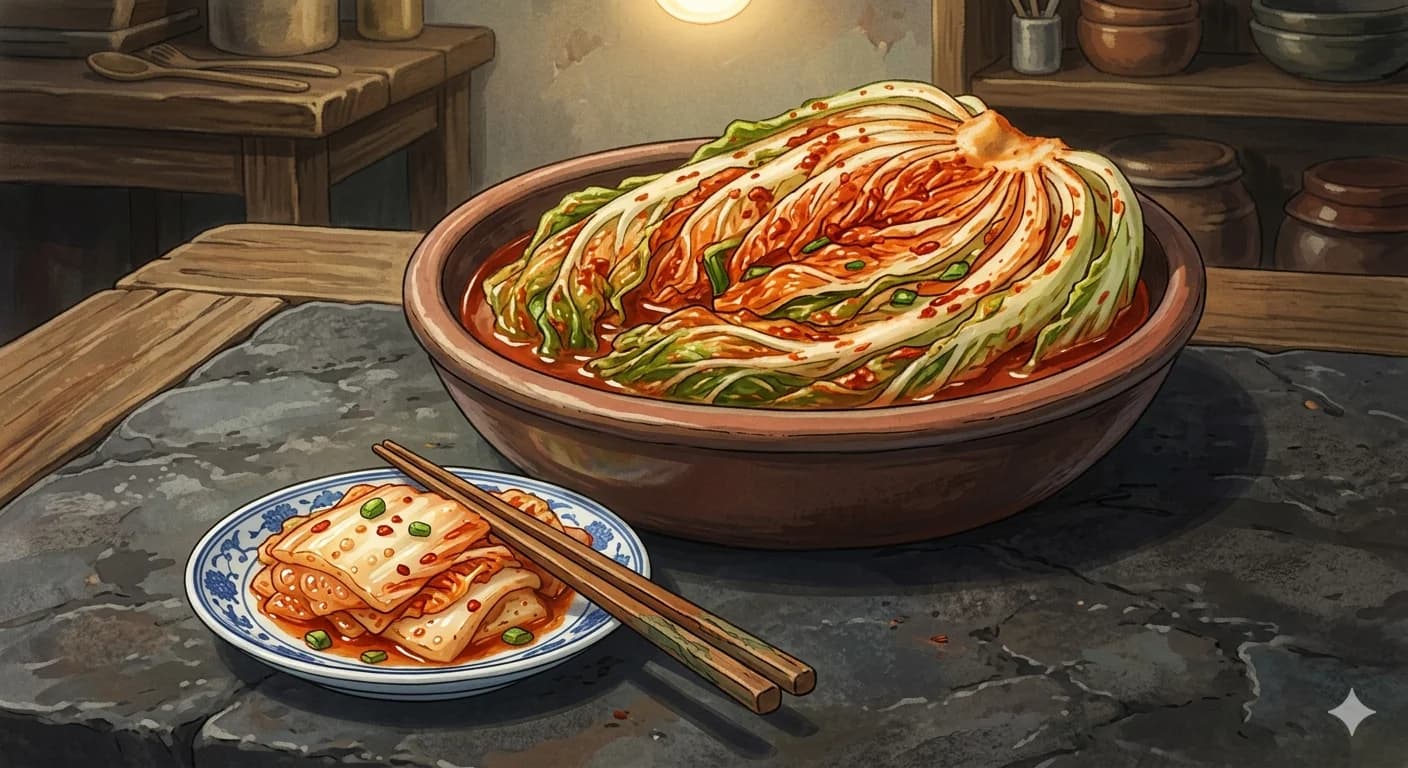
Kimchi
Also known as: Gimchi, Kimchee, Baechu-kimchi, Korean Fermented Vegetables
Kimchi is Korea's defining fermented food, a preparation of salted and seasoned vegetables that undergoes lactic acid fermentation to develop a flavor that is simultaneously sour, spicy, funky, and deeply savory. Hundreds of regional varieties exist, but the most iconic version, baechu-kimchi, is made from napa cabbage seasoned with gochugaru, garlic, ginger, scallions, and fish sauce or salted shrimp (saeujeot).
What makes kimchi remarkable is that it functions as both a standalone side dish and a foundational cooking ingredient. Fresh kimchi is crisp, bright, and mildly tangy. As it ages over weeks and months, it grows increasingly sour and complex, developing the deep fermented funk that makes kimchi jjigae and kimchi fried rice taste the way they do. Korean cooks keep kimchi at multiple stages of ferment on hand, reaching for young kimchi as a table condiment and well-aged kimchi for cooking.
The process itself is straightforward: salt the cabbage to draw out moisture, coat it in a spiced paste, pack it tightly to exclude air, and let naturally present lactic acid bacteria do their work. Temperature and time are the two variables that determine the final character, and Korean households have refined this balance over centuries.
Key facts at a glance:
- Lactic acid fermented napa cabbage — the most popular of hundreds of kimchi varieties
- Dual role — eaten as a condiment fresh and used as a cooking ingredient when aged
- Kimjang tradition — communal autumn kimchi-making, a UNESCO Intangible Cultural Heritage since 2013
- Rich in live lactobacillus — one of the most studied probiotic foods in the world
- Flavor deepens with age — young kimchi is bright and crisp; months-old kimchi is sour and funky
Flavor Profile
Origin
Korea, East Asia
Traditional Medicine Perspectives
Traditional Chinese Medicine
Fermented vegetables are generally viewed as aiding the Spleen and Stomach in TCM. The warming spices in kimchi (garlic, ginger, chili) are classified as pungent and warm, associated with dispelling cold and promoting the flow of qi. However, the sour quality of aged kimchi is associated with the Liver, and practitioners may advise moderation for individuals with damp-heat patterns.
Korean Traditional Medicine (Hanbang)
Kimchi is considered warming and pungent due to its garlic, ginger, and chili content, and is traditionally associated with stimulating digestion, promoting appetite, and dispelling internal cold. The fermentation process was understood to make the vegetables more digestible. Aged kimchi broth has long been consumed as a home remedy for sluggish digestion and poor appetite, particularly during cold weather.
Modern Scientific Research
Kimchi is one of the most extensively studied fermented foods in nutrition research, largely due to the work of Korean food scientists who have published thousands of papers on its microbiology, chemistry, and health associations.
The dominant bacteria in well-fermented kimchi are Lactobacillus, Leuconostoc, and Weissella species. These lactic acid bacteria produce organic acids that lower pH and preserve the vegetables, while also generating bioactive compounds during fermentation. Studies have associated regular kimchi consumption with improved markers of gut microbiome diversity, though individual responses vary.
Researchers at the World Institute of Kimchi have identified over 900 distinct bacterial species across different kimchi samples, making it one of the most microbiologically complex fermented foods studied.
Research has also examined kimchi's nutrient profile. Fermentation increases the bioavailability of B vitamins and creates new compounds not present in the raw ingredients. The combination of fiber from the vegetables, capsaicin from the gochugaru, and allicin from garlic provides a matrix of compounds that researchers continue to investigate for their combined effects on metabolism and immune markers.
It is worth noting that kimchi is relatively high in sodium due to the salting process. Studies on the health effects of kimchi consumption generally find associations at moderate intake levels (one to three servings daily), with the benefits of the probiotic and vegetable content weighed against sodium intake.
Cultural History
Vegetable fermentation in Korea predates the arrival of chili peppers by many centuries. The earliest forms of kimchi, documented as far back as the Three Kingdoms period (37 BC to 7th century AD), were simple salt-preserved vegetables without any red pepper at all. These early versions relied on salt, garlic, and sometimes fermented fish for flavor, and they were a practical answer to the same problem every northern agricultural society faced: how to eat vegetables through a long, cold winter.
Chili peppers arrived in Korea in the late 16th or early 17th century, and their adoption into kimchi created the fiery red preparation the world recognizes today. The transformation was gradual. Gochugaru gave kimchi its color, its heat, and a new dimension of fruity sweetness that the older white kimchi lacked. By the 18th and 19th centuries, the red-pepper style had become dominant across the peninsula.
Kimjang, the communal late-autumn practice of making kimchi for the winter, became one of the defining social rituals of Korean life. Families and neighbors gathered to process hundreds of heads of cabbage, sharing labor, recipes, and finished kimchi. In 2013, UNESCO recognized kimjang as an Intangible Cultural Heritage of Humanity, citing its role in reinforcing cooperation, social identity, and community belonging.
The development of the kimchi refrigerator (kimchi naengjanggo) in the 1990s was a distinctly Korean household innovation: a specialized appliance with precise temperature zones designed to ferment and store kimchi at different stages. It became one of the best-selling home appliances in Korean history and remains a standard fixture in Korean kitchens today.
Culinary Uses
As a table side dish, kimchi appears at virtually every Korean meal. Young kimchi (1 to 2 weeks old) is crisp, fresh, and mildly tangy, best eaten as-is alongside rice, grilled meat, or soup. It brightens rich, fatty dishes the way a pickle or acid hit would in any cuisine.
The real magic of kimchi as an ingredient begins when it ages. Well-fermented kimchi (3 weeks and older) develops a pronounced sourness and depth that transforms when cooked. Kimchi jjigae, the stew that many Koreans consider the ultimate comfort food, specifically requires old, sour kimchi, not fresh. The acidity mellows in the broth, the cabbage softens, and the fermented funk becomes a savory backbone that carries pork belly, tofu, and aromatics.
Kimchi fried rice (kimchi bokkeumbap) is the other essential aged-kimchi dish. Chopped kimchi is stir-fried with day-old rice, sesame oil, and often a bit of pork or spam, then topped with a fried egg. The sour kimchi caramelizes slightly in the hot pan, creating a nutty, tangy, deeply satisfying one-bowl meal.
Beyond Korean cooking, aged kimchi works anywhere you want fermented acidity and heat: chopped into quesadillas, folded into grilled cheese, stirred into fried rice of any origin, or used as a relish on burgers and hot dogs. Its umami and acid make it a versatile kitchen weapon.
Preparation Methods
Making baechu-kimchi starts with quartering and salting napa cabbage. Use about 1 cup of coarse sea salt per large head of cabbage. Salt between the leaves, concentrating on the thicker white stems. Let it sit for 6 to 8 hours or overnight, flipping once, until the leaves are wilted and pliable enough to bend without snapping. Rinse three times in cold water and squeeze out excess moisture.
While the cabbage salts, make the kimchi paste: blend or process gochugaru (about 1 cup per head), garlic (a full head, minced), ginger (a 2-inch piece, grated), fish sauce or saeujeot (3 to 4 tablespoons), and a touch of sugar or sweet rice flour paste. Add chopped scallions and optionally julienned Korean radish or daikon.
Work the paste between every leaf of the cabbage quarters, concentrating on the white stem portions. Pack tightly into a jar or fermentation container, pressing down to eliminate air pockets. Leave an inch of headspace, as the kimchi will produce gas and liquid as it ferments.
Ferment at room temperature for 1 to 3 days (depending on the season and your taste), then refrigerate. The kimchi will continue to ferment slowly in the cold. It is pleasant to eat within a few days, hits its stride at 2 to 3 weeks, and becomes ideal for cooking at 4 to 8 weeks. Well-made kimchi keeps in the refrigerator for months, growing more sour and funky over time.
Traditional Dishes
- Kimchi Jjigae
- Kimchi Fried Rice
- Kimchi Pancakes (Kimchijeon)
- Budae Jjigae
- Bibimbap
- Kimchi Mandu
Comments
Share your thoughts on this ingredient.
Sign in to comment0 Comments