Goan · Indian Cuisine
Goan Sour-Spicy Curry (Ambotik)
Goa's sour-spicy fish curry, where the name says exactly what it is
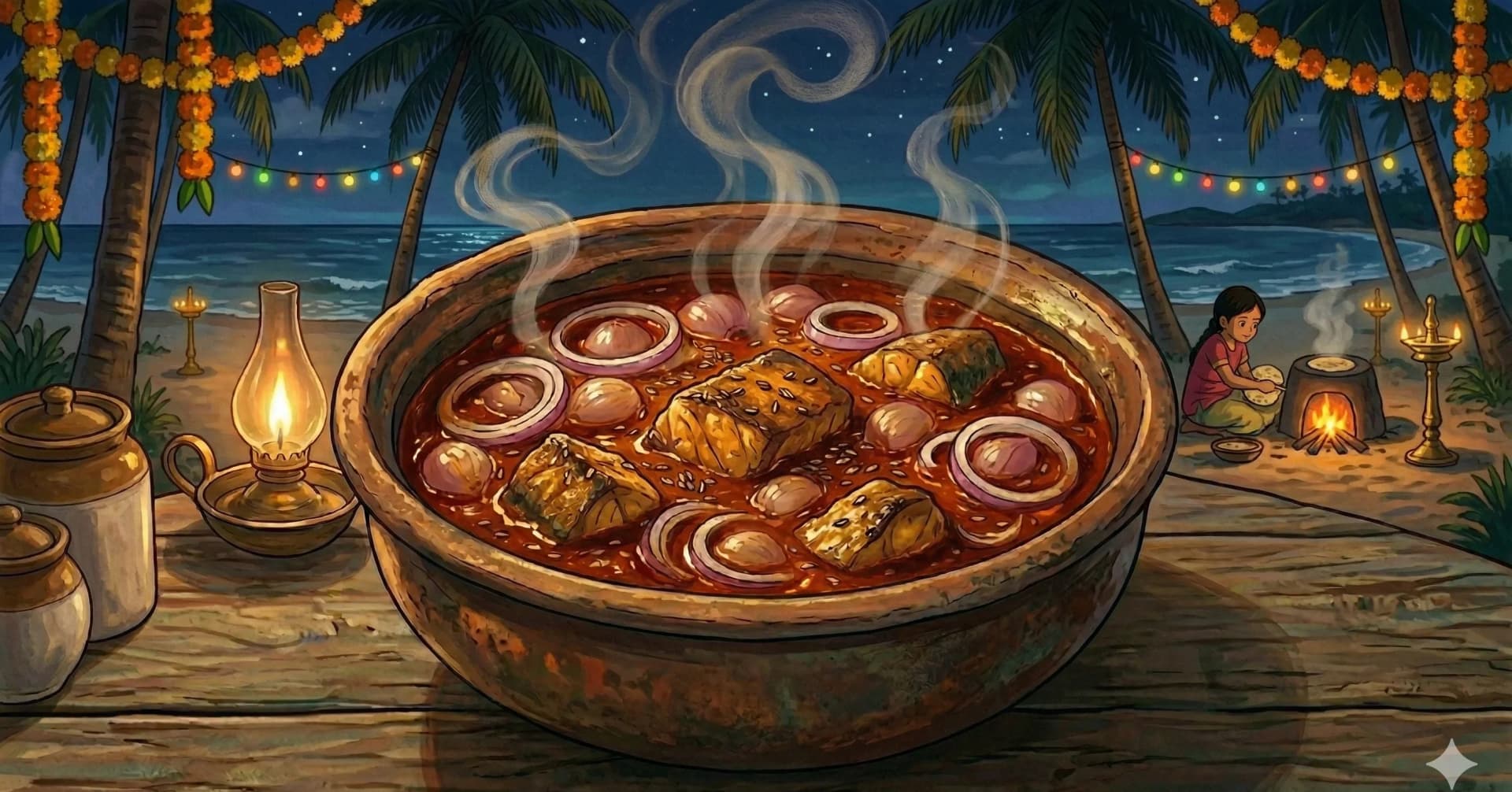
In Konkani, the language of Goa's coastal communities, ambot means sour and tik means spicy. The dish is named for exactly what it does to your palate: a double-punch of tamarind acid and chilli heat that arrives in sequence, one chasing the other, neither willing to yield. It is one of the most direct, honest names in any cuisine.
Ambotik belongs to the Catholic Goan kitchen, a cooking tradition shaped by five centuries of Portuguese presence, Indigenous Konkani practice, and the extraordinary produce of the Konkan coast. Where the Hindu Goan kitchen tends toward mild, golden caldeen-style curries, the Catholic table often runs hotter, sharper, more willing to confront the eater. Ambotik is an expression of that spirit.
The masala is built around coconut (the great unifier of all Goan cooking), ground with dried red chillies, coriander seed, peppercorn, and turmeric into a thick, vivid paste. Small onions, called madras onions or pearl onions in some markets, are the aromatic base: they are sweeter and more pungent than large onions, and they sauté to a different texture, more jammy than soft. The tamarind comes in last, after the fish has cooked, so its sourness stays bright rather than cooking down into something rounder and more mellow.
Use firm, fresh fish. Kingfish (surmai), shark (mori), catfish, or pomfret all work well. Soft fish will fall apart in the masala; you want something that holds a cut edge. The masala should be cooked out properly before the fish goes in: you're looking for the oil to begin to separate from the paste, which tells you the rawness has gone and the flavour has deepened.
This is a curry that tastes better the next day, once the fish has had time to absorb the masala. If you can resist it long enough.
At a Glance
Yield
4 servings
Prep
20 minutes
Cook
30 minutes
Total
50 minutes
Difficulty
Medium
Ingredients
Spice Paste Ingredients
Method
- 1
Make the masala. Combine the grated coconut, dried red chillies (50 g), coriander seeds (1 tsp), turmeric (¾ tsp), peppercorns (½ tsp), and the 2 reserved small onions (2) in a blender or wet grinder. Add a splash of water and grind to a smooth, thick paste. The paste should be deep red-orange and fragrant. Taste it: the rawness of the chilli should still be present at this stage, which is fine.
- 2
Prepare the tamarind. Soak the tamarind block (30 g) in warm water for 10 minutes, then work it with your fingers to release the pulp. Strain through a sieve, pressing to extract all the liquid. Set aside.
- 3
Sauté the onions. Peel and halve or slice the remaining small onions (250 g). Heat oil in a wide, heavy pan over medium heat. Add the onions and cook, stirring occasionally, until they are soft, translucent, and beginning to colour at the edges, about 8–10 minutes. The sweetness of small onions needs time to develop; don't rush this step.
- 4
Fry the masala. Add the ground coconut paste to the onions and stir to combine. Cook over medium heat, stirring frequently, for 8–10 minutes. You are looking for the masala to deepen in colour, to lose its raw, sharp smell, and for flecks of oil to begin appearing around the edges. This is the moment the curry finds its character.
- 5
Add the fish. Nestle the fish pieces into the masala, turning gently to coat. Add enough water to bring the curry to a loose, pourable consistency, about 150–200 ml. Bring to a single vigorous boil, then lower the heat and simmer, covered, for 8–12 minutes, until the fish is just cooked through. It should flake at the thickest part when pressed gently.
- 6
Add tamarind. Stir in the strained tamarind pulp. Taste and adjust salt. Simmer uncovered for 2 minutes more, just long enough for the sourness to integrate without cooking away. The curry should taste distinctly tart and spicy, with the coconut providing a creamy background note.
- 7
Serve hot with steamed rice, ideally the single-polished Goan ukde (parboiled) rice if you can find it.
Key Ingredient Benefits
Tamarind has a long history in Ayurvedic medicine as a digestive aid, and modern research supports some of this: it contains tartaric acid and a range of polyphenols. As an acidic agent in cooking, it also helps break down protein fibres in fish, subtly tenderising the flesh. Traditional Goan cooks choose between raw mango, kokum, and tamarind depending on the dish; each imparts a distinct sourness. Ambotik calls for tamarind specifically.
Small onions (shallots/pearl onions) have higher concentrations of quercetin and allicin than large onions, compounds associated in research with anti-inflammatory and cardiovascular benefit. Traditional medicine has long used small onions as a warming, digestive ingredient.
Dried red chillies provide capsaicin, which stimulates thermogenic processes in the body. Kashmiri chillies are relatively mild despite their vivid colour; their pigment comes primarily from carotenoids rather than capsaicin alone, making them a good choice where colour is wanted without excessive heat.
Why This Works
Grinding the coconut with the spices (rather than using coconut milk) gives the masala body and a different kind of richness than a broth-based curry. The coconut fat is released slowly as the paste fries, emulsifying into the oil and creating a sauce that clings to the fish rather than running off it.
Adding tamarind at the end is deliberate. Tamarind's tartaric acid breaks down under prolonged heat, becoming softer and less vivid. By adding it in the final minutes, you preserve the sharp, almost citrus-forward quality of the souring agent. That's what distinguishes ambotik from a generic fish curry and makes it taste like its name.
Substitutions & Variations
- Fish: Kingfish (surmai) is the classic choice and holds its shape beautifully. Shark (mori) is traditionally used in many Goan Catholic households. Pomfret, rawas (Indian salmon), or firm white fish like barramundi also work. Avoid thin, delicate fish.
- Coconut: Fresh coconut makes a noticeably better masala, but desiccated coconut rehydrated in a little warm water is a reasonable substitute. Don't use coconut milk here. The texture and cooking behaviour of the masala will be completely different.
- Heat: Reduce the chillies by half for a milder curry, or substitute some with Kashmiri chilli powder (mild and primarily for colour). The dish should be spicy; a completely mild version loses its identity.
- Tamarind: Kokum (Garcinia indica) is a Goan souring agent that gives a slightly different, fruitier tartness. It's traditional in some Goan Hindu preparations; using it here bridges the two traditions interestingly.
Serving Suggestions
Ambotik is served with steamed rice, specifically the Goan ukde (parboiled) rice, which is nuttier and slightly sticky and much better at absorbing the masala than long-grain basmati. A simple salad of sliced onions dressed with vinegar and a pinch of salt is the traditional accompaniment, its sharpness cutting through the richness of the coconut.
Serve the curry in the pot it was cooked in if possible, or in a wide, shallow bowl that allows each portion to include fish and plenty of masala. Have a wedge of lime on the side for anyone who wants an additional hit of acid.
Storage & Reheating
Ambotik keeps refrigerated for up to 2 days and genuinely improves overnight as the fish absorbs the masala. Store in a sealed container.
To reheat, warm gently over low heat with a splash of water to loosen the sauce. Do not boil vigorously after the fish is cooked; it will cause the fish to break apart. Fish curries do not freeze well. The texture of the fish deteriorates on thawing.
Cultural Notes
Ambotik (अंबोटीक, "sour-spicy") is the Goan Catholic fish or shark curry built on the sharp tangy-spicy flavor profile that the name describes: ambot (sour) and tik (spicy). The dish is one of the foundational Goan Catholic preparations and one of the dishes most strongly associated with the Konkan-Christian community of central Goa. The signature ingredients are a recheado-style spice paste (kashmiri red chilies, garlic, ginger, cumin, peppercorns, cloves, cinnamon, and palm vinegar ground together), tamarind or kokum for additional sour notes, and the catch of the day, traditionally shark (mori), now often substituted with kingfish, mackerel, or other firm white-fleshed fish.
The dish's character distinguishes it from the broader goan-fish-curry family. Where the standard Goan fish curry uses coconut milk as the gravy base for a creamy mild finish, ambotik is built on a vinegar-and-tamarind base with no coconut milk, producing a thinner, sharper, more aggressively sour and spicy curry. The vinegar comes from Goan palm vinegar (made from fermented coconut sap), which gives the dish a specific Goan tartness that distinguishes it from tamarind-only sour curries. The shark or fish is cut into thick chunks and added to the simmering curry for ten to fifteen minutes, just until cooked through, so the flesh stays firm and the gravy doesn't reduce too much.
The cultural setting is the Goan Catholic family meal. Ambotik appears at home lunches across the Catholic communities of central Goa (Old Goa, Margao, Mapusa) and at the small Goan Catholic restaurants of Panjim and the coastal villages. The dish has a particular association with the Goan home cooking tradition that adapts to whatever fish is available from the morning's catch, since the sharp curry base works with many different fish species. The dish is served with rice (plain steamed rice or the Goan red parboiled rice called ukda tandool) and a side of fresh sliced raw onion, sometimes with a small dish of pickled chilies for additional heat. The dish has spread through the Goan diaspora to Mumbai, Bangalore, and the broader Indian-Goan restaurant tradition in Western countries.
Nutrition Facts
Calories: 456kcal (23%)|Total Carbohydrates: 36g (13%)|Protein: 27g (54%)|Total Fat: 25g (32%)|Saturated Fat: 16.4g (82%)|Cholesterol: 51mg (17%)|Sodium: 271mg (12%)|Dietary Fiber: 10.7g (38%)|Total Sugars: 15g
You Might Also Like
Ratings & Comments
Ratings & Comments
Ratings
Share your thoughts on this recipe.
Sign in to rate and comment