Indian Cuisine
Goan Coconut Cake (Baath)
Goan Christmas Coconut and Semolina Cake
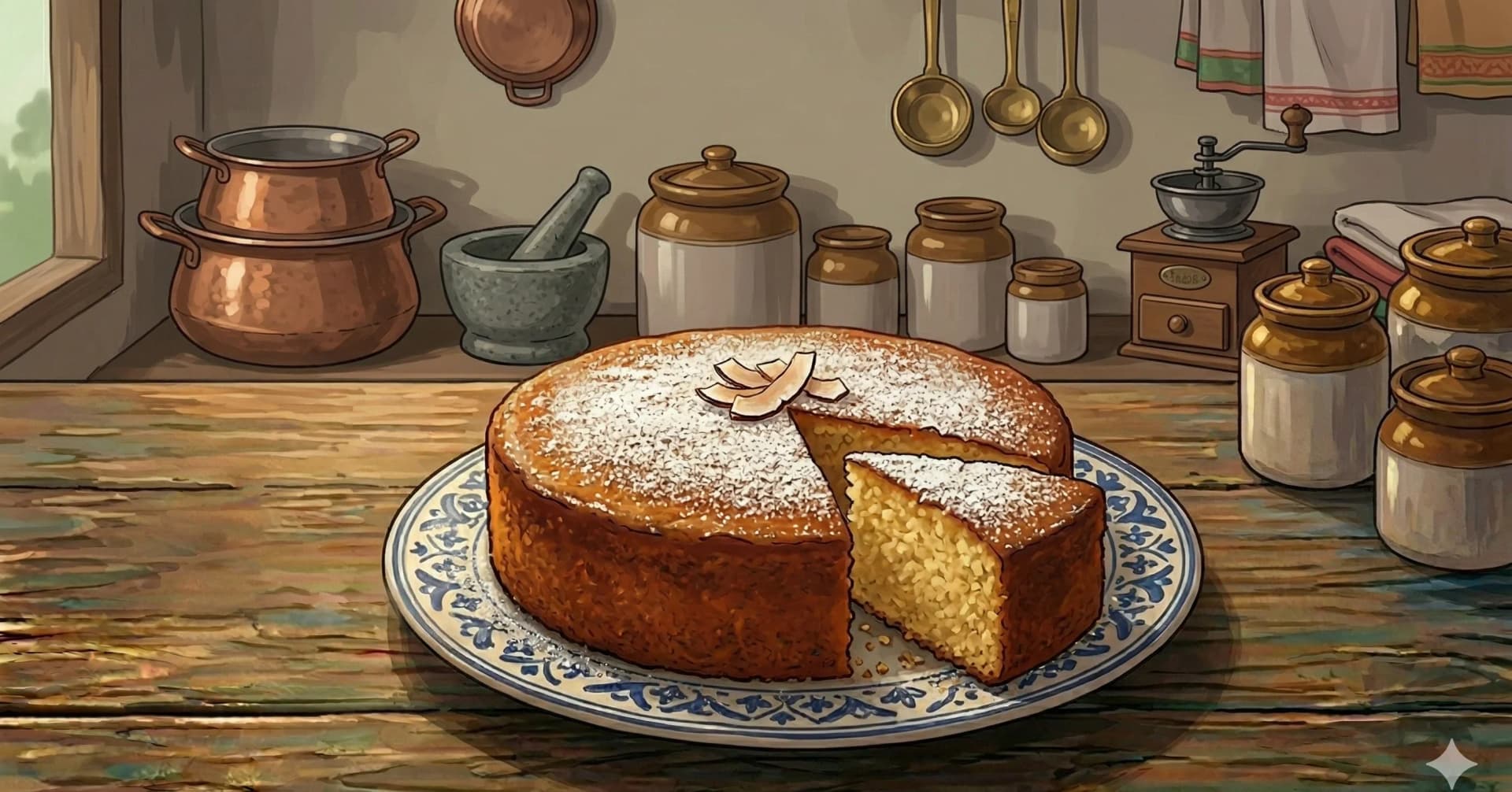
Christmas in Goa smells of coconut, butter, and vanilla, and much of that smell comes from baath. It is the dense, slightly chewy coconut and semolina cake that appears in every Goan Catholic household during the Christmas season, baked in large tins that are shared between neighbours, relatives, and friends who call over through December.
Baath is not a light cake. It does not aspire to the airy crumb of a sponge or the delicate structure of a chiffon. What it is, deliberately and precisely, is dense: dense from the semolina's starch, dense from the freshly ground coconut's fat and fibre, dense from the eggs and butter that hold the whole structure together. The texture is somewhere between a firm pudding and a pound cake. Slightly chewy from the coconut, with a fine grain from the semolina, holding together cleanly when sliced and yielding satisfyingly to the tooth.
The rest before baking is not optional. The batter goes together quickly (ground coconut, semolina, eggs, sugar, butter, baking powder, vanilla) but it must stand for four to five hours before it goes into the oven. During this rest, the semolina absorbs the liquid from the ground coconut and the eggs, hydrating fully and producing a batter that will set evenly and bake with a dense, moist crumb rather than the dry, crumbly texture that comes from underprepared semolina.
The final step, gratinating under the salamander or top heat, is what produces the signature baath surface: a deep, burnished golden crust that is slightly darker than the interior, faintly caramelised, with a very slight crispness at the very edge that softens as the cake cools.
Dust with powdered sugar if you like. Baath is at home on any Christmas table.
At a Glance
Yield
1 cake (serves 12–14)
Prep
20 minutes active (plus 4–5 hours rest)
Cook
1 hour baking plus gratinating
Total
6+ hours
Difficulty
Easy
Ingredients
- 1 lbfresh coconut (from approximately 1 large coconut), grated
- ½ lbfine semolina (sooji)
- 1¼ cupsugar
- ½ ozeggs (approximately 3 large eggs)
- ½ cupunsalted butter, softened at room temperature
- ¾ tspbaking powder
- 2 tspvanilla essence
- 3½ tbspwater (for grinding the coconut)
- —Powdered sugar, for dusting (optional)
Method
- 1
Grind the coconut. Grind the freshly grated coconut with 50 ml of water in a blender until you have a coarse, moist paste, not a smooth puree, but finely ground enough that the fibre is broken down. Set aside.
- 2
Combine all ingredients. In a large mixing bowl, combine the ground coconut paste, semolina, eggs, sugar, softened butter, baking powder, and vanilla essence. Mix thoroughly until everything is evenly incorporated. The batter will be thick and heavy.
- 3
Rest the batter. Cover the bowl with a clean cloth or cling film. Leave at room temperature for 4–5 hours. Do not refrigerate. The batter needs to rest at room temperature to allow the semolina to hydrate fully. During this rest, the batter will thicken further as the semolina absorbs liquid.
- 4
Prepare the tin. Line a cake tin (approximately 23 x 30 cm rectangular, or a 25 cm round tin) with greased baking paper. Preheat the oven to 200°C.
- 5
Bake. Pour the rested batter into the prepared tin and spread evenly. Bake at 200°C for 1 hour. The cake is done when a clean knife inserted into the centre comes out with no wet batter. A few moist crumbs are acceptable. The sides should be well-browned and pulling away from the tin.
- 6
Gratinate. Once the centre is cooked through, turn on the grill (salamander or top-heat oven element) and gratinate for 3–5 minutes until the top surface is deeply golden and slightly caramelised. Watch carefully. It can darken quickly.
- 7
Cool and serve. Remove from the oven and allow to cool in the tin for 20 minutes before turning out. Dust with powdered sugar if desired. Slice and serve at room temperature.
Key Ingredient Benefits
Fresh coconut is the defining ingredient and must be fresh. Not desiccated, not reconstituted, not coconut cream. Fresh coconut has medium-chain fatty acids, natural sweetness, and a moisture content that contributes directly to the cake's texture. Desiccated coconut lacks the natural moisture and produces a drier, less fragrant result.
Semolina provides structure and a slightly sandy grain to the crumb. Fine semolina (sooji) is specified; coarse semolina produces a more noticeably gritty texture.
Eggs provide both structure (protein coagulation during baking) and richness. Three large eggs is the traditional measure for this quantity of batter. Fewer produces a drier, more crumbly result.
Vanilla essence is the colonial influence. Pure vanilla was introduced to India's coastal regions through Portuguese and later British trade, and its presence in Goan baking reflects centuries of culinary exchange.
Why This Works
The four-to-five hour rest is the technical foundation of the recipe. Semolina, unlike flour, consists of coarser starch particles that require extended contact with liquid to hydrate fully. Baking with under-hydrated semolina produces a dry, sandy interior with uneven pockets of unabsorbed semolina. Fully hydrated semolina bakes into the dense, smooth-grained crumb characteristic of baath. The coconut's natural oils and the eggs provide sufficient liquid; the rest period simply allows time for absorption.
Grinding the coconut rather than using it grated releases the coconut's oils and allows them to blend more evenly into the batter. Grated coconut (unground) would produce a more fibrous texture with visible shreds; ground coconut integrates completely, contributing moisture and fat throughout the crumb without distinct textural interruptions.
The baking temperature (200°C) is higher than most Western cake recipes, which reflects the density of the batter. The high fat and egg content means the structure can withstand higher heat without drying. The gratinating step adds Maillard caramelisation to the already-baked surface, producing a crust that is genuinely dark and aromatic, not just browned.
Substitutions & Variations
- With coconut milk: Replace the ground coconut with 400 ml of full-fat coconut milk for a slightly different texture (looser crumb, more liquid batter). Increase semolina by 50 g to compensate.
- With cardamom: Add 1 tsp of ground cardamom to the batter for a more specifically South Asian flavour profile.
- Without eggs: This is a challenging substitution given the eggs' structural role. Replacing with flax eggs (1 tbsp flaxseed meal + 3 tbsp water per egg) will produce a denser, more pudding-like result.
- With jaggery: Replace white sugar with 220 g of powdered jaggery for a darker, more molasses-flavoured cake.
Serving Suggestions
Baath is Christmas food, made in large tins and shared. Serve at room temperature, sliced in generous squares or rectangles. It is a standalone cake, requiring no accompaniment, though a cup of strong tea or Goan filter coffee alongside is traditional. It appears at the Christmas table alongside bebinca (the layered Goan coconut cake), neureos (fried pastry crescents), and doce de grao (chickpea sweet), as part of the elaborate Goan Christmas sweet-making tradition.
Storage & Reheating
Baath keeps well in an airtight container at room temperature for up to 5–7 days in a cool climate. In humid conditions, refrigerate after day 2 to prevent the coconut from turning. Bring to room temperature before serving. Cold baath is denser and the vanilla fragrance is muted. It can be warmed briefly in a low oven (150°C, 8 minutes) for a freshly-baked quality. Baath also freezes well for up to 2 months; thaw completely at room temperature before serving.
Cultural Notes
Baath (બાથ) is the Gujarati and Parsi rice-based pudding similar to a thicker rice-and-milk preparation, distinguished from the broader Indian kheer family by its specific Gujarati or Parsi spice and flavor profile. The dish appears in multiple variations across the Gujarati and Parsi cooking traditions: the Gujarati dal baath (rice cooked with toor dal), the Parsi baath with semolina and milk, and the Gujarati festival baath with saffron, cardamom, and ghee. The word baath itself means "rice" in Gujarati, and the dish category covers a range of rice-based preparations that share the basic approach of slowly cooking rice in a flavored liquid.
The most internationally recognized Parsi version is the baath made with broken rice, milk, sugar, cardamom, saffron, and a generous amount of ghee, sometimes with crushed pistachios and almonds added at the end. This version sits between rice pudding and rice-based dessert, with the rice broken down enough that the dish has a thick custard-like consistency. The Gujarati Hindu version uses similar ingredients but is often less heavily ghee-laden and may include rose water or kewra water as the aromatic. Both versions appear at festival meals: the Parsi version at Navjote (the Zoroastrian coming-of-age ceremony) and family celebrations, the Gujarati version at religious festivals like Diwali and at home-and-temple offerings.
The technique builds the dish through slow cooking. Long-grain rice or broken rice is washed and added to milk in a heavy pot (the ratio is typically 1 part rice to 6 to 8 parts milk for a thick consistency, less for a thinner version). The mixture cooks at low heat for ninety minutes to two hours with periodic stirring, during which the rice breaks down completely and the milk reduces by about half. Sugar is added when the rice has softened (adding sugar earlier can interfere with the cooking process), along with crushed cardamom seeds, a pinch of saffron, and a generous addition of ghee. The dish is served warm in winter and chilled in summer, garnished with chopped pistachios, almonds, and a few additional saffron threads. The dish has spread through Parsi and Gujarati diaspora communities globally but remains less internationally recognized than the broader Indian kheer or the Bengali payesh.
Nutrition Facts
Calories: 337kcal (17%)|Total Carbohydrates: 43g (16%)|Protein: 4g (8%)|Total Fat: 18g (23%)|Saturated Fat: 14.6g (73%)|Cholesterol: 14mg (5%)|Sodium: 64mg (3%)|Dietary Fiber: 4.6g (16%)|Total Sugars: 23.5g
You Might Also Like


Ratings & Comments
Ratings & Comments
Ratings
Share your thoughts on this recipe.
Sign in to rate and comment