Parsi · Indian Cuisine
Puffed Rice-Flour Cookies (Batero)
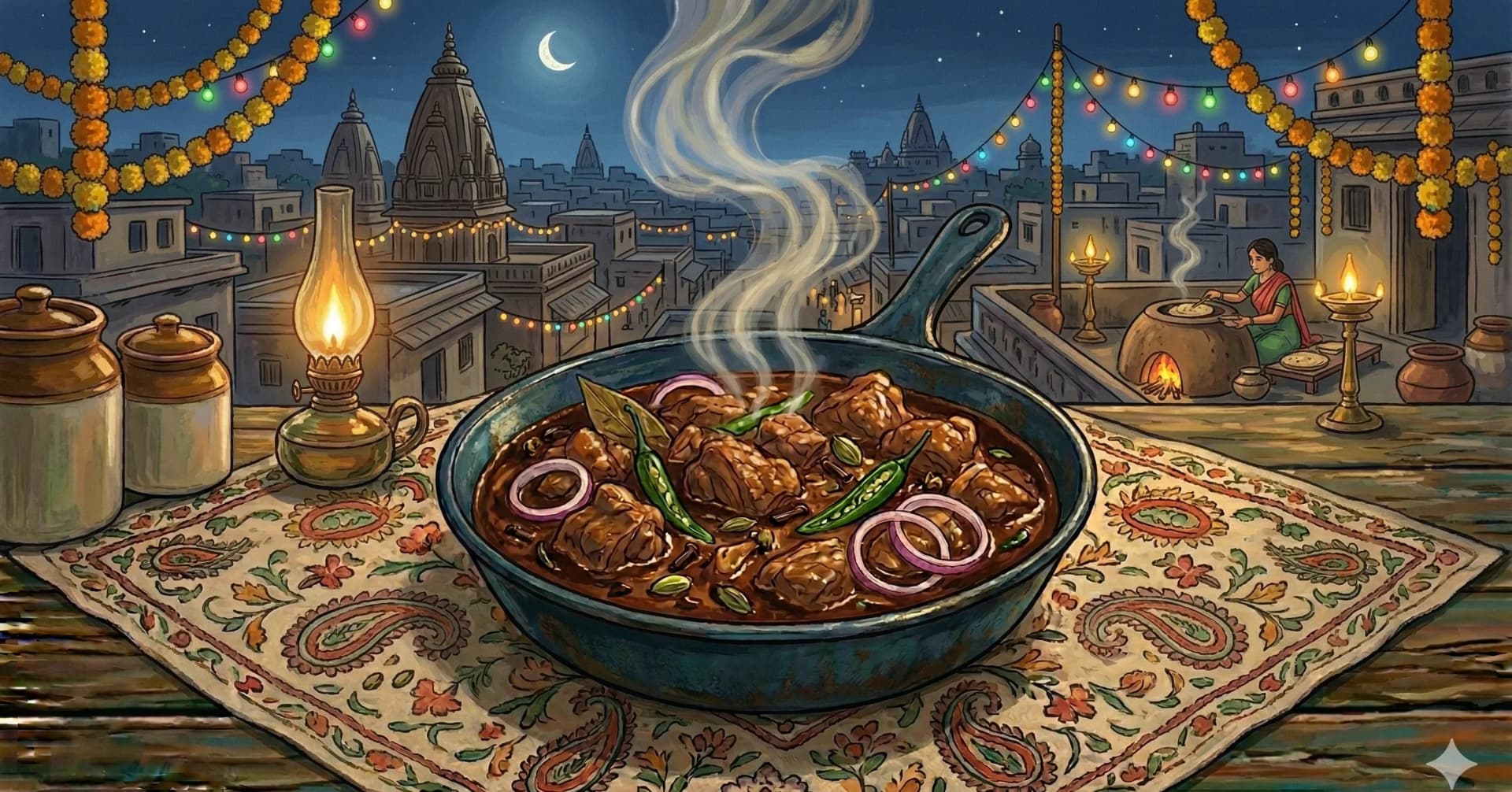
Parsi lamb marinated in toddy or beer with whole spices, then slowly braised until tender
The Parsi community's cooking reflects centuries of integration with Indian food culture while maintaining clear connections to Persian culinary heritage. The use of fermented liquid as a marinade and braising medium is one of the most distinctly Persian-influenced techniques in the repertoire. Batero uses toddy (a naturally fermented palm wine, sharp and slightly yeasty) or beer as both marinade and cooking liquid, producing a lamb dish with a complex, slightly sour depth that no other approach provides.
The mechanics are simple: lamb is pierced, rubbed with ground spices, covered entirely in toddy or beer, and left overnight. The fermented liquid's acids break down collagen and muscle fibres, tenderising the meat before it even reaches the fire. The next day, the lamb is seared in ghee until brown, then the remaining toddy is added and the whole pot simmers quietly for as long as it takes.
What emerges is deeply savoury, slightly sour, the toddy's yeasty quality integrated into the braising liquid to produce something that tastes ancestrally particular. A dish that could not be replicated with any other liquid. If toddy is unavailable, a dark beer with a teaspoon of white vinegar provides the closest approximation.
At a Glance
Yield
Serves 4
Prep
15 minutes + overnight marinating
Cook
45 minutes
Total
Overnight + 1 hour
Difficulty
Easy
Ingredients
Method
- 1
Prepare the marinade. Grind the ginger (50 g), garlic, turmeric (10 g), red chilli powder (10 g), cumin seeds (5 g), and peppercorns together to a paste (add a splash of toddy or water to help the blender move).
- 2
Marinate the lamb (500 g). Pierce the lamb pieces all over with a fork to help the marinade penetrate. Rub the ground spice paste thoroughly into all the pieces. Place in a deep bowl or container and pour enough toddy or beer to completely cover. Add salt (4 teaspoons). Stir well. Cover and refrigerate overnight (or for at least 2–3 hours, brought back to room temperature before cooking).
- 3
Sear the lamb. Heat the ghee (30 g) in a heavy pot over medium-high heat. Remove the lamb from the marinade (reserve all the marinade liquid) and fry in the hot ghee until brown on all sides, about 4–5 minutes total. This searing builds flavour that survives the long braise.
- 4
Braise. Add the reserved marinade liquid to the pot. Bring to a boil, then reduce heat to a low simmer. Cover and cook for 35–40 minutes until the lamb is completely tender and the sauce has reduced to a rich, dark, coating consistency. Taste and adjust salt.
- 5
Serve hot with roti, rice, or pav.
Key Ingredient Benefits
Toddy is the fermented sap of various palm trees (coconut, date, palmyra). It is commonly used in Goan and coastal Indian cooking. In Parsi cooking, it appears as both a drinking beverage and a cooking medium. If unavailable, a combination of dark beer and a teaspoon of white wine vinegar approximates the flavour profile.
Why This Works
Fermented liquids (toddy, beer, wine) tenderise meat through enzymatic action as well as acid action. The yeast and bacterial enzymes in toddy are particularly effective at breaking down proteins, which is why overnight marinating in toddy produces a tenderness that an acid-only marinade (like lemon juice) cannot fully replicate.
Searing the marinated meat before braising builds Maillard products on the surface. These dark, complex flavour compounds would not be produced in a liquid braise alone and are what gives the dish its depth beyond the braise.
The long simmer reduces the toddy or beer to a concentrated sauce that retains the fermented character as an integrated note rather than a raw foreground element. The fermentation flavour is present in the finished dish but has been mellowed by time and heat.
Substitutions & Variations
Beer substitute: A dark beer (stout or porter) with a teaspoon of white vinegar is the closest substitute for toddy. Light lagers are less flavourful but still work.
Mutton: Replace lamb with mutton. Increase braising time to 60–75 minutes, or use a pressure cooker for 20 minutes.
Serving Suggestions
Serve with plain basmati rice or soft, buttered roti. A simple kachumber salad (onion, tomato, cucumber with lemon and salt) on the side provides freshness against the rich, dark braise.
Storage & Reheating
Keeps refrigerated for 3 days. Improves significantly overnight. Reheat gently on the stovetop with a splash of water if needed. Freezes well for up to 1 month.
Cultural Notes
Batero (બટેરો) is the Parsi quail preparation in which whole quail (or pigeon, partridge, or other small game birds) are marinated in a yogurt-and-spice paste, then either grilled, roasted, or simmered in a sauce. The dish represents the Parsi tradition of cooking game birds, which the community brought with them from Persia and which sits alongside chicken and lamb as part of the Parsi non-vegetarian repertoire. The dish is one of the less commonly encountered Parsi preparations and appears primarily at Parsi family meals and at the small number of heritage Parsi restaurants that maintain the traditional menu.
Quail itself has a specific place in Indian cooking traditions, with most Indian regional cuisines treating the bird as a specialty item rather than an everyday meat. The Awadhi and Mughlai traditions of North India developed elaborate quail preparations (including the famous dum-ka-bateyr-hara-masala of Lucknow), the Rajasthani tradition cooks quail with chili and yogurt, and the Parsi tradition uses the Persian flavor philosophy of combining sweet, sour, and savory elements with quail's gamy character. The Parsi batero sits in this broader context but distinguishes itself with the specific Parsi spicing.
The technique varies by family but the most documented Parsi version uses a marinade of yogurt, ginger-garlic paste, kashmiri red chili powder, turmeric, ground coriander, ground cumin, garam masala, lemon juice, and salt applied to whole cleaned quail (or breast and leg portions) and left to marinate for at least four hours and ideally overnight. The marinated birds are then cooked in one of three ways: grilled over charcoal with periodic basting in ghee, roasted in a hot oven for fifteen to twenty minutes, or simmered in a Parsi-style gravy of caramelized onions, tomatoes, jaggery, vinegar, and ground spices. The grilled and roasted versions are served as a starter or main course with sliced raw onion, lemon wedges, and green chutney. The gravy version is served with steamed rice or rotli. The dish appears at Parsi family celebrations and at heritage Parsi restaurants in Mumbai and Pune, where it represents the community's small-game cooking tradition.
Nutrition Facts
Calories: 440kcal (22%)|Total Carbohydrates: 9g (3%)|Protein: 22g (44%)|Total Fat: 34g (44%)|Saturated Fat: 15.3g (77%)|Cholesterol: 101mg (34%)|Sodium: 2020mg (88%)|Dietary Fiber: 2.2g (8%)|Total Sugars: 0.6g
You Might Also Like

Ratings & Comments
Ratings & Comments
Ratings
Share your thoughts on this recipe.
Sign in to rate and comment