Dum · Indian Cuisine
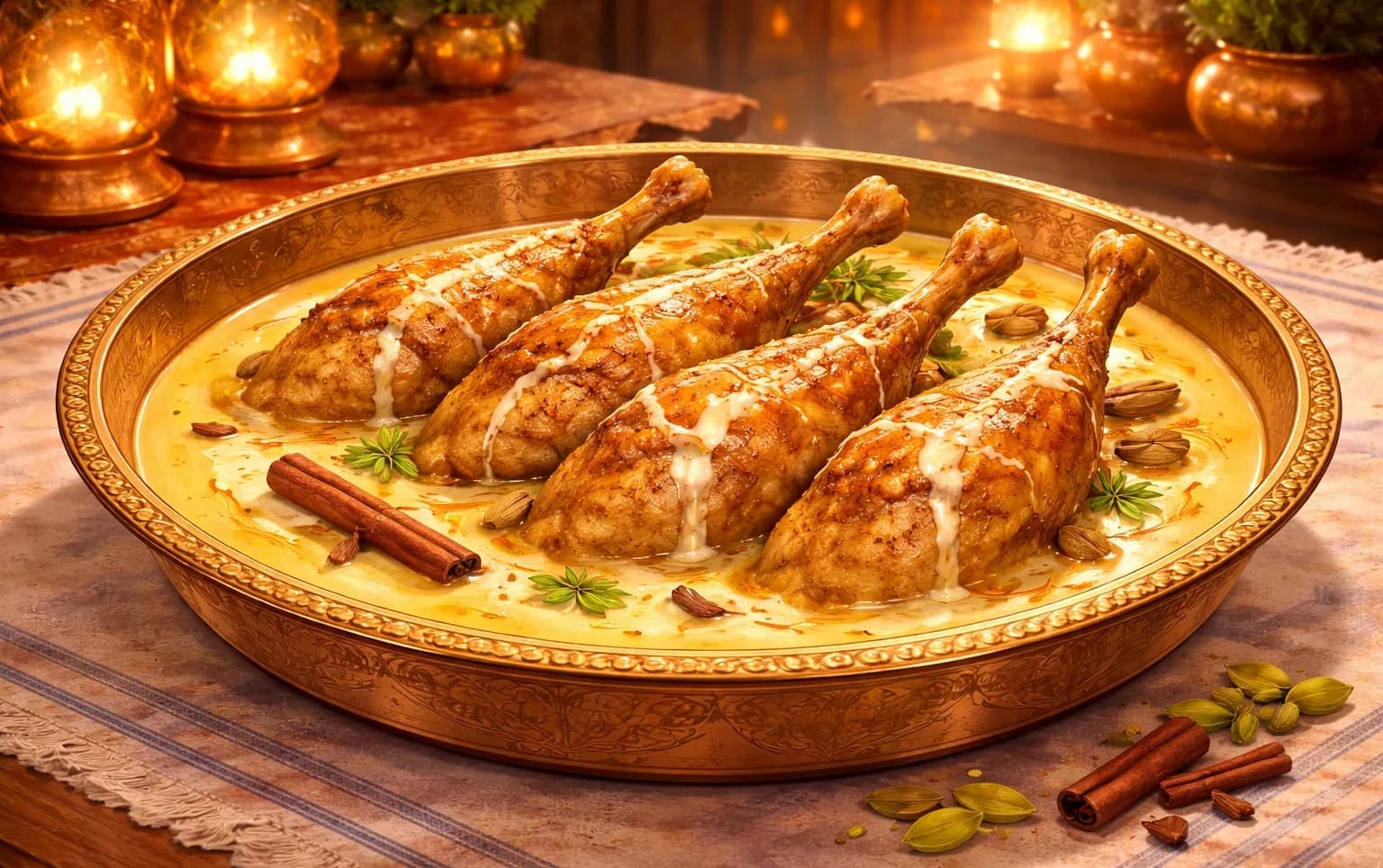
Slow-Cooked Duck (Dum Ki Batakh)
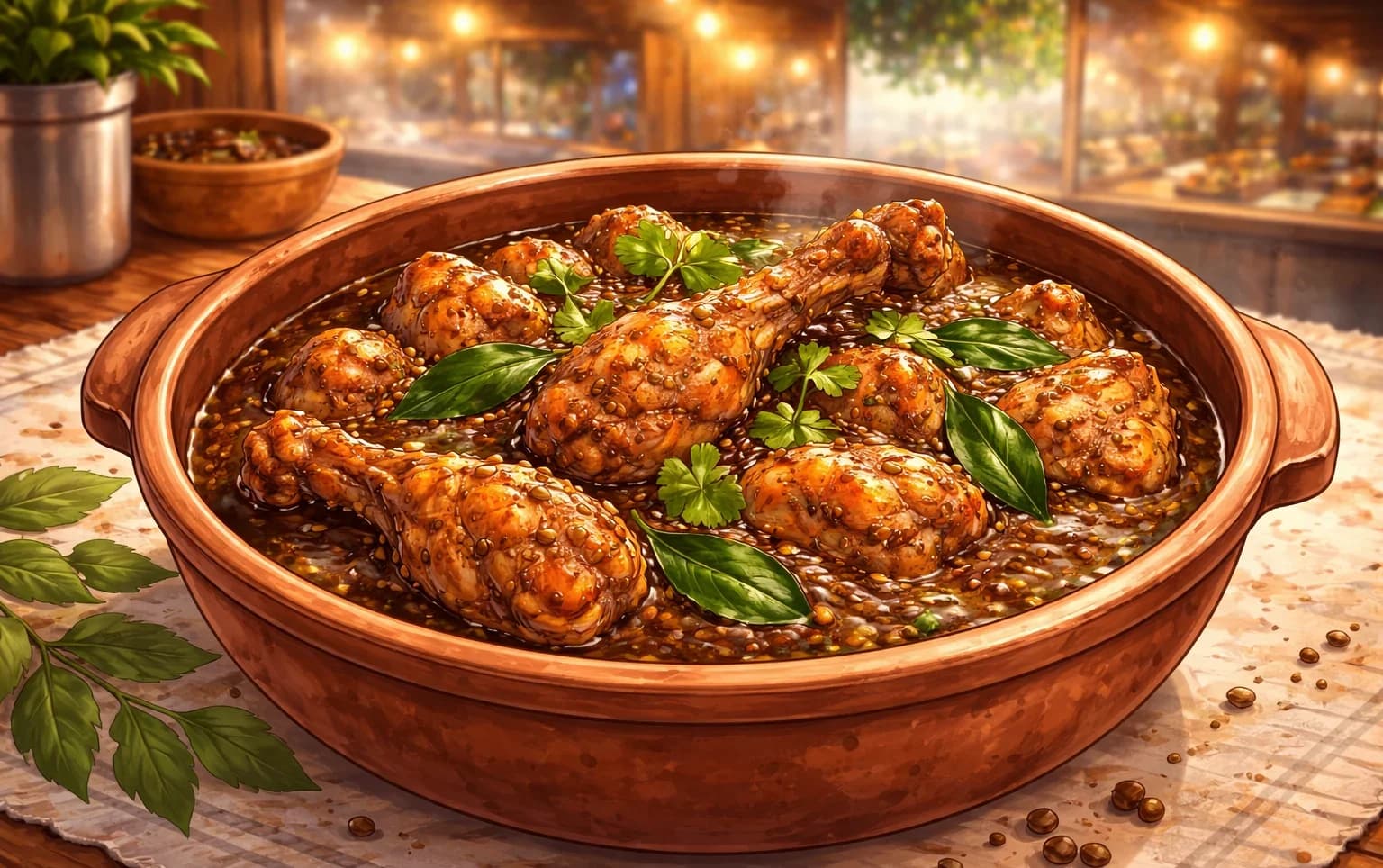
Duck legs marinated in saffron-scented yogurt, braised slow and sealed in a rich spiced gravy
Duck is not common in everyday Indian cooking, but it has a distinguished place in the festive kitchens of Awadh, where richness was celebrated rather than tempered, and where the dum technique allowed tough, flavourful birds to become exactly as tender as the cook intended.
Duck legs require time. Their fat is different from chicken, their connective tissue more substantial, and their flavour carries a depth that rewards rather than punishes slow cooking. Marinated overnight in yogurt with saffron, cream, brown onion paste, and a fragrant combination of whole spices (cardamom, cloves, cinnamon, nutmeg), then sealed in a handi and cooked over the lowest possible flame for 45 minutes, the duck emerges transformed: the skin collapsed and lacquered, the flesh falling at the touch of a spoon, the fat rendered and incorporated into the surrounding gravy.
Kewra water — the essence distilled from the flowers of the screwpine tree — is added at the end. Faintly floral, slightly wild, it is one of the most distinctive aromatic signatures of Awadhi cooking and should not be skipped if it can be found.
This is a dish for a long afternoon and a patient cook. The preparation is largely passive. The marinade and the sealed pot do the work. And the result is something that a fast method cannot produce.
At a Glance
Yield
Serves 4
Prep
20 minutes + overnight marinating
Cook
55 minutes
Total
Overnight + 1 hour
Difficulty
Involved
Ingredients
Marinade Ingredients
- 1 lbduck legs (about 2 legs), skin on
- ¾ lbfull-fat yogurt, whisked smooth
- ⅓ cupfresh cream
- 5½ ozbrown onion paste (onions fried until very dark golden (about 1 onion), then blended)
- 3¼ tbspred chilli paste (or 2 teaspoons Kashmiri chilli powder)
- 1 tspginger paste
- 1 tspgarlic paste
- ⅔ tspgreen chilli paste
- 1⅔ tspgaram masala
- ¾ tspturmeric
- —A large pinch of saffron (about ⅛ g), soaked in 2 tablespoons warm milk
- 1⅔ tspfine salt
Method
- 1
Marinate the duck. Score the duck legs (2 legs) with a sharp knife in a crosshatch pattern, cutting through the skin to help the marinade penetrate. Combine all the marinade ingredients and mix well. Coat the duck thoroughly, working the marinade into the scores. Cover and refrigerate overnight, or for at least 4 hours.
- 2
Start the cook. Remove the duck from the refrigerator 30 minutes before cooking. Heat the ghee (100 g) and oil together in a heavy handi or deep pot over medium heat. Add the whole spices (cardamom, cloves, cinnamon) and let them crackle and bloom for 30 seconds.
- 3
Sauté the onion (150 g). Add the chopped onion (100 g) and cook over medium heat, stirring, until just translucent — about 5 minutes. Do not brown.
- 4
Sear the duck. Add the marinated duck legs skin-side down. Cook without moving for 3–4 minutes until the skin has begun to render and colour. Turn and cook for 2 minutes on the flesh side.
- 5
Add stock and seal. Add the stock and bring to a boil. Seal the handi tightly — first with a layer of foil pressed firmly over the rim, then with the lid pressed down. Place on the lowest possible heat, ideally over a heat diffuser, and cook for 45 minutes without disturbing.
- 6
Rest and finish. Remove from heat. Rest, still sealed, for 10 minutes. Open carefully away from you. The duck should be completely tender and pulling away from the bone. Add the kewra water (20 ml), grate a little nutmeg over the top, and stir gently. Taste and adjust salt (2 teaspoons).
- 7
Serve with tandoori roti or khamiri roti.
Key Ingredient Benefits
Duck in Indian culinary history was more common than the modern kitchen might suggest, particularly in the festive traditions of Bengal and Awadh. Duck legs are significantly higher in fat than chicken legs, with most of it being unsaturated — similar in profile to olive oil fat. The fat content is also what makes duck such an effective carrier of spice flavour.
Saffron blooms most effectively in warm (not hot) liquid. Hot milk at about 60°C is ideal. Allowing it to steep for at least 15 minutes before use extracts more of its colour and volatile aromatic compounds, particularly safranal, which is responsible for its characteristic medicinal-sweet scent.
Kewra water is distilled from the flowers of Pandanus odorifer, the screwpine. It is used across North Indian sweets and savoury cooking as a final flavour note. It has no direct health application but belongs to a tradition of aromatic finishing — like rosewater — that marks a dish as finished and considered.
Why This Works
Overnight marinating in yogurt is essential for duck, not optional as it might be for chicken. The natural acids in yogurt begin to break down the collagen in the duck's connective tissue, giving the subsequent slow cook a head start. The fat in the cream and yogurt also penetrates the scored skin, basting from within.
Duck fat has a higher melting point than chicken fat, which means the skin renders slowly during the dum cook rather than quickly at high heat. This is actually an advantage: the fat renders gradually into the surrounding sauce, enriching it over 45 minutes in a way that quicker cooking cannot achieve.
Kewra water added at the end (not during cooking) preserves its floral volatility. High heat destroys most of its character; added off heat or just before serving, it remains bright and distinct.
Substitutions & Variations
Chicken instead of duck: Bone-in chicken legs work in the same recipe with reduced marinating time (2 hours minimum) and reduced dum cooking time (25–30 minutes). The result is excellent but different — lighter, less rich, without the depth that duck fat provides.
No kewra water: Rose water is the closest substitute — use half the quantity, as it is more assertive. Or omit and finish with a small amount of ghee stirred through just before serving.
Lamb: Bone-in lamb shoulder pieces can replace duck for a more traditional Awadhi korma. Increase dum cooking time to 1 hour 15 minutes over very low heat.
Serving Suggestions
Serve in the pot at the table for maximum effect. Provide khamiri roti or roomali roti for scooping. A simple onion-cucumber salad and a cooling raita on the side balances the richness of the dish. As a centrepiece for a special occasion meal, one duck leg per person with accompaniments is the right proportion.
Storage & Reheating
Keeps refrigerated for 2 days. Reheat very gently over low heat with the lid on, adding a splash of water or stock if the gravy has thickened too much. The duck becomes more tender on the second day. Not ideal for freezing (the sauce can separate), but possible if needed; thaw completely and reheat slowly.
Cultural Notes
Dum ki batakh (दम की बत्तख, "duck cooked dum") is the Awadhi preparation of duck slow-cooked in a sealed pot with yogurt, fried onion paste, cashew or almond paste, and the Awadhi aromatic spice mix of green cardamom, mace, nutmeg, and saffron. Duck was a prized protein at the court of the Nawabs of Awadh, who maintained ponds and gardens stocked with waterfowl for the royal kitchen, and the dum technique was developed in part to handle the richer fattier meat of duck without letting the cooking dry it out or letting the gravy break.
The Awadhi attitude toward duck reflects the broader court interest in elaborated rare proteins. Where everyday Awadhi cooking centered on lamb, chicken, and vegetables, the royal kitchen extended into duck, quail (bateyr), partridge, and other game birds that the Nawabs kept or hunted. The rakabdar (banquet specialist) chefs developed dedicated preparations for each game bird, treating duck as a richer slower-cooking variant of the chicken and lamb korma family. The dum technique, in which the pot is sealed and cooked over coals from above and below, allows the fatty duck to render its own fat into the gravy while the meat braises into tenderness without any of the moisture loss that an open-pot cook would cause.
The technique adapts the standard Awadhi korma method to duck. A whole duck is cut into eight or ten pieces (or duck legs are used alone for a richer preparation), trimmed of excess skin and fat, and marinated in yogurt, ginger-garlic paste, salt, and a small amount of Kashmiri red chili for at least three hours. The marinated duck is sautéed briefly in ghee in a heavy handi until lightly colored, then the fried onion paste, cashew paste, Awadhi spice mix, and a small amount of water are added. The handi is sealed with a dough closure and cooked over low coals for two hours, with additional coals piled on the lid for the top-down heat that the dum technique requires. The dish is rested briefly, the seal broken, and served with sheermal or naan to soak up the rich gravy.
Nutrition Facts
Calories: 888kcal (44%)|Total Carbohydrates: 10.7g (4%)|Protein: 25.6g (51%)|Total Fat: 82.3g (106%)|Saturated Fat: 32.6g (163%)|Cholesterol: 188mg (63%)|Sodium: 215mg (9%)|Dietary Fiber: 1.1g (4%)|Total Sugars: 6.9g
You Might Also Like
Ratings & Comments
Ratings & Comments
Ratings
Share your thoughts on this recipe.
Sign in to rate and comment