Rajasthani · Indian Cuisine
Slow-Roasted Rabbit (Khargosh Ka Mokul)
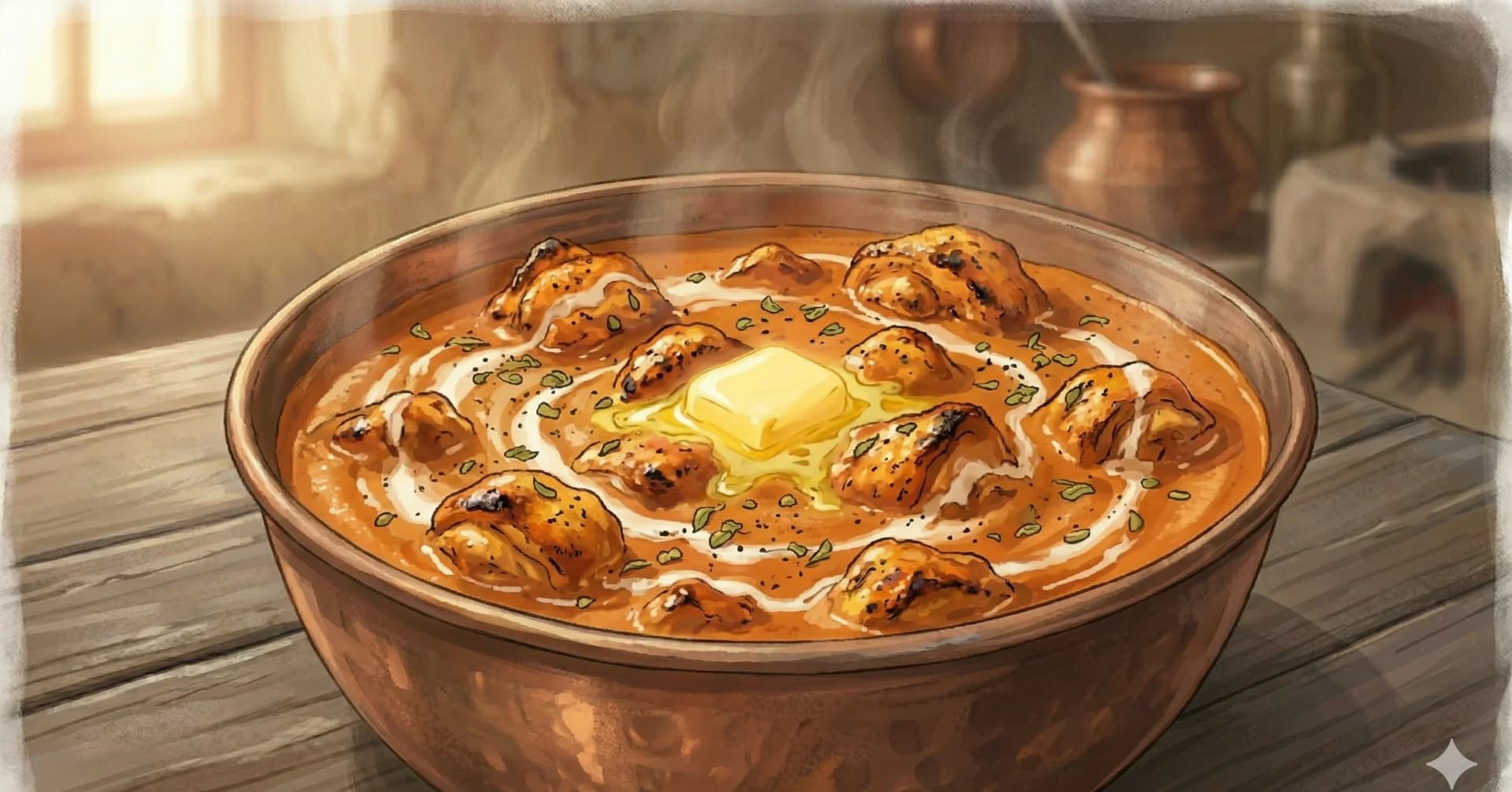
Rabbit braised in a white onion and cashew gravy with cream
The royal kitchens of Rajasthan (the rakhwala bawarchis who cooked for the Rajput maharajas) produced a distinctive style of cooking that is less well-known internationally than the region's fiery laal maans. It was a cuisine of refinement: mild, fragrant, elaborately textured, built on the same techniques as the Mughal court kitchen but adapted to Rajputana ingredients and tastes. Khargosh ka mokul (rabbit in a pale, ivory gravy) is one of these preparations.
Rabbit has been hunted across the Thar desert and the plains of Rajasthan for centuries. Its flavour is clean and delicate, leaner and somewhat milder than lamb, with a fine-grained texture that takes well to long braising in aromatic liquid. The mokul gravy in which it braises here is built on two onion preparations used together: fried raw onion for depth and caramelised sweetness, and boiled onion paste (onion cooked in water until completely soft, then puréed) for a smooth, mild body without the sharpness that frying alone would create. Cashew paste enriches the gravy, adding fat and a faint sweetness; yoghurt provides tang; cream finishes it to a silky consistency.
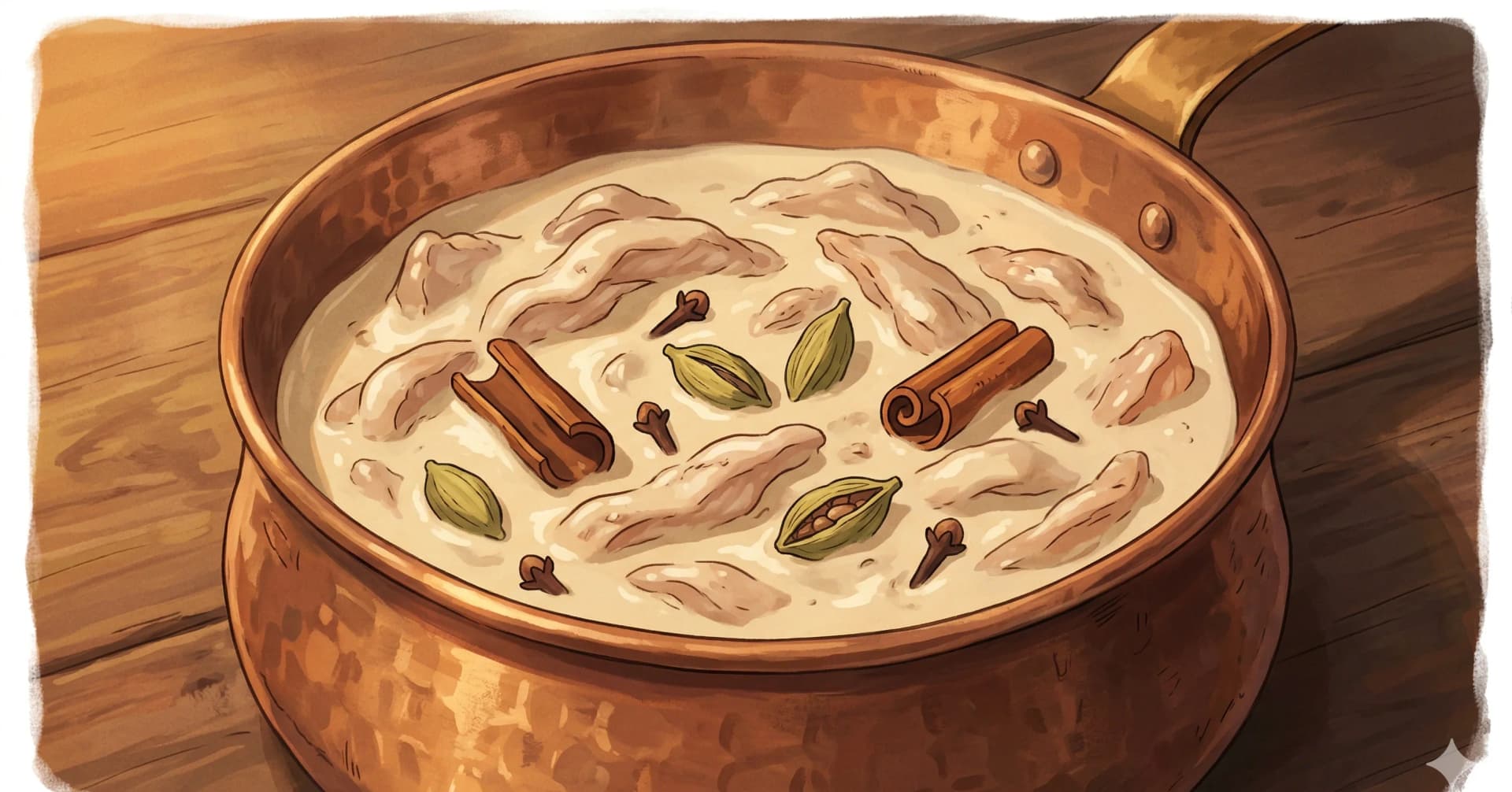
The whole spices used here (cloves, green cardamom, black pepper, mace) lean fragrant and slightly sweet, in keeping with the white gravy tradition that avoids chilli and turmeric to maintain the pale colour. The finished dish should look almost ivory, with the rabbit strips barely visible beneath the clinging, velvety sauce.
This is occasion food. Take the time it deserves.
At a Glance
Yield
Serves 4–6
Prep
30 minutes
Cook
1 hour
Total
1 hour 30 minutes
Difficulty
Involved
Ingredients
- 1½ lbboneless rabbit, cut into long strips (about 6 cm × 2 cm)
- 2⅓ tbspghee
- ½ tspwhole cloves (about 3–4)
- ¼ ozgreen cardamom pods (about 3–4)
- ⅔ tspwhole black peppercorns
- ¼ ozbay leaf (1 leaf)
- ½ tspmace blades (about 2–3 blades)
- 1¾ ozonion, finely chopped
- 1¼ tbspginger and garlic paste (combined)
- 1⅛ tspcoriander powder
- ⅓ tspturmeric powder
- ½ tspred chilli powder (about ¼ teaspoon, just a hint)
- 1¾ ozboiled onion paste (2 medium onions, boiled until soft, then blended)
- ½ ozcashew paste (cashews soaked in hot water for 20 minutes, then blended smooth)
- 1¼ tbspsingle cream
- 2¼ ozplain yoghurt, beaten
- ⅔ tspsalt
- ⅔ cuplight stock (chicken or vegetable) or water
Method
- 1
Boiled onion (50 g) paste (50 g). Roughly chop 2 medium onions and place in a small pot. Cover with water and boil for 20–25 minutes until completely soft and beginning to break apart. Drain and allow to cool slightly. Blend to a very smooth paste. Set aside.
- 2
Cashew paste (17 g). Soak the cashews in enough hot water to cover for 20 minutes. Drain and blend with just enough fresh water to get the blender moving, to a completely smooth paste. Set aside. **Cook the rabbit:**
- 3
Bloom the whole spices. Heat the ghee (35 g) in a wide, heavy-based pan over medium heat. Add the cloves (3–4), green cardamom, black peppercorns (½ teaspoon), bay leaf (1 g), and mace. Stir for 30–45 seconds until fragrant. The ghee should smell richly aromatic.
- 4
Fry the onions. Add the finely chopped onion. Fry over medium heat, stirring often, for 8–10 minutes until softened and turning light golden. Translucent to just-golden, not deeply browned, which would colour the sauce.
- 5
Add ginger-garlic and spices. Add the ginger-garlic paste and stir for 2 minutes. Add the coriander powder (½ teaspoon), turmeric (¼ teaspoon), and red chilli powder (¼ teaspoon, just a hint) dissolved in 2 tablespoons of water. Stir and fry for 2 minutes until the fat begins to separate slightly.
- 6
Add the onion paste and cashew paste. Add the boiled onion paste and stir well, frying for 3–4 minutes until it integrates with the masala and the fat separates. Add the cashew paste and stir, again frying for 3–4 minutes until the fat separates once more. The masala will look thick and almost paste-like.
- 7
Add yoghurt (65 g). Add the beaten yoghurt a little at a time, stirring constantly to prevent splitting. Cook for 3 minutes after adding all the yoghurt.
- 8
Add rabbit and cream (17 ml). Add the rabbit strips and stir to coat in the masala. Add the cream and stir. Stir-fry for 4–5 minutes over medium heat.
- 9
Add stock (150 ml) and braise. Add the stock (or water) and bring to a boil. Add the salt (¾ teaspoon). Reduce to a gentle simmer, cover the pan, and cook for 20–25 minutes, stirring occasionally, until the rabbit is cooked through and tender and the gravy is thick and sauce-like. The rabbit strips should be firm but yielding when pressed.
- 10
Adjust and serve. Taste and adjust salt. The gravy should be pale ivory to cream-coloured, rich, and clinging. Transfer to a serving dish.
Key Ingredient Benefits
Rabbit (Oryctolagus cuniculus) is one of the leanest domesticated meat sources, with a protein-to-fat ratio significantly higher than most other meats. It is high in B vitamins, particularly niacin and B12, and has a lower environmental footprint than most farmed meats due to its feed conversion efficiency. In Rajputana cooking it was a game meat, prized for its flavour and associated with the hunting culture of the Rajput nobility.
Cashew (Anacardium occidentale) is native to Brazil and was introduced to India by the Portuguese in the 16th century, quickly becoming integrated into coastal and later Mughal-influenced cooking. As a paste, cashew provides monounsaturated fats and some plant protein. In Ayurvedic tradition, nuts are generally considered bala (strengthening), and cashews are used in preparations that are intended to be both nutritious and easily digestible when cooked.
Mace (the aril of Myristica fragrans, the nutmeg plant) has a warm, slightly floral, slightly sweet aroma, similar to nutmeg but gentler. In Unani medicine it is used as a warming digestive aid and nerve tonic. In white Mughal-style gravies, mace appears frequently as one of the key fragrant spices that works without colouring the sauce.
Why This Works
The double onion technique (fried raw onion plus boiled onion paste) is a classic Mughal-influenced method for building a smooth, rich white gravy. The fried onion contributes caramelised depth and the savoury compounds that frying creates; the boiled onion paste provides a smooth, starchy body that gives the gravy its silky texture without the colour that deep frying would create. Neither alone produces the same result.
Cashew paste is the fat-and-body provider in white Mughal-style gravies, replacing the tomato that would otherwise be used. Cashews, once blended completely smooth, form a natural emulsion with the cooking liquid, creating a glossy, slightly sweet, rich sauce with a different character from cream or yoghurt alone. The combination of cashew and cream in the same dish is deliberate: cashew provides body and subtle nuttiness; cream provides clean fat richness and gloss.
Rabbit requires careful cooking. It is lean and can toughen if overcooked at high heat. The covered braise at a gentle simmer for 20–25 minutes is the right cooking duration: enough to cook the meat through completely and soften its fibres, without the protein seizure that higher heat would cause.
Substitutions & Variations
Chicken for rabbit: Boneless chicken thigh strips are an excellent substitute and produce a very similar result. Reduce the braise time to 12–15 minutes.
Without cream: Omit the cream and increase the yoghurt slightly. The sauce will be slightly less rich but still excellent. Or replace with additional cashew paste for a dairy-lighter version.
Adding saffron: A pinch of saffron soaked in 2 tablespoons of warm milk, stirred in near the end, adds a faint gold colour and floral note that suits this dish beautifully.
Serving Suggestions
Khargosh ka mokul is best served with laccha paratha or naan. The bread is needed to scoop up the pale, rich gravy. Plain boiled rice is also appropriate. The mild, cream-coloured sauce looks particularly striking served in a dark bowl or on a silver-coloured platter, as the contrast brings out the ivory colour. At a multi-course Rajasthani meal, this dish would follow a lighter preparation and precede a dessert. It is rich enough to be a centrepiece, delicate enough not to overwhelm.
Storage & Reheating
Refrigerate for up to 2 days. The cream-based gravy can separate slightly on cooling. Stir well and reheat gently over low heat, adding a tablespoon of water or cream to re-emulsify if needed. Do not freeze. The cream and yoghurt gravy tends to split on thawing. Prepare and serve fresh where possible.
Cultural Notes
Khargosh ka mokul (खरगोश का मोकुल, "rabbit mokul") is the Rajasthani Marwari preparation of rabbit cooked in a yogurt-based gravy with onion, ginger-garlic, ground coriander, cumin, turmeric, Kashmiri red chili, and a small amount of Mathania chili. The dish belongs to the Rajput hunting tradition of Rajasthan, which historically brought small game (rabbit, partridge, sandgrouse, quail) to the table alongside the larger lamb and wild boar of the Rajput hunting parties. Mokul in the Marwari culinary vocabulary refers to a slow-cooked yogurt-based stew, applied to whatever protein the hunt produced.
The Rajput attitude toward small game shaped the dish's character. Rabbit was hunted across the Rajasthani plains and the scrubland edges of the Thar desert, providing a leaner gamier meat than the more common lamb. The cooking approach treats the rabbit as needing a gentle braise (rabbit's lean meat can toughen if overcooked at high heat) and a generous gravy that adds the richness the meat itself lacks. The yogurt base, whisked smooth and added off the heat, gives the dish its characteristic tang and the slight thickness that distinguishes a mokul from a thinner curry. The use of Kashmiri chili rather than the more aggressive Mathania chili of the laal-maans reflects the gentler character thought appropriate for the smaller game.
The technique requires careful heat management to keep the rabbit tender. A whole rabbit is cut into eight or ten pieces (or rabbit legs are used alone for a richer preparation), trimmed of any silverskin, and marinated in yogurt, ginger-garlic paste, salt, and turmeric for at least two hours. Mustard oil is heated until just smoking in a heavy kadai, cooled briefly, then used to brown sliced onions until dark golden. The marinated rabbit is added and seared briefly, then ground coriander, cumin, Kashmiri red chili, a small amount of Mathania chili powder, and a small amount of water are added. The pot is covered and cooked over low heat for about an hour until the rabbit is tender and the gravy reduces to a medium consistency. The dish is finished with a scatter of fresh cilantro and a small drizzle of ghee, and served with bajra (pearl millet) roti, bati, or basmati rice.
Nutrition Facts
Calories: 310kcal (16%)|Total Carbohydrates: 3.2g (1%)|Protein: 29.3g (59%)|Total Fat: 19.3g (25%)|Saturated Fat: 6.4g (32%)|Cholesterol: 97mg (32%)|Sodium: 73mg (3%)|Dietary Fiber: 0.3g (1%)|Total Sugars: 1.1g
You Might Also Like
Ratings & Comments
Ratings & Comments
Ratings
Share your thoughts on this recipe.
Sign in to rate and comment