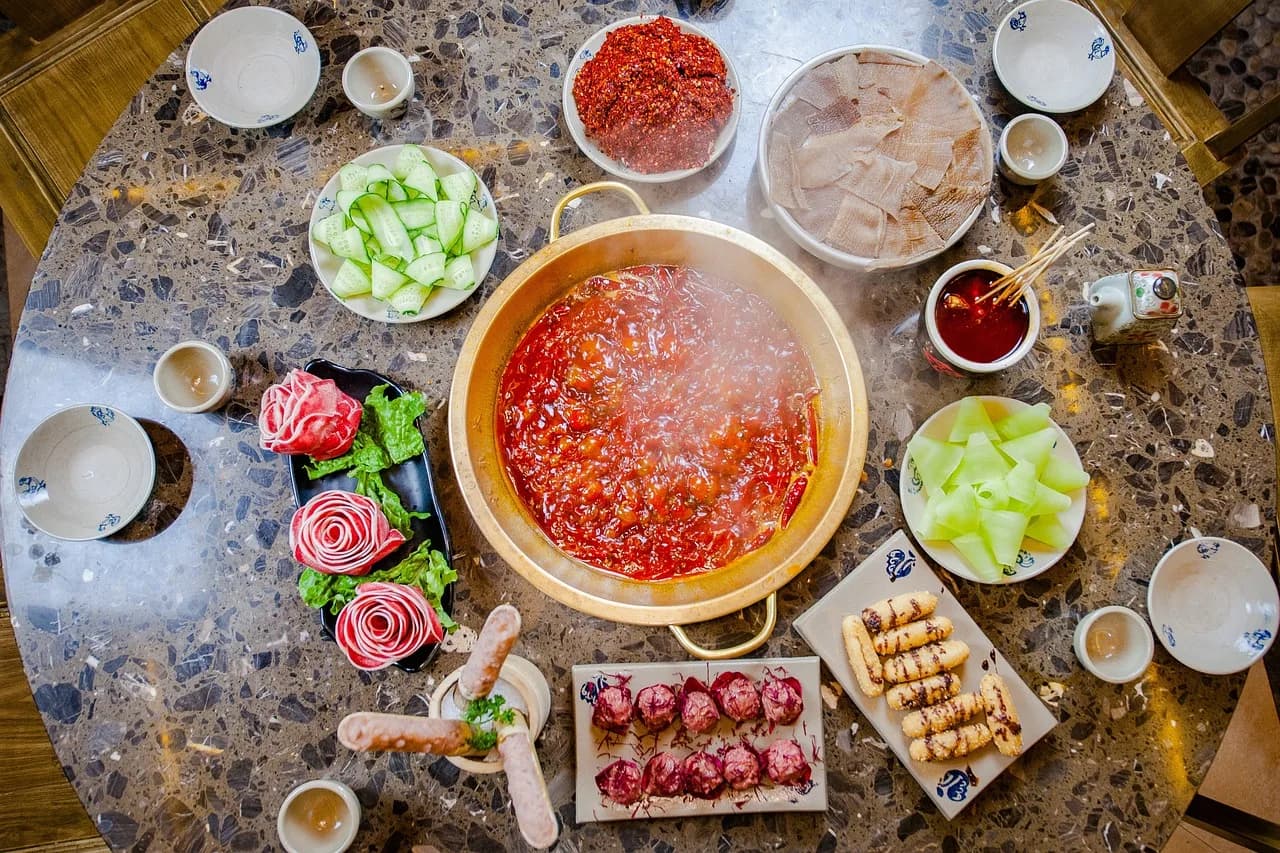
Hot Pot Season: How to Host One
Hot pot is the only dinner party format where the host gets to sit down. You put a pot of simmering broth in the middle of the table, surround it with raw things, and then you are a guest at your own party for the next two hours.
It is also the most forgiving thing you can cook for a group, because nothing has to be finished at the same moment and nothing gets cold. This is the single best reason to host one when it turns cold.
What you need, and what you do not
A portable burner and a wide shallow pot. Induction plates are cheap now, butane burners cheaper, and either works. The pot should be wide rather than deep so people can reach across it, and a divided pot with two broths is worth having if anyone at the table does not eat chilli.
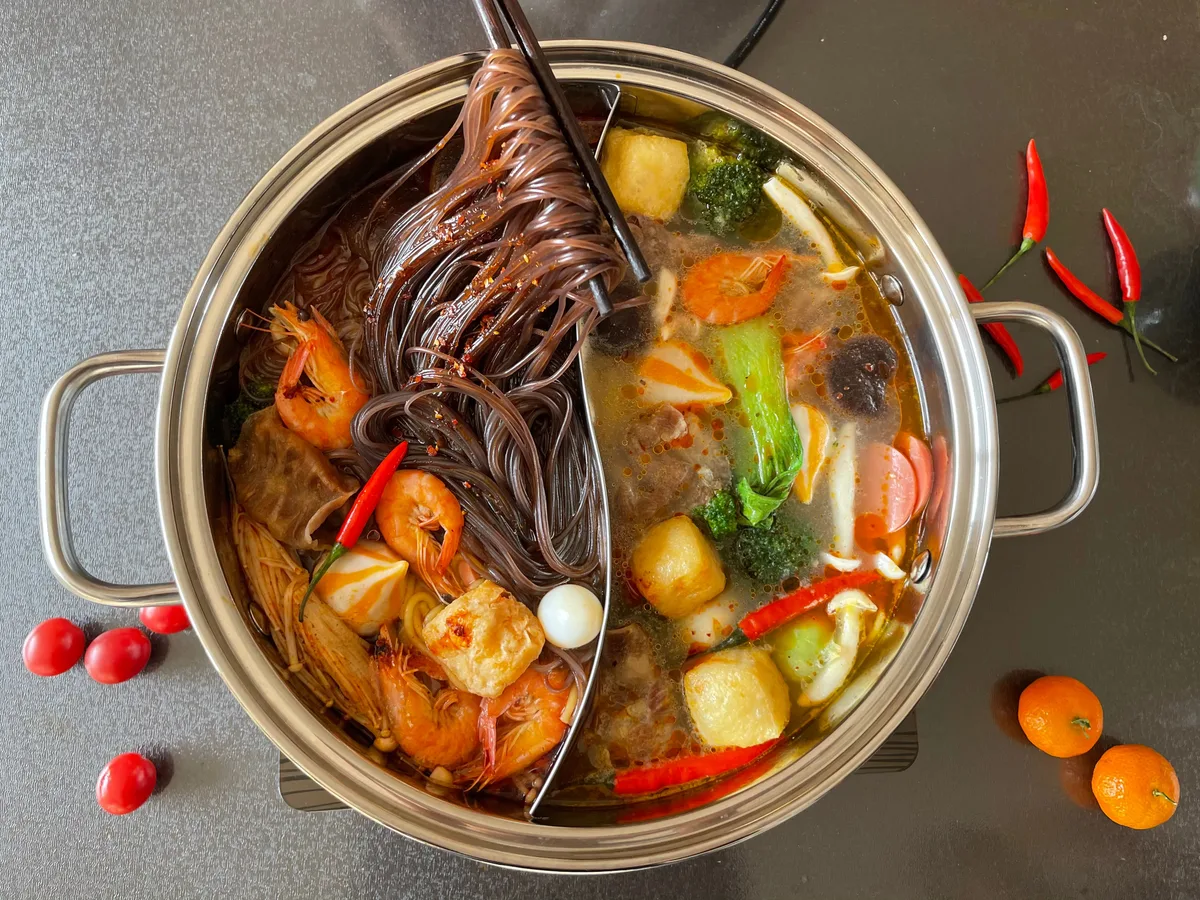
A pair of tongs or a small mesh ladle per person, so nobody is fishing around with chopsticks for something that sank ten minutes ago. This sounds fussy and is the single thing that most improves the evening.
What you do not need is a specialist appliance, a particular brand of broth base, or matching bowls.
The broth
The broth is not soup. It starts mild, because everything cooked in it seasons it, and by the end of the night it is far more concentrated than it began. A broth that tastes perfect at the start will be inedible by the end.
The simplest good base is water, kombu, a few slices of ginger, spring onion and a handful of dried mushrooms. That is the Japanese approach and it is what shabu shabu uses, where the point is that the meat and the dipping sauce carry the flavour.
Chinese mala hot pot goes the other way: doubanjiang, dried chillies, Sichuan peppercorn, star anise and a great deal of fat, fried first and then covered with stock. Ready-made hot pot bases in foil packets are genuinely good and are what most households in China use.
Korean hot pots tend to be a dish rather than a format, with the seasoning fixed from the start, as in budae jjigae.
Whichever you pick, keep a kettle of plain stock or water next to the table and top up as it reduces.
What to put out
Think in four groups and buy roughly equal volumes of each.
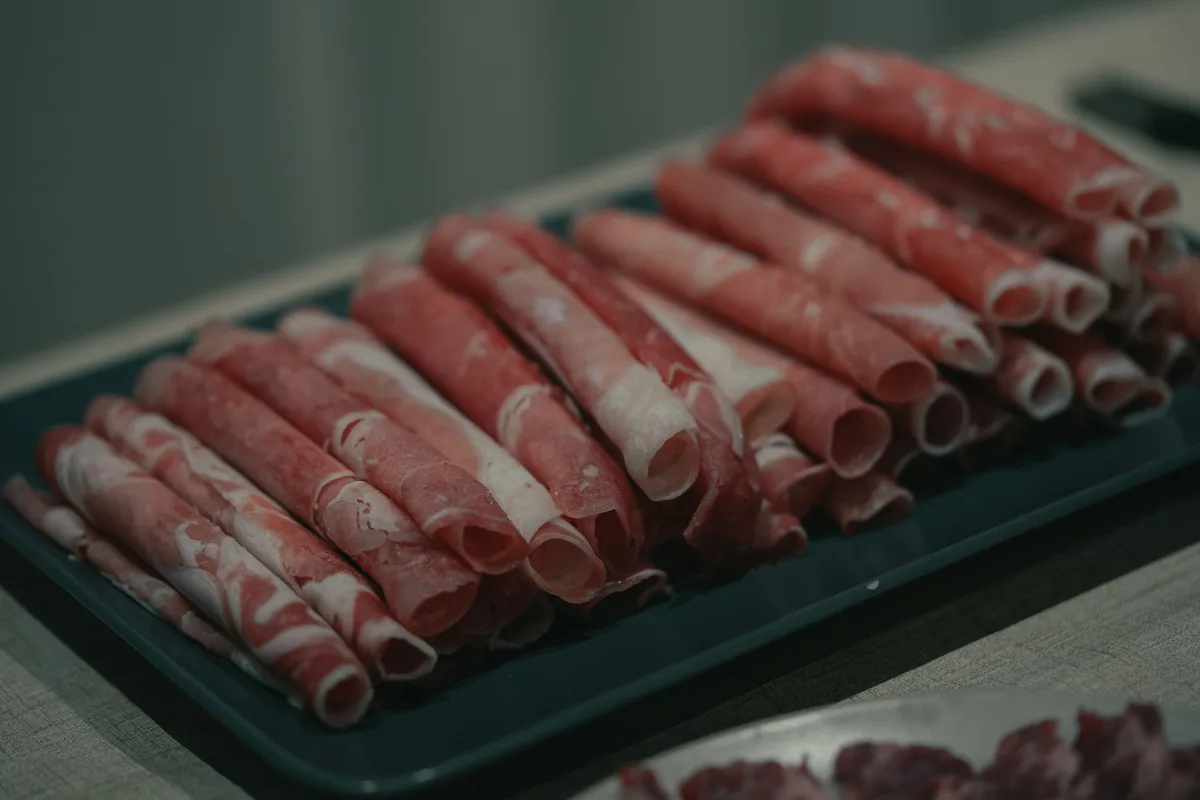
Thinly sliced meat, which is the one thing worth buying from an Asian supermarket rather than trying to slice yourself. Frozen rolls of beef, pork belly or lamb, sliced at a millimetre or less, cook in about eight seconds. If you must slice your own, freeze the piece for an hour first.
Things that need time: root vegetables, corn on the cob in rounds, daikon, firm tofu, mushrooms, cabbage. These go in early and sit there, and they are what turns the broth into something worth drinking at the end.
Things that need seconds: leafy greens, bean sprouts, thin fish slices, prawns, enoki, tofu skin. These are added continuously through the meal.
Starch, at the end. Noodles cooked in the finished broth are the best part of the night and the reason not to fill up. Udon, glass noodles or rice.
The dipping sauce is the actual meal
This is where people new to hot pot go wrong. The broth cooks; the sauce seasons. A bowl of plainly boiled cabbage is not the point, and if the food tastes bland it is because the sauce is not doing its job.
Set out components rather than finished sauces and let people mix their own. Sesame paste or tahini, soy sauce, black vinegar, chilli oil, minced garlic, chopped coriander, spring onion, sesame oil, sugar and a bowl of raw egg for anyone who wants the sukiyaki treatment.
Two classics to point people towards: sesame paste thinned with a little broth, soy, garlic and chilli oil for Chinese style, and ponzu with grated daikon for Japanese.
Running the evening
Cook in rounds rather than dumping everything in. An overloaded pot stops boiling and everything stews.
Put the long-cooking things in first and leave them. Add the fast things as you go.
Skim once or twice if you are doing a lot of meat, or the broth gets cloudy and greasy.
Eat the noodles last, in the reduced broth, and do not let anyone talk you out of it.
Budget about two hours. Hot pot is slow on purpose, and rushing it defeats the format.
Frequently asked questions
How much food per person?
Roughly 150g of protein and a large handful each of two or three vegetables per person, plus noodles. People eat less than they expect because it is slow, so err low and keep a backup packet of noodles.
Can I do hot pot without a portable burner?
You can simmer a pot on the stove and carry it to the table, but it stops boiling within minutes and the format falls apart. A cheap burner is the one purchase worth making.
Is it safe to share a pot with raw meat going in?
Use separate tongs for raw meat and for eating, which is standard practice in Chinese and Japanese households. The broth is at a rolling boil, which handles the rest.
What is the difference between hot pot, shabu shabu and sukiyaki?
Shabu shabu is Japanese, a light kombu broth with the flavour coming from dipping sauces. Sukiyaki is cooked in a sweet soy and mirin mixture and eaten dipped in raw egg, closer to a shallow braise. Chinese hot pot is the boldest broth of the three.
What to cook
Shabu shabu is the easiest first hot pot and the best demonstration of why the dipping sauce matters. Sukiyaki is the sweeter, richer alternative for a smaller table. Nabe is the everyday Japanese version with no ceremony attached. And budae jjigae is the Korean answer if you want the seasoning decided in advance.
Comments
Share your thoughts on this post.
Sign in to comment0 Comments