Saffron for PMS, Mood, and Skin: A Cook's Guide to the World's Most Expensive Spice
Saffron for PMS, Mood, and Skin: A Cook's Guide to the World's Most Expensive Spice
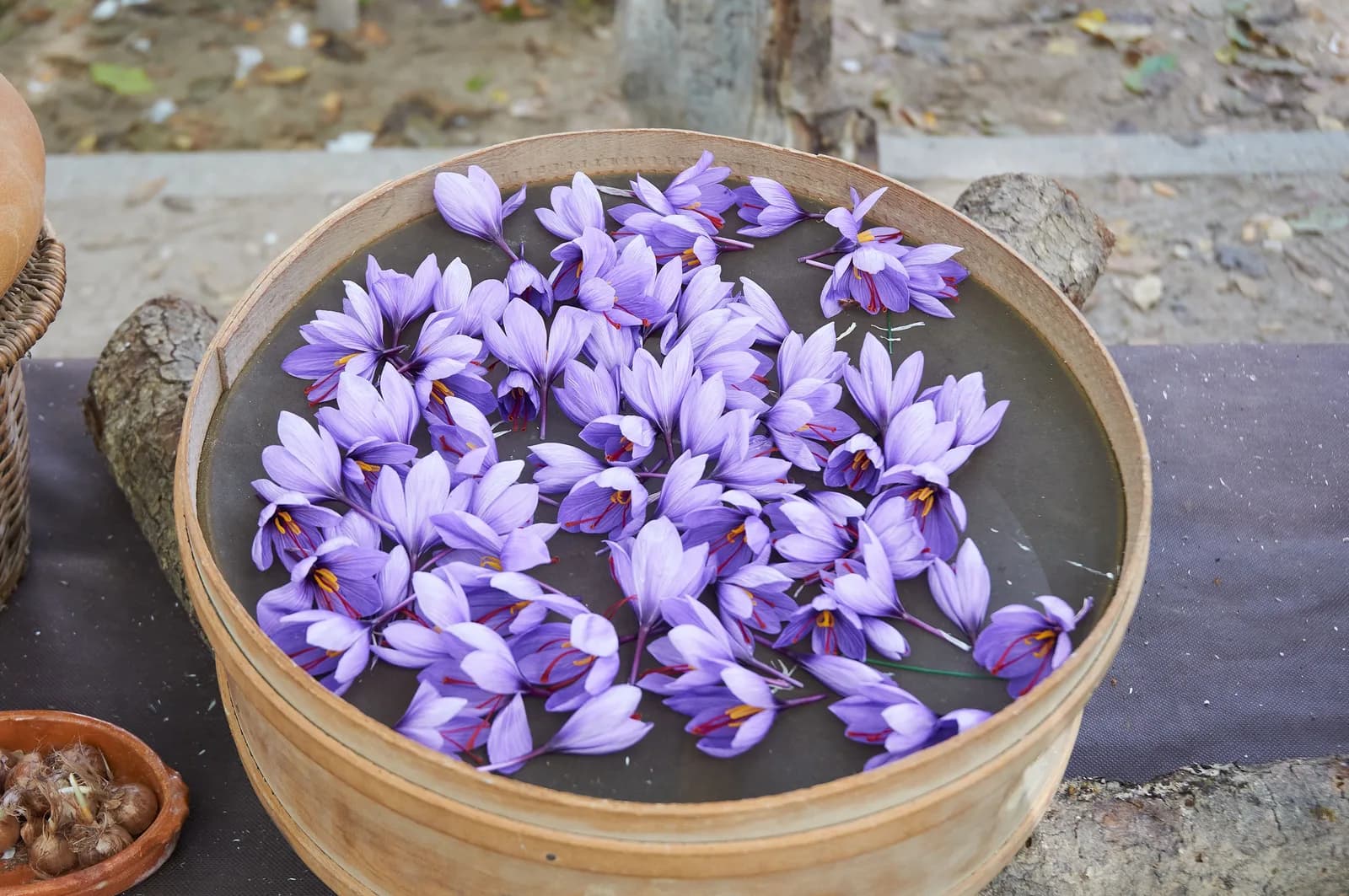
Saffron is the stigma of Crocus sativus, the autumn-flowering crocus that grows from Iran across to Kashmir and Greece. Each flower produces three stigmas. Each stigma is hand-harvested, dried, and graded. It takes roughly 75,000 flowers to produce a pound of saffron. The price reflects this: roughly $3 to $10 per gram retail, or $1,500 to $5,000 per pound depending on grade.
This is also the spice with one of the most surprisingly strong clinical evidence bases in the entire functional-food category. Saffron has been trialed for premenstrual syndrome, depression, anxiety, skin pigmentation, age-related macular degeneration, and several other indications. Most of these trials have shown meaningful benefit, in dose ranges that are achievable through cooking practice plus a small daily ritual.
The cooking traditions that put saffron at the center of their cuisines (Persian, Mughal Indian, Spanish, parts of Italian) developed practical use patterns long before the trials confirmed the effects. The Ayurvedic system classified saffron as a medhya (mind-supporting) and raktaprasadana (blood-purifying) ingredient with specific attention to women's-health applications. The contemporary research has caught up to most of what these systems described.
This is the practical guide to using saffron for the conditions where the evidence is strongest, and how to actually integrate it into cooking rather than treating it as a supplement.
What Saffron Actually Contains
The bioactive compounds in saffron are four main carotenoid derivatives:
Crocin. The yellow-orange pigment, water-soluble, responsible for saffron's color in food and water. Crocin has the strongest serotonin-modulating effect.
Crocetin. The smaller molecule from which crocin is built. Crosses the blood-brain barrier directly.
Picrocrocin. Provides the characteristic bitter taste of saffron.
Safranal. Released during drying and heating. Responsible for saffron's distinctive aroma.
All four compounds have been independently studied for various effects. The combination, as it occurs in actual saffron strands used in cooking, produces effects that isolated compounds replicate only partially.
The PMS Evidence
The premenstrual syndrome evidence for saffron is among the strongest for any natural intervention. A 2008 randomized double-blind placebo-controlled trial by Agha-Hosseini and colleagues in BJOG: An International Journal of Obstetrics and Gynaecology gave 50 women with PMS either 30 mg of saffron daily (15 mg twice a day) or placebo for two menstrual cycles. After two cycles, 76% of the saffron group reported a 50% or greater reduction in PMS symptoms, compared to 8% of the placebo group. The effect was specific and consistent.
Saffron's effect on the same mood pathways was confirmed separately for major depression: the 2013 meta-analysis by Hausenblas and colleagues in the Journal of Integrative Medicine pooled saffron-versus-placebo and saffron-versus-fluoxetine trials in major depressive disorder and found meaningful improvement at 30 mg daily, with effect sizes comparable to fluoxetine in some head-to-head trials. The serotonin and dopamine pathways those trials measured are the same ones implicated in PMS-related mood symptoms.
The mechanism is thought to be a combination of serotonin reuptake modulation (similar to but milder than SSRI medications), GABA-receptor effects, and the broader antioxidant effect of the carotenoids.
The actionable dose for PMS specifically is 30 mg of saffron daily, taken as supplementation (most trial designs) or distributed across cooking applications (the traditional approach). The latter requires roughly 3 to 5 substantial pinches of saffron daily, which is achievable in a cuisine that uses saffron regularly but not in a typical Western cooking pattern.
The Mood and Depression Evidence
The depression evidence for saffron is similarly strong, with multiple trials showing comparable effects to standard SSRI medications at higher doses.
A 2014 meta-analysis by Lopresti and Drummond in Human Psychopharmacology pooled five randomized trials of saffron for major depression. The pooled effect was significantly better than placebo and not statistically different from standard SSRI antidepressants. The dose in most positive trials was 30 mg daily.
A 2020 randomized trial by Lopresti and colleagues in the Journal of Clinical Sleep Medicine gave adults with self-reported poor sleep 14 mg of saffron twice daily for 28 days and found significant improvements in sleep quality and insomnia severity. The mood and sleep effects appear to work through partially overlapping mechanisms.
For women in the perimenopausal window specifically, a 2021 trial by Lopresti and colleagues in the Journal of Menopausal Medicine found that a standardized saffron extract significantly improved mood symptoms in perimenopausal women. The post on perimenopause and food covers the broader context.
The Skin Evidence
The skin claims for saffron are mostly traditional, with emerging modern evidence. The Persian and Indian traditions used saffron in face masks (mixed with milk, honey, or rose water) for centuries; the contemporary research is now beginning to test these uses.
Topical saffron preparations have been studied in small clinical trials for photoaging, hyperpigmentation, and skin smoothness, with modest but measurable effects. The proposed mechanism is the carotenoid antioxidant effect on collagen and elastin.
The internal use of saffron also has skin effects, primarily through the systemic anti-inflammatory and antioxidant pathways. Women using daily saffron preparations (in food and/or as a face mask) for several months often report skin clarity improvements. The evidence for this is mostly anecdotal but the mechanism is plausible.
The Ayurvedic and Persian Traditions
The Ayurvedic classification of saffron is kunkuma, with attributes of medhya (mind-supporting), raktaprasadana (blood-purifying), and varnya (improving complexion). The classical preparations for women's health include:
Saffron in warm milk. Three or four strands steeped in a cup of warm milk, drunk daily. The classical preparation for women, taken throughout the cycle and particularly during the premenstrual week. Also the base of ashwagandha moon milk.
Saffron in ghee. A few strands warmed gently in ghee, then drizzled on rice or warm milk. The fat-soluble compounds in saffron are extracted by the ghee.
Saffron face mask. Saffron + raw milk + a small amount of sandalwood paste, applied to the face for 10 minutes. The classical Ayurvedic preparation for skin clarity.
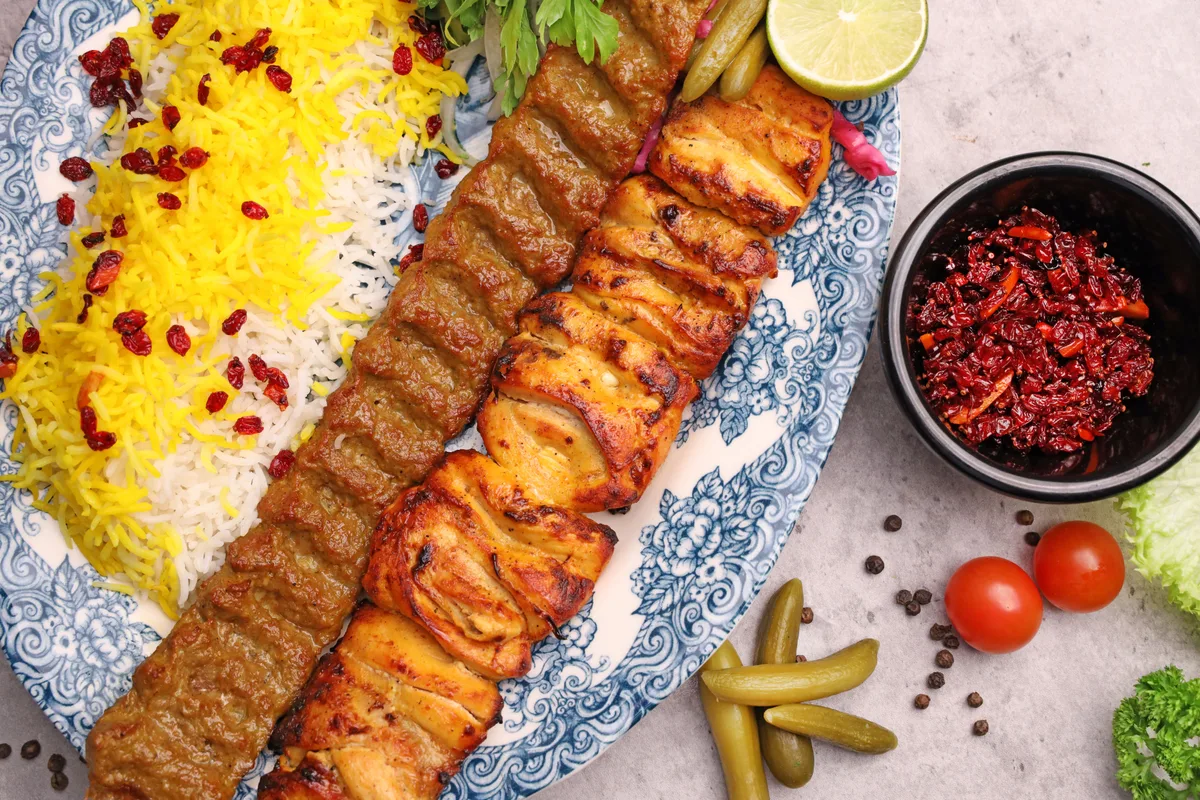
The Persian tradition uses saffron similarly at the cooking layer. Saffron tea is a daily preparation in many Iranian households. Saffron rice (chelow), saffron stew (gheimeh), and saffron-infused yogurt drinks distribute the spice through the daily diet.
How to Cook with Saffron
The practical use of saffron has several elements that determine whether you get the actual benefit or whether you waste expensive strands.
Bloom in warm liquid before adding. Saffron's compounds are released when the strands are soaked in warm liquid for at least 10 minutes. Steep in warm water, milk, or broth before adding to the dish. Cold infusion works but takes longer (overnight in the refrigerator).
Use the strands themselves, not powder. Powdered saffron is often adulterated with cheaper substances (turmeric, marigold, paprika). The intact strands let you verify quality.
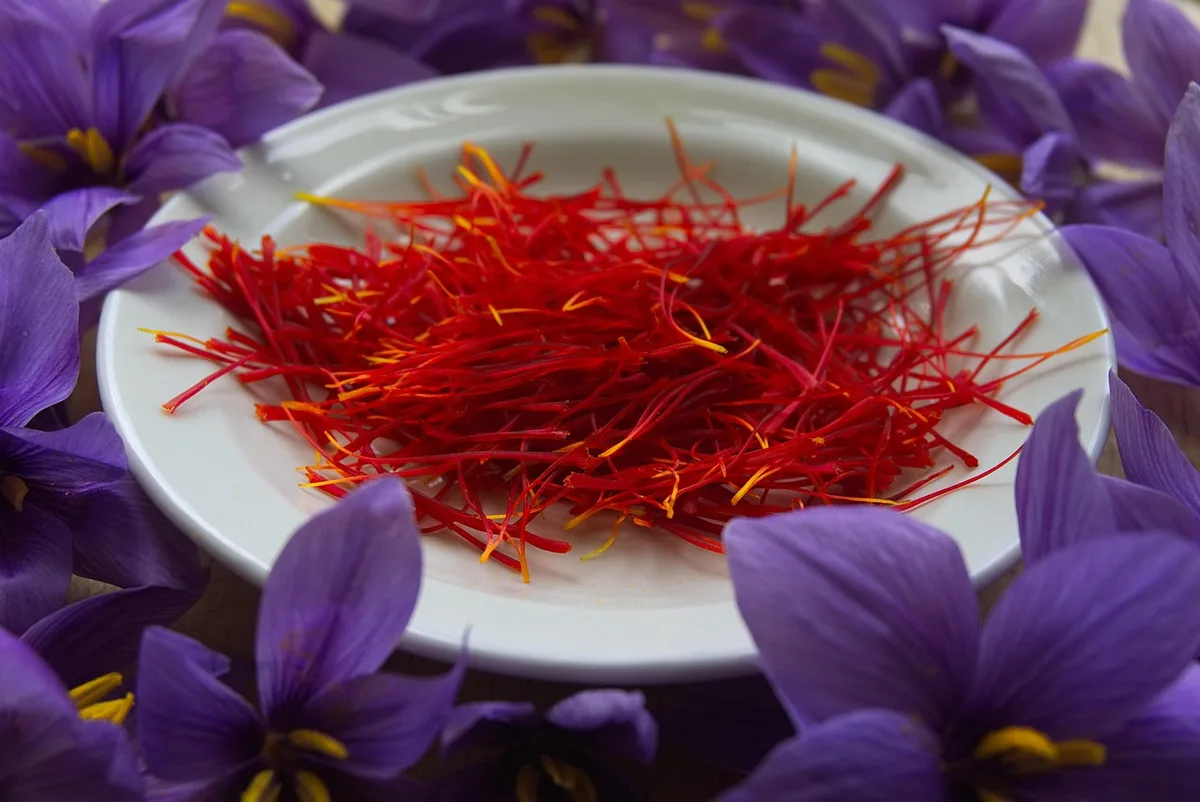
The quality check. Real saffron strands are deep red with slightly orange tips. The aroma is distinctive (slightly hay-like, slightly floral). A quality test: place a few strands in cold water. Real saffron tints the water slowly over 10 to 15 minutes; fake or adulterated versions tint immediately.
Dose for cooking. A pinch (roughly 10 to 15 strands) per cup of rice, per quart of broth, or per cup of warm milk. For the therapeutic 30 mg daily PMS or mood dose, this is roughly 3 to 5 pinches across the day, or one substantial saffron preparation.
Storage. Saffron loses potency over 1 to 2 years if stored well. Keep in an airtight container, away from light and moisture.
A Daily Saffron Practice for Women
A practical version of integrating saffron at the therapeutic-dose level:
Morning: 4 to 5 strands of saffron in a small cup of warm water, sipped on an empty stomach or with breakfast. Optional honey for taste.
Midday or with dinner: Saffron rice or saffron-infused dal once or twice a week. The fat in the dish (ghee, olive oil) extracts and carries the saffron compounds.
Evening: Saffron-and-ashwagandha moon milk before bed, particularly during the premenstrual week. The cumulative warming, mood-supporting effect is meaningful.
Throughout the cycle: Adjust intensity. The premenstrual week and the first few days of menstruation are when the mood and PMS effects are most needed. The follicular phase can be lighter on saffron.
What Saffron Will Not Do
Saffron at very high doses (over 1.5 grams daily) is associated with adverse effects: nausea, headache, anxiety, in rare cases more serious effects. The therapeutic doses (30 to 100 mg daily) are far below this and very well tolerated.
Saffron is not appropriate for use during pregnancy in large amounts. The traditional Persian medical use of saffron in pregnancy is in small culinary amounts, not in therapeutic doses. Women who are pregnant or trying to conceive should keep saffron to culinary amounts only.
For acute severe depression or PMS that significantly impairs daily function, saffron should not be a substitute for appropriate clinical evaluation and care. It can be a meaningful adjunct.
Frequently Asked Questions
How long until I notice anything?
For PMS, by the end of the first or second menstrual cycle. For mood and sleep, two to four weeks of consistent use. For skin, three months or more.
Is supplementation as good as cooking?
For the precise therapeutic dose, supplementation is more reliable. For the everyday use that combines culinary enjoyment with modest cumulative effect, cooking is preferable. Many women use both: culinary saffron daily plus a saffron supplement during the premenstrual week.
What about Spanish saffron versus Iranian versus Kashmiri?
Iranian and Spanish saffron are the most-traded grades; Kashmiri saffron has a distinct (somewhat earthier) flavor profile and is harder to source. Within each origin, quality varies more than between origins. A quality Iranian saffron and a quality Spanish saffron deliver essentially the same compounds.
Why is saffron so expensive?
Because every strand is hand-harvested from a flower that blooms for one or two weeks per year, three strands per flower, dried and graded by hand. The economics of saffron production have not been industrialized successfully; the human-labor component remains essential. The price reflects actual labor cost more than artificial scarcity.
A Daily Pinch
Saffron is one of the few spices where the price-to-effect ratio is genuinely favorable for the women's-health applications. A pinch a day, used as a moon-milk or rice or face-mask preparation, is achievable financially and meaningfully effective over months.
For the cognitive applications of saffron, see the upcoming post on saffron for mood and memory. For the broader women's-health framework, see cycle-syncing the Ayurveda way, perimenopause and food, and period pain foods. The world's most expensive spice has earned its place; the trick is using it consistently rather than saving it for special occasions.
Comments
Share your thoughts on this post.
Sign in to comment0 Comments