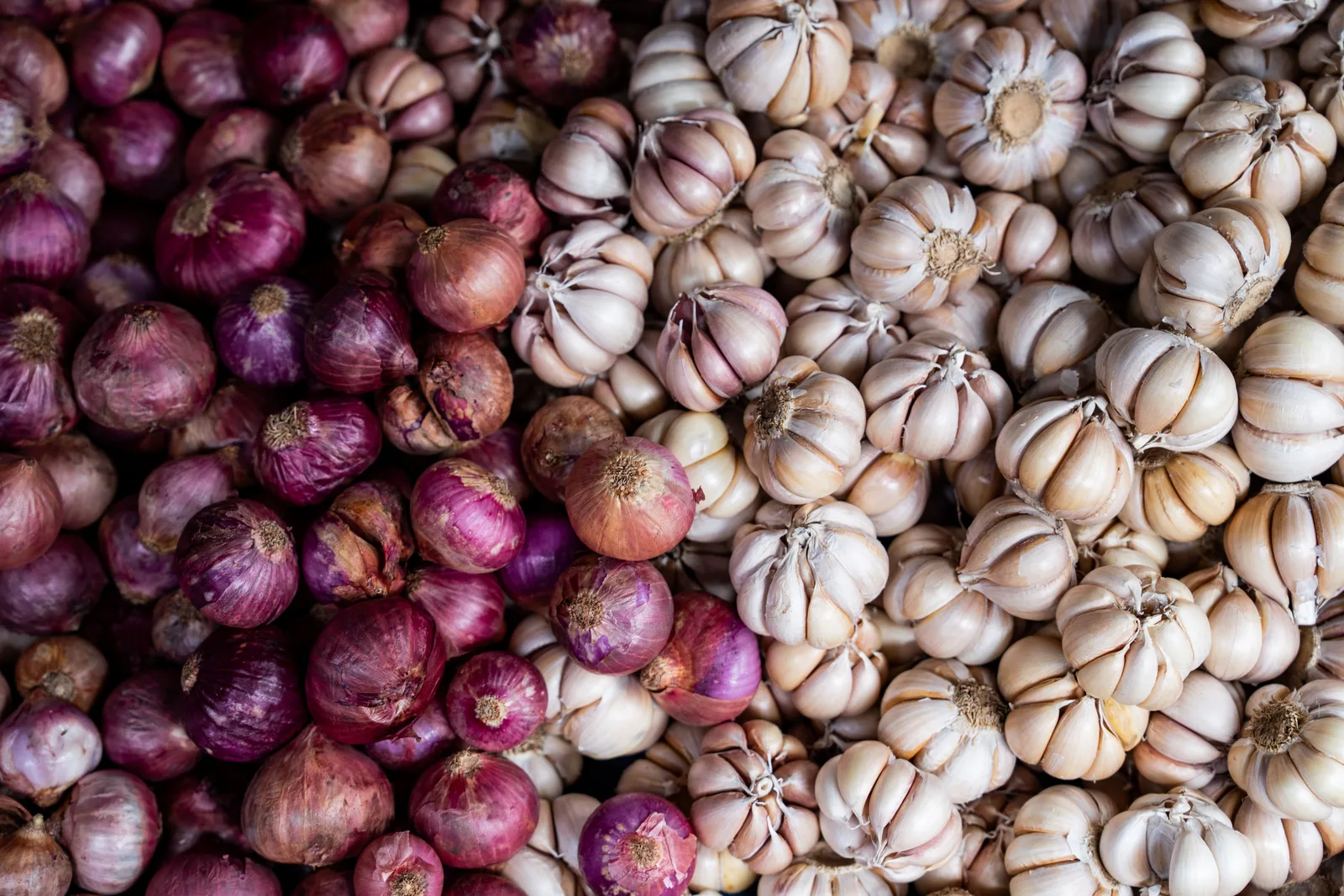
Why Some Indians Avoid Onion and Garlic
Order food at a Jain household in Gujarat, or at a temple kitchen in Vrindavan, or from a Kashmiri Pandit cook, and you will eat a meal with no onion and no garlic in it anywhere. Not reduced. Not substituted. Absent.
For anyone who assumes Indian cooking starts with onions frying in oil, this sounds like cooking with one hand tied. In practice it produced some of the most distinctive regional cooking in India, because removing the two default aromatics forces everything else to work harder.
Who avoids them, and why they differ
Three separate traditions arrive at the same restriction by different routes.
Jains avoid them primarily because of ahimsa, non-violence. Onions, garlic, potatoes and other root vegetables are pulled from the ground, which kills the whole plant and disturbs the organisms living in the soil. Strict Jain practice extends this to all underground vegetables, not just the alliums. The rule is about harm, not about flavour.
Vaishnav Hindus and many temple kitchens avoid them on different grounds. In the classification that divides foods into sattvic, rajasic and tamasic, onion and garlic are considered rajasic and tamasic: stimulating, heating, agitating to the mind, and unhelpful for anyone whose practice depends on a settled state. Food offered to a deity and then eaten as prasad is cooked without them for that reason.
Kashmiri Pandits avoid them as a regional culinary and religious convention, and their cooking is the clearest example of a full cuisine built on the restriction rather than a set of exceptions to one.
Many observant households across several traditions also drop them during particular fasting periods, even if they eat them the rest of the year.
What replaces them
This is the interesting part, because the answer is not nothing.
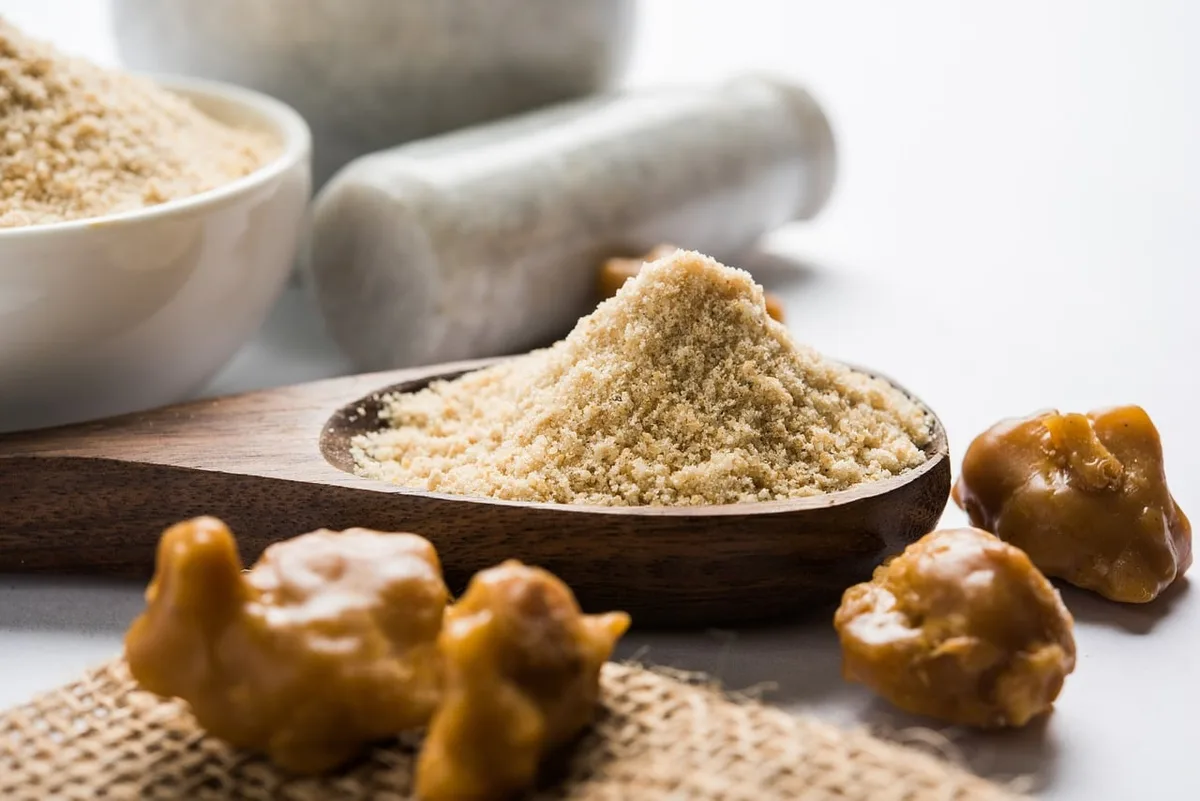
Asafoetida does most of the work. A resin from a giant fennel relative, sold as a lump or a yellow powder, it smells genuinely bad in the jar and turns into something close to cooked onion and garlic the moment it hits hot fat. A pinch, bloomed in ghee at the start, supplies the savoury base note that the alliums would have. This is why asafoetida is in almost every Jain and Vaishnav recipe and why the tin is a fixture in South Indian kitchens.
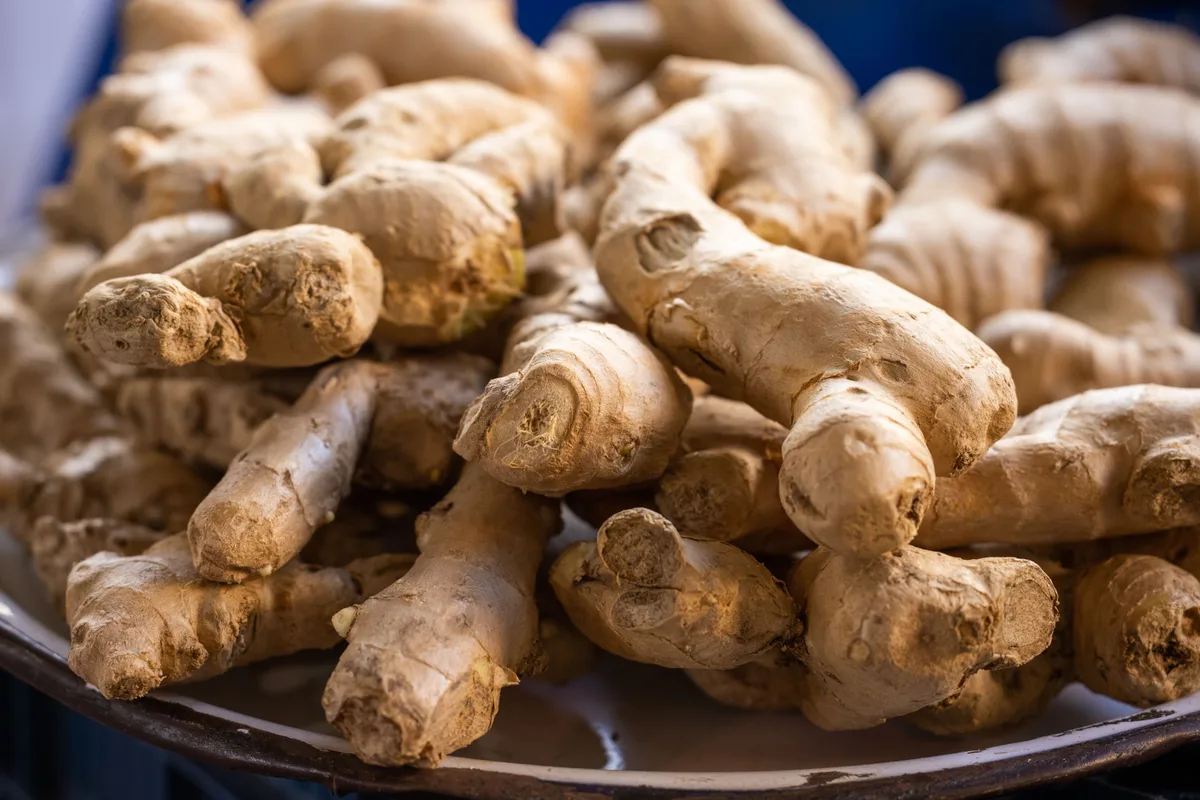
Ginger takes over the pungency. Where a normal recipe uses ginger and garlic paste in equal parts, these kitchens use ginger alone, and more of it.
Dried ginger powder, saunth, appears in Kashmiri Pandit cooking in place of both, along with fennel powder. That pairing is the actual signature of the cuisine, and it is why Kashmiri food tastes unlike anything else in India. Rogan josh in its Pandit form is built on fennel and dried ginger, not on an onion base.
Yogurt provides body and sourness where a fried onion paste would have thickened the gravy. Kashmiri dum aloo works this way, and so does most of the wider Kashmiri repertoire.
Tomato, tamarind and amchur fill in the acidity, and whole spices bloomed in fat do more of the heavy lifting than they would otherwise.
What the food actually tastes like
Cleaner and more direct. Onion and garlic contribute sweetness and a particular savoury weight, and without them the individual spices are much easier to pick out.
A Jain dal tastes more of the lentil, the asafoetida and the tempering than a standard one does. Haak, the Kashmiri greens dish, is greens, oil, asafoetida and chilli, and it tastes precisely of those four things.
Some dishes lose something real. A rich north Indian gravy that depends on slowly browned onions for its sweetness and body cannot be reproduced without them, and cooks in these traditions generally do not try. They cook a different set of dishes instead, which is the sensible response.
If you want to cook this way
Buy compounded asafoetida, the yellow powder cut with flour, rather than pure resin unless you know what you are doing. Pure hing is extremely strong.
Bloom it in fat, never add it dry at the end. Raw asafoetida tastes like its smell.
Increase the ginger, increase the whole spices, and add a sour element deliberately rather than assuming the dish will find its own balance.
Store it sealed and away from everything else. The smell migrates, and a tin left open will flavour an entire cupboard.
Frequently asked questions
Is asafoetida vegan and gluten free?
It is plant derived, so vegan. Compounded asafoetida is usually cut with wheat flour, so it is often not gluten free, though rice flour versions are sold specifically for that reason.
Do Jains avoid all root vegetables?
Strict practitioners do, including potatoes, carrots, beetroot and radish, on the same reasoning about uprooting the plant. Many less strict Jains eat potatoes but still avoid onion and garlic.
Is there a health argument for avoiding them?
The traditional argument is about mental state rather than physiology, and it should be described as that rather than dressed up as nutrition. Separately, some people with digestive sensitivities do find alliums difficult, which is a different question entirely.
Does this mean the food is bland?
No, and it is worth saying plainly. Kashmiri Pandit cooking is among the most aromatic in India. The restriction changed the flavour profile rather than reducing it.
What to cook
Rogan josh in the Pandit style is the best possible demonstration, because it is a famous dish most people assume must start with onions. Kashmiri dum aloo shows yogurt doing the structural job. Haak is four ingredients and shows what asafoetida contributes when there is nothing to hide behind. And for the wider regional context, see six regions and six thalis.
Comments
Share your thoughts on this post.
Sign in to comment0 Comments