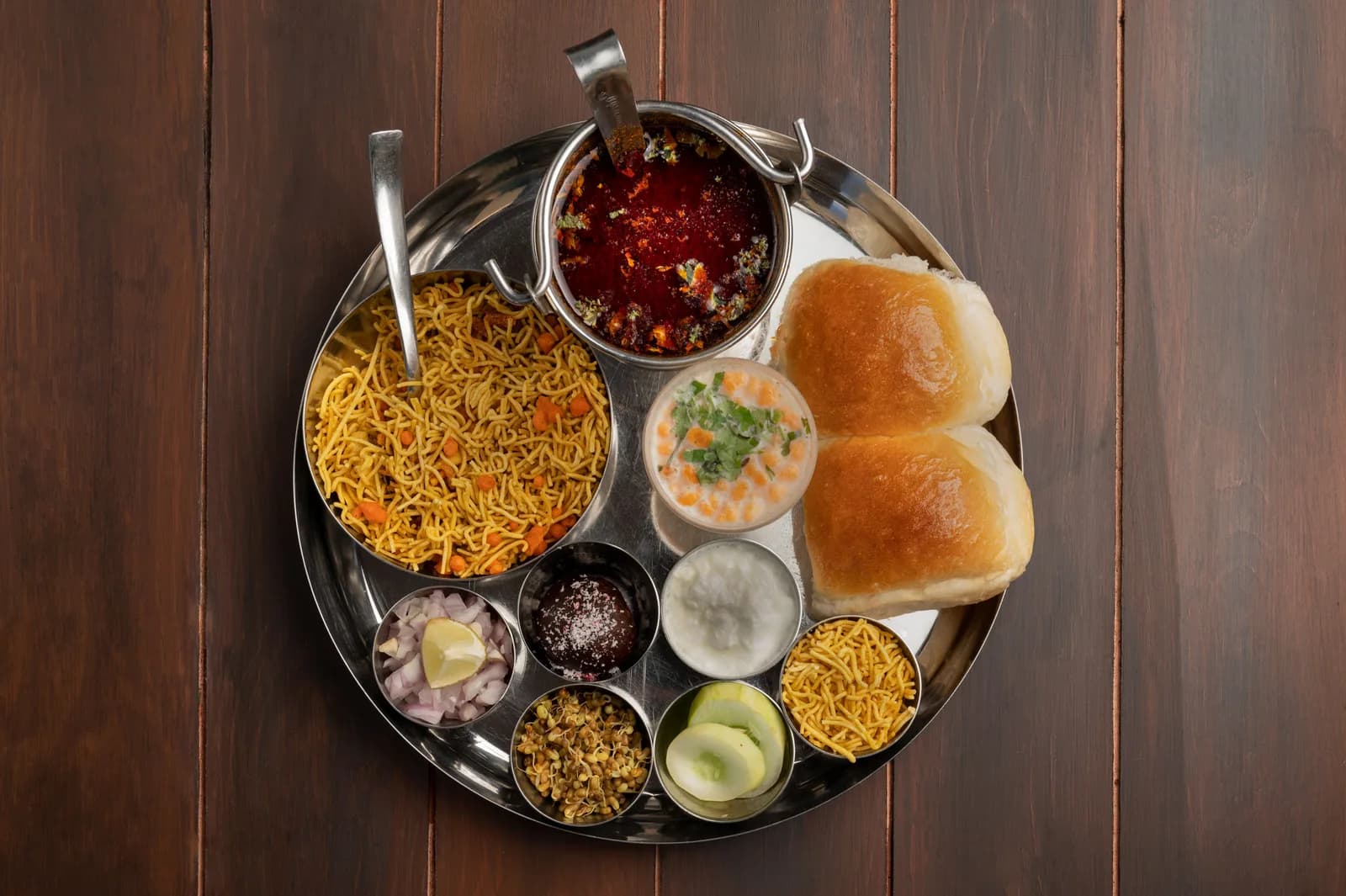
Regional Indian Cooking: Six Regions, Six Thalis
There is no such thing as Indian food, in the same way there is no such thing as European food. What exists is a couple of dozen regional cuisines that share a spice cabinet and agree on very little else, including the fat they cook in, the grain they eat, and whether a meal should be sweet at the start or the end.
The thali is the clearest way to see this. A round tray with small bowls around the rim, everything served at once, the composition fixed by convention rather than by chef. Six regions, six trays, six different arguments about what a meal is.
Punjab: the one the world thinks is Indian
Wheat, dairy and fire. Punjab is the northern plain, historically wealthy in grain and milk, and the food shows it. The bread is the staple rather than rice, cooked on a tawa or slapped against the wall of a tandoor.
On the tray: a thick Punjabi chicken curry or mutter paneer, kadhi with its yogurt sourness, a pile of kulcha or roti, raw onion in vinegar, and a spoon of ghee on everything. Tandoori chicken is the export version of this region and the reason most Western Indian restaurants look the way they do.
The fat is ghee and butter. The dairy is everywhere. This is the least representative Indian cuisine to have become the global default.
Bengal: fish, mustard, and a meal with an order
Bengal is the one region that insists on sequence. A Bengali meal is eaten in a defined order, bitter first, then dal, then vegetables, then fish, then sweet, and the order is about digestion rather than ceremony.
The fat is mustard oil, pungent and sharp, and the spice signature is panch phoron, a five seed mix used whole. Kasha mangsho, slow reduced mutton, sits at the rich end. Luchi, puffed white flour bread, is the celebration bread.
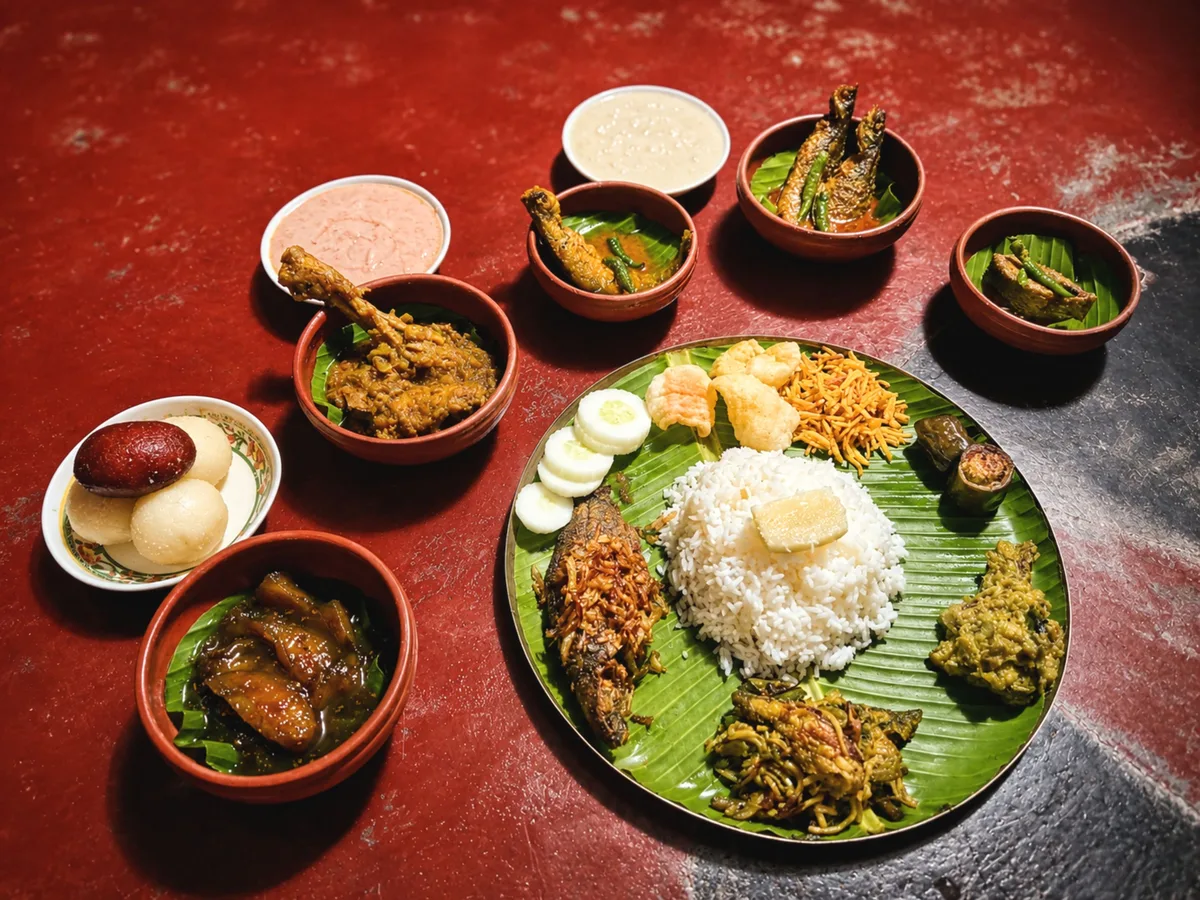
And then the sweets, which are a serious industry here. Roshogolla and payesh are Bengali in a way that no other Indian sweet tradition can claim, built on fresh cheese and slow reduced milk.
Kashmir: the one that does not taste Indian
Kashmiri food is closer to Persian and Central Asian cooking than to anything south of it. It uses dried ginger powder and fennel where the rest of India uses fresh ginger and garlic, and the Kashmiri Pandit tradition avoids onion and garlic entirely.
Rogan josh is the famous one, and the real version gets its red from Kashmiri chilli and alkanet root rather than from tomato. Tabak maas, lamb ribs simmered in milk then fried, is the dish that shows the cuisine's Persian debt clearly. Haak, a simple greens preparation, is what people actually eat most days.
The formal version of this cuisine is the wazwan, a multi course meat banquet of up to thirty six dishes served on a shared platter.
Kerala: coconut, curry leaf, and the sea
The southwest coast, wet and tropical, and the cooking runs on coconut in three forms: the oil, the milk and the grated flesh. Curry leaf and mustard seed go into hot oil at the start of almost everything.
Appam, fermented rice pancakes with lacy edges, are the breakfast. Avial is the vegetable dish that defines the region, a dozen vegetables held together with coconut and yogurt. Meen porichattu, fish marinated in chilli and fried, is what the coast is for.
Kerala also has a Christian and a Muslim cuisine alongside the Hindu one, which is why beef appears here and almost nowhere else in India.
Maharashtra: sweet, sour, hot, all at once
Maharashtrian food balances more flavours simultaneously than most Indian regional cooking, and it uses jaggery casually in savoury dishes in a way that surprises people from the north.
Varan is the plain dal that anchors the everyday tray. Tomato saar is the thin sour soup drunk alongside it. Masale bhaat is the spiced rice for occasions, and puran poli, a flatbread stuffed with sweetened lentil, is the festival bread that the rest of India has mostly not met.
The spice mix is goda masala, warm and slightly sweet with coconut and sesame in it, and it tastes nothing like garam masala.
Tamil Nadu: rice, fermentation, and a structured meal
The deep south eats rice at every meal and ferments a great deal of it. Dosa is the famous one, a fermented rice and lentil batter cooked thin, and the fermentation is what makes it sour and light rather than merely a pancake.
The tray, served on a banana leaf, runs to sambar, a thin peppery rasam, a dry vegetable poriyal, curd, and a small sweet. The order is fixed, the rice is eaten in three stages with a different accompaniment each time, and everything is eaten with the right hand.
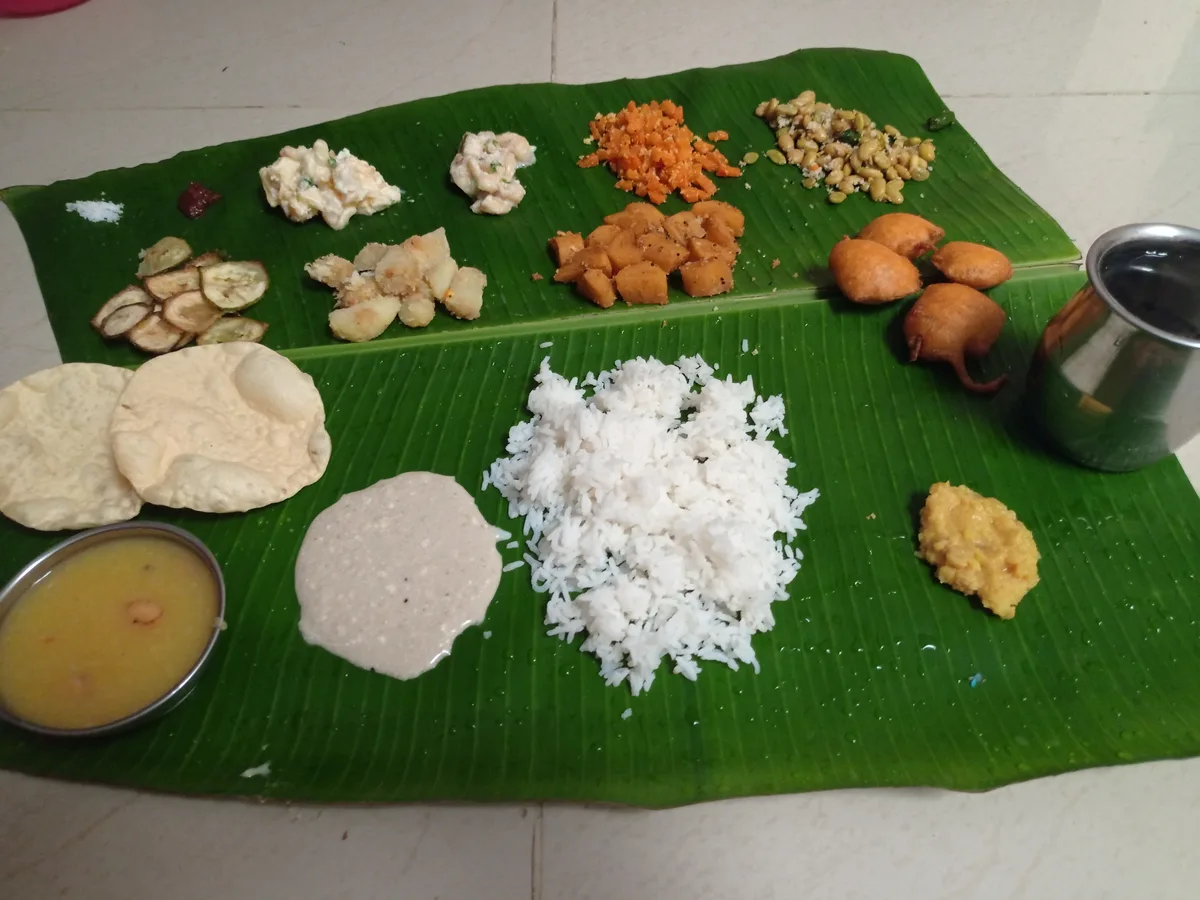
The fat is sesame oil or coconut oil depending on how far south you are. Asafoetida does the work that garlic does elsewhere in many Brahmin households.
Frequently asked questions
Is a thali always vegetarian?
No, though many are, particularly in Gujarat, Rajasthan and Brahmin traditions across the south. Bengali, Kerala Christian and Punjabi thalis routinely include fish or meat.
What is the difference between a thali and a curry with rice?
A thali is a composition. The elements are chosen to balance each other, usually something sour, something sweet, something bitter, a dal, a dry vegetable, a wet one, bread or rice, and a pickle. The individual dishes are less important than the completeness of the set.
Why does northern Indian food dominate restaurants abroad?
Migration patterns, mostly Punjabi, plus the fact that tandoor cooking and thick creamy gravies travelled well commercially. It is not a judgement about quality, and it left most of the subcontinent unrepresented.
What to cook
Pick a region rather than a dish. For Kerala, cook avial and understand what coconut does structurally. For Bengal, kasha mangsho shows what mustard oil and long reduction do to mutton. For Maharashtra, puran poli is the one nobody outside the region expects. And for the spice logic underneath all six, we wrote about why Indian cooking uses so many spices at once.
Comments
Share your thoughts on this post.
Sign in to comment0 Comments