Cross-Cultural · China
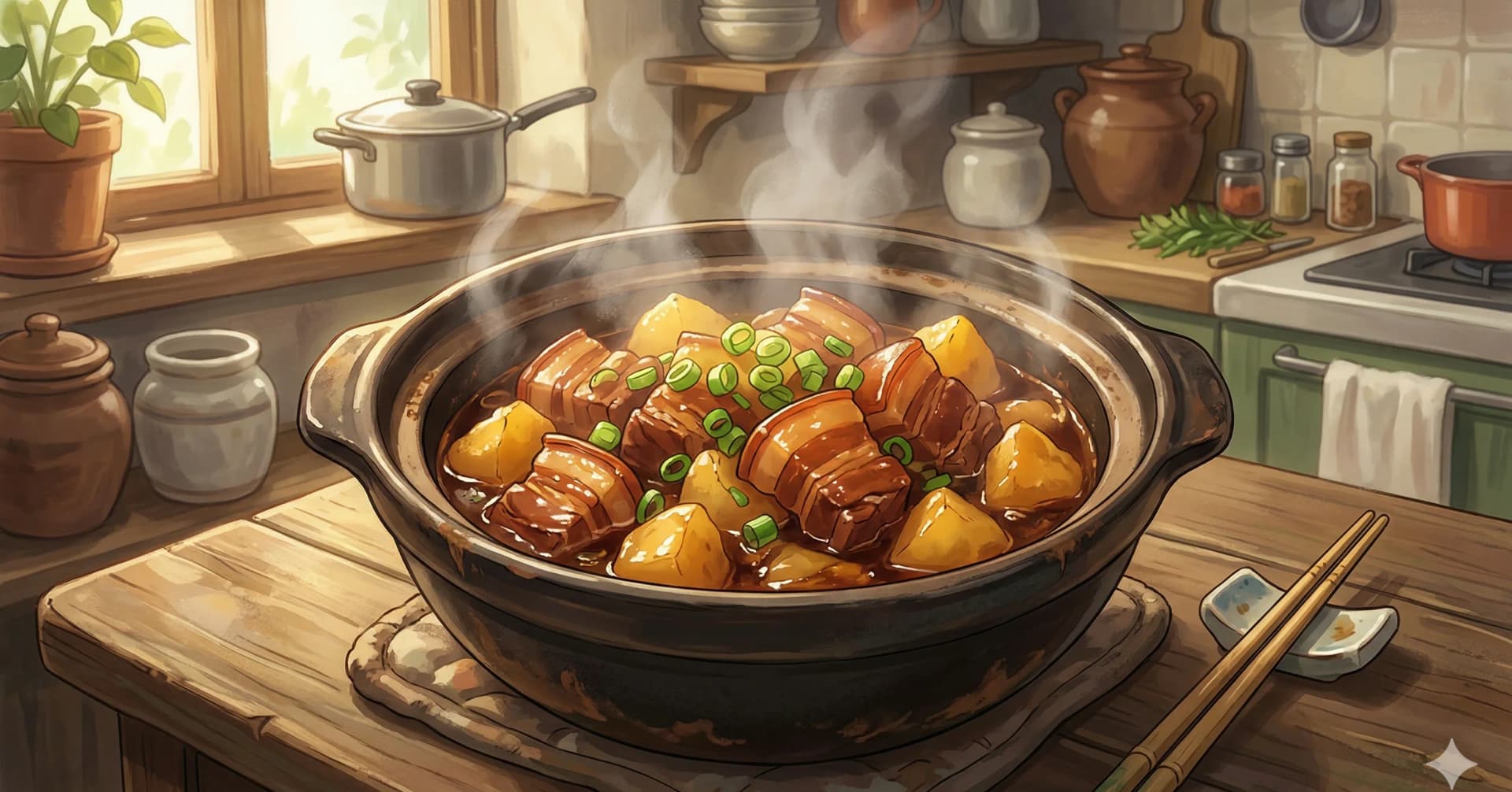
Braised Pork with Potatoes (薯仔炆豬肉)
Pork belly and potatoes browned in a wok then braised in ground bean sauce, oyster sauce, and soy until fall-apart tender
This is the Cantonese equivalent of a warm blanket. Pork belly and potatoes, browned in a wok and then braised in a sauce of ground bean paste, oyster sauce, and soy until the potatoes are falling apart and the pork is tender enough to cut with chopsticks. It is the kind of dish that tastes good on the first day and better on the third, which makes it the rare stew that improves with leftovers.
The technique is straightforward. The potatoes go into the wok first and get a quick sear until the edges turn golden. Then the pork belly, cut into thick pieces so it does not dry out during braising, gets the same treatment. Ground bean sauce, oyster sauce, and soy go in on low heat to bloom their flavors. Boiling water covers everything, the lid goes on, and ten minutes later the potatoes are tender and the sauce has reduced into a thick, savory glaze.
Pork belly is the right cut here. The layers of fat and meat render during braising into something silky and rich. Lean cuts like chops or loin will dry out. The potatoes absorb the sauce and the rendered pork fat, which is why this is a dish where the potatoes are arguably better than the meat.
At a Glance
Yield
4 servings
Prep
20 minutes
Cook
20 minutes
Total
40 minutes
Difficulty
Easy
Ingredients
- 1 lbpork belly, cut into bite-sized pieces at least 1 inch thick
- 2 lbspotatoes (900 g), peeled and cut into bite-sized chunks
- 3 ozred onion, diced
- 3 ozcarrot, cut into chunks
- 3garlic cloves, cut into thirds
- 3scallion stalks, cut into 2-inch batons
- 3 cupsboiling water
- 3 tspcooking oil
- 1 tbspground bean sauce
- 1 tbspoyster sauce
- 1 tbsplight soy sauce
- 2 tspsugar
- 1/2 tspsalt
- 1 tspsesame oil
Method
- 1
Prep: cut potatoes into triangular chunks and submerge in cold water. Cut carrots similarly. Dice onion. Cut garlic into thirds. Cut scallion tops into 2-inch batons.
- 2
Scrub pork belly, pat dry, cut into thick bite-sized pieces.
- 3
Stir-fry onion 30 sec in wok with oil, remove. Add more oil, stir-fry potatoes 2 min until golden, remove.
- 4
Add pork, sear 30-40 sec per side. Add garlic, stir 20 sec.
- 5
On lowest heat, add ground bean sauce, oyster sauce, soy sauce. Stir. Return to medium, add sugar, onion, potatoes, carrots. Stir 30 sec.
- 6
Add boiling water to almost cover. Cover wok, cook 5 min on medium-high. Adjust seasoning, cover, cook 3-4 min until potatoes are tender. Add scallions and sesame oil. Serve.
Key Ingredient Benefits
Pork belly: The traditional cut for Cantonese braised pork dishes, with roughly equal layers of fat and meat. The fat renders slowly during braising, basting the potatoes and creating the silky, almost glossy sauce that defines the dish. Pork belly contains significant amounts of B vitamins and the slow-rendered fat is mostly monounsaturated, more like olive oil than butter.
Potatoes (russet or Yukon Gold): Starchy potatoes that absorb the braising sauce and partially break down at the edges to thicken the sauce naturally. The potatoes are added in the second half of cooking so they retain shape while still absorbing flavor. They contribute substantial bulk and turn the dish into a complete one-pot meal.
Ground bean sauce: A Cantonese specialty made from mashed fermented soybeans, salt, and sometimes garlic. Less salty than soy sauce and chunkier than miso, ground bean sauce is the defining seasoning of many southern Chinese braised dishes. Its complex umami depth elevates the dish beyond ordinary soy-braised pork.
Oyster sauce: Adds glossy mouth-coating umami and helps the sauce reduce to a satisfying glaze on the meat and potatoes.
Red onion and carrot: Sliced thin, these aromatics melt almost completely into the braising sauce, contributing sweetness and body. The vegetables function more as flavor builders than as standalone elements in the finished dish.
Why This Works
Browning the pork belly in the wok before adding any liquid is the technique that produces deep flavor. The Maillard reaction on the meat surface creates aromatic compounds that infuse the entire braise. Skipping this step and just simmering the pork in sauce produces a flat, one-dimensional dish.
The ground bean sauce should be stirred into the hot oil before adding any liquid. This brief sauté blooms the fermented flavors and integrates the sauce throughout the dish rather than letting it sit as discrete chunks. This technique is borrowed from Sichuan cooking but applied to a Cantonese dish.
Adding the potatoes in the second half of the braise — typically 30 to 40 minutes in — is critical. Potatoes added at the start would dissolve into mush. Added late, they retain their shape and have just enough time to absorb the sauce and become tender.
The dish is meant to be wet but not soupy. The sauce should be thick enough to cling to the potatoes and pork when served, but loose enough to flow when spooned over rice. Reducing the sauce uncovered in the final 5 to 10 minutes concentrates the flavor and produces the proper consistency.
Substitutions & Variations
Pork belly: Pork shoulder is the most common substitute and produces an excellent if slightly less rich result. Cut into 1-inch chunks. Pork ribs (without bones for easier eating) also work and produce a deeper, more savory braise.
Potatoes: Yukon Gold gives the creamiest result. Russet breaks down more, producing a thicker sauce. Avoid waxy potatoes (red, fingerling), which stay too firm and never quite absorb the sauce.
Ground bean sauce: Hoisin sauce is too sweet and not a good substitute. A combination of doenjang (Korean fermented soybean paste) and a tiny amount of sugar approximates ground bean sauce. Fermented black bean sauce can work but produces a different flavor profile.
Oyster sauce: Cannot really be skipped without losing the glossy quality of the sauce. Vegetarian oyster sauce works for pescatarian needs.
Red onion: Yellow or white onion is a direct swap. Shallots produce a slightly sweeter, more refined result.
Carrot: Can be substituted with daikon, parsnip, or even sweet potato for different flavor profiles.
Serving Suggestions
Braised pork with potatoes is a complete one-bowl meal in itself, traditionally served over steamed jasmine rice that soaks up the rich sauce. A simple stir-fried green vegetable like gai lan or bok choy is the only additional dish needed.
For a fuller Cantonese family dinner, pair with a clear soup like winter melon soup or egg drop soup, plus a stir-fried vegetable and a small dish of pickled vegetables for contrast.
This is a deeply comforting cold-weather dish that pairs well with hot Chinese tea (pu-erh, oolong, or chrysanthemum). For an unconventional but excellent pairing, try a medium-bodied red wine — the rich pork and savory sauce work surprisingly well with Pinot Noir or lighter Syrahs.
The dish is also excellent as a meal-prep dinner — make a large batch on Sunday and eat from it for several weekday meals. The flavor improves dramatically by day two.
Storage & Reheating
Refrigerator: Store in an airtight container for up to 4 days. This dish genuinely improves over 24 to 48 hours as the pork continues to absorb the sauce and the potatoes deepen in flavor.
Reheating: Warm gently in a covered pan over medium-low heat with a splash of water to loosen the sauce. The sauce will thicken in the fridge from the gelatin in the pork; this is normal and will re-melt with gentle heat.
Skim the fat: Pork belly produces significant fat, which solidifies on top after refrigeration. You can leave it for richness or skim half off for a leaner result.
Make-ahead: Designed to be made ahead. The full dish can be cooked 1 to 2 days in advance and reheated; the flavor genuinely deepens with time.
Freezing: Freezes well for up to 2 months. The potato texture suffers slightly but remains acceptable. Thaw overnight in the fridge before reheating.
Cultural Notes
Braised pork with potatoes (shǔ zǐ men zhū ròu in Mandarin, syu zai mun zyu juk in Cantonese) is a quintessential Cantonese home cooking dish — the kind of dish that appears on family dinner tables across Guangdong, Hong Kong, and the global Cantonese diaspora but rarely on restaurant menus. It belongs to the category of jia chang cai (家常菜, "home-style dishes") that define everyday Cantonese eating.
The dish reflects the practical wisdom of Cantonese home cooking: combine an inexpensive cut of meat (pork belly), a humble starchy vegetable (potatoes), and aromatic vegetables in one pot, season with fermented ingredients (ground bean sauce, oyster sauce), and let time do the work. The result is comforting, deeply flavored, and substantial enough to be a complete meal.
Potatoes are not native to Asia — they arrived from the Americas via Spanish and Portuguese trade routes in the 16th and 17th centuries — but they have been thoroughly integrated into Cantonese home cooking over the centuries. Cantonese pork-and-potato braises like this one became popular as potatoes became affordable everyday vegetables in southern Chinese markets in the 19th and early 20th centuries.
The dish has close relatives in other Asian cuisines: Korean gamja jorim and galbi-jjim (which also include potatoes), Japanese nikujaga (literally "meat and potatoes"), and Filipino adobo with potatoes all reflect the same underlying impulse — pork, potatoes, fermented seasoning, and patient slow cooking. Each cuisine has put its own spin on the format, but the family resemblance is unmistakable.
Nutrition Facts
Calories: 719kcal (36%)|Total Carbohydrates: 48.8g (18%)|Protein: 16.9g (34%)|Total Fat: 51.2g (66%)|Saturated Fat: 17.9g (89%)|Cholesterol: 81mg (27%)|Sodium: 894mg (39%)|Dietary Fiber: 6.3g (23%)|Total Sugars: 6.3g
You Might Also Like
 Easy
EasyCross-Cultural · China
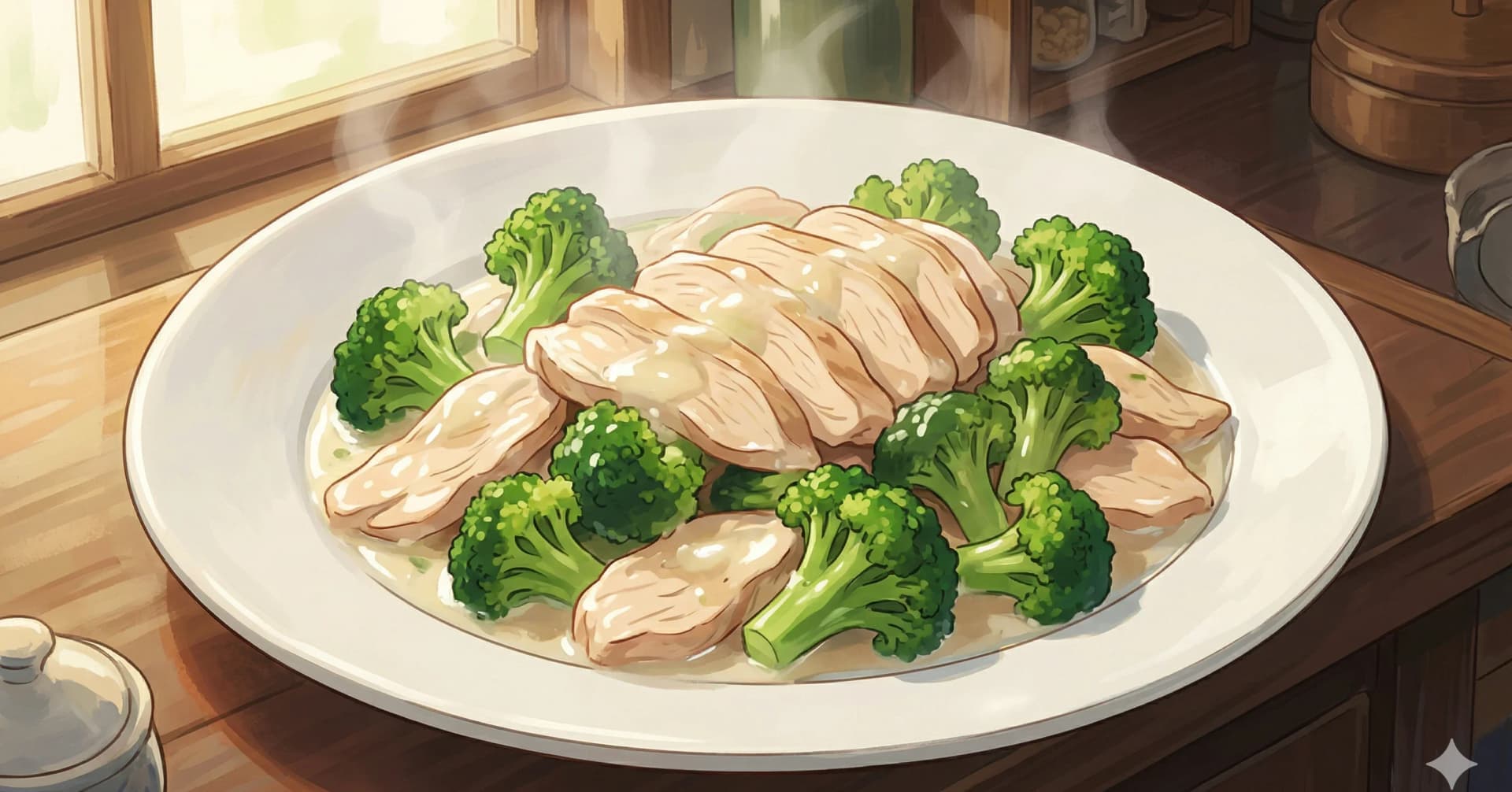
Chicken and Broccoli in White Sauce (白汁鸡花椰)
45 minutes
 Easy
EasyTraditional Chinese Medicine · China
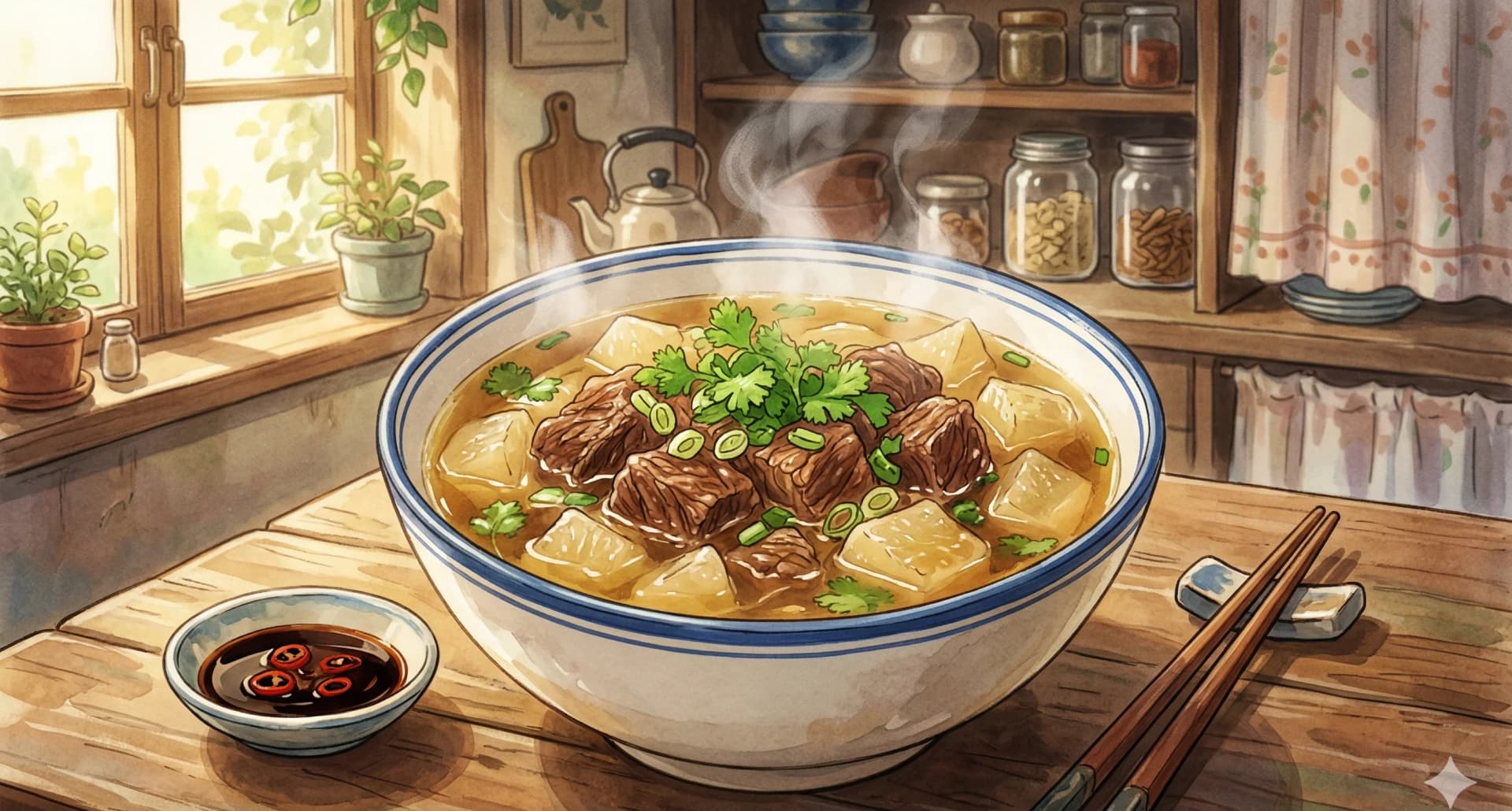
Beef Brisket Soup (清湯牛腩)
145 minutes
 Easy
EasyTraditional Chinese Medicine · China
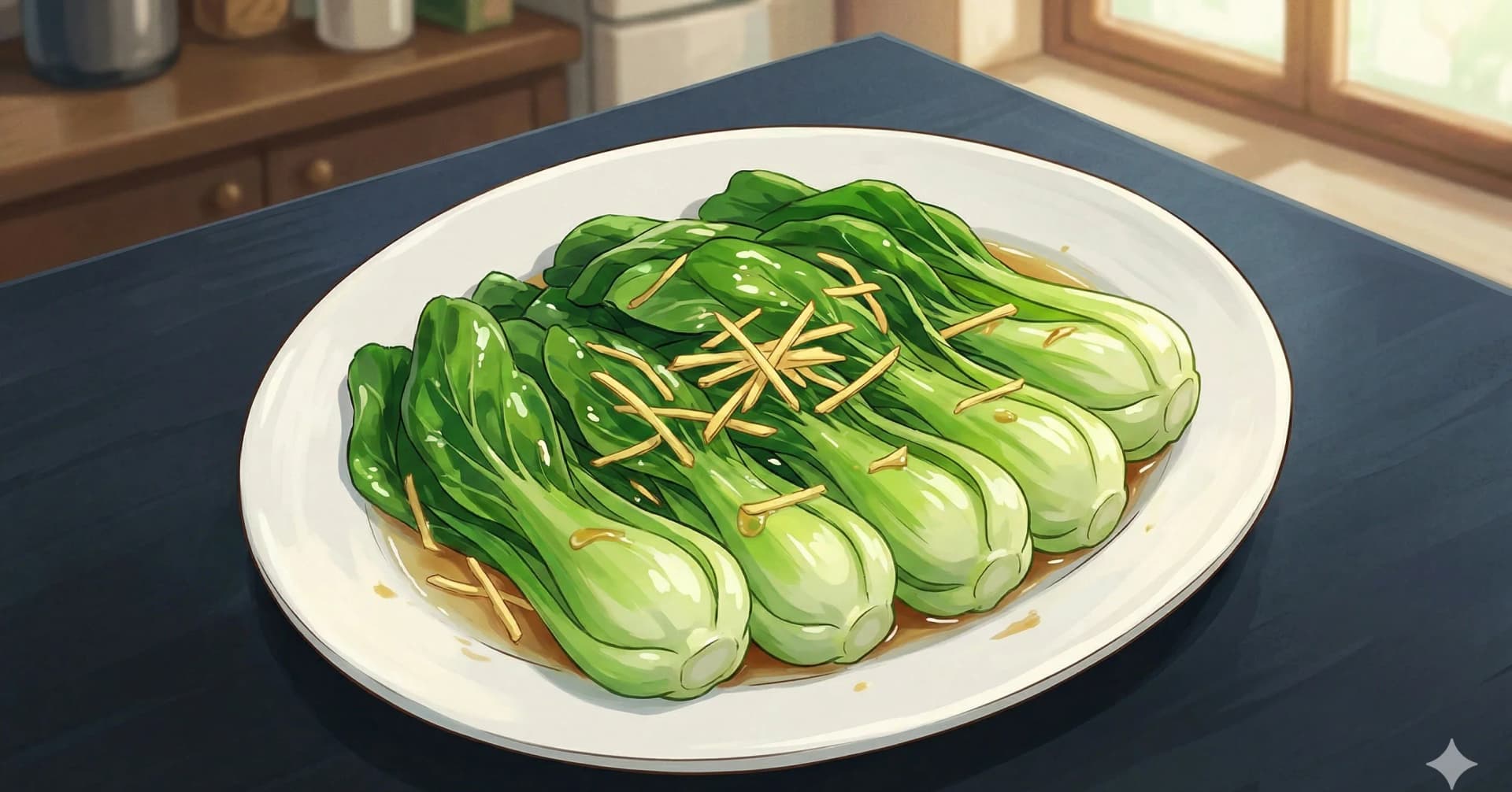
Bok Choy in Ginger Sauce (姜汁白菜)
6 minutes
 Easy
EasyVietnamese Cuisine
Ga Kho Gung (Vietnamese Caramelized Ginger Chicken)
1 hour
Ratings & Comments
Ratings & Comments
Ratings
Share your thoughts on this recipe.
Sign in to rate and comment