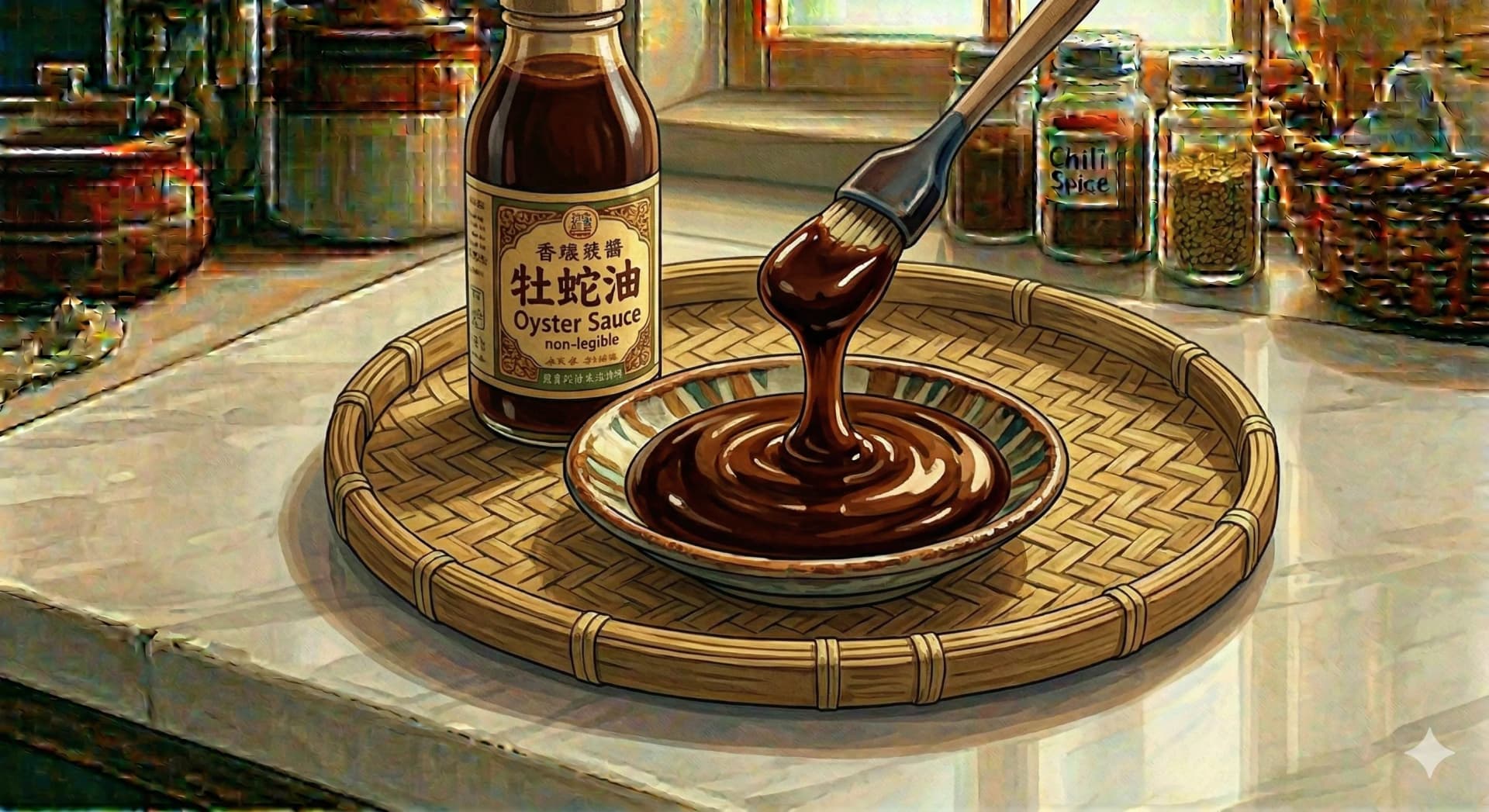
Oyster Sauce
Also known as: Hao You, Oyster-Flavored Sauce
Oyster sauce is a thick, dark brown condiment made from oyster extracts, sugar, and salt — cooked down and caramelized into a glossy, intensely savory sauce with a sweetness and depth unlike anything else in the pantry.
It was invented in Guangdong in the late 19th century and has become indispensable in Cantonese cooking and broadly across Chinese, Thai, and Vietnamese cuisines.
Key facts at a glance:
- Thick, dark condiment — made from oyster extracts, sugar, and salt
- Invented circa 1888 — by Lee Kum Sheung in Guangdong
- Rich in glutamates — contributing deep umami depth
- Indispensable in Cantonese cooking — and across Chinese, Thai, and Vietnamese cuisines
Flavor Profile
Origin
Guangdong, China, Cantonese cuisine
Traditional Medicine Perspectives
Traditional Chinese Medicine
Oysters (Mu Li) have a significant place in TCM as both food and medicine. The shell is used medicinally to anchor Yang, calm the mind, and soften hardness. Oyster meat is considered sweet and salty, nourishing Yin and supporting the Kidney. Oyster sauce, as a concentrated essence of oyster, carries some of these nourishing associations in a culinary context.
Modern Scientific Research
Oyster sauce contains glutamates and natural flavor compounds from oyster extract that contribute to its umami depth. Oysters themselves are among the richest dietary sources of zinc and contain high levels of vitamin B12, iron, and omega-3 fatty acids.
Commercially processed oyster sauce retains some of these micronutrients, though concentrations vary by brand and processing method. Sugar and salt content are significant.
Cultural History
Oyster sauce was reportedly invented by accident around 1888 by Lee Kum Sheung of Guangdong, who left oysters simmering too long and discovered the rich, concentrated liquid that resulted.
He went on to found the Lee Kum Kee company, which became one of the most recognized condiment brands in Asia.
Oyster sauce spread rapidly through Cantonese cooking and then throughout Chinese diaspora communities worldwide.
Culinary Uses
Used as a sauce base for stir-fried vegetables and meats, a marinade component, and a finishing glaze. Essential in Chinese-American stir-fries, beef with broccoli, and Cantonese vegetable preparations.
Pair with soy sauce and sesame oil for a classic Chinese sauce base. A small amount added to fried rice or noodles adds immediate depth.
Preparation Methods
Use straight from the bottle. Thin with water or stock to make a pourable sauce. Heat gently — high direct heat can make it bitter.
Combine with soy sauce, garlic, and cornstarch dissolved in water for a reliable stir-fry sauce.
Traditional Dishes
- Beef and broccoli
- Cantonese-style kai lan
- Oyster sauce chicken
- Congee toppings
- Chow fun
Recipes Using Oyster Sauce
- Bok Choy in Ginger Sauce (姜汁白菜)
- Braised Pork with Potatoes (薯仔炆豬肉)
- Chicken and Broccoli in White Sauce (白汁鸡花椰)
- Bun Cha (Vietnamese Grilled Pork with Rice Noodles)
- Chicken Chow Mein (鷄肉炒麵)
- Gravy Noodles (Rad Na / ราดหน้า)
- Slow-Braised Pork Belly (Moo Hong / หมูฮ้อง)
- Cashew Chicken Stir-Fry (Gai Pad Med Mamuang / ไก่ผัดเม็ดมะม่วงหิมพานต์)
- Ginger Beef
- Ginger Scallion Beef
- Jjajangmyeon (Black Bean Sauce Noodles)
- Braised Pork Leg on Rice (Khao Kha Moo / ข้าวขาหมู)
- Lo Mein (捞面)
- Black Pepper Beef (黑椒牛柳)
- Steamed Spare Ribs with Black Bean Sauce (豉汁蒸排骨)
- Char Kway Teow (炒粿條)
- Soy Sauce Fried Noodles (Pad See Ew / ผัดซีอิ๊ว)
- Pad Kra Pao Moo (ผัดกระเพราหมู)
- Beef in Black Bean Sauce (豉汁牛肉)
- Pad Kra Pao Gai (Holy Basil Chicken Stir-Fry)
- La Chang Fan (Sticky Rice with Chinese Sausage)
- Sai Krok Isan (Thai Fermented Sausage)
- Clams in Black Bean Sauce (豉汁炒蜆)
- Beef with Oyster Sauce (蠔油牛肉)
- Chicken Feet (鳳爪)
- Chinese Stuffed Eggplant (釀茄子)
- Chinese Stuffed Peppers (釀辣椒)
- Yu Choy with Oyster Sauce (蚝油油菜)
- Shrimp and Broccoli in Brown Sauce (虾仁西兰花)
- Lo Mai Gai (Lotus Leaf Sticky Rice)
- My Favorite Japanese Beef Tongue Recipe
- Jjamppong (Spicy Seafood Noodle Soup)
- Sesame Beef (芝麻牛肉)
- Black Bean Chicken
- Braised Chicken with Lily Buds and Mushrooms (Jin Zhen Yun Er Ji)
- Shi Zi Tou (Lion's Head Meatballs)
- Shaking Beef (Bò Lúc Lắc)
- Red Pork on Rice (Khao Moo Daeng / ข้าวหมูแดง)
- Bao Zai Fan (Claypot Rice)
- Jiaozi (Pork and Chive Dumplings)
- Nikuman (Japanese Steamed Pork Buns)
Comments
Share your thoughts on this ingredient.
Sign in to comment0 Comments