Korean Cuisine
Jjajangmyeon (Black Bean Sauce Noodles)
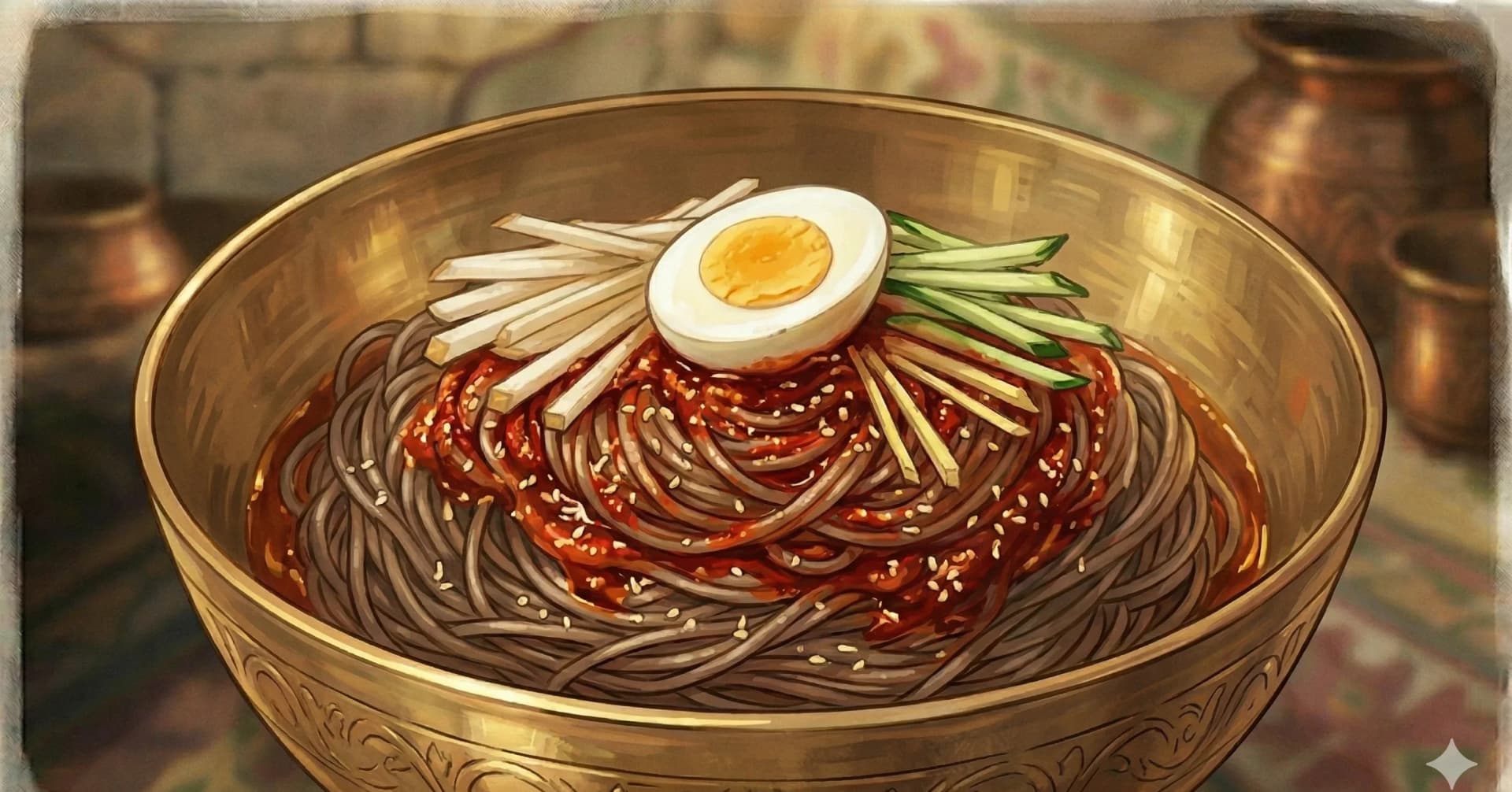
Thick wheat noodles draped in a glossy, savory black bean sauce with pork and vegetables
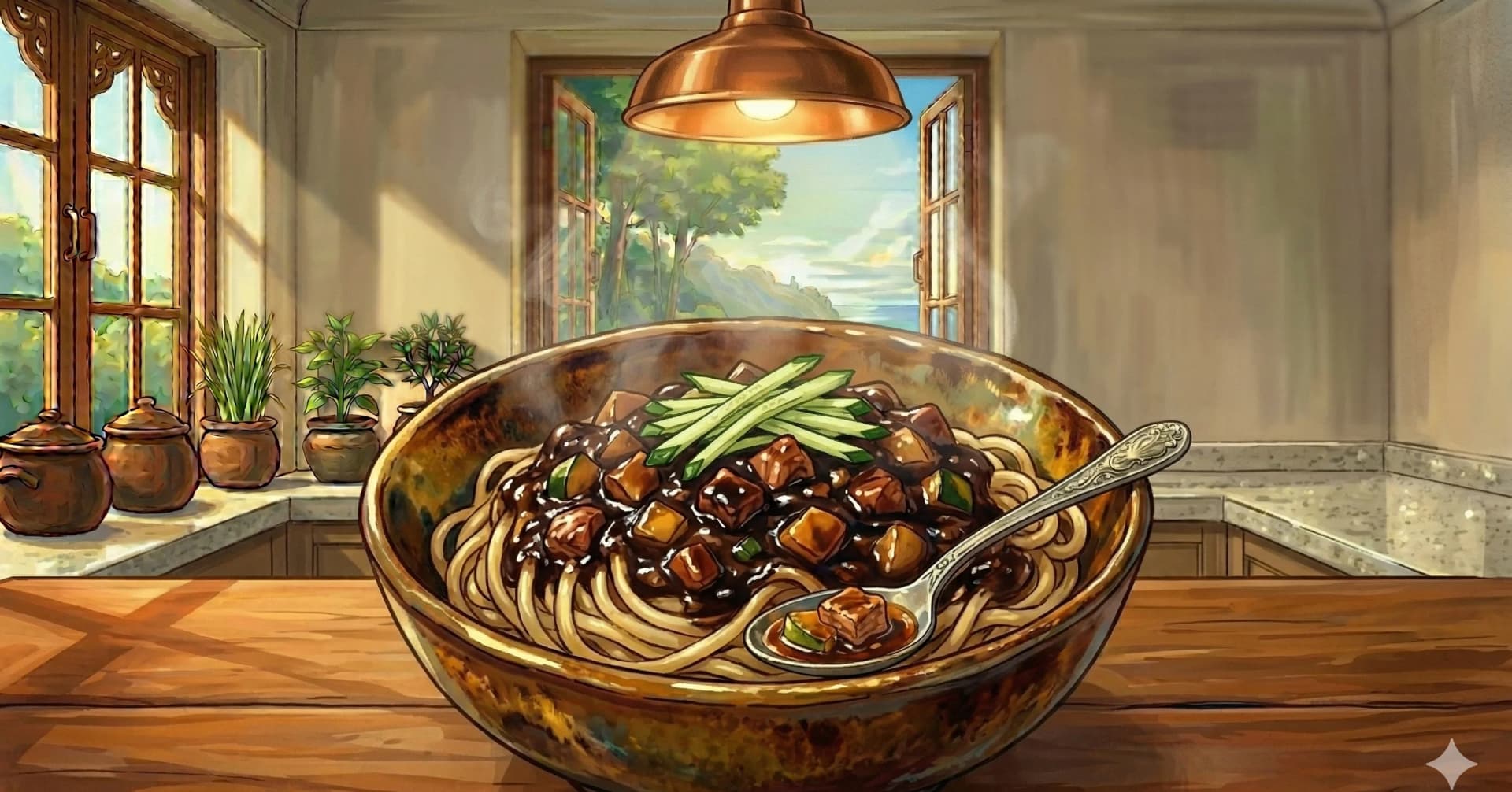
The sauce arrives at the table looking almost impossibly dark, a deep, lustrous black that gleams under the light. You mix the noodles through it, and the thick wheat strands turn glossy and dark, clinging to each other in heavy, satisfying tangles. The flavor is earthy and savory with a sweetness that comes not from sugar alone but from onions cooked low and slow until they dissolve into the sauce.
Jjajangmyeon is a Korean-Chinese dish, born from the zhajiangmian of Shandong province but transformed over more than a century into something distinctly Korean. Chinese immigrants in Incheon's Chinatown adapted their noodles to Korean tastes, and the dish became so embedded in the culture that it is now Korea's most popular delivery food. It is the dish Koreans eat on moving day, on Black Day (April 14th, when those without a Valentine's partner eat black noodles together), and on any ordinary evening when comfort is the priority.
What jjajangmyeon delivers is pure, uncompromising satisfaction. The sauce is thick, coating every noodle. The pork adds richness. The diced vegetables, softened but still present, give bursts of texture. A crown of cool, crunchy julienned cucumber on top cuts through the richness.
The practical insight is in the chunjang. Korean black bean paste must be fried in oil before combining with other ingredients. Raw chunjang tastes bitter and flat. Frying it for several minutes in hot oil transforms it, mellowing the bitterness and developing a deep, roasted savoriness that is the backbone of the dish. Do not skip this step.
At a Glance
Yield
4 servings
Prep
20 minutes
Cook
25 minutes
Total
45 minutes
Difficulty
Medium
Ingredients
- 4 ozchunjang (Korean black bean paste)
- ½ lbpork belly or pork shoulder, cut into 1 cm cubes
- 7 ozonion (about 1 large), cut into 1 cm dice
- 5½ ozzucchini (about 1 medium), cut into 1 cm dice
- 3½ ozpotato (about 1 small), cut into 1 cm dice
- 1¾ oznapa cabbage, roughly chopped (optional)
- 2 tbspvegetable oil
- 1¾ tbspminced garlic
- 1¼ tbspsugar
- 1 tbspoyster sauce
- 1¼ cupwater
- 2½ tbspcornstarch mixed with 40 ml cold water (slurry)
- 1¼ lbfresh jjajangmyeon noodles (or dried thick wheat noodles)
- 1small cucumber, julienned
- —Danmuji (yellow pickled radish), sliced
Method
- 1
Prepare all the vegetables and pork before you begin cooking. Cut the pork, onion, zucchini, and potato into uniform 1 cm dice. Uniformity matters here because everything cooks together, and uneven pieces mean some will be mushy while others stay raw.
- 2
Fry the chunjang. Heat 15 ml of vegetable oil in a wok or large deep skillet over medium heat. Add the chunjang and stir constantly for 2 to 3 minutes. The paste will loosen, darken slightly, and begin to smell roasted and nutty rather than sharp and bitter. This step is essential for developing the sauce's characteristic depth.
- 3
Remove the fried chunjang to a bowl and wipe the wok clean. The paste tends to stick, so a fresh surface for the next step produces better results.
- 4
Heat the remaining 15 ml of oil in the wok over high heat. Add the pork cubes and cook without stirring for 1 to 2 minutes until the bottom sides develop a light sear. Then stir and cook until no pink remains, about 3 minutes total.
- 5
Add the onion and garlic. Cook over medium-high heat for 3 to 4 minutes, stirring frequently. The onion should turn translucent and begin to soften, releasing moisture. This moisture will help deglaze any fond from the pork.
- 6
Add the potato and zucchini (and cabbage if using). Cook for another 2 minutes, stirring to coat everything in the rendered pork fat.
- 7
Return the fried chunjang to the wok and stir to coat all the meat and vegetables evenly. Everything should take on a dark color within a minute of stirring.
- 8
Pour in the water, sugar, and oyster sauce. Stir well and bring to a boil, then reduce heat to medium-low. Simmer for 8 to 10 minutes, stirring occasionally, until the potato is tender when pierced with a knife and the onion has mostly dissolved into the sauce.
- 9
Give the cornstarch slurry a final stir (it settles quickly) and pour it into the sauce while stirring constantly. The sauce will thicken within 30 seconds to a minute, becoming glossy and viscous enough to coat the back of a spoon. If it seems too thick, add a splash of water. If too thin, simmer for another minute.
- 10
While the sauce simmers, bring a large pot of water to a rolling boil. Cook the noodles according to package instructions, usually 3 to 5 minutes for fresh noodles. They should be chewy and slightly springy, not soft. Drain and rinse briefly under cold water to remove excess starch, then drain again.
- 11
Divide the noodles among serving bowls. The noodles should sit in a neat mound, ready to be covered.
- 12
Ladle the hot sauce generously over the noodles. The sauce should pool around and over them, thick and glossy. Top with julienned cucumber and serve with sliced danmuji on the side.
- 13
Mix thoroughly before eating, pulling the noodles through the sauce until every strand is coated in black.
Key Ingredient Benefits
Chunjang (Korean black bean paste): Made from fermented black soybeans, wheat flour, and caramel. It is distinct from Chinese doubanjiang or tianmianjiang, though they share a common ancestor. The fermentation process produces beneficial enzymes and complex flavors. Traditionally used in Korean-Chinese cooking since the early 20th century.
Pork belly: Provides the rich fat that carries the sauce's flavor. The rendered fat emulsifies into the sauce during cooking, contributing body and mouthfeel.
Onion: Contains quercetin and other flavonoids that research suggests may have antioxidant properties. In this dish, the onion's natural sugars caramelize during cooking, providing sweetness that balances the fermented savoriness of the chunjang.
Why This Works
Frying the chunjang in oil before adding it to the other ingredients is the critical step that separates good jjajangmyeon from mediocre versions. The high heat of the oil triggers Maillard reactions in the bean paste, converting its raw bitterness into complex, roasted flavors. Without this step, the finished sauce tastes one-dimensional and harsh.
Dicing the vegetables into uniform small pieces ensures they cook at the same rate and integrate into the sauce. The onion in particular should nearly dissolve, contributing body and natural sweetness to the sauce. The potato serves double duty: its starch helps thicken the sauce naturally while its flesh provides soft, creamy bites.
The cornstarch slurry creates the sauce's signature glossy, clinging texture. Without it, the sauce would be too thin to coat the noodles properly and would pool at the bottom of the bowl.
Substitutions & Variations
Protein: Chicken thigh, beef, or diced seafood (shrimp, squid) can replace the pork. For vegetarian jjajangmyeon, use diced firm tofu and mushrooms, and replace oyster sauce with soy sauce.
Vegetables: Daikon radish can replace potato. Green peas, diced carrot, or diced sweet potato are also used in some versions.
Gan-jjajang: A drier version where the sauce is not thickened with cornstarch. The vegetables and meat are stir-fried with the chunjang and a minimal amount of liquid, producing a less saucy, more concentrated result.
Jjajang-bap: Serve the sauce over steamed rice instead of noodles for a quick meal.
Noodles: If fresh jjajangmyeon noodles are unavailable, thick udon noodles or even spaghetti can approximate the texture.
Serving Suggestions
Jjajangmyeon is typically served as a complete one-bowl meal. Sliced danmuji (yellow pickled radish) is the essential accompaniment, providing a sweet, crunchy, acidic counterpoint to the rich sauce. A small dish of sliced raw onion in vinegar water is another traditional side. In Korean-Chinese restaurants, jjajangmyeon is often ordered alongside jjamppong so diners can share and enjoy both dishes.
Storage & Reheating
Sauce: The sauce stores well in an airtight container in the refrigerator for up to 3 days. It thickens considerably when cold, which is normal.
Noodles: Cook fresh noodles for each serving. Leftover cooked noodles become sticky and clump together.
Reheating: Warm the sauce in a pot over medium-low heat, adding 30 to 60 ml of water to restore the original consistency. Stir frequently to prevent scorching on the bottom.
Freezing: The sauce can be frozen for up to 1 month. Thaw in the refrigerator overnight and reheat as above.
Cultural Notes
Jjajangmyeon (짜장면) is the most-eaten dish in modern Korea, full stop. National surveys consistently show that Korean households order jjajangmyeon delivery more frequently than any other restaurant food, with one Korean-Chinese restaurant association estimating over 7 million bowls served per day nationwide. The dish's origins trace to the late 19th century, when ethnic-Chinese merchants from Shandong province settled in the Chinese quarter of the port city of Incheon, just west of Seoul.
The Korean-Chinese restaurant tradition (jungguk jip, 중국집) developed from those communities as a distinct cuisine, neither authentically Chinese nor wholly Korean, and became one of the most beloved branches of Korean food culture. The original zhajiangmian from Beijing uses a salty fermented soybean paste called huángjiàng (黄酱). The Korean adaptation swapped in chunjang (춘장), a sweeter, darker, caramel-tinted Korean black bean paste, and added more aromatic vegetables. The Gonghwachun restaurant in Incheon, established in 1908 and now a designated cultural museum, is officially credited as the birthplace of modern jjajangmyeon.
The cultural rituals around jjajangmyeon run deep. Moving day in Korea is virtually inseparable from ordering jjajangmyeon delivery. The noodles arrive, you eat them standing among unpacked boxes, and the meal marks the symbolic start of life in a new home. April 14th is "Black Day," when single people who did not receive chocolates on Valentine's Day or White Day are expected to eat jjajangmyeon together in self-aware solidarity. The black sauce around children's mouths after eating is a recurring visual cliche in Korean family media.
Combined with its sibling jjamppong, jjajangmyeon defines the entire Korean-Chinese restaurant category in Korea.
Nutrition Facts
Calories: 773kcal (39%)|Total Carbohydrates: 118.5g (43%)|Protein: 32.8g (66%)|Total Fat: 18.4g (24%)|Saturated Fat: 4.2g (21%)|Cholesterol: 46mg (15%)|Sodium: 1245mg (54%)|Dietary Fiber: 5.3g (19%)|Total Sugars: 6.8g
You Might Also Like
Ratings & Comments
Ratings & Comments
Ratings
Share your thoughts on this recipe.
Sign in to rate and comment