Korean Cuisine
Jjamppong (Spicy Seafood Noodle Soup)
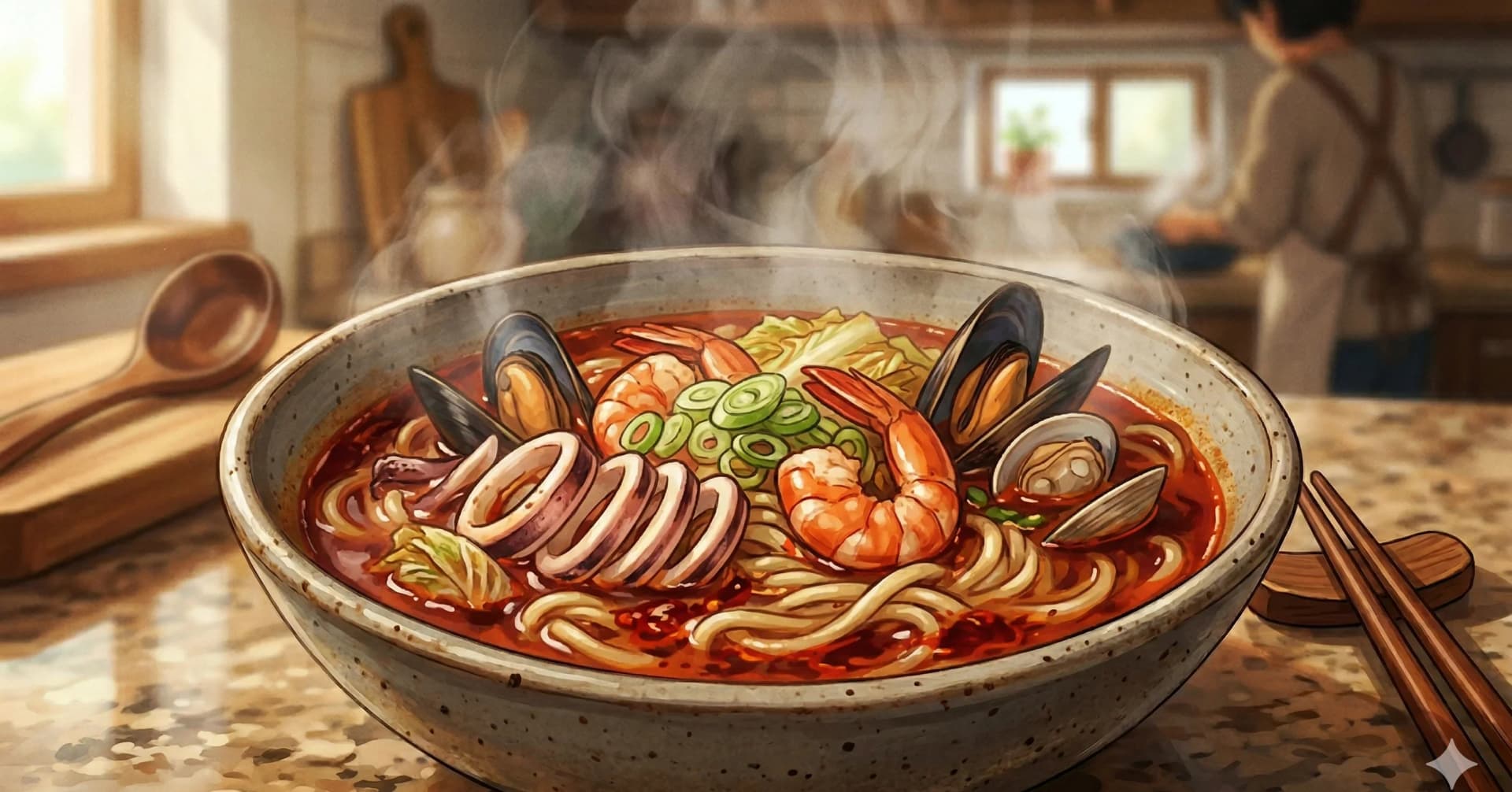
A blazing red broth loaded with seafood, vegetables, and chewy wheat noodles
The broth hits you before the spoon reaches your mouth, a rising wave of chili-scented steam that opens the sinuses and sets the appetite on high alert. The first sip is intense: fiery from gochugaru, savory from pork fat, and deeply oceanic from the mix of shellfish and squid that have released their essences into the liquid. This is a soup that holds nothing back.
Jjamppong, like jjajangmyeon, is a Korean-Chinese dish with roots in the Chinese jianbing cooking tradition, adapted and transformed by Chinese immigrants in Korean port cities. While jjajangmyeon is rich and mellow, jjamppong is its fiery counterpart. In Korean-Chinese restaurants, the two are almost always ordered together at the same table, each person choosing their allegiance for the day, though sharing across the table is expected.
What this soup delivers is layered intensity. The technique of stir-frying gochugaru in hot oil before adding the broth is what creates the soup's characteristic crimson color and deep chili flavor. Unlike simply stirring chili flakes into a simmering liquid, frying them in fat blooms the capsaicin and the red pigments, producing a broth that is vibrantly colored and complexly spiced rather than merely hot.
The practical insight is in the sequencing of the seafood. Mussels go in first because they take longest. Squid and shrimp go in last because they toughen within minutes of overcooking. Get the timing right, and every piece of seafood in the bowl is perfectly tender. The broth should taste like the ocean caught fire.
At a Glance
Yield
4 servings
Prep
20 minutes
Cook
20 minutes
Total
40 minutes
Difficulty
Medium
Ingredients
- 2 tbspvegetable oil
- 3½ ozpork belly or pork shoulder, thinly sliced
- ¼ cupgochugaru (Korean red pepper flakes)
- 2½ tbspminced garlic
- 1¾ tbspminced ginger
- 1¼ qtchicken stock or water
- 1 tbspsoy sauce
- 1 tbspoyster sauce
- 1¼ tspsugar
- —Ground black pepper to taste
- 7 ozmussels, scrubbed and debearded
- 5½ ozsquid, cleaned and cut into rings and tentacles
- 5½ ozshrimp (shell-on or peeled), deveined
- 3½ oznapa cabbage, cut into bite-sized pieces
- 3½ ozonion (about 1 medium), sliced
- 2¾ ozzucchini, halved and sliced into half-moons
- 1¾ ozcarrot (about ½–1 carrot), thinly sliced
- 2scallions, cut into 5 cm lengths
- 1fresh red or green chili, sliced (optional)
- 1 lbfresh jjamppong noodles or thick wheat noodles
Method
- 1
Prepare all ingredients before heating the wok. Cut the pork, clean and prepare the seafood, and slice all the vegetables. Jjamppong comes together quickly once you start cooking, and there is no time to chop mid-process.
- 2
Heat the vegetable oil in a wok or large deep pot over high heat until the oil begins to shimmer and the first wisps of smoke appear.
- 3
Add the pork and stir-fry for 1 to 2 minutes until the fat begins to render and the edges brown. The pork fat is critical here, as it will carry the chili flavor throughout the broth.
- 4
Add the gochugaru to the hot oil and pork fat. Stir continuously for about 30 seconds. The oil will turn a deep, vivid red and the gochugaru will become fragrant and slightly toasted. Be careful not to burn it. If the flakes darken too quickly, reduce the heat immediately.
- 5
Add the garlic and ginger. Stir for 15 seconds until fragrant, then immediately add the onion and carrot. Stir-fry for 1 to 2 minutes until the onion begins to soften and the carrot is lightly coated in the red oil.
- 6
Pour in the chicken stock or water. It will sizzle violently and turn a brilliant red. Add the soy sauce, oyster sauce, and sugar. Bring to a rolling boil.
- 7
Add the mussels and napa cabbage. They need the most time. Cover and cook for 3 to 4 minutes until the mussels begin to open and the cabbage has wilted.
- 8
Add the zucchini and cook for 2 more minutes until it softens but still holds its shape.
- 9
Add the squid, shrimp, and scallions. Cook for 2 to 3 minutes, no more. The shrimp should turn pink and curl, and the squid should be opaque and tender. Overcooking makes them rubbery. Discard any mussels that have not opened.
- 10
While the broth simmers, bring a separate large pot of water to a rolling boil. Cook the noodles according to package instructions, usually 3 to 5 minutes for fresh noodles. They should be chewy, not soft. Drain well.
- 11
Taste the broth and adjust. Add more soy sauce for salt, sugar for balance, or gochugaru for heat. The broth should be assertively spicy and deeply savory, with a noticeable seafood sweetness underneath the heat.
- 12
Divide the drained noodles among large, deep bowls. Arrange the seafood and vegetables over the noodles, distributing the mussels evenly.
- 13
Ladle the blazing red broth over everything. Garnish with sliced fresh chili if desired. Serve immediately while the steam is still rising and the noodles are springy.
Key Ingredient Benefits
Gochugaru (Korean red pepper flakes): Contains capsaicin, which research suggests may support metabolism and have anti-inflammatory properties. Korean gochugaru is typically made from sun-dried peppers that are deseeded and ground, resulting in a fruity, moderately hot chili with a vivid red color.
Mussels: An excellent source of iron, zinc, selenium, and vitamin B12. They also provide omega-3 fatty acids. Mussels are considered one of the most sustainable seafood choices available.
Squid: High in protein and low in fat, squid provides significant amounts of vitamin B12, copper, and selenium. Traditionally valued in East Asian diets for its nutritional density.
Why This Works
Frying gochugaru in hot oil before adding liquid is the technique that defines jjamppong. Oil-soluble capsaicin and carotenoid pigments dissolve into the fat, creating a broth that is both vividly red and deeply flavored. Simply adding dry gochugaru to simmering water produces a duller color and a more one-dimensional heat.
Using pork belly or shoulder provides rendered fat that acts as the vehicle for the chili flavor. The pork fat emulsifies into the broth during boiling, creating a slightly richer mouthfeel than a purely seafood-based broth would have.
Staggering the seafood by cooking time ensures nothing is overcooked or undercooked. Mussels need 4 to 5 minutes to open. Shrimp need 2 minutes to turn pink. Squid needs about 1 to 2 minutes to become opaque. Adding them in sequence from longest to shortest cooking time means everything reaches the bowl perfectly done.
Substitutions & Variations
Seafood: Use whatever is fresh and available. Clams, scallops, or crab can replace or supplement the mussels. Fish fillets cut into chunks work in place of some of the shellfish.
Without pork: Omit the pork for a lighter, purely seafood version. Use a tablespoon of butter or additional vegetable oil to bloom the gochugaru.
Heat level: Reduce the gochugaru to 15 g for a milder version. For extreme heat, add 5 g of gochugaru and a sliced fresh chili.
Noodles: If jjamppong noodles are unavailable, thick udon noodles or hand-pulled noodles (kalguksu) work well. Avoid thin noodles, which would get lost in the robust broth.
Instant version: Some Korean cooks add a packet of instant ramyeon seasoning to the broth for an extra layer of savory depth. This is a shortcut found in many Korean home kitchens.
Serving Suggestions
Jjamppong is a complete meal in a bowl. The traditional accompaniment is danmuji (yellow pickled radish) and a small dish of kimchi. In Korean-Chinese restaurants, jjamppong is always ordered alongside jjajangmyeon, so the table can enjoy both the spicy and the savory. Fried mandu (dumplings) are another common side.
Storage & Reheating
Broth and seafood: Store separately from the noodles. The broth with seafood can be refrigerated for up to 1 day. Seafood quality declines quickly, so consume promptly.
Noodles: Cook fresh noodles for each serving. Leftover noodles absorb the broth and become swollen.
Reheating: Bring the broth back to a gentle boil over medium heat. Do not boil vigorously, as this will toughen the seafood further.
Not recommended for freezing: The seafood becomes rubbery and the vegetables become mushy after freezing.
Cultural Notes
Jjamppong (짬뽕) is the spicy seafood-and-noodle counterpart to jjajangmyeon, and together the two dishes define the menu of every Korean-Chinese restaurant (jungguk jip, 중국집) in Korea. Ordering at a jungguk jip often comes down to a single binary decision: jjajang or jjamppong? The question has spawned countless friend-group debates, K-drama scenes, and even a hybrid order called jjamjjamyeon (짬짬면), where the bowl gets divided in half so you can have both at once.
The dish's name and lineage are Japanese-Chinese-Korean all braided together. Chanpon (ちゃんぽん) is a Nagasaki dish created in the late 19th century by a Chinese immigrant restaurateur named Chen Pingshun, who served thick wheat noodles in a milky pork broth to feed Chinese students cheaply. The dish traveled to Korea during the Japanese colonial period, then went through a major transformation under Korean-Chinese cooks who replaced the milky white broth with a fiery red broth built on gochugaru-toasted oil and seafood stock. The result is one of the most distinctly Korean dishes that originated entirely outside Korea.
The Korean version's signature technique is "wok-toasting" the gochugaru and aromatics in hot oil before adding the broth. The technique produces the dish's characteristic deep red, almost orange color and its signature smoky chili aroma. Different Korean-Chinese restaurants compete on the depth and balance of this red oil base, and the most prestigious jjamppong jip are judged largely on this one component.
The dish has spawned modern variants. White jjamppong is a deliberate revival of the original milky Nagasaki style. Jjamppong tang is a souped-up broth-only version. Jjamppong bap serves the broth over rice instead of noodles. Inside Korea, jjamppong is the order of choice for cold winter days, and for anyone hungover from the night before.
Nutrition Facts
Calories: 547kcal (27%)|Total Carbohydrates: 76.7g (28%)|Protein: 30.8g (62%)|Total Fat: 10.4g (13%)|Saturated Fat: 2.1g (11%)|Cholesterol: 98mg (33%)|Sodium: 1058mg (46%)|Dietary Fiber: 4.5g (16%)|Total Sugars: 4.8g
You Might Also Like
Ratings & Comments
Ratings & Comments
Ratings
Share your thoughts on this recipe.
Sign in to rate and comment