Korean Cuisine
Budae Jjigae (Army Stew)
A hearty, spicy stew born from ingenuity, blending Korean flavors with American pantry staples
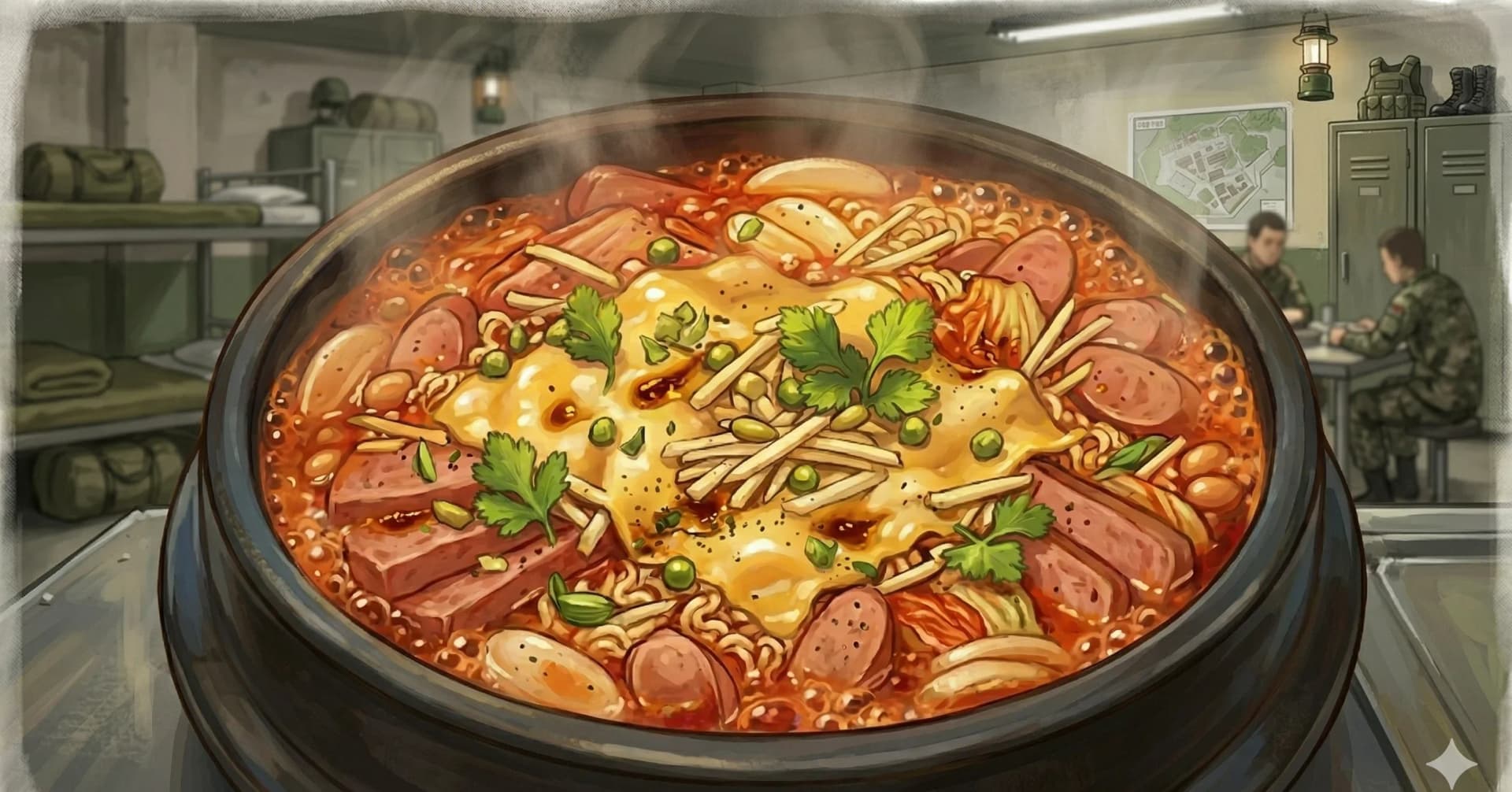
The pot arrives at the table already bubbling, a chaotic, beautiful mosaic of pink spam slices, crimson kimchi, golden baked beans, white tofu, and the unmistakable brick of instant ramyeon noodles softening in a fiery broth. As the cheese melts over the top, stretching in strings when you lift your chopsticks, the broth beneath becomes richer, slightly creamy, and completely irresistible.
Budae jjigae is a dish born from hardship and ingenuity. In the years following the Korean War, food scarcity drove people near American military bases to incorporate surplus army rations into their cooking. Spam, hot dogs, canned baked beans, and American cheese were combined with Korean kimchi, gochujang, and anchovy broth, creating a stew that was never meant to be refined but ended up becoming one of Korea's most beloved comfort foods. The city of Uijeongbu, near Seoul, claims it as a local specialty, and restaurants there have served it for decades.
What budae jjigae delivers is unfiltered comfort. It is salty, spicy, rich, and deeply savory, with the unlikely combination of processed American ingredients and traditional Korean flavors creating something that transcends its individual parts. The broth develops a complexity that is greater than the sum of its components, especially as the kimchi's lactic acid, the spam's salt, and the gochujang's fermented depth meld together.
The practical insight is to arrange the ingredients in the pot in distinct sections rather than dumping everything in haphazardly. This lets diners pick what they want from each area and ensures even cooking, since different ingredients need different amounts of time in the broth.
At a Glance
Yield
4 servings
Prep
15 minutes
Cook
25 minutes
Total
40 minutes
Difficulty
Easy
Ingredients
- 3⅓ cupanchovy-kelp broth (or chicken stock)
- ¼ cupgochugaru (Korean red pepper flakes)
- 2 tbspgochujang
- 1 tbspsoy sauce
- 2⅓ tspsugar
- 1¾ tbspminced garlic
- 1 tspsesame oil
- 7 ozSpam (about half a can), sliced into rectangles about 5 mm thick
- 2hot dogs (about 100 g), sliced diagonally into 1 cm pieces
- 7 ozwell-fermented kimchi, roughly chopped
- ¼ cupkimchi brine
- 7 ozfirm tofu, sliced into 1 cm thick rectangles
- 2¾ ozcanned baked beans
- 1package instant ramyeon noodles (save the seasoning packet for another use) (about 110 g)
- 2 slicesAmerican cheese
- 2scallions, sliced into 5 cm lengths
- 1small onion (about 80 g), sliced
- 3½ oztteok (rice cakes)
- 1egg
- —Sliced mushrooms
Method
- 1
Mix the seasoning base. In a small bowl, combine the gochugaru, gochujang, soy sauce, sugar, minced garlic, and sesame oil. Stir into a rough paste. This concentrated seasoning will dissolve into the broth during cooking.
- 2
Arrange the ingredients in the pot. Use a large, shallow pot or wide skillet. Place the Spam slices, hot dog pieces, kimchi, tofu, baked beans, sliced onion, and rice cakes (if using) in separate, neat sections around the pot. This arrangement is traditional and practical, letting each ingredient cook at its own pace.
- 3
Spoon the seasoning paste into the center of the pot, or distribute it among the ingredients.
- 4
Pour the anchovy-kelp broth and kimchi brine into the pot. The liquid should come about two-thirds of the way up the ingredients. Add more broth or water if needed.
- 5
Place the pot over medium-high heat and bring to a boil. As the broth heats, the seasoning paste will dissolve and the liquid will turn a deep red. This takes about 5 minutes.
- 6
Once boiling, reduce the heat to medium and let the stew simmer actively for 10 minutes. The kimchi will soften, the spam and hot dogs will heat through, and the tofu will absorb the spicy broth. Stir gently once or twice, keeping the sections roughly intact.
- 7
Add the ramyeon noodles. Place the brick of noodles in the center of the pot, pressing it down into the broth. If the broth does not cover the noodles, add a splash of water. Cook for 3 to 4 minutes until the noodles soften and separate.
- 8
Stir the noodles into the broth as they loosen. They will absorb liquid quickly, so add more broth or water if the stew becomes too thick.
- 9
Lay the American cheese slices over the top of the stew. Let them sit for about 1 minute until they begin to melt and drape over the ingredients, becoming soft and stretchy.
- 10
Scatter the scallion pieces over the top. Crack an egg into the broth if desired, letting it poach gently for 2 minutes.
- 11
Taste the broth and adjust. Add more gochugaru for heat, soy sauce for salt, or sugar for balance. The broth should be assertively spicy and salty, with a slight sweetness from the beans and a tangy backbone from the kimchi.
- 12
Bring the pot directly to the table, ideally still simmering on a portable burner. Budae jjigae is meant to be eaten communally, with everyone picking directly from the shared pot and ladling broth over their individual bowls of rice.
Key Ingredient Benefits
Kimchi: Fermented napa cabbage containing lactobacillus and other beneficial bacteria. Research suggests that regular consumption of fermented vegetables may support gut microbiome diversity. The fermentation process also produces vitamins B and K.
Spam: A canned cooked pork product that is unusually popular in Korea due to historical circumstances. It is high in sodium and fat, so it is best enjoyed in moderation. In Korean culture, Spam gift sets are a common and respected holiday present.
Gochujang: A fermented chili paste that provides both heat and umami. Its fermentation, traditionally lasting months, creates complex flavors and beneficial enzymes.
Tofu: A complete plant protein containing all essential amino acids. Soy isoflavones in tofu have been associated with various health benefits in observational studies, though research is ongoing.
Why This Works
The anchovy-kelp broth provides a clean, savory foundation that ties the diverse ingredients together. Its glutamate-rich character bridges the gap between the processed Western ingredients and the fermented Korean seasonings, creating coherence in what could otherwise taste chaotic.
Using well-fermented kimchi is important. Its sharp acidity cuts through the richness of the spam, cheese, and beans, preventing the stew from feeling heavy. The kimchi brine adds even more of this balancing acidity directly to the broth.
Arranging ingredients in sections rather than mixing them together is not just aesthetic. It allows you to control the cooking. Spam and hot dogs only need to heat through, tofu benefits from longer simmering to absorb flavor, and noodles need to go in last to avoid becoming overcooked.
The American cheese, while unconventional, serves a purpose beyond flavor. As it melts, it emulsifies slightly into the broth, creating a richer, silkier texture. It rounds out the sharp edges of the gochugaru and gochujang.
Substitutions & Variations
Spam alternative: Turkey spam, ham, or sliced kielbasa can substitute. For a less processed version, use sliced pork belly cooked until crispy before adding to the pot.
Without hot dogs: Vienna sausages, cocktail sausages, or any cured sausage will work.
Noodles: Any instant ramen noodles work. Some versions use udon noodles or Korean ramyeon specifically. Dangmyeon (glass noodles) can be added alongside for variety.
Cheese: Mozzarella or mild cheddar can replace American cheese. Some versions omit cheese entirely.
Vegetarian version: Replace spam and hot dogs with extra tofu, mushrooms, and vegetarian sausage. Use vegetable broth and omit the anchovy-kelp base.
Serving Suggestions
Budae jjigae is always served with steamed white rice. Each person should have their own bowl of rice and use it to soak up the spicy broth. The stew is a communal dish, so serve it in the center of the table on a portable burner if possible. Accompany with simple banchan: kongnamul muchim, sigeumchi namul, and additional kimchi.
Storage & Reheating
Leftover stew (without noodles): Store in an airtight container in the refrigerator for up to 2 days. The flavors actually improve overnight as the kimchi and spices meld further.
Noodles: Add fresh noodles when reheating rather than storing them in the broth. Leftover noodles absorb all the liquid and become bloated.
Reheating: Bring back to a gentle boil over medium heat, adding water or broth as needed to restore the liquid level. Refresh with a new slice of cheese and fresh scallions.
Freezing: Not recommended due to the tofu (which becomes spongy) and the processed meats (which change texture).
Cultural Notes
Budae jjigae (부대찌개) translates as "army stew" or "army base stew," and the name is not a metaphor. The dish was born in the years immediately after the Korean War (1950-1953), in the impoverished, hungry U.S. military base towns of Uijeongbu and Pyeongtaek north of Seoul. Korean civilians scavenging or trading for surplus American military rations (Spam, hot dogs, baked beans, processed cheese) combined them with whatever Korean staples were available (kimchi, gochujang, tofu, tteok) to stretch the imported protein into a hot, filling stew that could feed a family.
What started as desperate post-war improvisation became one of the most distinctive Korean fusion dishes of the 20th century. By the 1970s, budae jjigae had migrated from base towns to restaurants in central Seoul. By the 1990s, instant ramyeon noodles were a near-universal addition, often dropped into the pot at the table and cooked communally. Specific restaurants in Uijeongbu still claim direct lineage to the original post-war recipe, and one street in the city is officially named "Budae Jjigae Street."
The dish occupies an unusual cultural position in modern Korea. It is at once a marker of national hardship and a beloved comfort food. People eat it as casual anju at pojangmacha (포장마차) tents, as a hearty group meal at chain restaurants, and as a quick weeknight one-pot dinner at home. Some Korean food historians have argued that no other dish more honestly captures the texture of 20th-century Korean history. The argument is hard to refute when you watch a family pour Spam slices into a pot of kimchi stew.
Nutrition Facts
Calories: 601kcal (30%)|Total Carbohydrates: 71.8g (26%)|Protein: 21g (42%)|Total Fat: 26.2g (34%)|Saturated Fat: 9.9g (50%)|Cholesterol: 89mg (30%)|Sodium: 2841mg (124%)|Dietary Fiber: 8.3g (30%)|Total Sugars: 11.7g
You Might Also Like
 Medium
Korean Cuisine
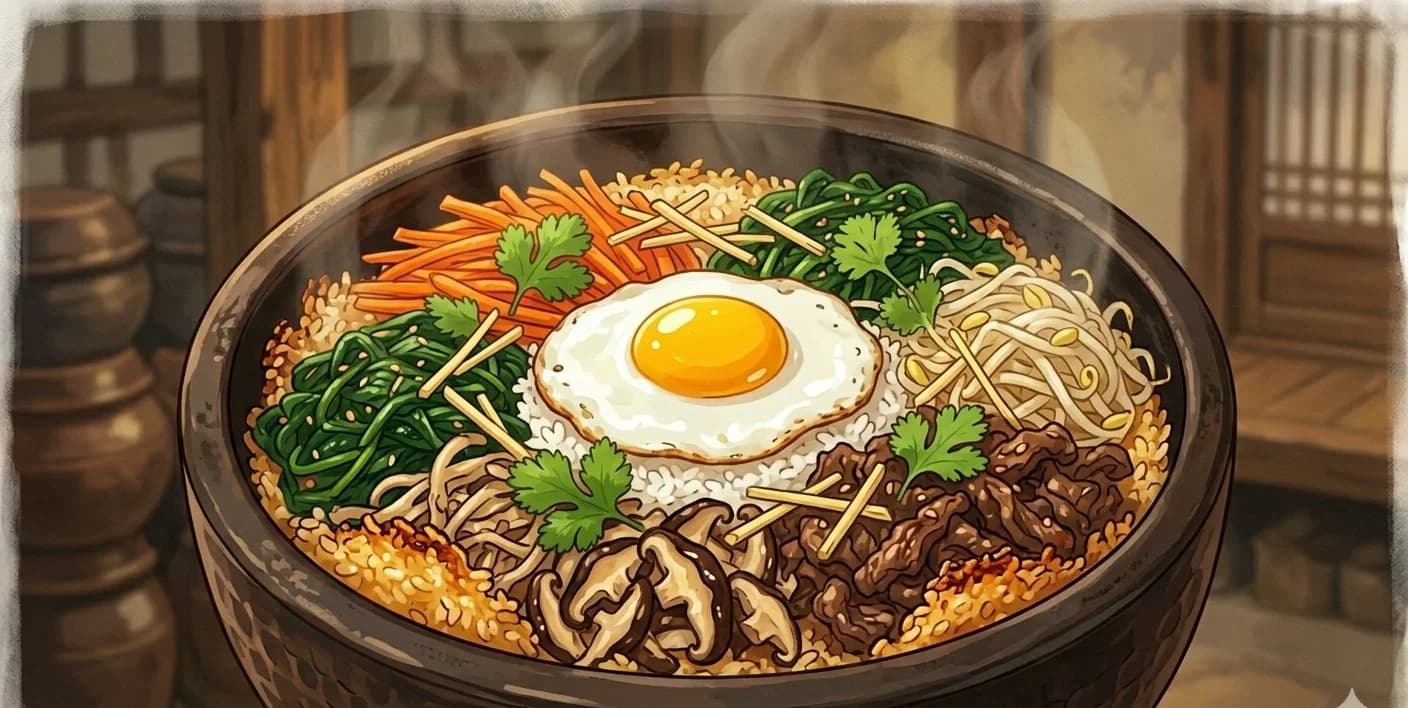
Bibimbap (Mixed Rice Bowl)
1 hour 10 minutes
 Medium
Cross-Cultural · Korea
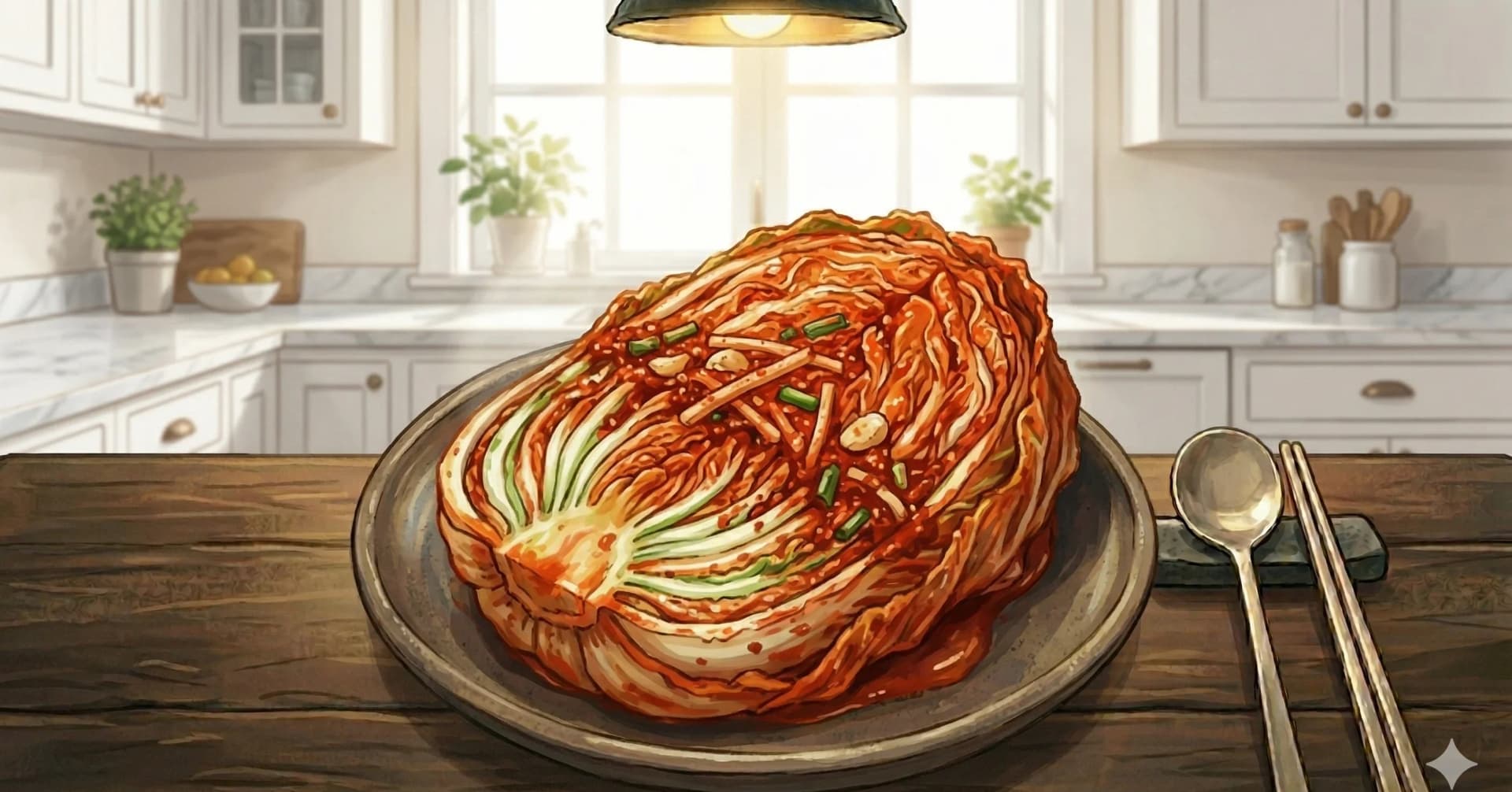
Napa Cabbage Kimchi (통배추김치)
8 hours plus 1-2 days fermentation
 Medium
Korean Cuisine
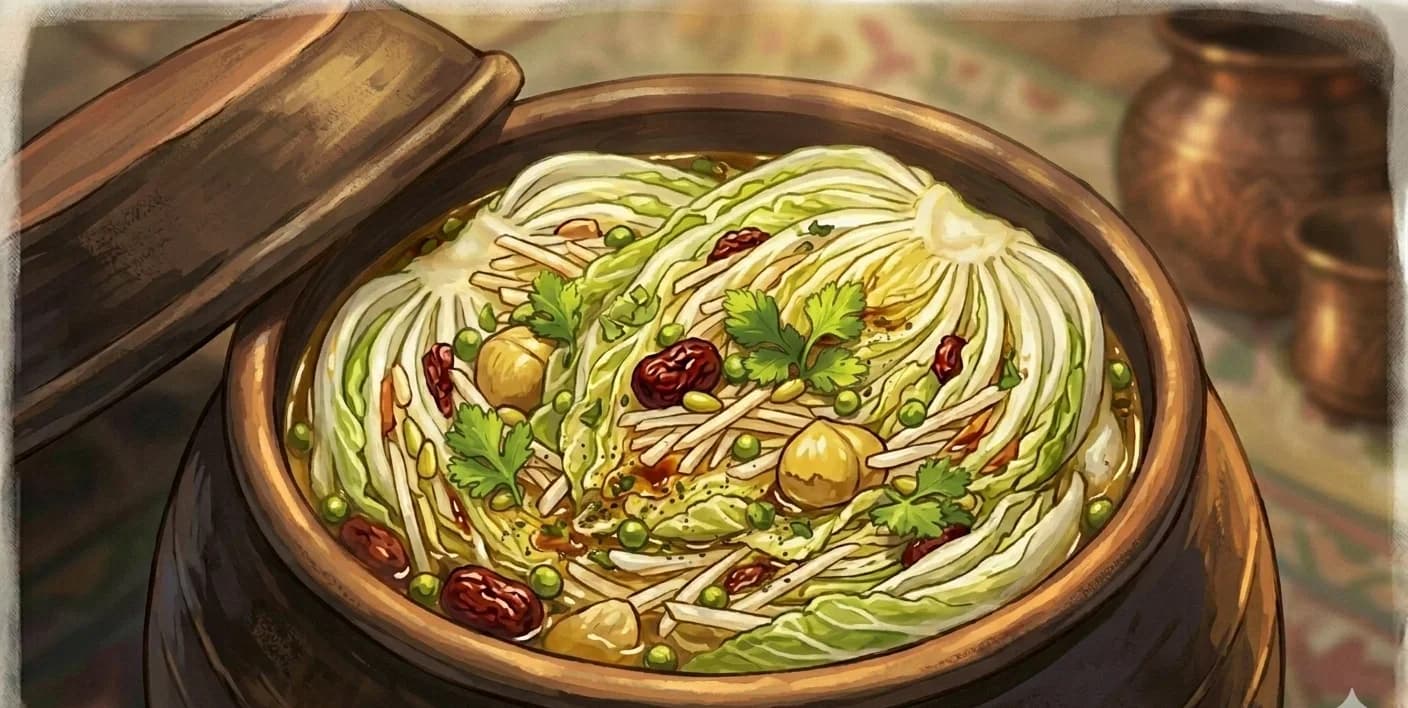
Baek Kimchi (White Kimchi)
3 hours (plus 1 to 3 days fermentation)
 Medium
Cross-Cultural · Korea
Braised Black Cod (Eundaegu-jorim / 은대구조림)
45 minutes
Ratings & Comments
Ratings & Comments
Ratings
Share your thoughts on this recipe.
Sign in to rate and comment