Kerala · Indian Cuisine
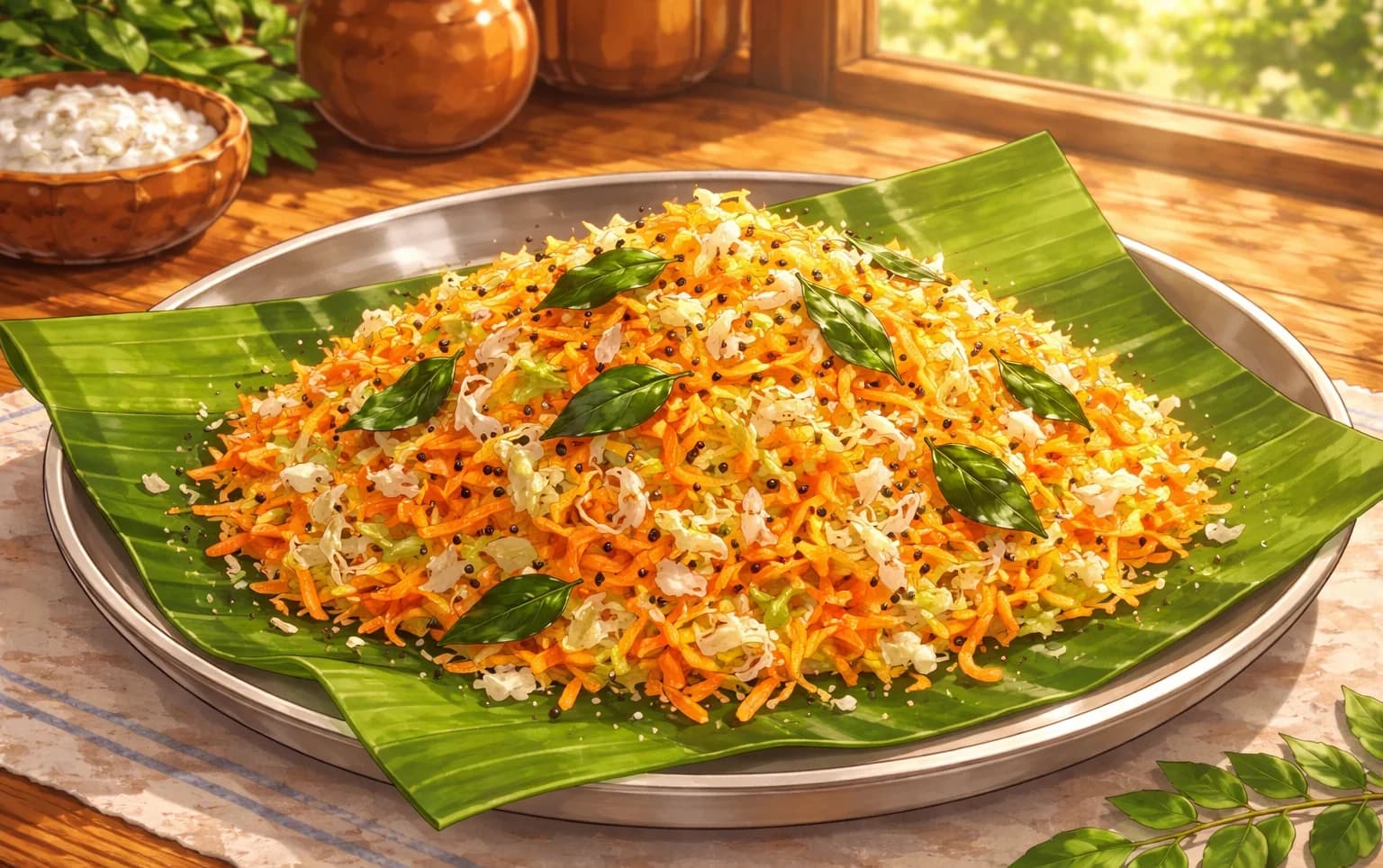
Carrot and Cabbage Thoran
Kerala dry stir-fry with grated coconut, mustard seeds and curry leaves — light, bright and ready in minutes
Thoran is not a single dish. It is a technique and a category. Almost any vegetable can be made into a thoran: raw plantain, beetroot, yam, green beans, drumstick leaves, and this combination of cabbage and carrot, which is perhaps the most common and most reliable of them all. The form is consistent: coconut oil, crackled mustard seeds, curry leaves, shallots, turmeric, the vegetable, and grated fresh coconut to finish. The texture should be dry, each piece of vegetable distinct, the coconut coating it lightly rather than clumping or becoming wet.
In a Kerala sadya (the elaborate vegetarian feast served on banana leaf) thoran always appears, usually in two or three varieties, as one of the dry preparations that balance the wetter curries and dals. But thoran is also the most everyday side dish, made fresh daily in many Kerala households, because it requires almost no preparation time and is at its best eaten immediately.
The carrot is blanched first, briefly, just to take the edge off its rawness and bring out its color. The cabbage goes in raw to the pan, where it wilts just enough to soften without losing its structure. Fresh coconut arrives at the very end, after the heat is off or nearly so, because overcooked coconut becomes oily and loses the fresh, faintly sweet quality that makes a thoran what it is.
This is a dish that rewards good ingredients: fresh curry leaves, freshly grated coconut, and coconut oil that actually tastes of coconut.
At a Glance
Yield
4–6 servings
Prep
15 minutes
Cook
15 minutes
Total
30 minutes
Difficulty
Easy
Ingredients
- 1¼ lbcarrot (about 9–9½ carrots), peeled and finely chopped or grated coarsely
- 2¼ lbcabbage (about 1–1½ heads), finely shredded
- 1 lbfresh coconut, grated
- ⅓ cupturmeric powder (note: use 1–2 teaspoons for this recipe, not the full 50 g)
- 3¼ tbspgreen chilli, finely chopped
- 1 tbspmustard seeds
- 1¾ tbspwhole dried red chilli
- ¾ cupcurry leaves (about 20–25 leaves)
- ½ cupcoconut oil
- ¾ lbshallots, finely sliced
- 1⅔ tspsalt, or to taste
Method
- 1
Blanch the carrot. Bring a pot of salted water to a boil. Add the chopped or coarsely grated carrot and blanch for 2–3 minutes, just long enough to soften slightly and turn bright orange. Drain and refresh under cold water. Set aside.
- 2
Crackle mustard seeds. Heat the coconut oil in a wide, heavy pan or wok over medium-high heat. Add the mustard seeds and wait for them to crackle and pop. Add the whole dried red chillies and let them darken for a few seconds.
- 3
Add aromatics. Add the curry leaves (20–25 leaves). They will spit vigorously. Follow immediately with the sliced shallots and chopped green chillies. Stir and cook for 3–4 minutes until the shallots soften and become translucent.
- 4
Add cabbage. Add the shredded cabbage. Sprinkle over the turmeric powder and salt. Toss everything together and cook over medium-high heat for 4–5 minutes, stirring regularly. The cabbage should wilt and soften but still retain a little texture, not completely limp.
- 5
Add carrot. Add the blanched carrot and stir through. Cook together for 1–2 minutes.
- 6
Finish with coconut. Add the grated coconut and stir to combine thoroughly. Cook for just 1 more minute, long enough for the coconut to warm through. Taste for salt and serve immediately.
Key Ingredient Benefits
Fresh coconut: The grated coconut in a thoran is a source of dietary fiber and medium-chain saturated fat. More relevantly for this dish, it is the element that provides texture, richness, and the mild sweetness that balances the turmeric and chilli. Dried coconut is a distant substitute in terms of flavor.
Turmeric: Present here in small amounts as a seasoning and color agent. Its flavor is slightly bitter and earthy, and in small amounts it functions as a spice rather than a supplement.
Mustard seeds: When crackled in hot oil, the seeds release their volatile compounds into the oil, which then carries that flavor through the entire dish. The seeds themselves become mild and nutty after popping, almost unrecognizable as mustard.
Curry leaves: A non-negotiable element of Keralite cooking. Fresh curry leaves have an aromatic complexity (citrusy, slightly savory, with a faint neem-like note) that dried leaves barely hint at. They are at their most aromatic when added directly to hot oil.
Shallots: Kerala cooking uses small red shallots (chuvannulli) rather than large onions. Their flavor is sharper and more complex than regular onion. Sliced or crushed large shallots are the closest approximation.
Why This Works
Blanching the carrot before pan-cooking addresses the difference in water content and texture between carrot and cabbage. Raw carrot requires significantly more heat and time to soften than cabbage; by pre-blanching, both reach the right texture at the same time in the pan.
Adding coconut at the end, after the bulk of cooking is done, preserves its fresh character. Freshly grated coconut contains volatile aromatic compounds that dissipate quickly with sustained heat. The coconut should warm and coat, not fry.
A dry thoran requires high heat and frequent stirring. Low heat traps the vegetables' released moisture, creating steam that turns the dish soggy. High heat evaporates this moisture quickly, maintaining the dry, toasted quality that defines the preparation.
Substitutions & Variations
- Single vegetable: Use only cabbage, or only carrot, for a simpler version. Cabbage-only thoran is particularly clean and quick.
- Beans thoran: Replace the carrot with finely chopped green beans. No blanching needed. Beans cook down quickly in the pan.
- Beetroot thoran: A vivid, earthy alternative using raw grated beetroot. Add a small amount of coconut vinegar or lime to sharpen.
- Coconut oil: If unavailable, a neutral oil works technically, though the flavor will be different and less distinctly Keralite.
- Dried coconut: Soak desiccated coconut in a little warm water before using. Texture will be softer, flavor less fresh.
Serving Suggestions
- Part of a Kerala sadya alongside rice, sambar, rasam, aviyal, olan, and other preparations.
- A side dish with any Kerala curry and rice in everyday meals.
- With appam or Kerala paratha as a lighter meal.
- Eaten as is, at room temperature, as a salad-like side for rice.
Storage & Reheating
Thoran is best eaten fresh. Stored in the refrigerator, the coconut becomes slightly oily and the vegetables soften overnight. It keeps for 1 day but is noticeably better on the day of cooking. To reheat, stir briefly in a dry pan over medium heat. Do not add water. This will make it soggy. Freezing is not recommended.
Cultural Notes
Thoran (തോരൻ) is the broad Kerala category of dry stir-fried vegetable preparations finished with grated fresh coconut, with the carrot-and-cabbage version being one of the most common everyday combinations. The dish belongs to the foundational vegetable side category of Kerala home cooking and appears at virtually every Kerala lunch and dinner as the upperi (dry vegetable accompaniment) that completes the standard meal of rice, sambar or moru curry, and one or two thorans. The dish is also a fixture of the formal sadya banquet, where two or three different thorans appear among the dozens of items served on the banana leaf.
The technique is a quick stir-fry with a specific coconut finish. A tempering of mustard seeds, urad dal, dried red chilies, and curry leaves is bloomed in coconut oil. Sliced shallots, chopped green chilies, and a pinch of turmeric go in for thirty seconds, then the prepared vegetables (in the carrot-and-cabbage version, finely shredded green cabbage and small diced or shredded carrot) are added with a small amount of salt. The pan covers for two to three minutes so the vegetables steam in their own moisture without going mushy, then the cover comes off and the vegetables cook for another two minutes uncovered to evaporate excess moisture. The dish is finished off the heat with a generous handful of fresh grated coconut (the coconut should be added off the heat or at very low heat so it stays raw-tasting and bright rather than toasting brown).
The cultural place is the everyday Kerala home meal. Thoran preparations rotate through the week based on what vegetables are at the market: carrot-cabbage thoran is a common combination, but the same technique applies to long beans, banana flower, raw banana, raw papaya, snake gourd, ridge gourd, ash gourd, and countless other Kerala vegetables. The dish demands fresh coconut as the defining ingredient, and the freshness of the coconut is one of the markers that distinguishes a properly made thoran from a careless one. The dish travels poorly (the coconut loses its fresh character within hours) and is one of the preparations that Malayalis in diaspora most often cite as something that does not reproduce well outside Kerala without access to fresh coconut, which has driven the recent proliferation of fresh coconut sourcing in Indian-Gulf and Western Malayali communities.
Nutrition Facts
Calories: 534kcal (27%)|Total Carbohydrates: 48g (17%)|Protein: 9g (18%)|Total Fat: 38g (49%)|Saturated Fat: 32g (160%)|Cholesterol: 0mg (0%)|Sodium: 772mg (34%)|Dietary Fiber: 17.2g (61%)|Total Sugars: 19.8g
You Might Also Like
Ratings & Comments
Ratings & Comments
Ratings
Share your thoughts on this recipe.
Sign in to rate and comment