Chinese Cuisine
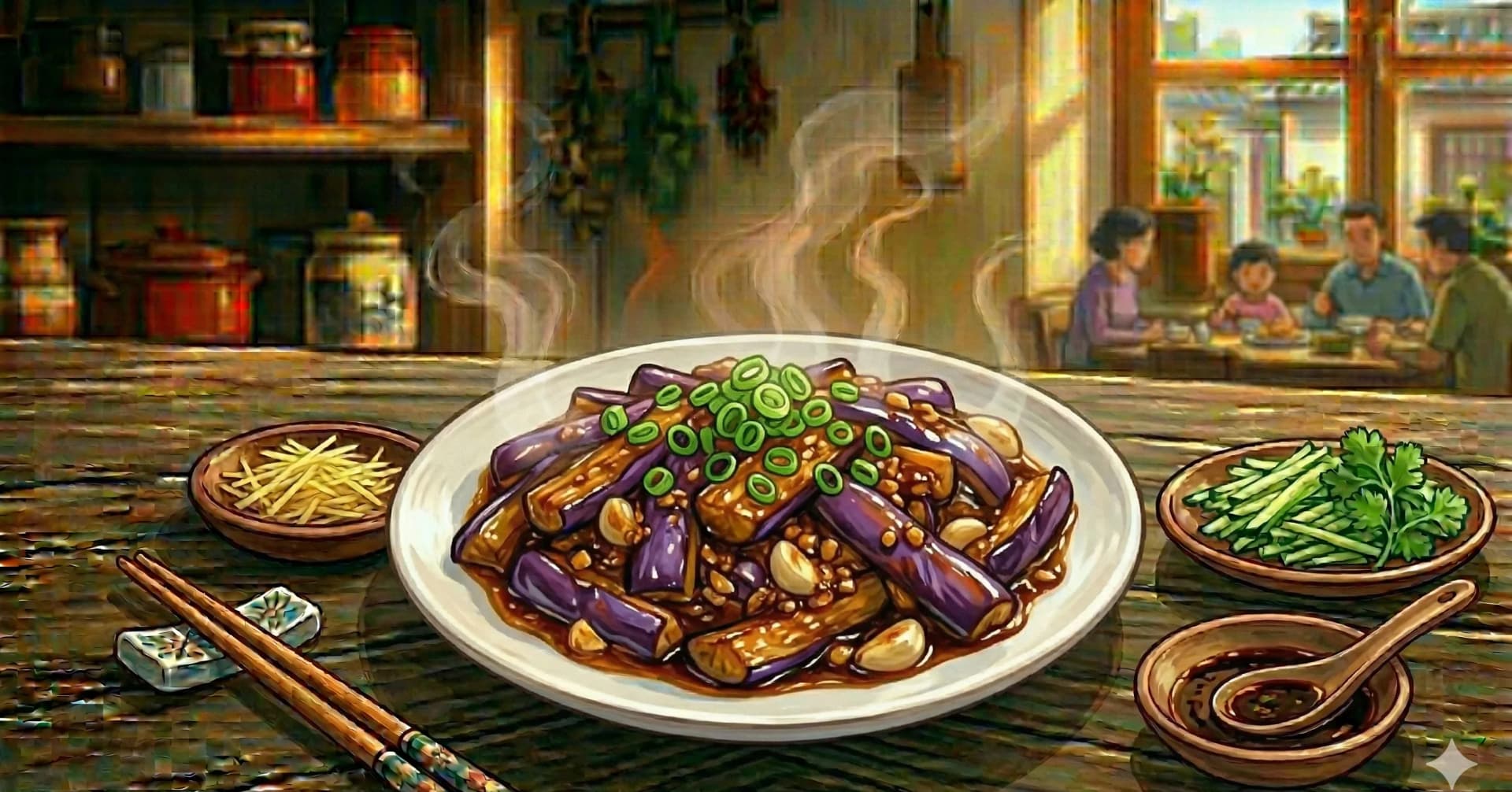
Yu Xiang Qie Zi (Chinese Eggplant with Garlic Sauce)
Silky Chinese eggplant in a sweet, sour, and spicy "fish-fragrant" sauce with garlic, ginger, and scallion
There is a moment, about two minutes into the stir-fry, when the eggplant pieces surrender. They have been resisting, firm and slightly spongy, but then the heat breaks through and they collapse into something silky, almost creamy, absorbing the sauce like velvet absorbs water. The sauce itself is a marvel of balance: the Sichuan "fish-fragrant" flavor profile (yu xiang), which despite its name contains no fish at all, but brings together heat from doubanjiang, sweetness from sugar, tang from vinegar, and aromatic depth from garlic, ginger, and scallion in a way that makes each taste inseparable from the others.
Yu xiang is one of the canonical flavor profiles of Sichuan cuisine, originally developed as the seasoning used in fish dishes and later applied to everything from pork to eggplant to tofu. The eggplant version has become perhaps the most popular, because the vegetable's sponge-like flesh absorbs the complex sauce completely, making every bite an explosion of concentrated flavor.
Chinese eggplant, longer and thinner than the globe variety common in Western markets, is essential here. Its thinner skin, fewer seeds, and creamier flesh cook faster and absorb sauce more readily. If you can find it, use it. The practical key is not over-handling the eggplant. It should be cooked hot and fast, allowed to brown and soften without being stirred into a pulp. The pieces should hold their shape while being completely tender inside.
At a Glance
Yield
4 servings
Prep
15 minutes
Cook
15 minutes
Total
30 minutes
Difficulty
Medium
Ingredients
Stir-Fry Ingredients
- 1 lbChinese eggplant (about 3–4), cut into batons 6 cm long and 1.5 cm wide
- 3 tbspvegetable oil
- ¾ ozdoubanjiang (Pixian preferred)
- 4 clovesgarlic, minced
- 2½ tbspfresh ginger, minced
- 3scallions, white and green parts separated, finely sliced
Sauce Ingredients
- 1 tbsplight soy sauce
- 1 tbspChinkiang black vinegar
- 1¼ tbspsugar
- ¼ cupwater or stock
To Finish
- 1⅞ tspcornstarch, dissolved in 15 ml cold water
- 1 tspsesame oil
Method
- 1
Cut the Chinese eggplant into batons about 6 cm long and 1.5 cm wide. If using globe eggplant, cut into similar-sized pieces and salt them for 15 minutes to draw out moisture, then pat dry. Chinese eggplant does not require salting.
- 2
Mix the sauce ingredients in a small bowl: light soy sauce, Chinkiang vinegar, sugar, and water. Stir until the sugar dissolves. Have the cornstarch slurry ready separately.
- 3
Heat a wok over high heat until it smokes. Add 30 ml of the vegetable oil and swirl.
- 4
Add the eggplant batons in a single layer. Do not crowd the wok. Work in batches if needed. Let the eggplant sit undisturbed for 1 minute, allowing the bottom surface to brown.
- 5
Toss and continue stir-frying for 3 to 4 minutes, turning the pieces to brown on multiple sides. The eggplant should soften and become slightly golden, with the flesh beginning to turn translucent. When a piece yields easily to gentle pressure from your spatula, it is ready. Transfer to a plate.
- 6
If the wok is dry, add the remaining 15 ml of vegetable oil. Reduce the heat to medium.
- 7
Add the doubanjiang and stir-fry for 30 seconds, until the oil turns red and the paste is fragrant. This step is critical: it transforms raw doubanjiang into something complex and rounded.
- 8
Add the minced garlic, ginger, and scallion whites. Stir for 15 seconds, until the aromatics bloom and the kitchen fills with a sharp, warm fragrance.
- 9
Pour in the sauce mixture. It will bubble immediately. Stir to combine.
- 10
Return the browned eggplant to the wok. Toss gently to coat each piece with the sauce. Let everything simmer together for 1 to 2 minutes, allowing the eggplant to absorb the sauce.
- 11
Give the cornstarch slurry a stir and pour it into the wok. Stir gently. The sauce will thicken within 15 seconds, becoming glossy and coating each piece of eggplant.
- 12
Taste the sauce. It should be a complex balance of sweet, sour, salty, and spicy, with no single flavor dominating. Adjust with a pinch of sugar, a drop of vinegar, or a splash of soy sauce as needed.
- 13
Remove from heat. Drizzle with sesame oil and scatter the scallion greens over the top.
- 14
Serve immediately with steamed rice.
Key Ingredient Benefits
Eggplant is a good source of fiber and contains nasunin, a potent antioxidant found in the purple skin. Research suggests nasunin may help protect cell membranes from oxidative damage. Eggplant is also very low in calories, though it readily absorbs oil during cooking.
Doubanjiang is rich in fermentation-derived umami compounds. As a fermented soybean product, it may contain beneficial enzymes and amino acids produced during its long aging process.
Chinkiang vinegar is a fermented black rice vinegar that has been used in Chinese cuisine and traditional medicine for centuries. Some research suggests that vinegar consumption may support blood sugar regulation.
Why This Works
Chinese eggplant has a cellular structure that acts like a sponge. When heated, the cells collapse and the air spaces between them fill with whatever liquid is present. In this dish, that liquid is the yu xiang sauce, which means every bite delivers the full spectrum of flavors rather than just a surface coating.
The doubanjiang is the backbone of the sauce. Frying it in oil before adding other ingredients allows its fermented flavors to bloom and its natural red color to leach into the oil, creating the characteristic reddish hue of the sauce. Without this step, the sauce would taste flat and look dull.
The yu xiang flavor profile follows a specific formula: heat (doubanjiang), sweet (sugar), sour (vinegar), savory (soy sauce), and aromatic (garlic, ginger, scallion). The balance between these five elements is what makes the sauce so compelling. No single element should dominate, and when it is right, the sauce has a quality that is hard to pin down but impossible to stop eating.
Substitutions & Variations
- Eggplant type: Globe eggplant works but has more seeds and thicker skin. Japanese eggplant is the closest substitute for Chinese eggplant.
- Doubanjiang: There is no perfect substitute. In a pinch, a mix of miso paste and chili flakes can approximate the flavor, but the result will lack depth.
- Fish-fragrant pork: The same sauce is traditionally used with shredded pork (yu xiang rou si). Slice pork loin into thin strips, velvet them, and stir-fry before building the sauce.
- Less oil: The eggplant can be microwaved for 3 minutes before stir-frying to pre-soften it, reducing the amount of oil it absorbs during cooking.
- Vegan: This dish is naturally vegan. Check the doubanjiang label, as some brands contain wheat or other additives.
Serving Suggestions
Serve over steamed rice, where the sauce will soak into the grains and create a deeply satisfying one-bowl meal. This dish pairs well with a lighter protein, such as steamed fish or simple poached chicken, and a clean vegetable side like stir-fried greens. It is rich enough to serve as a main dish for vegetarians, especially alongside rice and a soup.
Storage & Reheating
Store in an airtight container in the refrigerator for up to 3 days. The eggplant will continue to absorb sauce as it sits, becoming even more flavorful (though softer). Reheat in a skillet over medium heat, adding a splash of water to loosen the thickened sauce. The dish reheats well and some people prefer it the next day. Freezing is possible for up to 1 month, but the eggplant texture will be very soft upon thawing.
Cultural Notes
Chinese eggplant in garlic sauce is the American Chinese restaurant standard built from the Sichuan yu xiang (fish-fragrant) flavor profile, simplified and sweetened for the Cantonese-American palate that defined the second half of the twentieth century Chinese restaurant scene in North America. The dish traces directly to yu xiang qie zi, the traditional Sichuan eggplant dish that uses pickled chilies, vinegar, garlic, ginger, and sugar in a precisely balanced sauce. In the American adaptation, the pickled chilies typically disappear and the vinegar drops in favor of more sugar and soy sauce, producing a sweeter, milder version that retains the visual signature (long-cut eggplant in a glossy brown sauce, often with ground pork) without the heat and tang of the original.
The American version standardized in restaurants like Henry Chung's Hunan Restaurant in San Francisco and the Cantonese-American chains that spread across the country from the 1960s through the 1980s. The eggplant is typically the long thin Chinese or Japanese variety (rather than the rounder Italian eggplant), cut into thick batons, lightly battered or flour-dusted, and deep-fried until soft. The sauce is built from soy sauce, sugar, rice wine, garlic, ginger, scallion, and a cornstarch slurry, with optional doubanjiang or chili-garlic sauce for a hint of heat. Ground pork is added in many restaurant versions, giving the dish closer to its Sichuan ancestor than the strictly vegetarian variations.
For diners interested in the authentic Sichuan original, the yu xiang qie zi entry covers the traditional technique using paojiao pickled chilies, black vinegar, and the precise sweet-sour-spicy balance of the original. The American garlic-sauce version is a separate dish in its own right at this point, with its own history in the development of American Chinese cuisine. Jennifer 8. Lee's The Fortune Cookie Chronicles documents how dishes like this one evolved as Chinese immigrant cooks adapted their regional cuisines to American ingredients, equipment, and palates over four generations of Chinese restaurant work in North America.
Nutrition Facts
Calories: 123kcal (6%)|Total Carbohydrates: 15g (5%)|Protein: 2g (4%)|Total Fat: 7g (9%)|Saturated Fat: 0.9g (5%)|Cholesterol: 0mg (0%)|Sodium: 418mg (18%)|Dietary Fiber: 4.3g (15%)|Total Sugars: 8.7g
You Might Also Like
Ratings & Comments
Ratings & Comments
Ratings
Share your thoughts on this recipe.
Sign in to rate and comment