Korean Cuisine
Dak Kalguksu (Chicken Knife-Cut Noodle Soup)
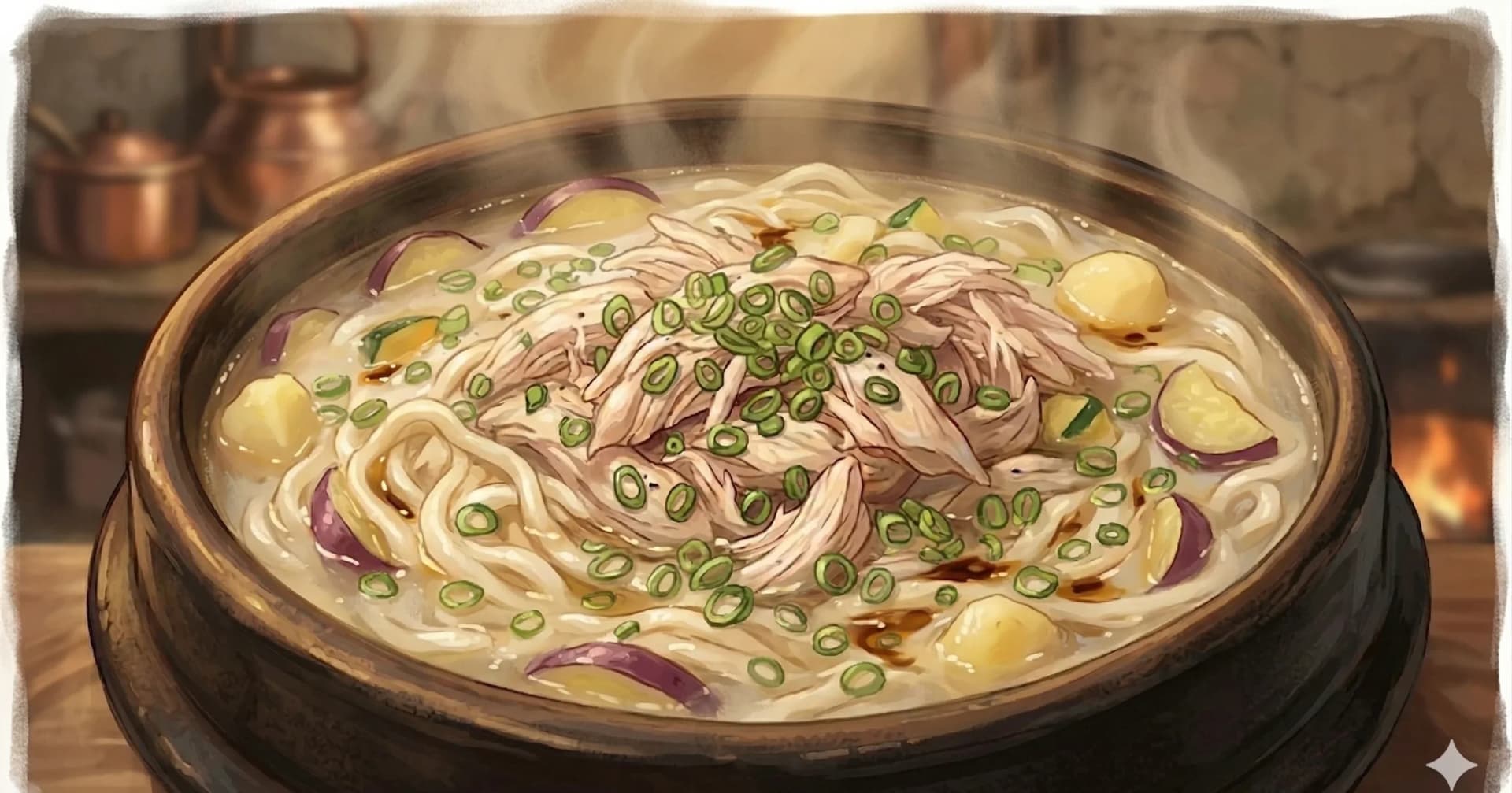
Hand-cut wheat noodles in a milky chicken broth with zucchini and potatoes
The noodles are the signature: broad, slightly uneven ribbons with a velvety, toothsome chew that only hand-cut pasta can deliver. They slip through the milky, chicken-rich broth, carrying with them soft pieces of potato and tender half-moons of zucchini. Each spoonful is warming and substantial, the kind of soup that feels restorative even before you finish the first bowl.
Kalguksu means "knife noodles," referring to the technique of rolling the dough thin and cutting it into strips with a knife rather than pulling, spinning, or extruding. The noodles are slightly thicker and more irregular than machine-made versions, and this irregularity is a feature. Each noodle cooks slightly differently, some silkier at the edges, some chewier at the center, creating a varied texture in every bite. Kalguksu is one of Korea's most comforting noodle dishes, and dak (chicken) kalguksu, with its protein-rich poultry broth, is among the most satisfying versions.
What this dish delivers is soulful, unpretentious nourishment. The broth is not a consomme; it is slightly cloudy, slightly starchy from the noodles cooking directly in it, and deeply flavored from a whole chicken or chicken parts simmered with garlic and onion. There is no fermented paste, no chili, no complexity to decode. It is pure and direct.
The practical insight is to cook the noodles directly in the broth rather than boiling them separately. The starch released from the noodles thickens the broth naturally, giving it the slightly creamy, opaque quality that defines a good kalguksu. This means the broth and noodles become inseparable, each improving the other.
At a Glance
Yield
4 servings
Prep
40 minutes (plus 30 minutes dough resting)
Cook
1 hour
Total
2 hours 10 minutes
Difficulty
Medium
Ingredients
Broth Ingredients
Dough Ingredients
- 2⅓ cupall-purpose flour, plus more for dusting
- ½ tspfine salt
- ⅔ cupwater
- 1 tspvegetable oil
To Finish
- 7 ozpotato (about 1 medium), peeled and cut into bite-sized pieces
- 5½ ozzucchini (about 1 small), halved and sliced into half-moons
- 3scallions, thinly sliced
Method
- 1
Make the noodle dough. Dissolve the salt in 140 ml of water. Pour the flour into a large bowl, make a well in the center, and add the salted water and vegetable oil. Stir with a fork or chopsticks until a shaggy dough forms, then turn out onto a lightly floured surface and knead for 8 to 10 minutes until smooth and elastic. The dough should feel firm but pliable, not sticky.
- 2
Wrap the dough tightly in plastic and let it rest at room temperature for 30 minutes. Resting relaxes the gluten and makes rolling much easier.
- 3
While the dough rests, start the broth. Place the chicken in a large stockpot with the water, onion, garlic, ginger, kelp (if using), and peppercorns. Bring to a boil over high heat.
- 4
Skim the scum that rises to the surface during the first few minutes of boiling. Reduce heat to a steady simmer, cover partially, and cook for 40 to 50 minutes until the chicken is fully cooked and the broth is flavorful.
- 5
Remove the chicken from the broth. Let it cool slightly, then shred the meat, discarding the skin and bones. Set the shredded chicken aside.
- 6
Strain the broth through a fine mesh strainer and return it to the pot. Discard the solids. Season the broth with soy sauce and salt. It should taste clean and savory with a distinct chicken flavor. You should have about 1.5 liters. If less, add water.
- 7
Roll out the rested dough. Divide it in half for easier handling. On a well-floured surface, roll each piece into a thin rectangle, about 2 mm thick. Flip the dough and dust with flour frequently to prevent sticking.
- 8
Cut the noodles. Fold the rolled dough loosely over itself (like folding a letter) and cut crosswise into strips about 3 to 5 mm wide. Unfold the strips and toss them gently with flour to prevent them from sticking together. The noodles will be slightly irregular, which is correct.
- 9
Bring the strained broth back to a boil over high heat. Add the potato pieces and cook for 5 minutes until they are starting to soften around the edges.
- 10
Add the hand-cut noodles to the boiling broth, shaking off excess flour first. Stir gently to separate them as they enter the liquid. The broth will become slightly cloudy and thicker as the noodles release starch.
- 11
Cook the noodles in the broth for 5 to 7 minutes, stirring occasionally to prevent clumping. They are done when they are tender but still have a pleasant chewiness at the center. Test one by biting through it.
- 12
Add the zucchini slices and shredded chicken during the last 2 to 3 minutes of cooking. The zucchini should soften but not turn mushy.
- 13
Taste the broth one final time and adjust the salt. The starch from the noodles will have muted the seasoning slightly, so it may need a touch more salt or soy sauce.
- 14
Ladle into deep bowls, making sure each serving has a generous tangle of noodles, a share of the vegetables and chicken, and plenty of broth. Top with sliced scallions and serve immediately.
Key Ingredient Benefits
Chicken broth: Rich in glycine and proline from collagen, amino acids that research suggests may support gut lining integrity and joint health. Traditionally valued across many cultures as a restorative food during illness and recovery.
All-purpose flour: Provides gluten, which gives the noodles their characteristic chewiness and elasticity. The dough hydration level (about 47%) is relatively low for noodle dough, which creates a firmer, more toothsome noodle.
Zucchini: A source of vitamin C, potassium, and manganese. Its mild flavor and soft texture when cooked make it a natural complement to the savory broth without competing with the chicken.
Why This Works
Cooking the noodles directly in the broth is the defining technique of kalguksu. The starch released from the fresh noodles thickens the broth naturally, creating the slightly opaque, creamy quality that distinguishes this soup from clear broths. This also means the noodles absorb the chicken flavor as they cook, making them taste like the soup rather than being a separate element dropped in.
Hand-cutting the noodles creates variation in width and thickness, which translates to variation in texture. Some noodles are thinner and silkier, others thicker and chewier. This unevenness gives the dish character and makes each bite slightly different, which is more interesting than the uniformity of machine-cut noodles.
Using bone-in chicken with skin for the broth extracts collagen and fat, which give the broth body and richness. Removing the skin before shredding the meat for the final dish means the broth benefits from the fat during simmering, but the finished soup is not greasy.
Substitutions & Variations
Store-bought noodles: If making noodles from scratch is not practical, look for fresh kalguksu noodles at Korean grocery stores. Dried kalguksu or even fresh fettuccine can approximate the texture.
Broth variations: Some versions use anchovy-kelp broth instead of chicken, particularly at seafood-focused kalguksu restaurants. Clam kalguksu (jogae kalguksu) is another popular variation.
Additions: Dumplings (mandu) are sometimes added to the soup for a more substantial meal. Thinly sliced mushrooms or perilla leaves are other common additions.
Spicy version: Serve with a side of gochugaru mixed with soy sauce and sesame oil for diners who want heat.
Serving Suggestions
Dak kalguksu is a complete meal on its own, but it pairs well with a few simple banchan. Kkakdugi (cubed radish kimchi) is the traditional companion, its sharp, crunchy acidity cutting through the rich broth. A plate of kimchijeon on the side makes for a satisfying combination. In kalguksu restaurants, the meal often concludes with rice cooked in leftover broth, creating a simple porridge.
Storage & Reheating
Leftover soup: Store in the refrigerator for up to 2 days. The noodles will absorb the broth and swell, so the soup will become thicker. Add water or additional broth when reheating.
Uncooked noodles: Dust generously with flour and store in the refrigerator for up to 1 day, or freeze on a tray and transfer to a bag for up to 1 month. Cook directly from frozen, adding 1 to 2 minutes to the cooking time.
Reheating: Warm gently over medium heat, adding broth or water as needed. The noodles will have softened further, losing some of their chewiness, but the soup will still be delicious.
Cultural Notes
Dak kalguksu (닭칼국수) joins two pillars of Korean comfort cooking: dak (닭, chicken) and kalguksu (칼국수, "knife-cut noodles"). Kalguksu itself is one of the oldest Korean noodle traditions, predating both jjajangmyeon and ramyeon by centuries. The earliest written record of kalguksu in Korea appears in a 1809 cookbook called Gyuhap Chongseo, but archaeological and oral evidence places hand-cut wheat noodles in Korean kitchens well before that.
The "knife-cut" technique is what gives the noodles their character. The dough is rolled flat, folded, and sliced into ribbons with a kitchen knife rather than being extruded, hand-pulled, or pressed. The result is a noodle with slightly uneven edges and a soft, absorbent chew that suits a broth-based bowl. Regional broth choice splits sharply. In the south of Korea, kalguksu is most often paired with anchovy or seafood broth. In the inland provinces, the chicken-broth dak kalguksu version is dominant.
The dish has a strong association with summer monsoon season (jangma, 장마). The heavy humidity of jangma makes thick rice meals feel oppressive, and a steaming bowl of chicken-noodle soup paradoxically becomes the right answer. Dak kalguksu also has deep Buddhist-temple roots. Certain temples in Jeolla and Gangwon provinces are known for distinctive preparations served to pilgrims and resident monks.
The Myeongdong Kyoja restaurant in central Seoul, opened in 1966, is probably the most famous specialty kalguksu shop in the country. It serves thousands of bowls of its signature chicken-broth version every day.
Nutrition Facts
Calories: 560kcal (28%)|Total Carbohydrates: 63.8g (23%)|Protein: 33.4g (67%)|Total Fat: 19.2g (25%)|Saturated Fat: 5.4g (27%)|Cholesterol: 104mg (35%)|Sodium: 352mg (15%)|Dietary Fiber: 3.5g (13%)|Total Sugars: 1.8g
You Might Also Like
 Medium
Thai Cuisine
Boat Noodles (ก๋วยเตี๋ยวเรือ)
3 hours 15 minutes
 Medium
Vietnamese Cuisine
Spicy Beef Noodle Soup (Bún Bò Huế)
3 hours 45 minutes
 Easy
EasyVietnamese Cuisine
Cháo Gà (Vietnamese Chicken Rice Porridge)
1 hour 30 minutes
 Medium
Indonesian Cuisine
Ayam Goreng Lengkuas (Galangal Fried Chicken)
1 hour 45 minutes
Ratings & Comments
Ratings & Comments
Ratings
Share your thoughts on this recipe.
Sign in to rate and comment