
Japanese Cuisine
Eel Sauce (Unagi no Tare)
The dark, glossy, sweet soy glaze for grilled eel and sushi rolls, simmered from four pantry ingredients
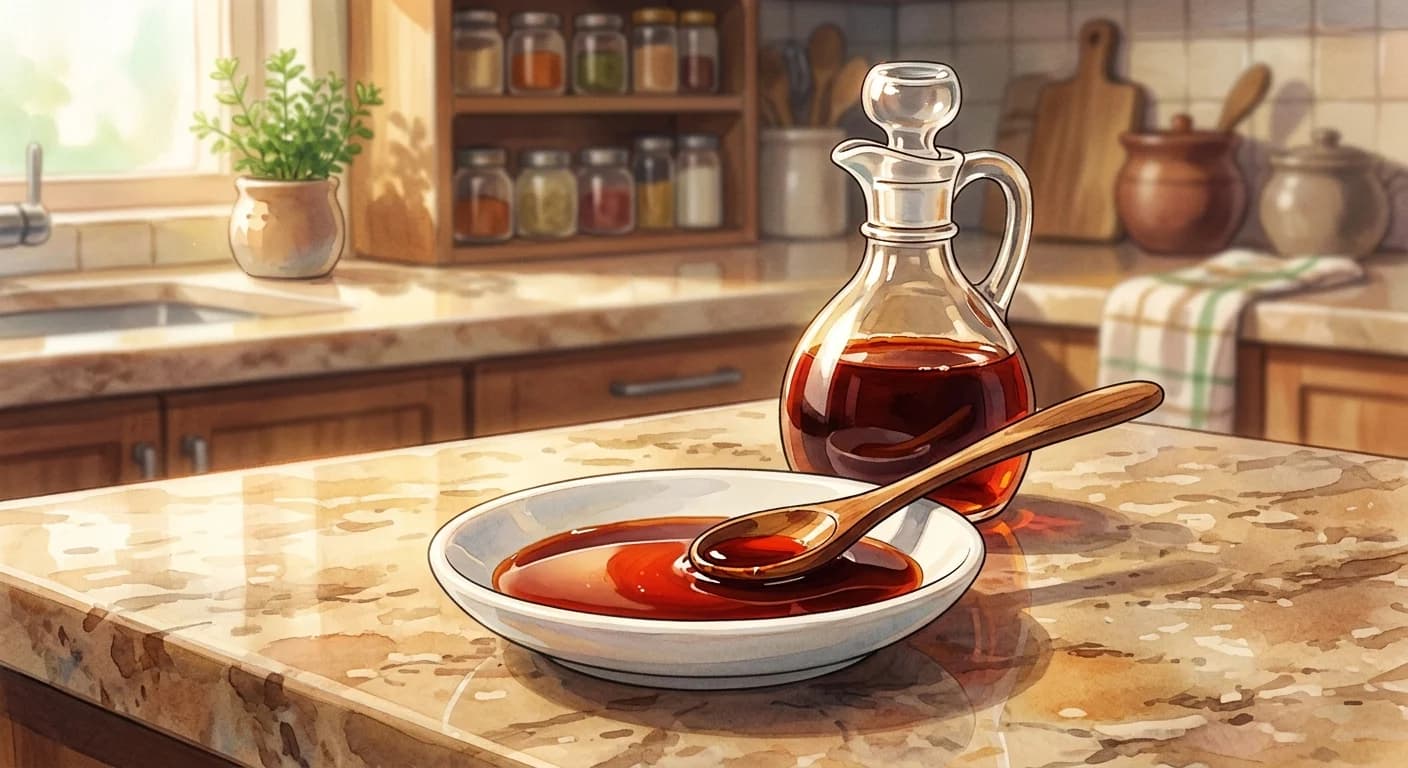
Eel sauce is the dark, glossy drizzle on dragon rolls and the lacquer on grilled eel over rice. There's no eel in it. In Japan it's called unagi no tare, the basting sauce for eel, and it's soy sauce, mirin, sake and sugar cooked down until it turns syrupy and smells faintly of caramel.
The name comes from how it's used. Eel restaurants brush it onto the fish again and again as it grills, so the sugar chars and builds up in thin layers. At home you make a jar, and it ends up on far more than eel: grilled chicken, salmon, eggplant, rice balls crisped in a pan, sushi rolls, or a plain bowl of rice.
It's a close cousin of teriyaki sauce, with more sugar and a longer reduction, so it comes out thicker and sweeter.
Keep an eye on the pan toward the end. Sugar and soy sauce scorch easily, so turn the heat down once the sugar dissolves, and take the sauce off while it still pours freely. It thickens a lot as it cools, and an over-reduced batch sets almost like candy in the fridge. If that happens, warm it with a spoonful of water and it loosens again.
Inspired by Just One Cookbook and Chopstick Chronicles.
At a Glance
Yield
About ⅔ cup (ten 1-tablespoon servings)
Prep
5 minutes
Cook
15 minutes
Total
20 minutes (plus cooling)
Difficulty
Easy
Ingredients
Method
- 1
Pour the mirin and sake into a small saucepan and bring them to a boil over medium heat. Let them bubble for 1 minute to cook off some of the alcohol.
- 2
Add the sugar and soy sauce and stir until the sugar dissolves completely, about 1 minute.
- 3
Lower the heat so the sauce bubbles gently and simmer for 10 to 15 minutes, stirring now and then, until it has reduced by about half, to roughly ⅔ cup (160 ml). Near the end the bubbles turn smaller and more crowded, and the sauce coats a spoon in a thin, glossy layer. Keep the heat low; sugar and soy sauce scorch easily.
- 4
Take the pan off the heat while the sauce still pours easily, because it thickens as it cools. To check, put a drop on a cold plate and wait a minute. It should run slowly, like warm honey.
- 5
Let the sauce cool completely in the pan, then pour it into a clean jar or squeeze bottle and refrigerate.
- 6
To glaze, brush it onto grilled or broiled eel, chicken or fish in the last few minutes of cooking, turning and brushing two or three times so the layers build up. For sushi, drizzle it over the rolls just before serving.
Key Ingredient Benefits
Sugar and sodium: A 1-tablespoon serving has roughly 11 g of sugar and 700 mg of sodium. A drizzle over a sushi roll is less than that, but it adds up across a plate.
No eel: Despite the name, there's no fish in this sauce, so it's vegan as written. Bottled versions vary, and some Japanese brands include eel or bonito extract, so check the label if that matters to you.
Allergens: Soy sauce contains soy and wheat. Tamari makes the sauce gluten-free.
Alcohol: The boil and the simmer remove some of the alcohol in the sake and mirin, not all of it.
Why This Works
Eel sauce thickens by reduction alone. Simmering drives off water and some of the alcohol and concentrates the sugar until the sauce is thick enough to cling. Because sugar does the thickening, the sauce stays glossy and clear instead of turning gummy the way a starch-thickened sauce can.
The sugar is also what makes it a glaze. Brushed on over high heat, it browns, and the sugars react with the amino acids in the soy sauce to form the dark, toasty surface you see on grilled eel. One thick coat would burn before it set. Several thin coats build color without scorching.
Boiling the mirin and sake first takes the raw edge off the alcohol before the soy sauce goes in. Mirin brings a rice sweetness and body of its own, and sake adds savory depth, so the finished sauce tastes rounder than soy sauce and sugar would on their own.
Substitutions & Variations
Quick version: Simmer for 5 minutes, then stir in 1 teaspoon of cornstarch mixed with 2 teaspoons of cold water and let it bubble for 30 seconds. It thickens fast, but the sauce comes out a little cloudy instead of clear like a reduced one.
No sake: Use water. The sauce tastes a little flatter.
Cooking sake: Salted cooking sake makes the sauce saltier. Cut the soy sauce by a quarter and taste before adding the rest.
Gluten-free: Use tamari in place of the soy sauce.
Brown sugar: Light brown sugar adds a molasses note and makes the sauce darker.
Honey: Replace 1 tablespoon of the sugar with honey for extra shine. Watch the pan closely, because honey scorches faster than sugar.
Serving Suggestions
Brush it onto broiled eel and serve the eel over rice for unadon, or use it on grilled chicken thighs, salmon or eggplant. Drizzle thin lines over sushi rolls, especially ones with eel, tempura shrimp, avocado or cream cheese.
For yaki onigiri, brush it over onigiri and crisp them in a hot pan until the glaze bubbles and browns. And a spoonful over a bowl of rice with a fried egg makes a fast lunch.
Storage & Reheating
Fridge: Keep it in a clean, airtight jar for up to 1 month. It turns thick when cold; set the jar in hot water for a few minutes, or microwave a portion for 10 seconds, to loosen it.
Freezer: Freeze it in small portions for up to 3 months. Thaw in the fridge.
If it hardens: Warm it gently in a small pan with 1 to 2 teaspoons of water, stirring until it pours again.
Cultural Notes
Tare is the Japanese word for a basting or dipping sauce, and eel sauce is the tare of kabayaki: eel split, boned, skewered and grilled with a sweet soy glaze. According to Wikipedia's entry on kabayaki, a custom dating to the Edo period calls for eating kabayaki in summer for stamina, tied to Doyō no Ushi no Hi, the Midsummer Day of the Ox, which falls between July 18 and August 8. Served on a bowl of rice, the grilled eel becomes unadon.
Outside Japan the sauce traveled with sushi bars. Most people know it from rolls, where it's drizzled over fillings that often contain no eel at all.
Nutrition Facts
Calories: 60kcal (3%)|Total Carbohydrates: 13g (5%)|Protein: 1g (2%)|Total Fat: 0g (0%)|Saturated Fat: 0g (0%)|Cholesterol: 0mg (0%)|Sodium: 700mg (30%)|Dietary Fiber: 0g (0%)|Total Sugars: 11g
You Might Also Like
Ratings & Comments
Ratings & Comments
Ratings
Share your thoughts on this recipe.
Sign in to rate and comment