Chinese Cuisine
Five-Spice Roast Chicken
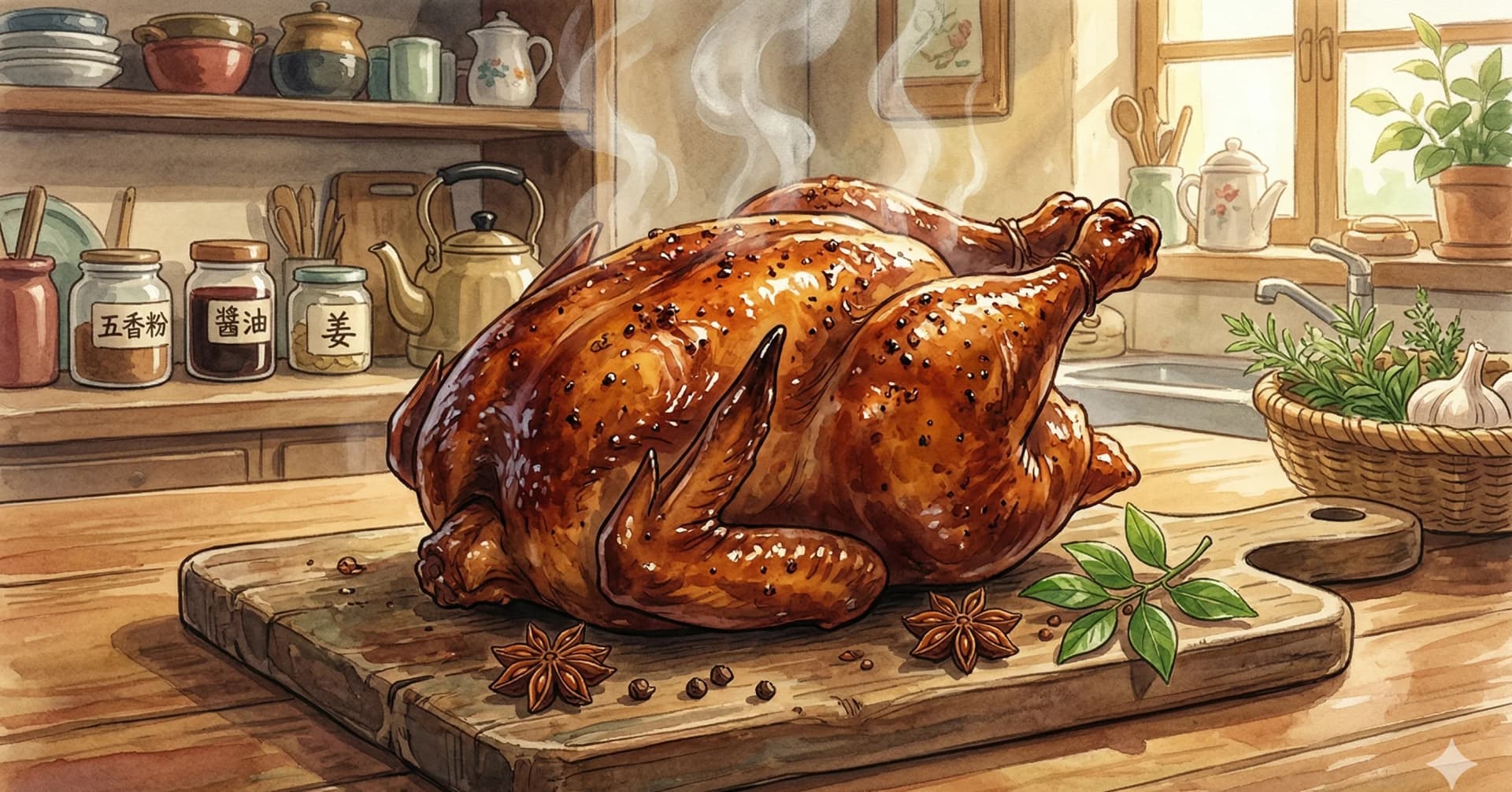
A whole roast chicken perfumed with Chinese five spice, soy, and ginger
There is a version of roast chicken in nearly every cuisine that uses fire. The Chinese version distinguishes itself through aromatics. Five spice powder, that warm and slightly mysterious blend of star anise, cassia cinnamon, cloves, fennel, and Sichuan peppercorn, transforms the familiar Sunday roast into something fragrant and altogether different. Combined with soy sauce, Shaoxing wine, sesame oil, and fresh ginger, it creates a marinade that colors the bird a rich amber and fills the kitchen with a scent that is both sweet and savory.
This is a simple recipe by design. There is no brining, no deep-frying, no elaborate glaze. You rub the chicken inside and out with the spice mixture, let it sit in the refrigerator for at least a few hours (overnight is better), and roast it in a hot oven until the skin crackles and the juices run clear. The dark soy sauce in the marinade is responsible for the deep color. Without it, the bird looks pleasant enough but lacks that burnished mahogany surface that signals a Chinese-style roast.
The cavity stuffing of ginger, garlic, and scallions steams from within, keeping the breast meat moist and infusing the pan juices with flavor. Those pan juices, reduced briefly on the stovetop, become a quick sauce that ties the whole dish together. In Cantonese homes, a chicken like this might appear at a holiday table alongside Char Siu and Siu Yuk, part of a grand spread. But it works just as well on a weeknight with a bowl of rice and some steamed greens.
At a Glance
Yield
4 to 6 servings
Prep
20 minutes (plus 4 hours marinating)
Cook
1 hour 15 minutes
Total
5 hours 35 minutes
Difficulty
Easy
Ingredients
Chicken Ingredients
- 1 wholechicken, about 1.8 kg
Marinade Ingredients
- 2 tbspsoy sauce
- 1 tbspdark soy sauce
- 1 tbspShaoxing rice wine
- 1 tbspsesame oil
- ¼ ozfive spice powder
- 1 tspsugar
- ½ tspwhite pepper
- ½ tspsalt
Aromatics Ingredients
- 4 slicesfresh ginger
- 4 clovesgarlic, lightly smashed
- 2scallions, cut into 3-inch pieces
- 2 wholestar anise
Glaze Ingredients
- ¾ ozhoney or maltose, dissolved in 15 ml hot water
Method
- 1
Prepare the chicken. Remove the chicken from its packaging. Pull out any giblets from the cavity. Pat the entire bird thoroughly dry with paper towels, including inside the cavity. Trim any excess skin or fat from the cavity opening.
- 2
Mix the marinade. In a small bowl, combine the soy sauce, dark soy sauce, Shaoxing wine, sesame oil, five spice powder, sugar, white pepper, and salt. Stir until the sugar dissolves.
- 3
Rub the chicken. Using your hands or a pastry brush, coat the chicken inside and out with the marinade. Work the mixture into the skin, under the skin where you can loosen it gently over the breast, and throughout the cavity. Place the chicken in a baking dish or large resealable bag. Cover tightly and refrigerate for at least 4 hours, or up to overnight. Turn the chicken once halfway through marinating if possible.
- 4
Stuff and truss. Remove the chicken from the refrigerator 45 minutes before roasting. Place the ginger slices, garlic cloves, scallion pieces, and star anise inside the cavity. Tie the legs together with kitchen twine and tuck the wing tips under the body.
- 5
Roast. Preheat the oven to 425F (220C). Place the chicken breast-side up on a rack set in a roasting pan. Roast for 30 minutes at this temperature. The skin will begin to color.
- 6
Reduce heat and continue. Lower the oven temperature to 375F (190C). Continue roasting for another 35 to 40 minutes. If the skin darkens too quickly at any point, loosely tent with aluminum foil. Baste once or twice with the pan juices during this stage.
- 7
Glaze. In the final 10 minutes, brush the honey-water mixture over the entire surface of the chicken. This adds a final layer of gloss and helps the skin achieve a deep, even color.
- 8
Check doneness. Insert an instant-read thermometer into the thickest part of the thigh, away from the bone. The chicken is done at 165F (74C). The juices should run clear when the thigh is pierced.
- 9
Rest. Remove the chicken from the oven and let it rest on a carving board for 15 minutes. Remove the cavity aromatics and discard.
- 10
Make a quick sauce (optional). Pour the pan drippings through a fine sieve into a small saucepan, discarding the solids. Skim off excess fat. Set over medium heat and simmer for 2 to 3 minutes to concentrate the flavors. Adjust seasoning with a splash of soy sauce if needed. Drizzle over the carved chicken or serve alongside.
- 11
Carve and serve. Cut the chicken into pieces Chinese-style (through the bone with a cleaver) or Western-style (separating legs, thighs, wings, and slicing the breast). Arrange on a platter and spoon the sauce over the top.
Key Ingredient Benefits
Five spice powder: The standard blend contains star anise, cassia cinnamon, cloves, Sichuan peppercorn, and fennel seeds. Some regional variations include licorice root or dried tangerine peel. In traditional Chinese food philosophy, five spice is said to harmonize all five tastes. Each component has been individually studied for bioactive compounds, but the amounts used in seasoning are well below any therapeutic threshold. These are culinary, not medicinal, quantities.
Dark soy sauce: Thicker, sweeter, and less salty than regular (light) soy sauce. Its primary role is adding color. It is aged longer and often includes molasses or caramel. A tablespoon contributes significant color but relatively modest sodium compared to the same amount of light soy sauce.
Shaoxing wine: A Chinese rice wine made from fermented glutinous rice, wheat, and water. It contributes acidity, aroma, and depth. Dry sherry is the most common substitute.
Why This Works
Five spice powder is potent. A small amount, combined with the soy sauces and wine, creates a marinade that penetrates the chicken thoroughly during its long rest. The dark soy sauce is primarily a coloring agent here, contributing less sodium per tablespoon than regular soy sauce but producing the deep brown exterior. Without it, the chicken would taste similar but lack the visual impact.
Starting at a high oven temperature renders the subcutaneous fat quickly and begins crisping the skin. The lower second stage prevents the exterior from burning while the thicker parts of the bird cook through. The honey glaze at the end caramelizes in the residual heat, building a thin, glossy shell over the already-browned skin.
Stuffing the cavity with aromatics creates a closed environment where ginger, garlic, and scallion can steam and perfume the meat from the inside. These flavors are not assertive in the finished dish. They contribute a gentle warmth and depth that you notice by its absence when they are omitted.
Substitutions & Variations
Five spice powder: If unavailable, combine equal parts ground star anise, ground cinnamon, and ground cloves with a pinch of ground fennel and ground white pepper. The flavor will not be identical but will be in the same family.
Shaoxing wine: Dry sherry is the classic substitute. In a pinch, dry white wine or sake will work, though the flavor profile shifts slightly.
Chicken pieces: You can apply this marinade to bone-in thighs, drumsticks, or leg quarters rather than a whole bird. Reduce roasting time to 35 to 40 minutes at 400F (200C). This approach is used in Gong Bao Ji Ding for a stir-fried rather than roasted preparation.
Spatchcocking: For faster, more even cooking, remove the backbone with kitchen shears and press the chicken flat before marinating. This reduces roasting time by about 15 minutes and exposes more skin surface to the oven heat.
Serving Suggestions
Serve with steamed jasmine rice and a simple stir-fried green vegetable, such as Chinese broccoli with oyster sauce or bok choy with garlic. The pan sauce over the rice is deeply satisfying.
For a celebration table, this chicken works alongside Char Siu and Siu Yuk as part of a Cantonese siu mei platter. Add a bowl of Congee or Wonton Soup to round out the meal.
Cold leftover five-spice chicken, shredded and tossed with sesame oil and scallions, makes an excellent filling for rice bowls or a topping for noodles.
Storage & Reheating
Refrigerator: Store carved or whole chicken in an airtight container for up to 3 days. The dark soy glaze helps keep the surface from drying out.
Freezer: Wrap portions tightly and freeze for up to 2 months. Thaw overnight in the refrigerator before reheating.
Reheating: Place pieces skin-side up on a baking sheet and warm in a 375F oven for 8 to 10 minutes until heated through and the skin re-crisps. Cover loosely with foil if the skin is already dark to prevent burning. Shredded chicken can be reheated in a covered pan with a tablespoon of broth or water.
Cultural Notes
Wu xiang shao ji (五香燒雞, "five-spice roast chicken") is the broader Chinese category of roasted or braised chicken built around the wu xiang fen (五香粉, five-spice powder) blend, which is one of the foundational spice mixtures of Chinese cooking. The classical five-spice mixture combines star anise, cassia or cinnamon bark, fennel seed, Sichuan peppercorn, and clove in roughly equal proportions, with regional variations sometimes adding white pepper, ginger powder, or dried tangerine peel. The spice mixture provides the warm aromatic character that defines countless Chinese braises, marinades, and rubs, and chicken is one of its most common protein applications.
The dish exists in several distinct regional preparations. The Cantonese roast chicken (shao ji) version uses five-spice as part of a marinade with soy sauce, Shaoxing wine, honey, and ginger, applied to a whole chicken that is then air-dried and roasted at high heat in the same kind of oven used for char siu and roast duck. The Hunan and Sichuan braised versions cook chicken pieces in a soy-and-spice braise until tender. A northern Chinese variation called kao ji (烤雞) roasts a whole chicken in a hot oven with a five-spice salt rub, producing a dish closer in spirit to a Western roast chicken but with the distinctive five-spice aromatic profile. The Beijing street stall version, sold from carts outside subway stations, is typically a deboned half-chicken roasted on a rotating spit and chopped to order for customers.
The dish illustrates one of the defining principles of Chinese spice cookery: a small number of carefully chosen aromatic spices, used in correct proportions, can flavor a whole preparation without dominating the underlying ingredient. Harold McGee's On Food and Cooking discusses the chemistry of the five-spice combination, noting that the combination of star anise (anethole), cinnamon (cinnamaldehyde), fennel (anethole), Sichuan peppercorn (sanshool), and clove (eugenol) produces a complex aromatic that activates multiple flavor and trigeminal receptors simultaneously, which is why the blend feels deeper and more complete than the sum of its parts.
Nutrition Facts
Calories: 516kcal (26%)|Total Carbohydrates: 5.7g (2%)|Protein: 54.1g (108%)|Total Fat: 29.1g (37%)|Saturated Fat: 7.8g (39%)|Cholesterol: 172mg (57%)|Sodium: 753mg (33%)|Dietary Fiber: 0.4g (1%)|Total Sugars: 3.8g
You Might Also Like
 Medium
Chinese Cuisine
Char Siu (Chinese BBQ Pork)
9 hours (including marinating)
 Medium
Chinese Cuisine
Bai Qie Ji (White Cut Chicken)
4 hours 30 minutes
 Easy
EasyVietnamese Cuisine
Cháo Gà (Vietnamese Chicken Rice Porridge)
1 hour 30 minutes
 Medium
Chinese Cuisine
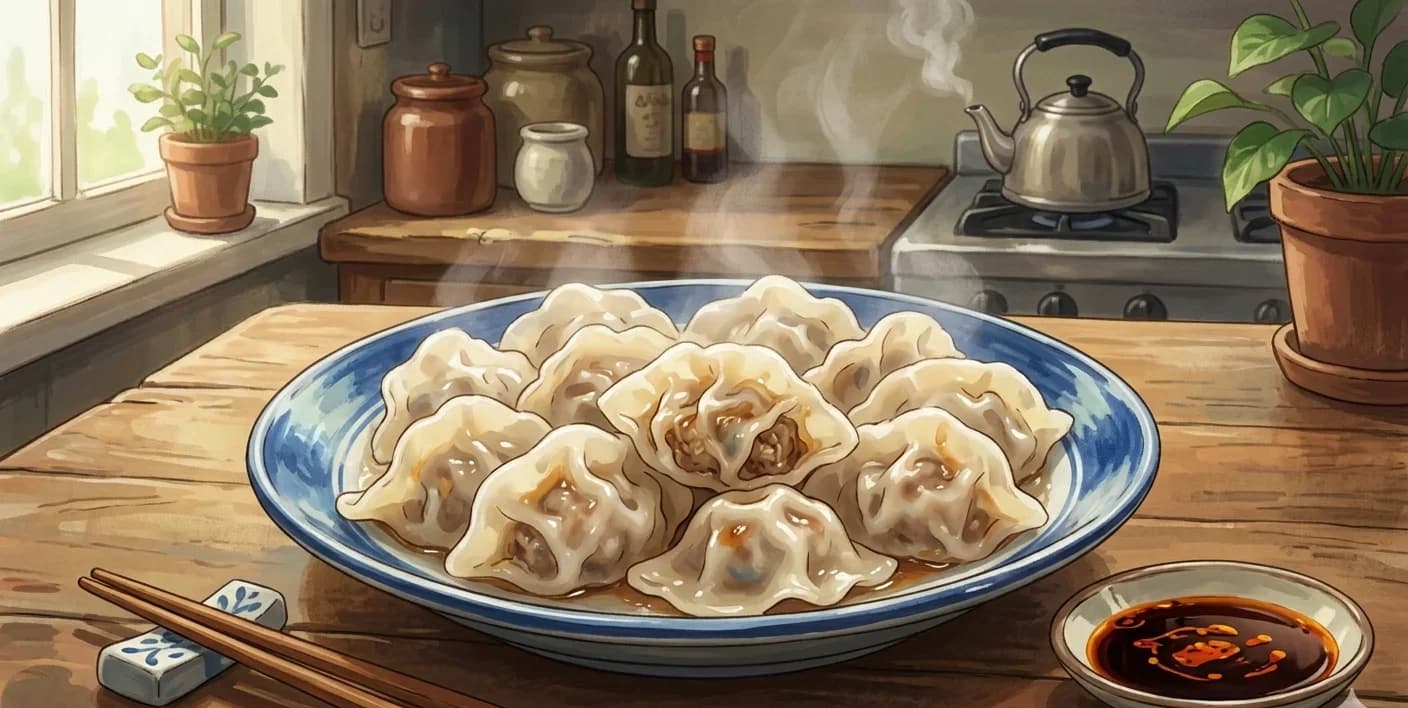
Niu Rou Yang Cong Jiaozi (Beef and Onion Dumplings)
60 minutes
Ratings & Comments
Ratings & Comments
Ratings
Share your thoughts on this recipe.
Sign in to rate and comment