Malaysian Cuisine
Hainanese Chicken Rice
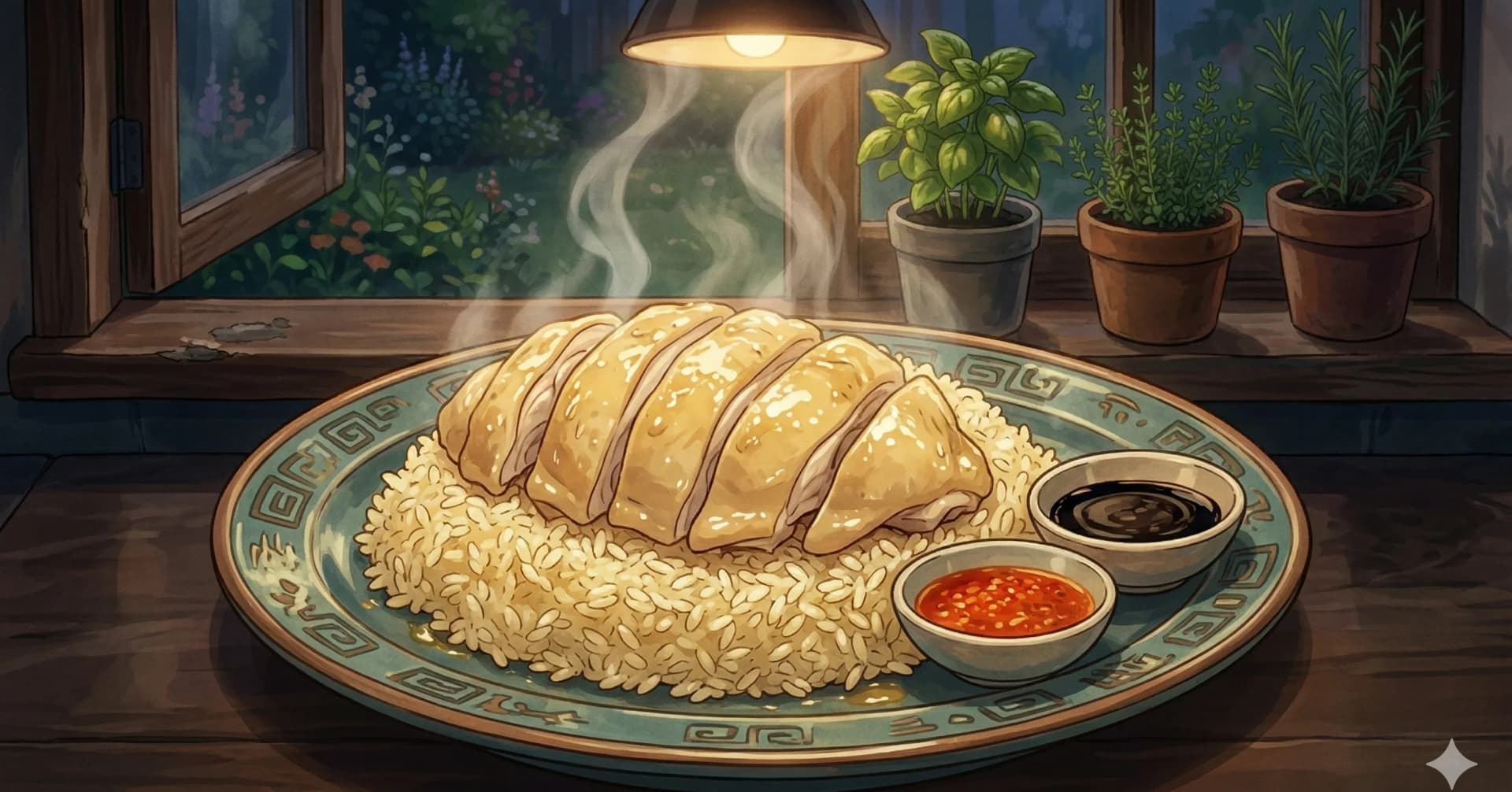
Silky poached chicken and fragrant ginger-garlic rice with chili-lime sauce, the hawker dish that defines Malaysian comfort food
There is a reason Hainanese chicken rice is eaten almost daily across Malaysia and Singapore. It is not flashy, not complicated to describe, and not the kind of dish that photographs dramatically. What it is, instead, is deeply satisfying in a way that keeps you coming back, meal after meal, year after year. A plate of tender poached chicken, glossy with a thin layer of gelatin just beneath the skin, resting beside rice that has absorbed the full richness of chicken broth and fat. A spoonful of ginger-chili sauce, bright with lime, pulls everything into focus.
The dish traces its origins to Wenchang chicken from Hainan Island in southern China. In the early 1900s, Hainanese immigrants carried the technique to Southeast Asia, where it adapted and deepened, absorbing local aromatics and the tropical habit of eating rice with condiments rather than as a side. In Malaysia, chicken rice stalls are everywhere, from air-conditioned restaurants to open-air hawker centers, and the debates about which stall is best are fierce and unending. In Thailand, the same tradition lives on as khao man gai, a close relative that swaps lime-chili sauce for a fermented soybean dip. You will find a similar reverence for poached chicken in the Cantonese Bai Qie Ji, and a kindred spirit in the warming, whole-chicken-in-broth approach of Korean Samgyetang.
The technique here follows the hawker principle: keep the heat low, let the chicken poach gently, and use every part of the cooking liquid. The broth cooks the rice. The broth flavors the chili sauce. The broth becomes the soup served alongside. Nothing is wasted. This is the same resourceful approach that defines Nasi Lemak, where coconut milk serves triple duty, and Pho Ga, where a single pot of broth anchors an entire meal.
At a Glance
Yield
8 servings
Prep
20 minutes
Cook
55 minutes
Total
1 hour 15 minutes
Difficulty
Medium
Ingredients
Chicken Ingredients
Rice Ingredients
- 1¼ lbjasmine rice (about 3 rice-cooker cups), rinsed until water runs mostly clear
- ⅓ cupneutral oil (vegetable or peanut)
- 4shallots, finely minced
- 4 clovesgarlic, finely minced
- 3 cupreserved chicken broth
- 1thumb-sized piece fresh ginger (about 20 g), lightly crushed
- 2½ ozchicken fat, rendered (trimmed from the cavity and neck area before poaching)
- 1⅓ tspsalt, or to taste
- 2pandan leaves, tied into a knot (optional but recommended)
Soy Sauce Ingredients
- 2 tsplight soy sauce
- 2 tspreserved chicken broth
- 1 tbsptoasted sesame oil
- 1 tbspgarlic-shallot oil (reserved from frying the rice aromatics)
Chili Sauce Ingredients
- 3 tbspchili garlic sauce (such as Huy Fong brand)
- 2½ tbspgarlic (about 3 cloves), finely grated or minced
- ½ cupfresh ginger, finely grated or minced
- ⅞ tspsalt
- 1¼ tspsugar
- 3 tbspreserved chicken broth
- 1 tbspfresh lime juice, or to taste
To Serve
- 1cucumber (about 200 g), peeled and sliced into thin rounds
- —A few sprigs of fresh cilantro
- —Reserved chicken broth, heated, for the side soup
Method
- 1
Prepare the chicken. Remove any giblets from the cavity. Trim excess fat from around the neck and cavity opening and set it aside for rendering later. Wash the chicken under cold running water and drain well. Stuff the crushed ginger and scallion stalks into the cavity. Rub 10 g of salt evenly over the entire surface of the chicken, working it into the skin with your palms. The salt acts as a gentle scrub and helps the skin achieve a smooth, clean appearance.
- 2
Poach the chicken. In a stockpot large enough to hold the chicken snugly, bring the chicken stock and the remaining 5 g of salt to a rolling boil. Lower the chicken breast-side down into the pot. The liquid should cover the bird. Immediately reduce the heat to the lowest setting that maintains a barely perceptible simmer. You want the surface of the liquid to tremble with the occasional lazy bubble, not a vigorous boil. Cover and poach for 35 to 45 minutes, depending on the size of your bird. A 1.5 kg chicken will need closer to 35 minutes; a 1.8 kg chicken may need the full 45. Check by piercing the thickest part of the thigh with a skewer or knife tip. The juices should run clear, not pink. If using a thermometer, the thigh should register 74C (165F) at its deepest point.
- 3
Ice-bath the chicken. While the chicken poaches, fill a large bowl or clean sink basin with the ice-cold water and add a generous amount of ice if available. When the chicken is done, lift it carefully from the broth using tongs or a large spider strainer, letting the broth drain from the cavity back into the pot. Plunge the chicken directly into the ice bath. Let it sit for 10 minutes. This step is what creates the prized layer of gelatin just beneath the skin and firms the skin so it slices cleanly without tearing. Remove the chicken from the ice bath and set it on a cutting board. Discard the ginger and scallions from the cavity.
- 4
Reserve the broth. Skim any foam from the surface of the poaching broth. You will use this broth for the rice, the chili sauce, and the side soup. Set aside at least 700 ml for the rice and keep the rest warm.
- 5
Render the chicken fat (if not already done). Chop the reserved chicken fat into small pieces. Place in a cold wok or small saucepan over low heat. Cook gently, stirring occasionally, until the fat melts and the solid pieces turn golden and crisp, about 8 to 10 minutes. Strain through a fine mesh sieve. Reserve the liquid fat for the rice.
- 6
Cook the rice. Heat the neutral oil in a wok or large skillet over medium heat. Add the minced shallots and garlic and fry, stirring frequently, until they turn golden and fragrant, about 3 to 4 minutes. The kitchen should smell sweet and toasty. Spoon off about 15 ml of the aromatic oil and set it aside for the soy sauce dressing. Add the rinsed and drained rice to the wok and stir for 1 to 2 minutes, coating every grain in the fragrant oil. Transfer the rice to a rice cooker. Add the 700 ml of reserved chicken broth, the crushed ginger, rendered chicken fat, pandan leaves (if using), and salt. Cook according to your rice cooker's normal cycle. When finished, remove and discard the ginger and pandan leaves. Fluff the rice gently with a fork. Each grain should be separate, glossy, and lightly golden with a perfume of chicken and ginger.
- 7
Make the soy sauce dressing. In a small bowl, stir together the light soy sauce, chicken broth, sesame oil, and reserved garlic-shallot oil. Set aside.
- 8
Make the chili-lime sauce. In a small bowl, combine the chili garlic sauce, grated garlic, grated ginger, salt, sugar, chicken broth, and lime juice. Stir well. Taste and adjust: add more lime juice for brightness, more sugar to round out the heat, or more salt to deepen the savory quality. The sauce should be spicy, tangy, and slightly sweet, with a strong ginger presence.
- 9
Chop the chicken. Place the chicken on a sturdy cutting board. Using a cleaver, chop through the bones into bite-sized pieces, keeping the skin attached to the meat. Work methodically: remove the legs first, then the wings, then halve the breast and chop each half crosswise into strips about 2 cm wide. If you prefer not to chop through bone, carve the chicken Western-style by removing the breasts and legs whole, then slicing the meat against the grain into pieces about 1 cm thick.
- 10
Assemble and serve. Line a serving plate with the cucumber slices. Mound a generous portion of rice alongside or use a small bowl to shape it into a dome. Arrange the chicken pieces over the cucumber. Drizzle the soy sauce dressing over the chicken. Garnish with cilantro sprigs. Serve with the chili-lime sauce in a small dish and a bowl of hot chicken broth on the side, garnished with sliced scallions or a few cilantro leaves.
Key Ingredient Benefits
Whole chicken: As with Bai Qie Ji, the quality of the bird matters greatly when the cooking method is this gentle and the seasoning this restrained. A free-range chicken with good fat distribution will give you better flavor, a richer broth, and more fat to render for the rice. Avoid very large birds; a chicken between 1.5 and 1.8 kg poaches most evenly.
Ginger: Appears three times in this dish: in the poaching liquid, in the rice, and in the chili sauce. Each application serves a different purpose, from infusing the broth to providing raw heat in the condiment. Ginger contains gingerol, which has documented anti-inflammatory and digestive properties. See the Ginger ingredient guide.
Chicken fat: The rendered fat is not a shortcut or indulgence. It is the ingredient that gives chicken rice its characteristic fragrance and distinguishes it from ordinary steamed rice. The fat carries flavor compounds from the bird into the rice during cooking.
Pandan leaves: These long, blade-shaped leaves release a floral, almost vanilla-like aroma when heated. They are commonly used in Southeast Asian rice dishes, including Nasi Lemak, and add a subtle sweetness that rounds out the savory notes. Available fresh or frozen at most Asian grocery stores.
Sesame oil: The toasted variety, used in the soy sauce dressing, contributes a nutty depth that complements the chicken. See the Sesame Oil ingredient guide.
Why This Works
The low-and-slow poaching method is the foundation of this dish. By keeping the liquid at a bare simmer rather than a rolling boil, the chicken cooks gently and evenly. The protein fibers in the meat do not seize and contract the way they would with aggressive heat, resulting in flesh that is tender and moist throughout, with no dry edges or tough spots. This is the same principle at work in Bai Qie Ji, the Cantonese white-cut chicken that shares this technique.
The ice bath performs two functions. First, it halts the cooking immediately, preventing residual heat from pushing the chicken past its ideal doneness. Second, the rapid cooling causes the thin layer of fat and collagen just beneath the skin to solidify into a smooth, jelly-like film. This is the texture that chicken rice lovers prize above all else, and it cannot be achieved without the sudden temperature shock.
Cooking the rice in chicken broth rather than water is what elevates this from ordinary steamed rice to something fragrant and savory. The rendered chicken fat adds richness and a subtle poultry flavor that permeates every grain. The shallot and garlic, fried until golden before the rice is added, contribute a toasted sweetness. Together, these elements produce a rice that can stand on its own as a deeply satisfying food, even before the chicken reaches the plate.
The chili sauce depends on the balance of four elements: heat from the chili garlic sauce, sharpness from the raw ginger, acidity from the lime juice, and a savory backbone from the chicken broth. This combination cuts through the mild richness of the poached chicken and the fatty rice, keeping each bite lively and preventing the palate from tiring.
Substitutions & Variations
Chicken parts instead of whole bird: Bone-in, skin-on chicken thighs (about 1 kg) can be poached using the same method. Reduce the poaching time to 20 to 25 minutes. The broth will be lighter, so consider supplementing with store-bought chicken stock for the rice.
Roasted chicken rice: In Malaysia, many stalls offer a roasted version alongside the poached. To approximate this, roast the chicken at 200C (400F) for 45 to 50 minutes instead of poaching, basting with a mix of soy sauce, honey, and sesame oil. You will need separate stock for the rice in this case.
Chili sauce from scratch: For a more authentic sauce, blend 6 fresh red chilies, 3 bird's eye chilies, 30 g ginger, 4 cloves garlic, and 60 ml lime juice until smooth. Season with salt and sugar. Loosen with chicken broth to your preferred consistency. This is closer to what you will find at the best hawker stalls.
Thai-style (khao man gai): Replace the chili-lime sauce with a fermented soybean dipping sauce: blend yellow soybean paste with ginger, garlic, chilies, vinegar, and sugar. Serve with a side of Khao Tom for a Thai-inspired meal.
Dark soy sauce drizzle: Some stalls in Malaysia and Singapore drizzle a mixture of dark soy sauce and oyster sauce over the chicken for a deeper color and sweetness. Add 5 ml dark soy sauce and 5 ml oyster sauce to the dressing if you prefer this style.
Serving Suggestions
Hainanese chicken rice is traditionally a complete meal in itself, but it welcomes company. In Malaysia, hawker stalls often serve it alongside char siu, roast pork belly, and soy sauce eggs, building a combination plate that draws from several traditions at once. At home, consider adding a simple stir-fried green vegetable, such as blanched choy sum or bok choy dressed with oyster sauce, for freshness and color.
For a broader Southeast Asian spread, pair it with Nasi Lemak for a rice-focused feast, add Chicken Rendang for a richly spiced contrast, or serve it after a starter of Gai Yang, the grilled Thai chicken that offers a smoky counterpoint to the gentle poached bird. The clear chicken broth served alongside doubles as a light soup course, and you can enrich it with fish balls, shredded cabbage, or a handful of glass noodles.
If you enjoy the warming, restorative quality of chicken poached in broth, you will also find much to appreciate in Samgyetang, the Korean ginseng chicken soup, and Pho Ga, the Vietnamese chicken noodle soup, both of which share this dish's philosophy of extracting everything good from a single bird.
Storage & Reheating
Refrigerator: Store the poached chicken, rice, and chili sauce in separate airtight containers. The chicken and rice will keep for up to 3 days. The chili sauce will keep for up to 5 days, and its flavors will meld and improve after a day or two.
Reheating the chicken: The chicken is traditionally served at room temperature or slightly cool, so refrigerated chicken can simply be brought to room temperature for 20 minutes before serving. If you prefer it warm, steam the chicken pieces gently over simmering water for 3 to 4 minutes, just enough to warm through without drying out.
Reheating the rice: Sprinkle a tablespoon of chicken broth over the rice before microwaving or steaming. This restores the moisture and fragrance that refrigeration dulls.
Freezing: The poached chicken can be frozen for up to 1 month. The rice freezes well for up to 2 months. Thaw overnight in the refrigerator. The chili sauce does not freeze well, as the lime juice and raw ginger lose their brightness.
Leftover broth: Strain and refrigerate the remaining poaching broth for up to 4 days, or freeze for up to 3 months. Use it as a base for Congee, wonton soup, or any recipe that calls for chicken stock. It will carry a gentle ginger-scallion perfume.
Cultural Notes
Hainanese chicken rice started with immigrants from Hainan Island, off China's southern coast, who brought their regional dish Wenchang chicken (文昌雞) to Southeast Asia during the 19th and early 20th centuries. The original Wenchang preparation used a specific local breed of chicken from the city of Wenchang on Hainan Island, traditionally poached gently in water with ginger and scallion, then served at room temperature with rice cooked in the poaching liquid. The version that grew up in Malaysia and Singapore evolved through generations of Hainanese cooks adapting to local ingredients, palates, and chili-based dipping sauces.
The dish's path to becoming a national icon of both Malaysia and Singapore runs through the kopitiam (Hainanese-Chinese-owned coffeeshop) tradition. Many of the first chicken rice stalls were run by Hainanese immigrants who came to British Malaya in the early 20th century, often working as cooks for British colonial administrators before opening their own shops. The Hainanese community's outsized influence on the broader regional kopitiam culture, including the development of Malaysian kaya coconut jam, Hainanese coffee, and Hainanese pork chops, gave Hainanese chicken rice an unusually broad geographic reach.
The dish has spawned several distinguished regional traditions. Singapore claims the most international fame: Tian Tian Chicken Rice in Maxwell Hawker Centre and Boon Tong Kee are the names that travel furthest, and the dish is widely treated as Singapore's national food. Malaysian variations include the more deeply flavored Ipoh-style (where the chicken is cooked with bean sprouts as a side), the Melaka-style "chicken rice balls" (where the rice is hand-formed into ping-pong-sized spheres), and the Hainanese chicken rice stalls in Kuala Lumpur's Chinatown that have run for over 50 years. The competition between Singapore and Malaysia over chicken rice ownership parallels the rendang debate, and like that one it has no clean answer.
Nutrition Facts
Calories: 535kcal (27%)|Total Carbohydrates: 68g (25%)|Protein: 32.5g (65%)|Total Fat: 14.8g (19%)|Saturated Fat: 3.5g (18%)|Cholesterol: 95mg (32%)|Sodium: 1250mg (54%)|Dietary Fiber: 1g (4%)|Total Sugars: 3g
You Might Also Like
 Medium
Chinese Cuisine
Bai Qie Ji (White Cut Chicken)
4 hours 30 minutes
 Easy
EasyVietnamese Cuisine
Cháo Gà (Vietnamese Chicken Rice Porridge)
1 hour 30 minutes
 Easy
EasyIndonesian Cuisine
Bubur Ayam (Indonesian Chicken Rice Porridge)
1 hour 10 minutes
 Medium
Vietnamese Cuisine
Cháo Lòng (Vietnamese Pork Organ Rice Porridge)
2 hours 15 minutes
Ratings & Comments
Ratings & Comments
Ratings
Share your thoughts on this recipe.
Sign in to rate and comment