Japanese Cuisine
Miso Shiru (Japanese Miso Soup)
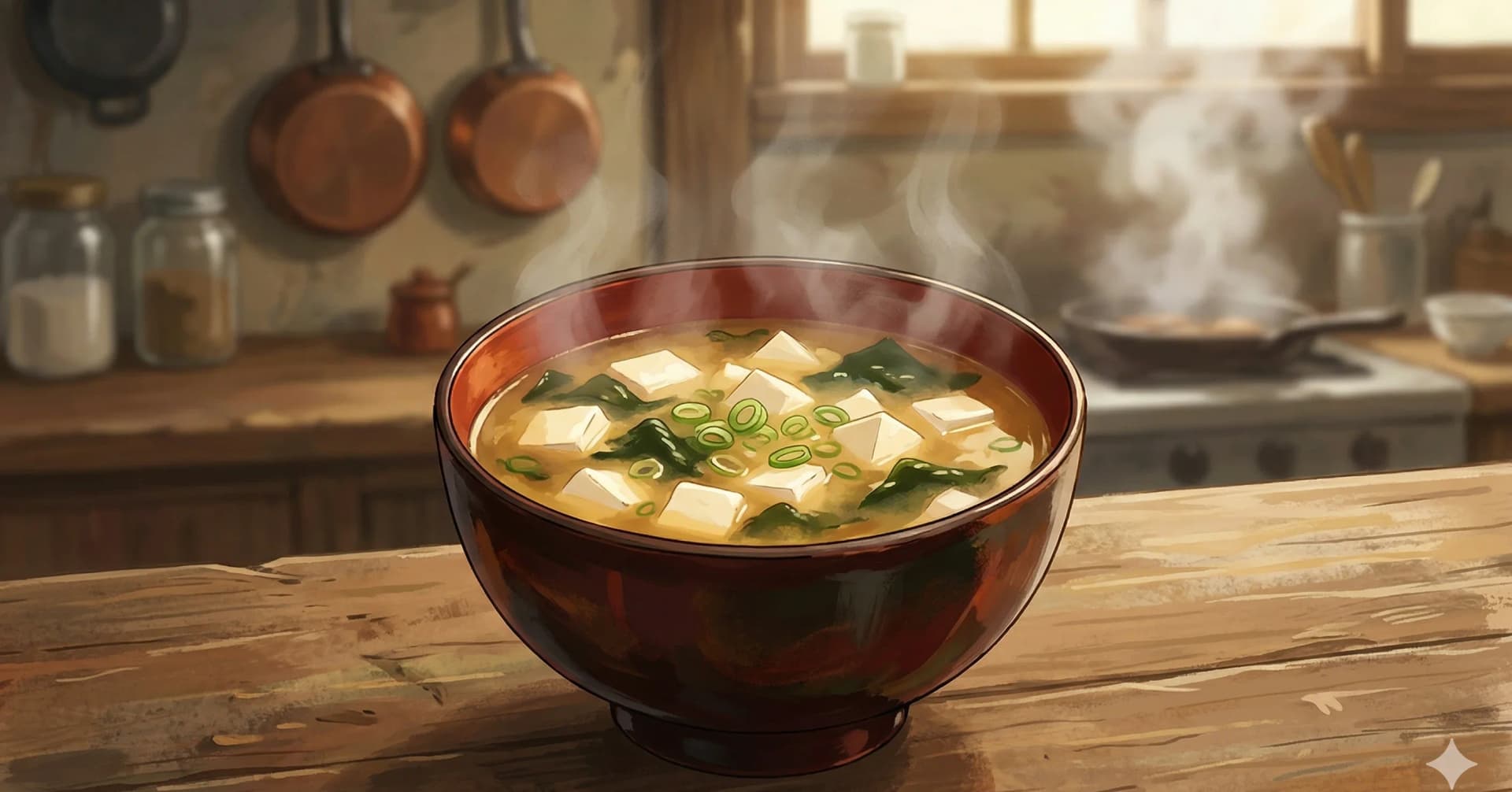
A clean, warming bowl of dashi broth and fermented soybean paste with silken tofu and wakame
There is no dish more quietly essential to Japanese cooking than miso shiru. It is served at breakfast, lunch, and dinner. It appears alongside tonkotsu ramen at a noodle shop and next to a plate of grilled fish at home. It is the first thing many Japanese children learn to cook, and the last thing many people eat at the end of the day. It is not a showpiece. It is a foundation.
The soul of the soup is two ingredients working together: dashi and miso. Dashi, the clear stock made from kombu (dried kelp) and katsuobushi (dried bonito flakes), provides a delicate backbone of umami that is oceanic and faintly smoky. Miso, the fermented soybean paste, brings salinity, depth, and a living complexity that changes with every batch. When you dissolve good miso into good dashi, the result is greater than either one alone.
The technique here asks for patience in two places: drawing the kombu slowly through warming water to coax out glutamates without bitterness, and dissolving the miso gently off the boil so its enzymes and aroma stay intact. Everything else is simple assembly. Silken tofu, wakame seaweed, and scallions go in at the end, barely cooked, each contributing a different texture to the warm broth.
This version follows the approach of Namiko Hirasawa Chen, with broader ingredient options drawn from Serious Eats and RecipeTinEats. The result is a soup that you can make in thirty minutes on any weeknight, but one that tastes like it was made by someone who cares about the details.
At a Glance
Yield
4 servings
Prep
10 minutes
Cook
20 minutes
Total
30 minutes
Difficulty
Easy
Ingredients
Dashi Ingredients
- 1 qtwater
- 1 piecekombu (dried kelp), about 10 g (roughly 10 x 10 cm)
- ¼ ozkatsuobushi (dried bonito flakes), loosely packed
Soup Ingredients
- 7 ozsilken or soft tofu (kinugoshi), cut into 1.5 cm cubes
- 2¼ ozmiso paste
- ¼ ozdried wakame seaweed
- 1scallion, thinly sliced
- 1 ozfresh shiitake mushrooms, thinly sliced
- 1 ozspinach or baby spinach leaves
- ½ ozaburaage (fried tofu pouch), sliced into thin strips
To Serve
- 1small sheet nori, cut into thin strips for garnish
- —Shichimi togarashi
Method
- 1
Soak the kombu. Place the kombu in a medium saucepan with 960 ml of cold water. Let it sit for at least 15 minutes if you have time, or up to 30 minutes. The kombu will soften and begin releasing a faint sea-like fragrance into the water.
- 2
Heat the dashi slowly. Set the saucepan over medium-low heat and warm the water gradually for about 10 minutes. Watch for small bubbles forming along the bottom of the pan and around the edges of the kombu. The water should reach roughly 80C (176F), just below a simmer. Do not let it reach a full boil, as this extracts bitter, slimy compounds from the kelp.
- 3
Remove the kombu. Lift the kombu out of the water with tongs or chopsticks when the water is steaming and small bubbles are visible. The surface of the kombu will feel slightly slippery. Set it aside (it can be reused for a second, lighter stock or added to simmered dishes like [oden](/recipes/oden)).
- 4
Add the bonito flakes. Increase the heat to medium and bring the kombu water to a gentle boil. Scatter the katsuobushi across the surface. Let the flakes sink and simmer for no more than 30 seconds, then turn off the heat. Allow the bonito flakes to settle undisturbed to the bottom of the pan for 10 minutes. The liquid will turn a pale gold.
- 5
Strain the dashi. Set a fine-mesh strainer over a clean bowl or pot and pour the stock through it. Do not press or squeeze the bonito flakes, as this clouds the broth and adds bitterness. You should have roughly 800 to 850 ml of clear, fragrant dashi. Discard or compost the bonito flakes.
- 6
Prepare the additions. While the dashi steeps, rehydrate the dried wakame in a small bowl of cold water for 5 minutes. It will expand to several times its dry size and turn a deep green. Drain and gently squeeze out excess water. Cut the tofu into 1.5 cm cubes with care, as silken tofu is delicate. Slice the scallion thinly.
- 7
Heat the dashi. Return the strained dashi to the saucepan and warm it over medium heat until it reaches a gentle simmer, around 80 to 85C (176 to 185F). Small bubbles will appear at the edges. Turn the heat to low.
- 8
Dissolve the miso. Place 65 g of miso paste in a ladle or small fine-mesh strainer and lower it partway into the warm dashi. Using chopsticks or a small whisk, stir the miso in the ladle to dissolve it gradually into the broth. This prevents lumps and keeps the miso from hitting the hot bottom of the pan. The broth will turn cloudy and golden. Taste and adjust, adding more miso a teaspoon at a time if needed.
- 9
Add the tofu and wakame. Gently slide the tofu cubes into the soup. Add the drained wakame. If using shiitake mushrooms or aburaage, add them now as well. Let everything warm through for 1 to 2 minutes without boiling. The tofu will warm to the center and the wakame will become tender.
- 10
Serve immediately. Ladle the soup into individual bowls, making sure each bowl gets a balance of tofu, wakame, and broth. Scatter the sliced scallion on top. If using nori strips or shichimi togarashi, add them at the table. Do not reboil the soup once the miso has been added.
Key Ingredient Benefits
Miso. A fermented paste made from soybeans, salt, and koji (Aspergillus oryzae mold), sometimes with the addition of rice or barley. White (shiro) miso is mild, sweet, and fermented for a shorter period. Red (aka) miso is saltier, stronger, and aged longer. Awase miso blends the two and is the most common choice for everyday miso soup. Miso is a live fermented food containing probiotics, and traditional Japanese medicine has valued it for digestive health for centuries. It is a close relative of Korean doenjang, though the fermentation processes differ. Store miso in the refrigerator, where it keeps for months.
Kombu. Dried kelp, usually from the species Saccharina japonica, harvested primarily in Hokkaido. It is one of the original sources of umami, first identified by Japanese chemist Kikunae Ikeda in 1908. Kombu is naturally rich in glutamic acid, iodine, and minerals. The same ingredient serves as the base for dashi in udon broth and the simmering liquid for oden.
Katsuobushi. Dried, fermented, and smoked bonito (skipjack tuna) that is shaved into thin flakes. The smoking and fermentation process can take months. Katsuobushi is rich in inosinic acid, which synergizes with the glutamic acid in kombu to create a umami effect that is far greater than either ingredient alone. This synergy is the scientific basis for why dashi made with both kombu and katsuobushi is so effective.
Wakame. An edible seaweed that rehydrates quickly and has a silky, slightly slippery texture. It is a good source of minerals including iodine, calcium, and magnesium. In traditional use, wakame is valued for thyroid support due to its iodine content, though intake should be moderate.
Why This Works
Drawing the kombu through slowly warming water rather than dropping it into boiling water is the single most important step for clean-tasting dashi. Kombu releases glutamic acid (the compound behind umami) most efficiently between 60 and 80C. Above 85C, it also releases mannuronic acid and other polysaccharides that make the stock slimy and bitter. The slow extraction takes patience but produces a stock with remarkable depth and zero off-flavors.
Dissolving the miso off the heat, or at the very least below a simmer, preserves the living cultures and volatile aromatics that make good miso worth buying. Boiling miso kills the beneficial bacteria from fermentation and drives off the delicate, slightly fruity fragrance that distinguishes a carefully made bowl from an institutional one. The ladle technique, where you suspend the miso in a small pool of broth and work it smooth before releasing it into the pot, ensures even distribution without lumps.
The bonito flakes are treated like a tea: a brief steep followed by gentle straining. Longer contact extracts astringent and fishy compounds. Thirty seconds of simmering followed by ten minutes of passive steeping gives the fullest flavor with the least bitterness.
Substitutions & Variations
Instant dashi. If you do not have time to make dashi from scratch, dissolve 5 g of dashi powder (hon-dashi) in 800 ml of hot water. The result is less nuanced but still makes a good soup. Check the package, as some brands contain MSG, which is fine if you are comfortable with it.
Vegetarian and vegan dashi. Omit the katsuobushi entirely and make the dashi with kombu alone. Steep the kombu for 30 minutes in cold water, then heat slowly and remove before boiling. Alternatively, add 3 to 4 dried shiitake mushrooms to the cold water along with the kombu for a richer vegetarian stock. Use the same technique you would find in a vegetarian chawanmushi.
Miso types. White miso produces a lighter, sweeter soup suited to spring and summer. Red miso gives a deeper, saltier bowl that pairs well with heartier ingredients. A 50/50 blend of white and red (awase style) is the most versatile starting point.
Protein additions. Small clams (asari) added to the dashi and simmered until they open make a luxurious variation called asari no miso shiru. Thinly sliced pork or chicken can be simmered briefly in the dashi before adding the miso.
Vegetable swaps. Thinly sliced daikon radish, cubed kabocha squash, shredded cabbage, sliced naganegi (long onion), or fresh spinach can replace or supplement the standard tofu and wakame. Root vegetables should go in early enough to soften; leafy greens go in at the end.
Korean cousin. For a bolder, funkier take on soybean paste soup, try doenjang-jjigae, which uses Korean doenjang and a more aggressive cooking technique with higher heat and longer boiling.
Serving Suggestions
Miso shiru is almost never served alone. It is part of a set, the quiet partner to a main dish and a bowl of rice. At its simplest, serve it alongside steamed rice and a piece of grilled fish or a few slices of pickled vegetables for a traditional ichiju sansai (one soup, three sides) meal.
For a larger Japanese table, pair it with tonkotsu ramen or serve it as a side alongside nikujaga, where the light broth balances the sweet soy richness of the braised meat and potatoes.
Miso soup also works well as a gentle starter before udon noodles or a bowl of donburi. It opens the appetite without overwhelming it.
For breakfast, serve a small bowl of miso shiru with rice, a soft-boiled egg, and a few strips of nori. This is closer to how many Japanese families start their day, and you may find it more sustaining than you expect.
Storage & Reheating
Miso soup is best eaten immediately after the miso is dissolved. The aroma fades within minutes of sitting, and the tofu continues to absorb broth as the soup cools.
If you have leftovers, refrigerate in a sealed container for up to 2 days. The tofu will become denser and the wakame softer, but the flavor remains good. Reheat gently on the stovetop over low heat, warming until just steaming. Do not bring it to a boil, as this degrades the miso further.
For meal prep, store the finished dashi separately from the miso and solid ingredients. When ready to serve, warm the dashi, dissolve fresh miso into it, and add the tofu and wakame. This produces a much better result than reheating finished soup.
Dashi on its own keeps in the refrigerator for 3 to 5 days or in the freezer for up to 2 weeks. Freeze it in ice cube trays or small containers for easy portioning.
Cultural Notes
Miso shiru (味噌汁) might be the single most ubiquitous dish in Japanese eating. It is the shiru (soup) component of ichijū sansai (一汁三菜), the "one soup, three sides plus rice" structure that has organized Japanese home meals for over a thousand years. Traditional inns (ryokan, 旅館) include it with every meal regardless of what else is on the tray. Hospitals serve it at almost every breakfast. It is the background hum of Japanese cooking.
The thing that makes it work is miso (味噌), fermented soybean paste, one of Japan's most important traditional foods. Miso has been written about in Japanese cooking since the Nara period (710-794), and it has developed deeply regional traditions over the centuries. Shiromiso (白味噌, white miso) from the Kyoto region uses a higher proportion of rice koji and a shorter fermentation, which gives it a sweeter, milder paste. Akamiso (赤味噌, red miso) from the Sendai region ferments longer and uses barley koji for a deeper, more savory result. Hatcho miso (八丁味噌) from Okazaki in Aichi Prefecture skips the rice and barley entirely and ferments pure soybean for years. It is the darkest and most intense of the three.
What you do with the miso reveals how you were taught. The most basic test is whether you dissolve the miso through a small tea strainer, which keeps its texture fine and preserves its living enzymes, or whether you just stir it straight into the pot, which produces a coarser, blunter soup. The other test is heat. Bring miso to a boil and the enzymes die and the flavor flattens out. Take the pot off the heat first, then add the miso, then ladle. Japanese cookbooks devote real space to these two points. Japanese mothers pass them to their daughters in the same way they pass any other quiet kitchen knowledge.
A cook's miso soup tells you almost everything else you need to know about how they cook.
Nutrition Facts
Calories: 83kcal (4%)|Total Carbohydrates: 6g (2%)|Protein: 5g (10%)|Total Fat: 4g (5%)|Saturated Fat: 1g (5%)|Cholesterol: 0mg (0%)|Sodium: 820mg (36%)|Dietary Fiber: 2g (7%)|Total Sugars: 2g
You Might Also Like

Ratings & Comments
Ratings & Comments
Ratings
Share your thoughts on this recipe.
Sign in to rate and comment