Malaysian Cuisine
Nasi Lemak
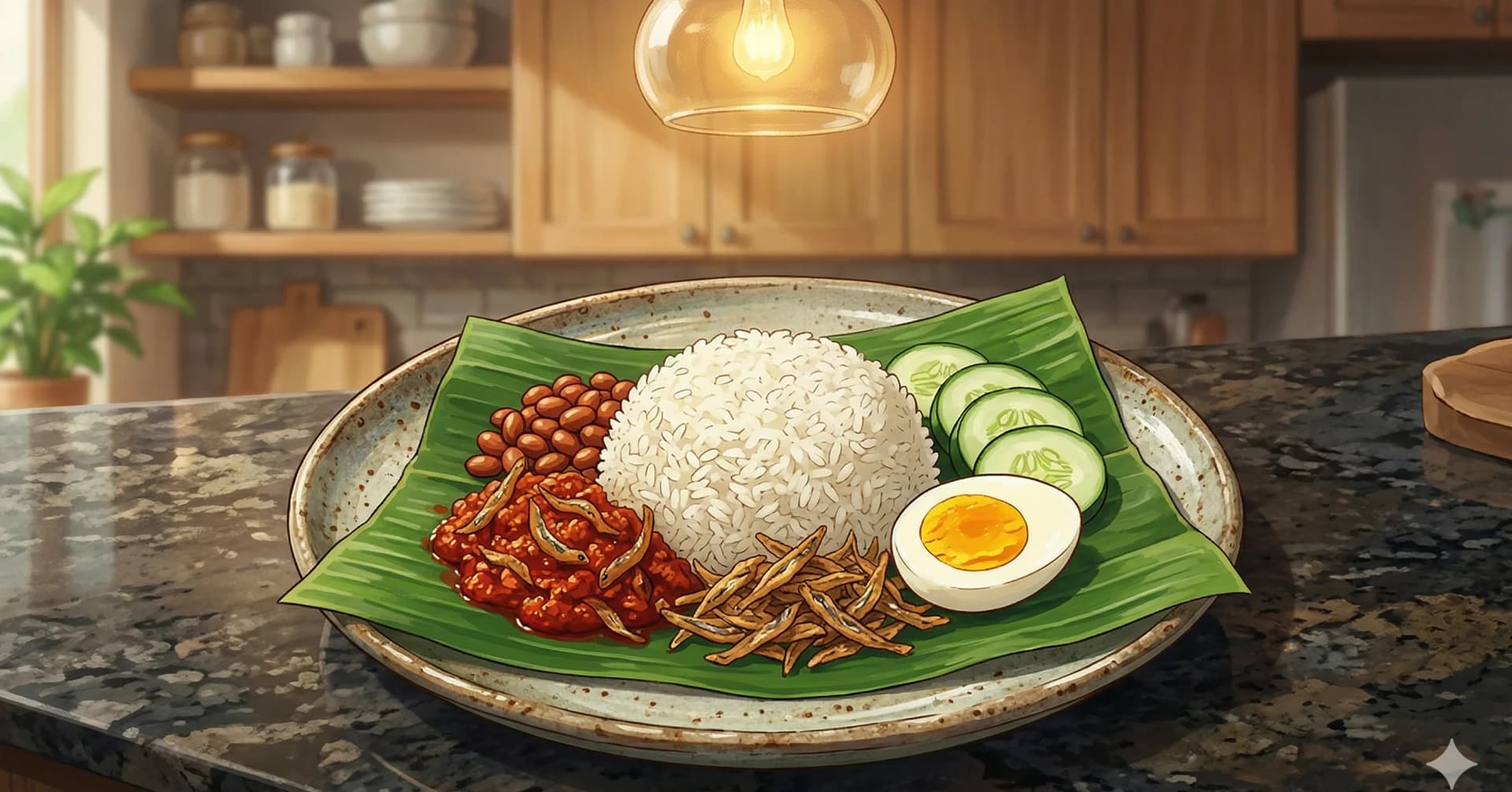
Fragrant coconut rice with sambal ikan bilis, fried anchovies, roasted peanuts, and egg
Nasi lemak is not a single dish so much as a careful assembly of parts, each one distinct, each one pulling a different lever of flavor and texture. The name translates loosely to "fat rice" or "rich rice," a reference to the coconut milk that saturates the grains during cooking. It is the national dish of Malaysia, eaten at every hour of the day by people of every background, and it inspires the kind of devotion that is difficult to explain until you have eaten a good one.
What separates a forgettable nasi lemak from a memorable one is the sambal. The coconut rice can be excellent, the anchovies can be perfectly fried, but without a well-balanced sambal, the plate falls flat. The sambal here uses a pounded paste of dried chilies, shallots, garlic, and belacan, fried slowly until it deepens in color and fragrance, then brought together with tamarind water for a tangy sweetness that anchors the entire plate.
The coconut rice relies on pandan leaves, those long, blade-shaped leaves that release a floral, almost vanilla-like perfume when heated. They are not optional. Without them, the rice tastes pleasant but generic. With them, the rice becomes something unmistakable. A sheet of banana leaf under the rice, if you can find one, adds an earthy green aroma that ties the dish to its roots in hawker stalls and roadside wrappings across the Malay Peninsula.
Nasi lemak sits comfortably alongside other pillars of Malaysian cooking. Pair it with Chicken Rendang for a feast, or follow a meal of Satay with a simple plate of nasi lemak to close things out. It shares the same coconut-forward spirit you will find in Laksa, but where laksa is a broth, nasi lemak is a composed plate, each element placed with intention.
At a Glance
Yield
4 servings
Prep
30 minutes
Cook
30 minutes
Total
1 hour
Difficulty
Medium
Ingredients
Rice Ingredients
- ¾ lbjasmine rice (about 2 rice-cooker cups)
- 1⅔ cupwater
- ½ cupfull-fat coconut milk
- ⅞ tspfine salt
- 3pandan leaves, tied into a knot
Sambal Ingredients
- 4shallots, peeled and roughly chopped
- 1 clovegarlic, peeled
- 8medium dried red chilies (such as chile de arbol), stems removed, seeds removed, soaked in warm water for 15 minutes
- ¼ ozbelacan (Malaysian shrimp paste)
- ½ oztamarind pulp (about the size of a small walnut)
- 1 cupwarm water
- 2 tbspneutral oil (such as vegetable or peanut oil)
- 1medium red onion, peeled and sliced into thin rings
- —The spice paste (from above)
- —The tamarind water (from above)
- ⅞ tspsalt, or to taste
- 2½ tbspsugar, or to taste
To Serve
- 2 ozdried anchovies (ikan bilis), rinsed
- 2 cupsneutral oil, for frying
- 3small whole sardines or mackerel, cleaned and halved (optional)
- 2eggs, hard-boiled and halved
- 2 ozroasted peanuts (skin-on if available)
- 1small cucumber (about 150 g), halved lengthwise and sliced into half-moons
- —Banana leaf sheets for serving (optional)
Method
- 1
Rinse the rice in several changes of cold water, swirling the grains with your hand until the water runs mostly clear. Drain thoroughly through a fine mesh strainer. Transfer the rice to your rice cooker or a medium saucepan with a tight-fitting lid. Add the water, coconut milk, and salt. Tuck the knotted pandan leaves into the rice so they sit submerged. Cook as you normally would. When the rice is done, the kitchen should smell distinctly floral and sweet. Remove and discard the pandan leaves. Fluff the rice gently with a fork, being careful not to crush the grains.
- 2
While the rice cooks, prepare the tamarind water. Place the tamarind pulp in a small bowl and pour the warm water over it. Let it soak for 15 minutes, pressing and squeezing the pulp occasionally with your fingers to release the sour concentrate. The water will turn a murky reddish-brown. Strain through a fine mesh strainer, pressing out as much liquid as possible. Discard the seeds and fibers.
- 3
Prepare the spice paste. If using a mortar and pestle, add the soaked and drained dried chilies, shallots, garlic, and belacan. Pound in a rhythmic, twisting motion until the mixture breaks down into a rough, fragrant paste. You will smell the fermented shrimp paste sharpen as it combines with the chilies. Alternatively, combine everything in a food processor and pulse until fairly smooth, scraping down the sides as needed.
- 4
Fry the anchovies. Rinse the dried anchovies under cold running water two or three times. Drain well and pat dry with paper towels. Heat the frying oil in a wok or deep skillet over medium-high heat until a single anchovy dropped in sizzles immediately and floats. Add the anchovies in a single layer and fry, stirring occasionally, until they turn golden and crisp, about 3 to 4 minutes. They should feel light and crunchy when you tap one against the side of the wok. Remove with a slotted spoon or spider strainer and drain on a paper towel-lined plate. Reserve the oil for frying the fish if using.
- 5
Cook the sambal ikan bilis. Heat 30 ml of fresh oil in a clean wok or skillet over medium-low heat. Add the spice paste and stir-fry steadily, keeping the heat low enough that the paste sizzles without scorching. Cook for 5 to 7 minutes, until the paste darkens from bright red to a deeper brick-red and the raw shallot smell gives way to a rich, toasted fragrance. The oil will begin to separate from the paste at the edges. Add the onion rings and stir to coat them in the paste. Cook for another minute until the onions soften slightly. Pour in the strained tamarind water, then add the salt and sugar. Stir well, raise the heat to medium, and let the sambal simmer until the liquid reduces and the sauce thickens to a consistency that clings to a spoon, about 5 to 8 minutes. Fold in about half of the fried anchovies and toss gently to coat. Set aside. Reserve the remaining fried anchovies for serving alongside.
- 6
Fry the fish, if using. Season the cleaned sardines or mackerel halves generously with salt. Reheat the reserved frying oil over medium-high heat. Fry the fish until the skin is golden and crisp on both sides, about 2 to 3 minutes per side. The flesh should be opaque and flake easily when prodded with a fork. Drain on paper towels.
- 7
Assemble each plate. If using banana leaf, place a sheet on each plate. Pack a small bowl with coconut rice and invert it onto the center of the leaf or plate to create a neat dome. Arrange the sambal ikan bilis, a small pile of the reserved crispy anchovies, roasted peanuts, cucumber slices, and a halved egg around the rice. If you made the fried fish, add a piece alongside. Spoon extra sambal over the rice if you prefer more heat. Serve immediately while the rice is still warm and fragrant.
Key Ingredient Benefits
Dried anchovies (ikan bilis): These tiny dried fish are a staple protein in Malaysian and Southeast Asian kitchens. They provide concentrated calcium (the bones are eaten whole), omega-3 fatty acids, and a savory depth that approaches umami. Look for the smaller variety, about 2 to 3 cm long, which fry more evenly and have a milder flavor than the larger sort. See the Dried Shrimp ingredient guide for related dried seafood pantry notes.
Belacan (shrimp paste): Fermented shrimp paste is the backbone of Malaysian sambal. It is intensely pungent raw but mellows into a deeply savory, almost meaty flavor when cooked. A small amount contributes significant umami. It contains protein, B vitamins, and sodium. If you are sensitive to fermented foods, start with half the amount and adjust.
Pandan leaves: Sometimes called the vanilla of Southeast Asia, pandan leaves are used across the region in both savory and sweet cooking. Their fragrance is difficult to replicate. The leaves contain modest antioxidant compounds, though they are used primarily for flavor rather than nutritional benefit. Find them fresh or frozen at Southeast Asian grocery stores.
Coconut milk: Full-fat coconut milk provides the richness that defines nasi lemak. It contains lauric acid, a medium-chain fatty acid that some research suggests is metabolized differently from longer-chain fats. Shake the can well before measuring, as the cream and water tend to separate.
Tamarind pulp: The sour, fruity paste from tamarind pods adds an acidity that is rounder and more complex than vinegar or citrus. It is rich in tartaric acid and provides small amounts of potassium and magnesium. Tamarind concentrate can substitute in a pinch: use about 15 ml concentrate mixed with 45 ml water to approximate the flavor.
Why This Works
Cooking rice in coconut milk introduces fat into the starch matrix, which has two effects. The fat coats the exterior of each grain, keeping the grains distinct rather than sticky, while the coconut flavor permeates the interior as the starch absorbs liquid during cooking. The pandan leaves contribute 2-acetyl-1-pyrroline, the same aromatic compound found in basmati and jasmine rice, amplifying an aroma already present in the grain itself.
The sambal is cooked low and slow for a reason. Dried chilies contain capsaicin bound in oily resins that need time and heat to fully dissolve into the cooking oil. Frying the spice paste gently allows the Maillard reaction to develop complex, toasted flavors without burning the sugars in the shallots and garlic. The tamarind water adds tartaric acid, which balances the heat and sweetness and helps the sauce emulsify into a thick, spoonable consistency rather than separating.
Frying the anchovies separately before folding some into the sambal creates two textures from one ingredient. The anchovies in the sambal soften slightly and absorb the sauce, becoming chewy and intensely flavored. The ones served on the side stay shatteringly crisp, offering a salty crunch that contrasts with the soft rice and creamy egg.
Substitutions & Variations
Rice type: Jasmine rice is traditional and preferred for its natural fragrance, which complements the pandan and coconut. Basmati works but absorbs liquid differently; reduce the total liquid by about 30 ml and expect a drier, fluffier texture.
Coconut milk: Light coconut milk can substitute if you want a leaner result, though the rice will taste noticeably less rich. Avoid coconut cream, which is too thick and can make the rice gluey.
Pandan leaves: If pandan leaves are truly unavailable, add a drop of pandan extract (available online) to the cooking water. It is not the same, but it is closer than omitting the flavor entirely. Do not substitute vanilla.
Sambal without belacan: For a version without shrimp paste, increase the dried chilies by two and add 5 ml of soy sauce to compensate for the lost umami. The flavor will be different but still good.
Protein swaps: The fried fish is a common accompaniment but not essential. Chicken Rendang is a classic upgrade for a more substantial meal. Fried chicken, particularly a belacan-marinated version, is popular in many nasi lemak stalls. Satay skewers make an indulgent addition.
Vegetarian version: Omit the anchovies, fish, belacan, and eggs. Make the sambal with extra shallots, a spoonful of miso for depth, and crispy fried tempeh in place of the anchovies. Serve with hard-boiled tofu eggs (firm tofu braised in soy and turmeric) and vegetable acar (quick pickle).
Sambal heat level: The eight dried chilies produce a moderate heat. For a milder sambal, reduce to four chilies. For a fiery version, add two or three fresh bird's eye chilies along with the dried ones.
Serving Suggestions
Nasi lemak is a complete meal on its own, but it readily scales into a feast. Chicken Rendang is the most beloved pairing, its dry, deeply spiced coconut gravy echoing the coconut in the rice. Satay with peanut sauce brings a grilled, smoky element that plays well against the sambal. For a lighter spread, add a plate of Gado-Gado with its peanut-dressed vegetables, or serve Roti Jala, the lacy net crepes that are traditionally eaten alongside Malaysian curries and coconut-based dishes. Hainanese Chicken Rice and nasi lemak together make for a generous rice-focused table, though you may want to share with a crowd. Laksa is a natural companion when you want both a broth and a plate on the table.
Storage & Reheating
Coconut rice: Store in an airtight container in the refrigerator for up to 2 days. Reheat by sprinkling a tablespoon of water over the rice, covering with a damp paper towel, and microwaving in 30-second intervals until steaming. The rice can also be reheated in a steamer basket for 5 to 7 minutes. The pandan fragrance will fade after the first day but the coconut flavor persists.
Sambal ikan bilis: Keeps well in a sealed jar in the refrigerator for up to 5 days. The flavors actually deepen overnight as the tamarind and chili continue to meld. Reheat gently in a small pan over low heat, adding a splash of water if it has thickened too much.
Fried anchovies: Best eaten the day they are fried. If stored, keep in an airtight container at room temperature for up to a day. They will lose some crispness. A brief re-fry or a few minutes in a 180C oven will restore crunch.
Eggs, peanuts, and cucumber: Hard-boiled eggs keep refrigerated for 3 to 4 days. Roasted peanuts store at room temperature in a sealed container for weeks. Slice the cucumber fresh each time you serve, as it goes limp quickly.
Freezing: The coconut rice freezes reasonably well for up to 1 month. The sambal can also be frozen. Thaw both in the refrigerator overnight before reheating. The fried anchovies and fresh accompaniments should not be frozen.
Cultural Notes
Nasi lemak, translatable loosely as "fat rice" or "rich rice" in reference to the coconut milk in which the rice is cooked, is widely considered Malaysia's national dish. The first written reference to nasi lemak appears in a 1909 book by Sir Richard Olaf Winstedt, a British colonial scholar who documented Malay village life in detail, though the dish itself is older and was a staple of Malay peasant breakfast for centuries before that documentation. The dish started humble: just coconut rice wrapped in banana leaf with a small portion of sambal, a few anchovies, a hard-boiled egg, sliced cucumber, and roasted peanuts.
The dish has experienced a dramatic cultural ascent. From village breakfast food, nasi lemak rose through 20th-century Malaysia to become a national symbol, served at every Malaysian event from school ceremonies to state diplomatic dinners. In 2017, Malaysia's then-Prime Minister Najib Razak declared nasi lemak the country's national dish in an official statement. The dish has also become a major export of Malaysian culinary identity: McDonald's Malaysia and other international fast-food chains have offered nasi lemak burgers and meal sets, and nasi lemak features prominently on Malaysian-themed restaurant menus worldwide.
The signature sambal, the chili-based paste that gives nasi lemak its defining flavor profile, exists in distinct regional variations and is the component that home cooks most pride themselves on. Sambal ikan bilis (with dried anchovies) is the most traditional pairing and the breakfast standard. The dried anchovies add deep umami to the chili-shallot base. Sambal sotong (squid sambal), sambal kerang (cockle sambal), and sambal udang (prawn sambal) are the more elaborate variations served at lunch and dinner nasi lemak. The traditional banana-leaf wrap is practical for transport and visually striking when opened, though paper or styrofoam has largely replaced it in modern street vending. Banana-leaf nasi lemak remains the prestigious benchmark.
Nutrition Facts
Calories: 1078kcal (54%)|Total Carbohydrates: 109.1g (40%)|Protein: 29.7g (59%)|Total Fat: 60.1g (77%)|Saturated Fat: 31.4g (157%)|Cholesterol: 120mg (40%)|Sodium: 1754mg (76%)|Dietary Fiber: 7.2g (26%)|Total Sugars: 19g
You Might Also Like

Ratings & Comments
Ratings & Comments
Ratings
Share your thoughts on this recipe.
Sign in to rate and comment