Punjabi · Indian Cuisine
Paneer Bhurji
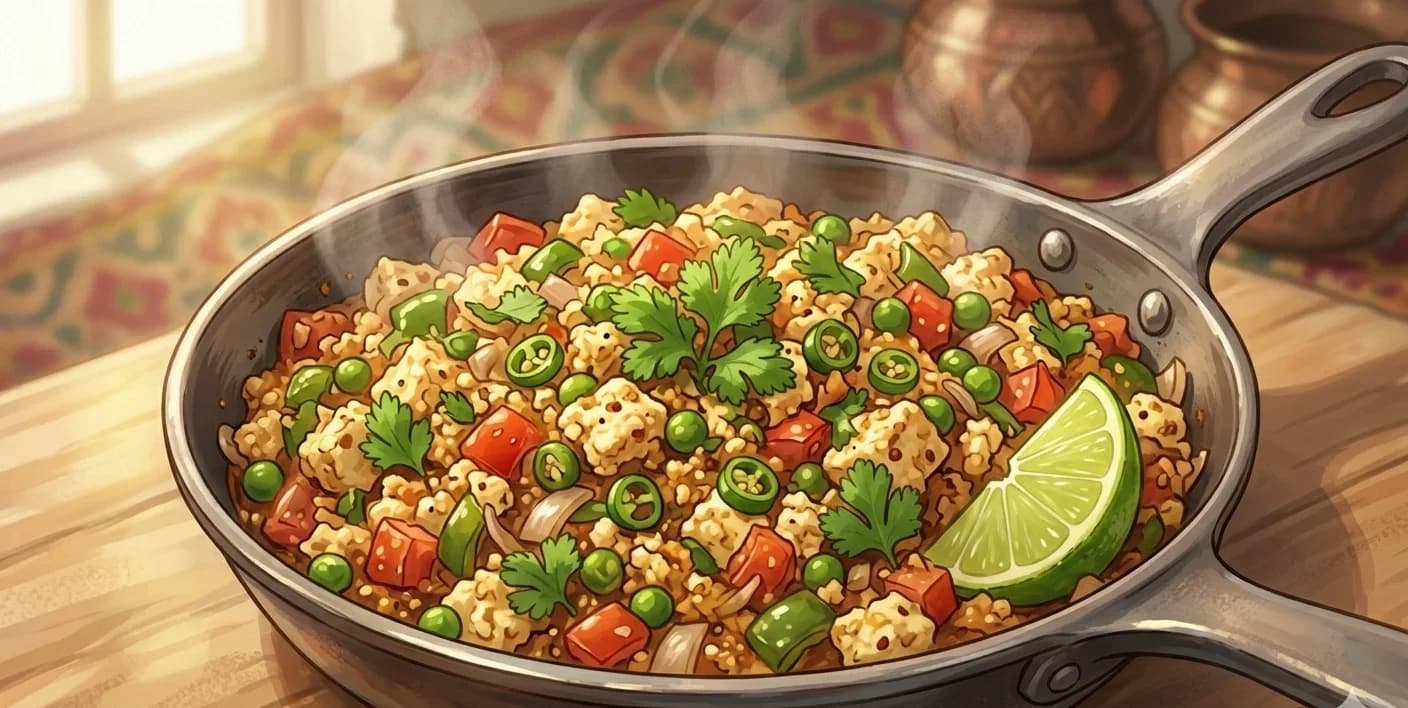
Crumbled paneer scrambled with onions, tomatoes, and green chillies
The sizzle of cumin seeds hitting hot oil, then the sharp, green scent of chillies and onions cooking down fast in a wide pan. Paneer bhurji moves quickly. It is one of those dishes that goes from raw ingredients to plate in the time it takes to warm a paratha, and it rewards speed and confidence more than any kind of precision.
Bhurji means scrambled, and the dish is the vegetarian counterpart to egg bhurji (scrambled eggs Indian-style). Crumbled paneer takes the place of the egg, and the technique is almost identical: a quick masala of onions, tomatoes, and green chillies, followed by the protein, scrambled through the spices over high heat until everything comes together into something dry, flavorful, and deeply satisfying.
In Punjab and across North India, paneer bhurji occupies the territory of fast comfort food. It shows up at breakfast with parathas, as a quick dinner with roti, stuffed into bread rolls for a street-food snack, or served alongside dal and rice as a protein-rich side. It is the dish that cooks make when there is no time for anything elaborate but the appetite demands something more interesting than plain paneer.
The key to good bhurji is heat and restraint. The pan must be hot enough that the vegetables cook quickly without steaming, and the paneer must be added at the very end, cooked just long enough to warm through and absorb the spices. Overcooked paneer becomes rubbery and dry. The finished bhurji should be moist, just barely holding together, with the paneer crumbles distinct and tender.
At a Glance
Yield
Serves 4
Prep
10 minutes
Cook
15 minutes
Total
25 minutes
Difficulty
Easy
Ingredients
- 1 lbpaneer, crumbled by hand into rough, uneven pieces (not grated)
- 2 tbspneutral oil or ghee
- 2⅓ tspcumin seeds
- 1medium onion (150 g), finely chopped
- 3green chillies, finely chopped
- 1¾ tbspfresh ginger, finely chopped
- 2 clovesgarlic, finely chopped
- 5½ oztomatoes (about 1–1½ tomatoes), finely chopped
- 1⅛ tspturmeric
- 1⅔ tspred chilli powder
- 1⅔ tspcoriander powder
- ⅞ tspsalt
- 1¾ ozcapsicum (bell pepper), finely diced (optional)
- ¾ cupfresh coriander, roughly chopped
- —Juice of half a lime
Method
- 1
Crumble the paneer. Break the paneer (400 g) into rough, uneven crumbles with your hands. The pieces should range from fine crumbs to chunks about the size of a pea. Do not grate the paneer; grated paneer becomes pasty when cooked. The irregular texture is part of the dish's character, with different-sized pieces providing different textures in every bite.
- 2
Heat the pan. Place a wide pan or tawa over medium-high heat. Add the oil or ghee (30 ml). When the oil shimmers, add the cumin seeds (5 g). Let them sizzle and darken slightly, about 15 seconds, releasing a toasted, earthy aroma.
- 3
Cook the onions quickly. Add the chopped onion (150 g) and cook over medium-high heat for 4 to 5 minutes, stirring frequently, until softened and turning translucent with golden edges. The onion should soften but retain some bite. This is not a slow-cooked masala; the speed is part of the dish's character.
- 4
Add aromatics. Add the green chillies (3), ginger (10 g), and garlic (2 cloves). Stir for 1 minute until fragrant. If using capsicum (50 g), add it now and stir for another minute until it softens slightly but retains its crunch.
- 5
Add tomatoes and spices. Add the chopped tomatoes (150 g), turmeric (3 g), red chilli powder (3 g), coriander powder (3 g), and salt (5 g). Stir well. Cook over medium-high heat for 3 to 4 minutes, stirring and mashing the tomatoes, until they break down and most of their liquid has evaporated. The mixture should look thick and cohesive rather than wet.
- 6
Add the paneer. Add the crumbled paneer to the pan. Fold it through the masala with a spatula, coating every piece in the spiced onion-tomato mixture. Cook for 2 to 3 minutes over medium heat, stirring gently. The paneer should warm through and absorb the flavors without drying out. Do not cook longer than necessary. The moment the paneer is hot and evenly coated, it is done.
- 7
Check the seasoning. Taste and adjust salt and chilli. Squeeze the lime juice over the top and fold through. The acid brightens the entire dish and cuts through the richness of the paneer.
- 8
Finish with coriander. Remove from heat immediately. Stir through the fresh coriander (15 g). Transfer to a plate and serve at once.
Key Ingredient Benefits
Paneer is a fresh, acid-set cheese made from whole milk. It is high in protein and calcium, and provides a significant amount of the daily calcium requirement per serving. Unlike aged cheeses, paneer contains no rennet and is suitable for vegetarians. It is also naturally low in lactose, as much of the lactose drains away with the whey during production. In Indian dietary traditions, paneer is considered a sattvic (pure, harmonious) food in Ayurvedic classification.
Green chillies provide capsaicin, which research associates with potential metabolic benefits including thermogenesis. In this quick-cooked dish, the chillies retain more of their raw, grassy heat compared to dishes where they simmer for extended periods, producing a brighter, sharper chilli flavor.
Lime juice added at the end serves as an acid brightener, a technique common across Indian cooking. The acid reacts with the fat and proteins in the dish, enhancing the perception of freshness and cutting through richness. It also provides vitamin C, which research suggests enhances iron absorption from the other ingredients.
Why This Works
The speed of this dish is not incidental; it is structural. Paneer is a fresh, unaged cheese that has already been cooked once during its curdling and pressing. Prolonged heat exposure drives moisture out of the protein matrix, causing it to become dense and rubbery. The brief 2 to 3 minutes in the pan is sufficient to warm the paneer and allow it to absorb the masala without losing its soft, crumbly texture.
Crumbling the paneer by hand rather than grating it produces irregular pieces with rough, broken surfaces. These surfaces have more area for the masala to cling to compared to smooth, uniformly grated shreds. The range of piece sizes also creates textural variety: the smallest crumbles absorb the most masala and become intensely flavored, while the larger pieces retain more of paneer's mild, milky character.
The cumin seeds fried at the beginning of the dish provide a different flavor contribution than ground cumin would. Whole cumin seeds, when fried in hot oil, release their essential oils (primarily cuminaldehyde) into the fat, creating a base layer of flavor that coats every ingredient added afterward. This is a foundational technique in North Indian cooking.
Substitutions & Variations
Egg bhurji: Replace the paneer with 8 beaten eggs. Add the eggs to the cooked masala and scramble over medium heat until just set. The technique is identical; the timing slightly shorter.
Tofu bhurji: Firm tofu, crumbled, works as a vegan substitute. Press the tofu well before crumbling to remove excess moisture. Add a pinch of black salt (kala namak) for an eggy, sulfurous note.
Pav bhurji style: Cook the bhurji slightly wetter (add a splash of water) and serve stuffed into buttered, toasted bread rolls with raw onion and lime.
Spicier version: Add 1 teaspoon of pav bhaji masala along with the other spices for a more complex, warmer spice profile.
Serving Suggestions
Paneer bhurji is most commonly served with paratha, roti, or naan. It is a natural breakfast dish alongside buttered toast or stuffed into a roll. For a fuller meal, pair it with dal and rice. It also works as a filling for wraps, sandwiches, or stuffed parathas. On a Punjabi thali, it would sit alongside a dal, a wet vegetable curry, rice, and pickles.
Storage & Reheating
Paneer bhurji is best eaten fresh. It can be refrigerated for up to 1 day, but the paneer will firm up and the vegetables will release liquid. Reheat in a pan over medium heat, adding a small knob of butter or a splash of water to restore moisture. Do not microwave, as this tends to make paneer rubbery. Freezing is not recommended.
Cultural Notes
Paneer bhurji (पनीर भुर्जी, "scrambled paneer") is the everyday North Indian preparation of crumbled fresh paneer cooked quickly with sautéed onion, tomato, green chili, ginger, and ground spices, producing a dry to semi-dry dish that resembles scrambled eggs in texture and serves a similar role in the Indian kitchen: a fast protein-rich preparation for breakfast, a quick lunch, or a paratha filling. The dish belongs to the broader Punjabi-Delhi-UP home kitchen tradition and appears across vegetarian home cooking, dhaba (roadside truck-stop) menus, and the Indian-vegetarian restaurant tradition globally.
The dish reflects the practicality of paneer in vegetarian cooking. Paneer (fresh non-melting Indian cheese made by curdling hot milk with lemon juice or vinegar) provides a quick high-protein ingredient that cooks fast, takes spices well, and adapts to many preparation styles from rich curries (paneer-makhni, paneer-tikka) to the everyday humble bhurji. The bhurji preparation specifically takes advantage of paneer's crumbly texture when crushed by hand, producing a granular dish that mimics scrambled eggs and that traditionally serves as the vegetarian counterpart to the popular anda bhurji (scrambled-egg preparation) that anchors many Indian breakfast and street-food menus. The dish is the staple breakfast paneer dish across Punjab, Delhi, Uttar Pradesh, and the broader north Indian belt.
The technique cooks the bhurji fast and at higher heat than the gravy paneer preparations. Onions are chopped fine and sautéed in ghee or oil over medium-high heat until just golden (not deep brown like the korma onions, since the bhurji wants a fresher onion flavor). Ginger paste, green chili, and chopped tomato are added and cooked briefly until the tomato softens. Turmeric, ground coriander, ground cumin, Kashmiri red chili, and salt are added with a small amount of water. The fresh paneer is crumbled by hand into small irregular pieces and added to the pan, then tossed with the masala for two or three minutes (not longer: overcooked paneer turns rubbery). The dish is finished with garam masala, a scatter of fresh cilantro, and a squeeze of lime, and served with hot buttered roti, paratha, or pav (the soft white bread roll, in the pav-bhaji tradition), or stuffed into a paratha for a portable breakfast.
Nutrition Facts
Calories: 329kcal (16%)|Total Carbohydrates: 8.5g (3%)|Protein: 18.9g (38%)|Total Fat: 24.6g (32%)|Saturated Fat: 13.7g (69%)|Cholesterol: 50mg (17%)|Sodium: 1271mg (55%)|Dietary Fiber: 1.3g (5%)|Total Sugars: 2.9g
You Might Also Like
Ratings & Comments
Ratings & Comments
Ratings
Share your thoughts on this recipe.
Sign in to rate and comment