Japanese Cuisine
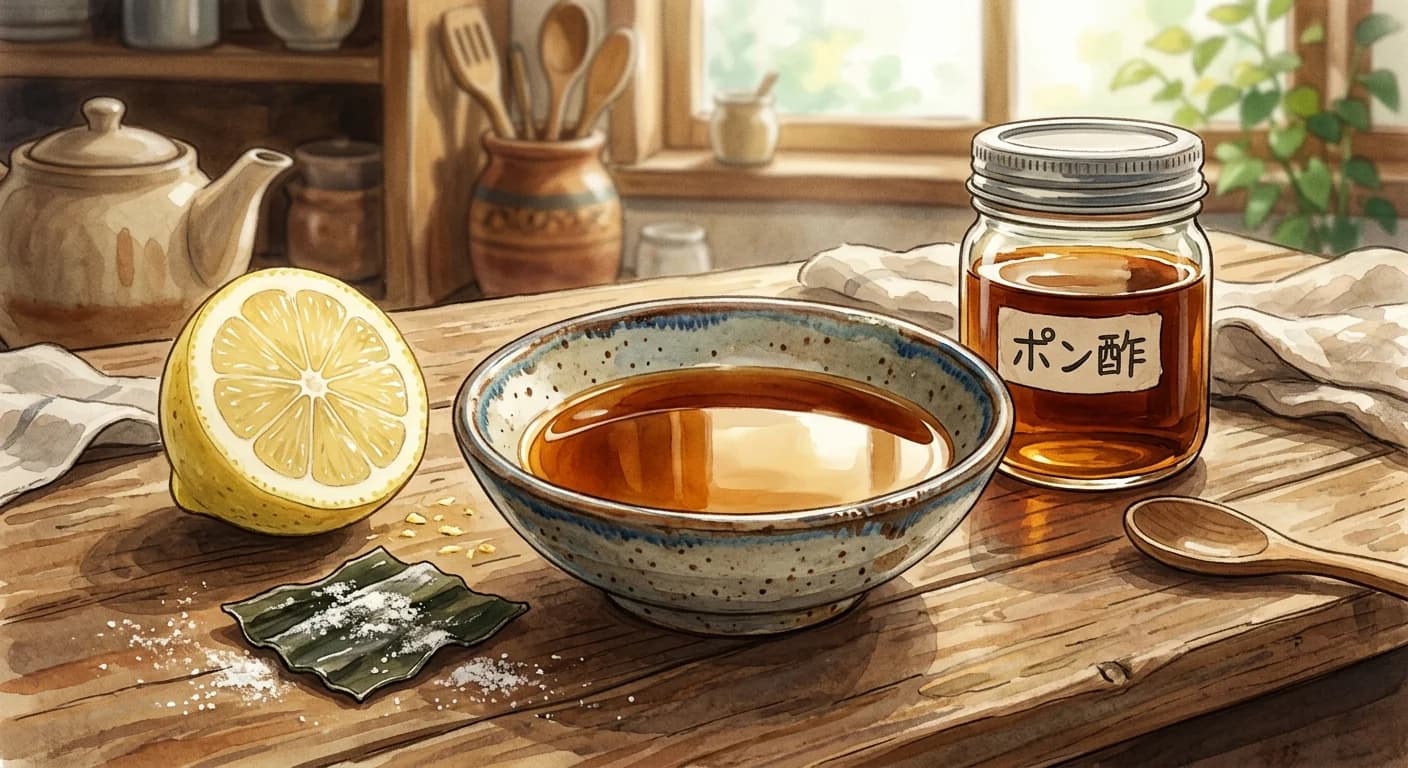
Ponzu (Japanese Citrus Soy Sauce)
Soy sauce, fresh citrus, kombu and bonito steeped overnight into a bright, salty sauce for dipping and dressing
Ponzu is what you reach for when soy sauce on its own feels too heavy. It's thin and dark, salty and sour at the same time, with a smoky depth from bonito and kelp under the citrus. A spoonful over grilled fish or cold tofu tastes like you seasoned it and squeezed a lemon over it in one move.
In Japan it's the standard dip for hot pots like shabu-shabu and nabe, and it turns up on dumplings, seared tuna, salads and fried chicken. Bottled ponzu is good. Homemade is brighter, because the citrus is fresh.
The classic citrus is Japanese: yuzu, sudachi or kabosu. Fresh ones are hard to find outside Japan, so this version uses mostly lemon with a little orange to round off the sharpness. If you have bottled yuzu juice, use it instead.
The hands-on part takes five minutes. Boil the soy sauce and mirin to cook off some of the mirin's alcohol, drop in the kombu and bonito flakes while it's hot, then add the citrus once it has cooled, so the juice never cooks. After that the fridge does the work. Give it at least one night before you strain it. The kombu and bonito need that long to soften the edge of the soy sauce, and a few more days make it rounder still.
Inspired by Just One Cookbook and Chopstick Chronicles.
At a Glance
Yield
About 1 cup (sixteen 1-tablespoon servings)
Prep
10 minutes (plus overnight steeping)
Cook
5 minutes
Total
12 hours 15 minutes (including overnight steeping)
Difficulty
Easy
Ingredients
- ½ cupsoy sauce
- 3 tbspmirin
- ¼ ozkombu (dried kelp), one piece about 2 x 3 inches (5 x 7.5 cm)
- ¼ ozkatsuobushi (dried bonito flakes), about 1/2 cup lightly packed
- 6 tbspfresh lemon juice, from about 2 lemons
- 2 tbspfresh orange juice, or use 1/2 cup yuzu, sudachi or kabosu juice in place of the lemon and orange
- 1lemon, zest only, finely grated (optional)
Method
- 1
Wipe the kombu with a damp paper towel to remove any grit, but leave the white powder on its surface. That powder is part of the flavor.
- 2
Pour the soy sauce and mirin into a small saucepan and bring it to a boil over medium-high heat. As soon as it boils, turn off the heat. The brief boil cooks off some of the mirin's alcohol. Left in, it would taste harsh in a sauce that is otherwise raw.
- 3
Add the kombu and bonito flakes to the hot liquid and push them under with a spoon. Leave the pan to cool to room temperature, about 30 minutes. The flakes darken and sink as they soak.
- 4
If you are using the zest, grate it from the lemon before you cut it. Squeeze the lemon and orange juice and stir it, with the zest, into the cooled liquid. Heat dulls the fresh smell of citrus, so it goes in only once the pan is cool.
- 5
Pour everything, solids included, into a clean glass jar. Cover and refrigerate overnight, or for up to a week if you want a rounder, deeper flavor.
- 6
Set a fine-mesh strainer over a bowl and pour the ponzu through it. Press the bonito flakes gently with the back of a spoon to get the last of the sauce out. Don't mash them, or the sauce turns cloudy. Pour the strained ponzu into a clean jar.
- 7
Taste before you use it. It should be salty and sour in about equal measure, with a little sweetness behind. If it tastes too sharp, stir in a teaspoon of mirin; if it tastes too salty, add a little more citrus juice.
Key Ingredient Benefits
Citrus juice: Lemon and orange juice are good sources of vitamin C, which breaks down with heat. Because the juice goes into ponzu raw, more of it survives than it would in a cooked sauce, although at a tablespoon at a time ponzu is a seasoning, not a meaningful source of vitamins.
Sodium: Because nearly half the liquid is citrus, a tablespoon of this ponzu has roughly 380 mg of sodium, a little under half of what the same spoonful of soy sauce carries. As a dip it's still salty. Low-sodium soy sauce brings it down further.
Kombu: Kombu is one of the richest food sources of iodine, and some of it passes into the sauce as it steeps. At a spoonful at a time that's not a concern for most people, but anyone who has been told to limit iodine should know it's there.
Bonito flakes: Katsuobushi is dried, smoked skipjack tuna. It makes this ponzu a fish product and not vegetarian; Substitutions has a version made with dried shiitake.
Allergens: Soy sauce contains soy and wheat. Tamari makes the sauce gluten-free.
Why This Works
Ponzu borrows its depth from the same pairing as dashi, the stock under so much Japanese cooking. Kombu is rich in glutamate, bonito flakes carry inosinate, and the two together taste more savory than either one alone. According to Wikipedia's article on umami, the chemist Kikunae Ikeda traced the savory taste of kombu broth to glutamate, and one of his students later found the second savory compound in dried bonito. That savoriness is what a quick mix of soy sauce and lemon juice is missing.
Temperature matters at each stage. The short boil drives off some of the mirin's alcohol, and the hot liquid starts pulling flavor out of the kombu and bonito. The citrus goes in cold because much of its aroma comes from volatile compounds in the juice and zest, and heat drives them off. That's also why ponzu is best as a finishing sauce rather than something you cook with.
Nearly half the liquid is citrus juice, so the sauce is far less salty than soy sauce, and the acid makes it taste lighter. Lemon on its own reads sharp and a little one-note next to yuzu. A quarter of the juice here is orange, which brings sweetness and a floral smell that move the flavor closer to Japanese citrus.
Substitutions & Variations
Vegetarian ponzu with shiitake: Leave out the bonito flakes and use 2 dried shiitake mushrooms (about 6 g) instead. Add them to the hot soy sauce along with the kombu and steep as written. Shiitake carries its own savory compound, guanylate, which pairs with the glutamate in kombu the way bonito does, so the sauce keeps its depth. It tastes earthier and loses the smoky note. Strain out the mushrooms with the kombu and slice them into a soup or stir-fry.
Yuzu, sudachi or kabosu: Use 1/2 cup of any of these juices, fresh or bottled, in place of the lemon and orange. Japanese grocery stores sell bottled yuzu juice; check that it's pure juice with no added salt.
Other citrus: Lime, grapefruit or a mix all work. Keep roughly three parts sour juice to one part sweeter juice.
No mirin: Use 1 tablespoon of sugar and 3 tablespoons of water, heated with the soy sauce until the sugar dissolves. Use this version within a week.
Gluten-free: Use tamari or a gluten-free soy sauce.
Same-day ponzu: If you need it today, steep it for 1 hour at room temperature before straining. It will taste sharper and saltier but works fine as a dip.
Serving Suggestions
Ponzu is first a dipping sauce. Set out small bowls of it for shabu-shabu or nabe, with grated daikon, sliced scallions and a pinch of shichimi togarashi for each person to stir in. It's good with dumplings too, in place of the usual soy and vinegar dip.
As a finishing sauce, spoon it over seared tuna or beef, grilled fish, or chilled tofu with grated ginger. It's also good on karaage with a mound of grated daikon. Whisked with oil, about 3 parts ponzu to 1 part sesame or neutral oil, it turns into a quick dressing for greens, cucumbers or cold noodles.
Storage & Reheating
Fridge: Strained ponzu keeps for about 1 month in a clean, airtight glass jar. The citrus fades slowly, so it's brightest in the first two weeks.
Freezer: Freeze it in an ice cube tray, then move the cubes to a bag. It keeps 2 to 3 months, and each cube is 1 to 2 tablespoons. Thaw in the fridge.
Don't heat it: Use ponzu cold or at room temperature. If you add it to a hot dish, do it at the very end, off the heat.
The leftover solids: The strained kombu and bonito still have flavor. Simmer them in water for a light second stock, or chop them and cook them with a little soy sauce and sugar into a homemade furikake.
Cultural Notes
The word ponzu has a Dutch root. According to Wikipedia's entry on ponzu, Japanese borrowed it from the now obsolete Dutch word pons, meaning punch, the drink made from fruit juice. Because the sauce is sour, the final syllable came to be read as su (酢), the Japanese word for vinegar.
Strictly speaking, ponzu is the citrus base on its own, and the version with soy sauce is ponzu shōyu. In practice nearly everyone calls the dark, soy-based sauce simply ponzu, and that's what this recipe makes. The citrus used in Japan includes yuzu, sudachi, daidai and kabosu, all more fragrant than lemon.
Nutrition Facts
Calories: 11kcal (1%)|Total Carbohydrates: 2g (1%)|Protein: 1g (2%)|Total Fat: 0g (0%)|Saturated Fat: 0g (0%)|Cholesterol: 0mg (0%)|Sodium: 380mg (17%)|Dietary Fiber: 0g (0%)|Total Sugars: 1g
You Might Also Like




Ratings & Comments
Ratings & Comments
Ratings
Share your thoughts on this recipe.
Sign in to rate and comment