Parsi · Indian Cuisine
Parsi Chicken with Potato Straws (Salli Murgi)
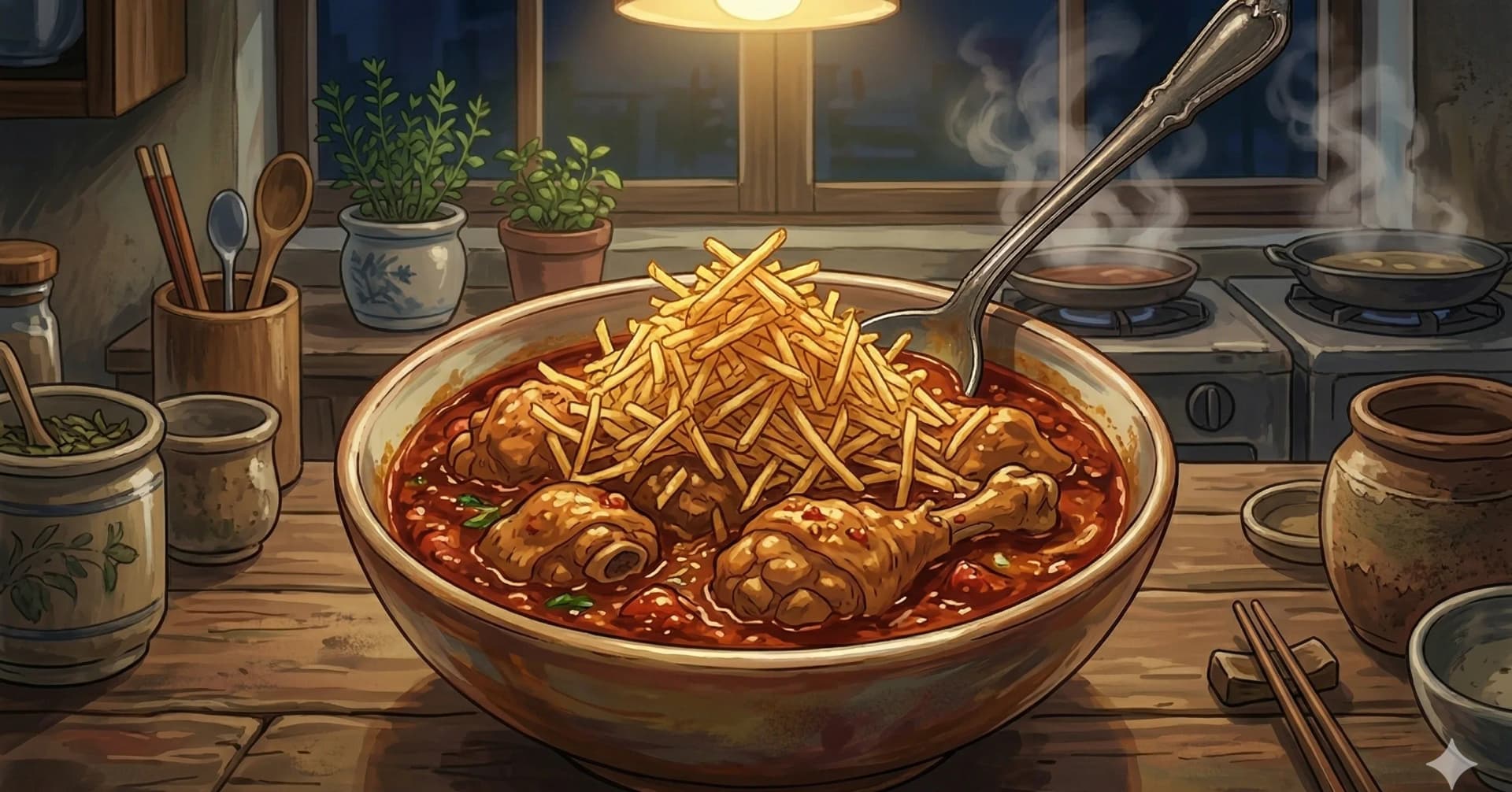
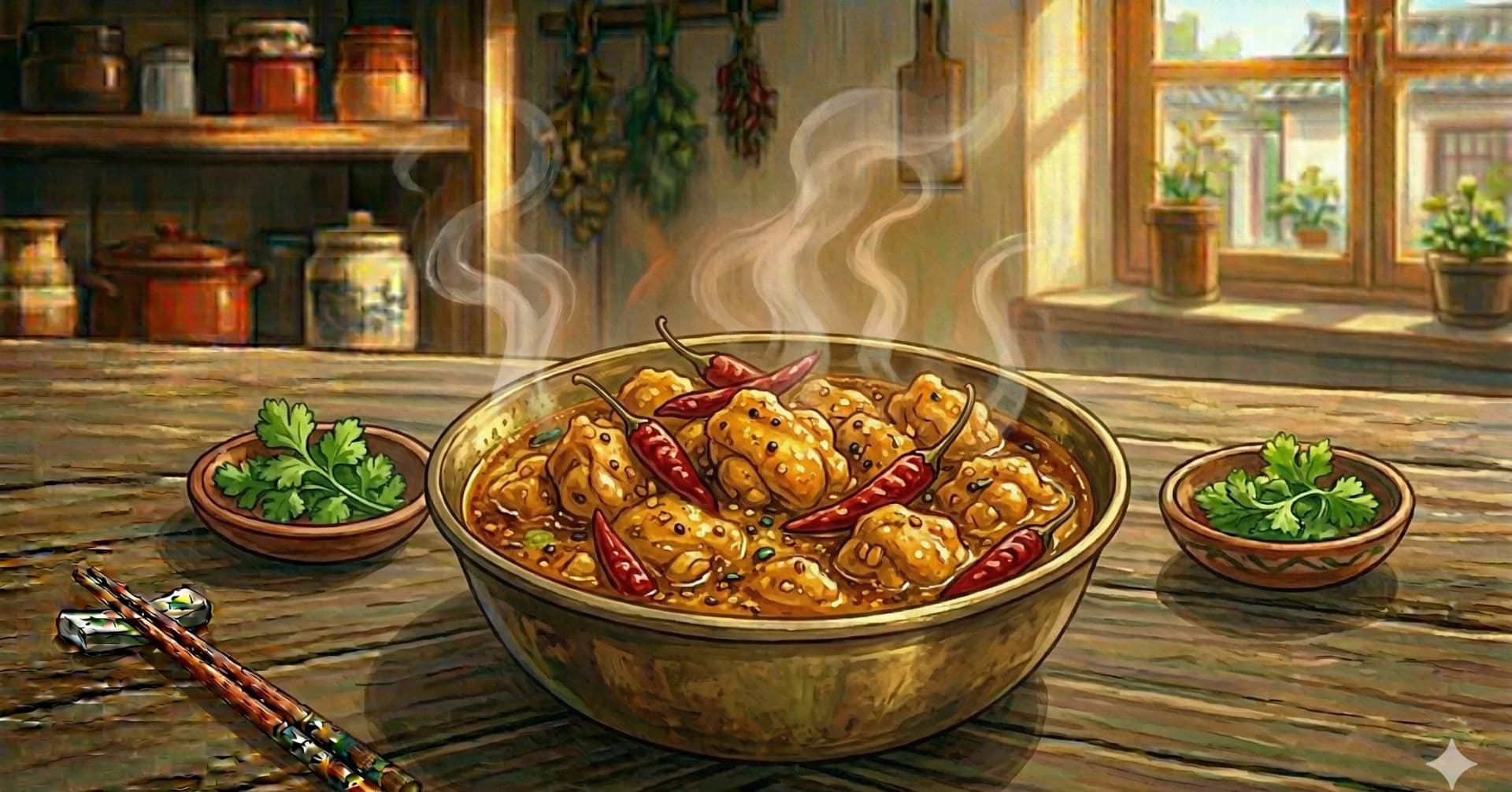
Parsi chicken curry with dried apricot, finished with cream and a crown of crispy potato straws
Salli murgi earns its name from the potato straws (salli) that are piled on top just before serving. These thin-cut, deep-fried potato shreds provide a crunch that no other garnish can replicate and a visual drama that marks this as a festive dish. Below them, the chicken curry is rich, slightly sweet from the dried apricots, and rounded with cream. A combination that places this squarely in the Parsi tradition of sweet-savoury balance.
The salli must be made fresh and added at the last moment; they soften within minutes of contact with the hot curry and lose the crunch that is the whole point. This is a dish about timing as much as flavour.
At a Glance
Yield
Serves 4
Prep
25 minutes
Cook
40 minutes
Total
1 hour 5 minutes
Difficulty
Medium
Ingredients
Chicken Ingredients
- 1 lbboneless chicken, cut into large pieces
- 3½ ozonions (about ½–1 onion), sliced
- 1green chilli, sliced
- 1¾ tbspgarlic, crushed
- ⅓ cupfresh ginger, minced
- ¾ tspturmeric
- 1⅛ tspred chilli powder
- 1 tspcumin powder
- ⅞ tspcinnamon powder
- ⅓ tspwhite pepper
- 5½ oztomatoes (about 1–1½ tomatoes), blended smooth
- 2 tbspneutral oil
- ¼ cupwater
- 1⅔ tspsalt
- ½ tspsugar
- 1 ozdried apricots, halved (optional but traditional)
- ⅔ tspgaram masala
- 3½ tbspcream
- 1⅔ cupfresh coriander, chopped
Salli Ingredients
- 1 lbpotatoes (about 3–3½ potatoes), peeled and very finely shredded (on a julienne grater or mandoline)
- —Salt
- —Oil for deep-frying
Method
- 1
Cook the curry base. Heat oil in a kadhai over medium heat. Fry the sliced onion until golden brown, about 10 minutes. Add the chilli (1), garlic (10 g), ginger (30 g), turmeric (2 g), red chilli powder (2 g), white pepper (1 g), cumin (2 g), and cinnamon (2 g). Stir-fry for 3–4 minutes.
- 2
Add tomatoes (150 g). Add the blended tomato. Cook until oil separates, about 5 minutes. Transfer to a blender, add 60 ml water, and blend to a smooth paste. Return to the pan.
- 3
Cook the chicken. Stir-fry the chicken in a wok or wide pan in a little oil for 5 minutes. Add the blended onion-tomato masala, salt (10 g), sugar (2 g), and enough water (60 ml) to barely cover. Simmer uncovered for 15–20 minutes until the chicken is cooked and the gravy has thickened.
- 4
Finish. Add the dried apricots (if using) and cook for 5 minutes more. Stir in the cream (50 ml) and garam masala (2 g). Garnish with coriander (30 g). Keep warm.
- 5
Make the salli. Rinse the shredded potato thoroughly in cold water until water runs clear. Pat completely dry with a kitchen towel. This is essential for crispy results. Heat oil in a kadhai to 180°C. Fry the potato straws in small batches until golden and crisp, about 3–4 minutes. Drain and immediately season with salt.
- 6
Serve. Top each portion of chicken with a generous tangle of salli at the table.
Key Ingredient Benefits
Chicken (bone-in pieces): Bone-in chicken thighs and drumsticks are the traditional Parsi choice. The bone-in cuts deliver more flavor through the long simmer and stay tender longer than breast meat. About 25 g of protein per 100 g, with good amounts of B12, niacin, and selenium.
Dried apricots (Hunza or Turkish): The signature ingredient. Hunza apricots (small, tart, intensely flavored) are most authentic; Turkish apricots (larger, sweeter, more orange) substitute well. The apricots are soaked briefly to soften, then added to the curry where they slowly break down and infuse the gravy with sweet-tart character. High in vitamin A, potassium, iron, and fiber.
Onions: Sliced thin and slow-cooked into a deep brown paste that forms the curry's base. The slow cooking caramelizes the natural sugars, producing the sweet, complex foundation typical of Parsi cooking.
Ginger and garlic paste: The aromatic foundation. Used generously in Parsi cooking and added to the slow-cooking onions to develop together.
Cinnamon, cloves, cardamom (whole): The Parsi spice signature for poultry dishes. Whole spices are used (rather than ground) to provide layered, slowly-released aromatic depth without overwhelming the dish.
Heavy cream: Added at the end. Provides the rich, finishing creaminess that distinguishes Parsi-style chicken from leaner preparations. The cream is what makes salli murgi feel celebratory rather than everyday.
Salli (potato straws): The iconic Parsi garnish. Thin julienned potatoes deep-fried until crispy and used as a textural and visual topping. Salli are a defining element of Parsi cuisine and appear on many Parsi dishes beyond this one.
Vinegar: A small splash near the end provides the sweet-sour balance characteristic of Parsi cooking.
Why This Works
Drying the shredded potato thoroughly before frying removes surface moisture, which otherwise steams rather than fries the potato, producing a soggy result. A completely dry potato hits the hot oil with immediate, direct contact, producing a fast, even crisp.
Substitutions & Variations
Chicken: Bone-in thighs and drumsticks are the traditional choice. Boneless thighs work but produce less flavorful gravy. Whole chicken cut into pieces is excellent. Avoid breast meat — too lean and dries out during the long simmer.
Dried apricots: Hunza apricots are most authentic but hard to find outside South Asia. Turkish apricots are the most common substitute. California dried apricots work but are sweeter. Dried peaches or apple rings can substitute for a different but acceptable result. Fresh apricots (when in season) work but cook differently.
Onions: Yellow or red onions both work. The amount is generous — Parsi cooking uses substantial onions in poultry preparations. Shallots produce a sweeter, more refined result.
Heavy cream: Coconut cream substitutes for dairy-free needs (changes the character somewhat). Greek yogurt thinned with cream is a popular modern variation. Half-and-half produces a lighter result.
Salli (potato straws): Pre-made salli are sold in Indian groceries (sometimes labeled "potato sticks" or "sev sticks"). Homemade salli are dramatically better but require time and oil for deep-frying. Crushed potato chips substitute in a real pinch (not traditional but acceptable for casual home meals).
Whole spices: Pre-made garam masala can substitute (use about 1 teaspoon ground at the end), but the dish loses some of the layered character.
Ginger and garlic paste: Cannot really be omitted. Fresh-made paste is best; jarred works.
Vinegar: Cane vinegar is traditional Parsi choice. White wine vinegar substitutes. Apple cider vinegar works. Lime juice can substitute for the acid but produces a different character.
Spice variations: Some modern Parsi cooks add a pinch of turmeric (not traditional but common). Bay leaves, fennel seeds, or star anise appear in some regional variations.
Without salli garnish: The dish remains good without the potato straws, but loses its iconic visual signature. Substitute with crispy fried onions (birista) for similar textural contrast.
Serving Suggestions
Serve with rice or soft bread. The curry is rich enough to need plain accompaniment. The salli must go on at the last second; serve with extra salli on the side.
Storage & Reheating
Curry keeps refrigerated for 3 days. Make salli fresh each time.
Cultural Notes
Salli murgi (literally "chicken with potato straws" in Parsi vernacular) is one of the signature dishes of Parsi cuisine and one of the most recognizable Parsi preparations globally. The dish combines several defining elements of Parsi cooking: sweet-savory balance (chicken with apricots), Persian-Indian fusion (slow-cooked onion base + Indian spices), and the iconic salli garnish that distinguishes Parsi food from other Indian regional traditions.
The dish reflects the Parsi community's Persian heritage and the integration of Persian sweet-savory cooking with Indian techniques. The pairing of chicken with dried fruits (apricots, prunes, raisins) is fundamentally Persian — it appears in classical Iranian dishes like khoresh-e fesenjān (pomegranate-walnut chicken stew) and khoresh-e gheymeh (split pea stew with potato straws). The Parsi adaptation uses Indian techniques (slow-cooked onion paste, Indian whole spices) but retains the Persian flavor profile.
The salli (potato straws) are perhaps the most distinctive Parsi culinary signature. Thin julienned potatoes deep-fried until crispy appear as garnish on multiple Parsi dishes including salli boti (lamb with potato straws), salli per eedu (eggs over potato straws), and various seafood preparations. The technique itself is borrowed from Persian kashk preparations but the application as garnish for everyday dishes is uniquely Parsi.
Salli murgi appears at virtually every Parsi celebration — Navjote ceremonies, weddings, Navroz (Parsi New Year), and special family meals. The dish is typically served as one of several non-vegetarian preparations alongside dhansak, patra ni machi (fish in banana leaf), and various vegetarian sides. The combination of sweet, savory, creamy, and crunchy textures makes it satisfying as a centerpiece dish.
The dish has become one of the most recognizable Parsi preparations in Mumbai's celebrated Parsi restaurant scene (Britannia & Co., Jimmy Boy, SodaBottleOpenerWala, Cafe Mondegar) and increasingly appears at Parsi-owned restaurants worldwide. The dish's combination of accessibility (chicken-based, not too spicy), distinctive presentation (the salli garnish), and exotic flavor profile (Persian-Indian fusion) has made it one of the most "exportable" Parsi dishes.
In Parsi family cooking, salli murgi recipes are often closely-guarded household specialties, with each family claiming a slightly different version. The ratios of spices, the timing of apricot addition, and the specific seasoning of the cream finish all vary by family lineage. The dish represents not just a recipe but a piece of Parsi cultural identity passed down through generations.
Nutrition Facts
Calories: 512kcal (26%)|Total Carbohydrates: 30.8g (11%)|Protein: 42.5g (85%)|Total Fat: 23.9g (31%)|Saturated Fat: 5.3g (27%)|Cholesterol: 114mg (38%)|Sodium: 2599mg (113%)|Dietary Fiber: 4.2g (15%)|Total Sugars: 3g
You Might Also Like
Ratings & Comments
Ratings & Comments
Ratings
Share your thoughts on this recipe.
Sign in to rate and comment