Chinese Cuisine
Xia Ren Chao Fan (Shrimp Fried Rice)
Wok-tossed day-old rice with plump shrimp, egg, and scallions in the Cantonese tradition
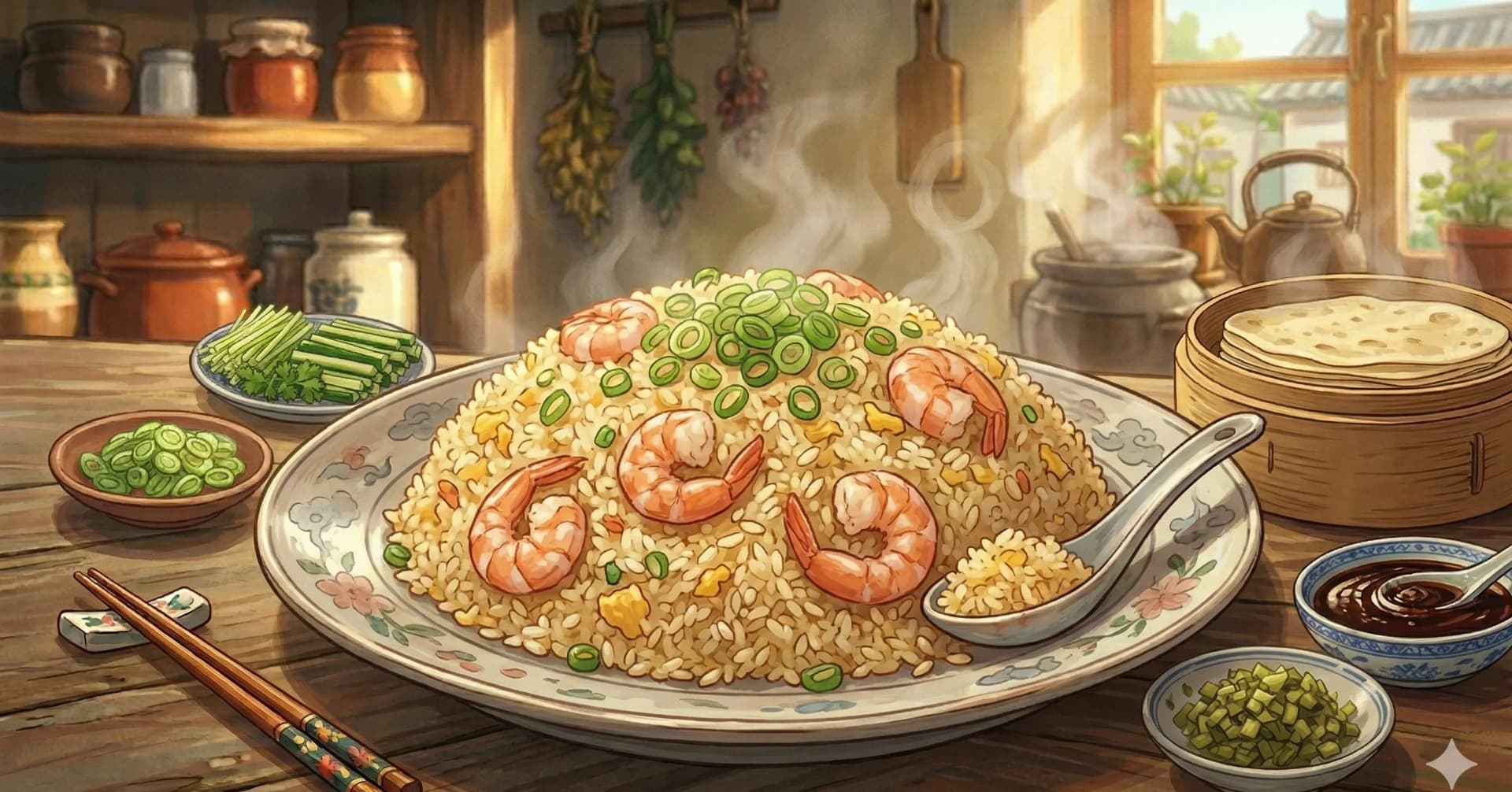
Good fried rice has a particular sound: the rapid clatter of grains hitting a screaming hot wok, punctuated by the sizzle of egg and the hiss of soy sauce meeting hot metal. When it is right, each grain of rice is separate and distinct, coated in a thin film of oil and egg, with a faintly smoky flavor that comes from the wok itself. The shrimp are pink, plump, and snappy, sitting among the grains like little treasures rather than being lost in the mixture.
Fried rice is China's great leftover dish, born from the practical need to transform cold, day-old rice into something hot, satisfying, and new. The Cantonese approach, which is the foundation for most versions served worldwide, emphasizes clean flavors and restrained seasoning. The goal is not a heavily sauced, wet pile of rice but a dry, fluffy mound where the individual grains tumble freely and the toppings are clearly visible.
The practical key, the insight that changes everything, is the rice itself. It must be cold, preferably a day old. Freshly cooked rice is too moist and too sticky. As rice cools in the refrigerator, the starches retrograde, meaning they crystallize and harden. This makes the grains firm, separate, and able to withstand the high heat and vigorous tossing of the wok without clumping or turning to mush. If you do not have leftover rice, cook a fresh batch, spread it on a sheet pan, and refrigerate it uncovered for at least 2 hours.
At a Glance
Yield
3 servings
Prep
10 minutes
Cook
10 minutes
Total
20 minutes
Difficulty
Easy
Ingredients
- 1 lbcold cooked jasmine rice (day-old is best)
- 7 ozmedium shrimp, peeled and deveined
- 3large eggs
- 3scallions, white and green parts separated, finely sliced
- 2 clovesgarlic, minced
- 3 tbspvegetable oil, divided
- 1 tbsplight soy sauce
- 1 tspsesame oil
- ½ tspsalt
- ⅞ tspwhite pepper
- ⅓ tspsalt
- 1⅞ tspcornstarch
- 1 tspShaoxing wine
Method
- 1
Pat the shrimp dry and toss them with the salt, cornstarch, and Shaoxing wine. Set aside for 10 minutes.
- 2
Break up the cold rice with your hands, separating any large clumps. The grains should be individual and loose. If the rice is very hard from the refrigerator, let it sit at room temperature for 10 minutes, then break it apart.
- 3
Beat the eggs lightly in a bowl with a pinch of salt. You want them just combined, not frothy.
- 4
Heat a wok over high heat until it begins to smoke. Add 15 ml of vegetable oil and swirl. Add the shrimp in a single layer. Cook for 30 seconds per side, until they are pink and just curled. They should not be fully cooked through, as they will return to the wok later. Transfer to a plate.
- 5
Wipe the wok if needed and return to high heat. Add 15 ml of vegetable oil. When it shimmers, pour in the beaten eggs. Let them set for about 3 seconds, then scramble quickly with your spatula, breaking them into small, fluffy pieces. When the eggs are about 80 percent set, still slightly glossy, transfer them to the plate with the shrimp.
- 6
Return the wok to high heat. Add the remaining 15 ml of vegetable oil. Add the garlic and scallion whites. Stir for 5 seconds.
- 7
Add the cold rice to the wok. Spread it across the surface and press it gently against the hot wok. Let it sit for 15 to 20 seconds to develop some sear, then toss vigorously. Repeat this process of pressing, searing, and tossing for 2 to 3 minutes. You should hear the grains crackling against the wok.
- 8
Drizzle the light soy sauce along the edge of the wok, letting it sizzle and caramelize before it reaches the rice. Toss to distribute the color evenly. The rice should take on a light golden hue.
- 9
Season with salt and white pepper. Toss again.
- 10
Return the shrimp and scrambled egg to the wok. Toss everything together for 30 seconds, just until heated through and evenly distributed.
- 11
Add the scallion greens and toss for another 10 seconds. They should wilt just slightly but retain their color.
- 12
Remove from heat. Drizzle with sesame oil and give one final toss.
- 13
Transfer to a serving plate, mounding the rice slightly in the center. Serve immediately.
Key Ingredient Benefits
Jasmine rice is a long-grain variety with a moderate glycemic index. Cooling and reheating rice increases its resistant starch content, which research suggests may have beneficial effects on blood sugar regulation and gut health.
Shrimp are a lean protein source, low in calories and rich in selenium, iodine, and omega-3 fatty acids. They provide astaxanthin, a carotenoid with potential anti-inflammatory properties.
Eggs add both protein and richness. The combination of shrimp, eggs, and rice creates a nutritionally balanced meal with complete amino acid profiles.
Why This Works
Day-old rice has undergone starch retrogradation, a process where the amylose molecules in the cooked starch realign into a more ordered crystalline structure as the rice cools. This makes the grains firmer, drier, and less sticky, which is exactly what fried rice needs. Fresh, hot rice contains too much surface moisture, which creates steam in the wok and prevents the grains from frying properly.
The high heat and small batch size are critical for achieving the dry, slightly charred quality of good fried rice. Each grain needs direct contact with the hot wok surface to develop flavor. Overcrowding lowers the temperature and creates steam, resulting in wet, clumpy rice.
Adding the soy sauce along the edge of the wok rather than directly onto the rice ensures that it partially caramelizes before mixing in. This adds depth of flavor and prevents the rice from becoming soggy in one spot.
Substitutions & Variations
- Rice type: Jasmine rice is ideal for its separate, fluffy grains. Short-grain or sushi rice is too sticky. Basmati works but has a different flavor profile.
- Shrimp: Any size works. Larger shrimp can be cut into pieces. Crab, lobster, or scallops make luxurious alternatives.
- Egg technique: Some cooks mix the raw egg directly into the cold rice before adding it to the wok. This coats each grain in a thin layer of egg, producing a golden, slightly richer result.
- Additions: Diced carrots, peas, corn, or diced lap cheong (Chinese sausage) are all common additions.
- XO sauce version: Add a tablespoon of XO sauce with the garlic for a Hong Kong-style upgrade that adds dried seafood umami and chili heat.
Serving Suggestions
Shrimp fried rice is a complete meal on its own. If serving as part of a larger Chinese dinner, pair it with a soup and a vegetable dish. It works beautifully alongside any braised or roasted meat, or as a late-night meal when you need something quick and satisfying. A side of chili oil or hot sauce on the table is always welcome.
Storage & Reheating
Leftover fried rice can be stored in an airtight container in the refrigerator for up to 2 days. Reheat in a hot wok or skillet, tossing frequently, until piping hot throughout. A splash of water can help steam the rice back to life. Microwave reheating works but will not restore any crispness. Fried rice freezes well for up to 1 month; reheat directly from frozen in a hot wok. Important: rice should be cooled quickly after initial cooking and reheated thoroughly to reduce the risk of Bacillus cereus contamination.
Cultural Notes
Xia ren chao fan (蝦仁炒飯, "shrimp fried rice") is the Cantonese fried rice variation that uses peeled shrimp as the central protein, alongside the standard fried rice components of day-old rice, scrambled egg, scallion, and a small amount of soy sauce. The dish belongs to the broader Cantonese fried rice tradition, of which the most famous representative is yangzhou-fried-rice, and it shares the same technical foundation: properly cooled day-old rice, a screaming-hot wok, the right cooking order, and restraint with the seasoning so the wok hei (breath of the wok) carries the dish rather than the sauce.
The dish has cultural prominence as one of the standard restaurant offerings at every Cantonese-American Chinese restaurant from the late nineteenth century onward. Cantonese immigrants to the United States, Canada, and Australia opened restaurants serving simplified fried rice variations adapted to local tastes and ingredients, and shrimp fried rice became one of the menu pillars alongside chicken, beef, pork, and house-special combinations. The diaspora version typically uses long-grain Western rice, frozen peeled shrimp, frozen peas, and diced carrot, producing a recognizable Cantonese-American interpretation that differs in texture and flavor from the Cantonese restaurant version in Hong Kong or Guangzhou.
The authentic Cantonese restaurant version uses jasmine rice cooked the day before, fresh shrimp (small to medium size for this dish, since they cook in seconds and stay tender), beaten egg scrambled briefly first and removed from the wok, and finely chopped scallion white added in the second stage. The shrimp are velveted briefly with salt, white pepper, and cornstarch before cooking, which keeps them tender during the brief flash-fry. The wok hei development is the technical signature: the wok has to be hot enough to vaporize a small amount of soy sauce or wine added at the end, which carries the smoky flavor into the rice grains. A properly made Cantonese shrimp fried rice has separate grains, bright pink shrimp, and the faint smoky aroma that no domestic stove can fully replicate without restaurant-grade wok burners.
Nutrition Facts
Calories: 438kcal (22%)|Total Carbohydrates: 51g (19%)|Protein: 25g (50%)|Total Fat: 14g (18%)|Saturated Fat: 3g (15%)|Cholesterol: 293mg (98%)|Sodium: 1076mg (47%)|Dietary Fiber: 1.3g (5%)|Total Sugars: 0.6g
You Might Also Like
Ratings & Comments
Ratings & Comments
Ratings
Share your thoughts on this recipe.
Sign in to rate and comment