Japanese Cuisine
Tonkatsu Sauce (Homemade Katsu Sauce)
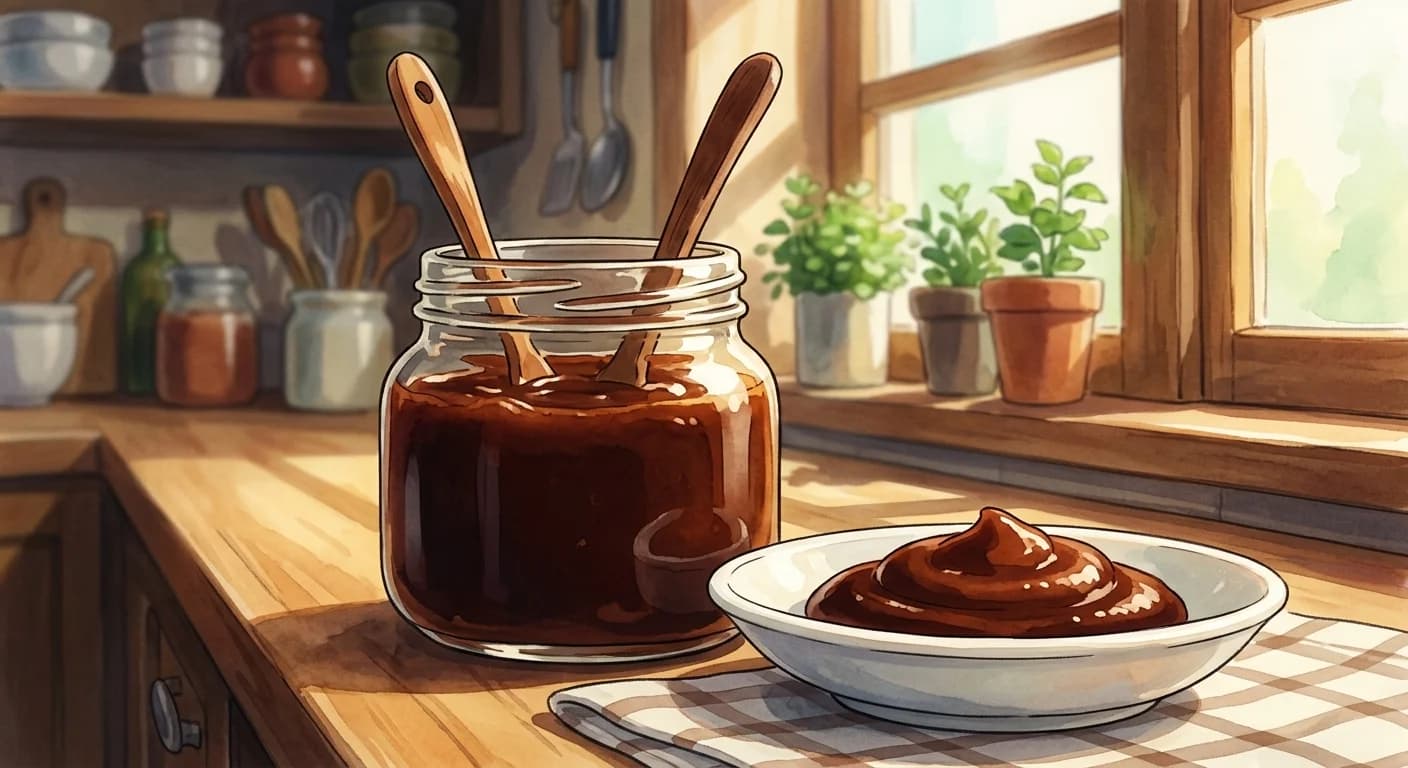
The thick, sweet and tangy brown sauce for katsu, whisked together from pantry bottles in five minutes
Good tonkatsu sauce is thick enough to sit on top of a fried cutlet instead of soaking into the crust. It tastes of fruit and tomato first, then vinegar and spice, with a long savory finish, and it's sweeter than you'd guess from something so dark.
In Japan most people buy it. Bottled sauce is cheap and sold everywhere, and the big brands build theirs on fruit and vegetable purées. This version gets close in five minutes with a whisk and what's already in the fridge door. Ketchup and Worcestershire do most of the work, and a spoonful each of oyster sauce, soy sauce and mirin carries it the rest of the way.
Spoon it over tonkatsu or any other katsu, and keep the rest: a jar lasts a few weeks in the fridge.
Two habits help. Dissolve the sugar in the thin liquids before the ketchup goes in, because sugar takes ages to melt into something already thick. Then give the sauce 30 minutes in the fridge before you judge it. It thickens as it chills, and the Worcestershire mellows.
Inspired by Just One Cookbook.
At a Glance
Yield
About ¾ cup (twelve 1-tablespoon servings)
Prep
5 minutes
Total
35 minutes (including 30 minutes chilling)
Difficulty
Easy
Ingredients
- ⅓ cupketchup
- 3 tbspWorcestershire sauce
- 1 tbspoyster sauce
- 1 tbspsoy sauce
- 1 tbspmirin
- 1½ tbspsugar, light brown sugar preferred
- 1/2 tspDijon mustard, or karashi (Japanese hot mustard)
- 1/8 tspgarlic powder (optional)
Method
- 1
Put the Worcestershire sauce, soy sauce, mirin and sugar in a small bowl or a clean jar. Whisk for about a minute, until you no longer feel grit when you drag the whisk across the bottom. Sugar dissolves quickly in thin liquid and very slowly once the ketchup is in.
- 2
Add the ketchup, oyster sauce, mustard, and the garlic powder if you are using it. Whisk until the sauce is smooth and evenly brown, with no red streaks of ketchup left.
- 3
Taste it on something plain, like a corner of bread or a piece of a cooked cutlet. It should hit sweet and tangy first, then finish savory. Ketchup brands vary a lot in sweetness, so adjust here: if it tastes sharp, add sugar 1/2 teaspoon at a time and whisk until it dissolves.
- 4
Cover and chill for at least 30 minutes. The sauce thickens in the fridge until it falls slowly off a spoon, and the sharp edge of the Worcestershire softens.
- 5
Spoon it over katsu or serve it in a small dish for dipping. Keep the rest in a clean, covered jar in the fridge.
Key Ingredient Benefits
Sodium and sugar: This is a condiment, and it is salty and sweet like one. A 1-tablespoon serving has roughly 230 mg of sodium and 4 g of sugar. Making it yourself means you can use low-sodium soy sauce or cut the sugar to 1 tablespoon.
Allergens: Worcestershire sauce is usually made with anchovies, and oyster sauce with oyster extract, so this sauce contains fish and shellfish. Soy sauce contains soy and wheat. Substitutions covers fish-free, shellfish-free and gluten-free versions.
Mirin: Mirin is a sweet Japanese rice seasoning that contains some alcohol. In a no-cook sauce the alcohol stays in, though at 1 tablespoon spread across twelve servings the amount in each is tiny.
Why This Works
Ketchup is the body of the sauce: cooked tomato, sugar and vinegar, already thick. Worcestershire brings the sour, spiced, fermented note that Japanese brown sauces are built around, along with a little anchovy. Oyster sauce adds a savory depth that lasts after the sweetness fades, which is why the finished sauce doesn't taste like sweetened ketchup.
Soy sauce and mirin pull it toward Japan. Soy sauce adds salt and a roasted, brewed flavor. Mirin adds a rounder sweetness than sugar alone. Together they move the sauce away from American barbecue sauce and closer to the bottle on the table at a tonkatsu restaurant.
The mustard is easy to miss. Half a teaspoon won't make the sauce hot, but it sharpens everything around it, a bit like a squeeze of lemon. Tonkatsu often comes with a dab of karashi on the side anyway, so the flavor belongs.
Fried pork is rich and salty, and a sweet, sour sauce cuts through the fat. Thickness matters too. A thin sauce soaks into the panko and softens it, while this one stays on the surface, so the crust keeps its crunch longer.
Substitutions & Variations
No oyster sauce: Use the same amount of vegetarian stir-fry sauce made from mushrooms. Paired with a Worcestershire sauce made without anchovies, the whole sauce becomes vegan.
Gluten-free: Use tamari in place of the soy sauce, and check the labels on the Worcestershire and oyster sauce. Gluten-free versions of both are sold.
Brown sugar: Light or dark brown sugar adds a molasses note that tastes closer to the bottled sauces. Dark brown makes the sauce a shade darker.
No mirin: Use 1 teaspoon of sugar and 2 teaspoons of water instead. This also makes the sauce alcohol-free.
Karashi instead of Dijon: Japanese hot mustard is much sharper. Start with 1/4 teaspoon.
Fruitier sauce: Whisk in 1 tablespoon of unsweetened applesauce for a flavor closer to bottled sauces made with apple. Use this version within a week.
Serving Suggestions
The obvious place is tonkatsu, with a heap of finely shredded raw cabbage, rice and miso soup. Put sauce on the cabbage as well as the cutlet; plenty of people in Japan eat it that way. It suits anything fried in panko: chicken katsu, fried shrimp, croquettes, and a katsu sandwich on soft white bread.
It also fills in for other Japanese brown sauces. Brush it over okonomiyaki or drizzle it on takoyaki with Japanese mayonnaise when you don't have the dedicated sauce. A spoonful stirred through fried rice or yakisoba noodles works too.
Serve it cold or at room temperature. It doesn't need heating.
Storage & Reheating
Fridge: Keep it in a clean, airtight jar for 2 to 3 weeks. Use a clean spoon each time.
Freezer: Freeze it in an ice cube tray, then move the cubes to a bag. It keeps 3 to 4 months. Thaw in the fridge and whisk before using, since it can separate a little.
No reheating needed: Serve it cold or at room temperature. If it's too thick straight from the fridge, stir in a teaspoon of water.
Cultural Notes
Tonkatsu sauce belongs to a Japanese family of sauces called sōsu, which started from British Worcestershire sauce and went their own way. In Japan the thin original is labeled "Worcester," and many Japanese versions are milder and sweeter, made with apple and tomato purées. According to Wikipedia's article on Worcestershire sauce, Japan's agricultural standards sort these sauces into grades by how thick they are. Tonkatsu sauce is one of the thicker styles, made from vegetables and fruit.
The sauce takes its name from the dish. Tonkatsu, a breaded and fried pork cutlet, is a yōshoku dish, part of the Western-style cooking that Japanese restaurants developed from the late 1800s onward. Wikipedia's tonkatsu sauce entry dates the first tonkatsu sauce to 1948, made by Oliver Sauce Co. in Hyōgo Prefecture.
Nutrition Facts
Calories: 21kcal (1%)|Total Carbohydrates: 5g (2%)|Protein: 0g (0%)|Total Fat: 0g (0%)|Saturated Fat: 0g (0%)|Cholesterol: 0mg (0%)|Sodium: 230mg (10%)|Dietary Fiber: 0g (0%)|Total Sugars: 4g
You Might Also Like
Ratings & Comments
Ratings & Comments
Ratings
Share your thoughts on this recipe.
Sign in to rate and comment