Japanese Cuisine
Zaru Soba (Cold Soba Noodles)
Chilled buckwheat noodles with a briny dashi dipping sauce, ready in fifteen minutes
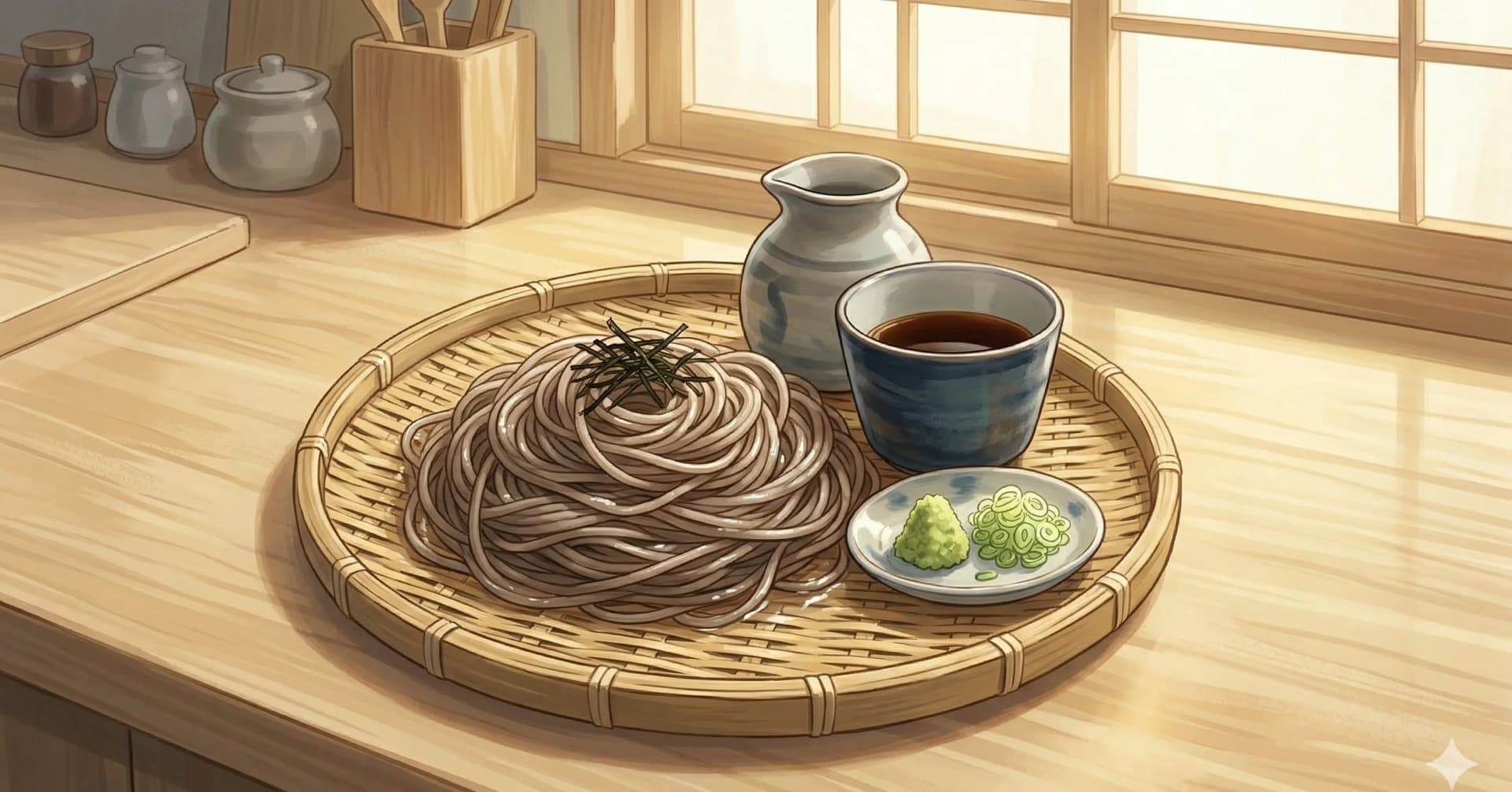
Zaru soba is the meal Japan reaches for when the air goes thick and still. A tangle of cold buckwheat noodles rests on a bamboo mat, waiting for a quick dip into a small cup of tsuyu, a concentrated sauce built from kombu, katsuobushi, soy sauce, and mirin. The name comes from the zaru, the woven bamboo strainer that lifts the noodles so water drains away and every strand stays firm. The dish dates to the Edo period, roughly the early 1600s, and it has not changed much since because there is nothing to improve.
What makes soba worth learning is the noodle itself. Buckwheat has an earthy, faintly nutty flavor that sits somewhere between grain and herb. Good soba should feel slightly coarse against the tongue, with a pleasant chew that gives way cleanly. The dipping sauce (mentsuyu) is concentrated and salty on its own, so you only dip the bottom third of each bite, letting the noodle flavor come through. At the end of the meal, you stir the reserved cooking water, called sobayu, into the leftover sauce and drink it warm like a light broth. It is one of those small rituals that turns a simple dish into something you look forward to.
This recipe includes a from-scratch mentsuyu that keeps for a month in the fridge, so you can pull it out any time a hot afternoon calls for cold noodles. If you enjoy Japanese noodle dishes, you will find similar satisfaction in a bowl of udon, a quiet cup of miso soup, or a slow-simmered pot of tonkotsu ramen. For something from a neighboring tradition, pad thai offers a different but equally rewarding study in noodle technique.
At a Glance
Yield
4 servings
Prep
5 minutes
Cook
10 minutes
Total
15 minutes
Difficulty
Easy
Ingredients
Sauce Ingredients
Noodle Ingredients
- 1 lbdried soba noodles (100 g per serving)
- —Ice water for shocking
To Serve
- ⅓ cupmentsuyu (from above)
- 1⅛ cupiced water
- 2scallions, thinly sliced
- —Shredded nori seaweed (kizami nori)
- —Wasabi, freshly grated or from tube (optional)
Method
- 1
Make the mentsuyu base. Pour the sake and mirin into a medium saucepan and bring to a boil over medium-high heat. Let it bubble for a few seconds so the raw alcohol smell fades. Add the soy sauce, kombu, and katsuobushi. Use the larger amount of katsuobushi if you want a more pronounced smoky depth. Reduce the heat and simmer gently for 5 minutes. The liquid will darken and smell richly savory. Turn off the heat and let the mixture steep and cool completely, about 20 minutes. Strain through a fine-mesh sieve, pressing lightly on the bonito flakes. Discard the solids.
- 2
Boil the noodles. Bring a large pot of unsalted water to a rolling boil. Fan the soba noodles into the water in a circular motion so they separate immediately. Stir once to prevent clumping. Cook according to the package directions, usually 4 to 5 minutes, until the noodles are just tender but still have a slight firmness when you bite through one. Do not overcook.
- 3
Reserve the sobayu. Before draining, scoop out about 360 ml of the cloudy cooking water and set it aside in a small pitcher or bowl. This is the sobayu you will drink at the end of the meal.
- 4
Rinse and chill. Drain the noodles in a colander and rinse under cold running water, gently rubbing the strands between your fingers to wash away the starchy coating. The water should run clear and the noodles should feel slippery, not tacky. Transfer to a bowl of ice water and let them sit for about 30 seconds, just long enough to firm the texture. Drain well, shaking the colander a few times.
- 5
Mix the dipping sauce. Combine the mentsuyu and iced water in a measuring jug. Taste and adjust: if it seems too salty, add a splash more water; if too mild, add a little more mentsuyu. Divide among individual dipping cups.
- 6
Plate and serve. Mound one serving of noodles onto each bamboo mat or plate. Scatter shredded nori over the top. Set out the sliced scallions and wasabi on small side dishes. Each person adds condiments to their dipping cup to taste, then picks up a few noodles and dips just the lower portion before eating. When the noodles are finished, pour the warm sobayu into the remaining sauce in each cup and sip it slowly.
Key Ingredient Benefits
Buckwheat (soba): Despite its name, buckwheat is not wheat. It is a pseudocereal related to rhubarb and sorrel. It contains rutin, a flavonoid that has been studied for potential cardiovascular benefits, along with manganese, magnesium, and dietary fiber. Pure buckwheat soba (ju-wari, 100% buckwheat) is naturally gluten-free, but most commercial dried soba contains 20 to 40 percent wheat flour for elasticity. Check the label if gluten is a concern.
Kombu: A kelp that is exceptionally rich in iodine, which supports thyroid function. It is also one of the original sources of umami, containing naturally high levels of glutamic acid. A small square is enough to flavor an entire pot of broth.
Katsuobushi: Dried, fermented, and smoked skipjack tuna, shaved into thin flakes. It is a concentrated source of protein and inosinic acid, another umami compound. The combination of katsuobushi and kombu is the foundation of dashi, the stock that underpins much of Japanese cooking.
Sobayu: The starchy cooking water contains water-soluble nutrients from the buckwheat, including rutin and B vitamins, that leach out during boiling. Drinking it mixed with leftover tsuyu is a traditional way to close the meal and is considered nourishing in Japanese food culture.
Why This Works
Rinsing the cooked noodles under cold water removes the surface starch that would otherwise make them gummy and cause strands to stick together. The brief ice bath that follows firms the protein structure in the buckwheat, locking in a satisfying chew that holds up throughout the meal.
The mentsuyu concentrates flavor into a small volume. Because you dip rather than submerge, the ratio of sauce to noodle stays restrained, letting the buckwheat flavor lead. The kombu provides glutamic acid and the katsuobushi provides inosinic acid, and together they create a synergistic umami effect that is greater than either ingredient alone.
Cooking in a large volume of unsalted water matters. Soba noodles release starch quickly, and a big pot keeps the water temperature stable and prevents the noodles from crowding. Salt would toughen the buckwheat, so it stays out entirely.
Substitutions & Variations
Noodle types: Hachi-wari soba (80% buckwheat, 20% wheat) is the most common and has a smooth, slightly elastic texture. Ju-wari soba (100% buckwheat) is more fragile, with a stronger earthy flavor and a drier bite. Green tea soba (cha soba) adds a subtle matcha note and a pale green color. Ume soba, tinted pink with pickled plum, is a milder alternative.
Mentsuyu shortcut: Bottled mentsuyu is available at Japanese and Asian grocery stores and works well. Dilute it according to the label directions for a dipping sauce consistency (typically 1 part mentsuyu to 2 or 3 parts water).
Gluten-free: Use 100% buckwheat soba and tamari in place of regular soy sauce.
Sake substitute: Dry sherry or Chinese rice wine both work. In a pinch, use water.
Mirin substitute: Mix 3 parts sake (or water) with 1 part sugar. The result is a little less complex but close enough.
Kake soba (hot version): To serve soba in hot broth instead of cold, make a lighter broth by combining 720 ml dashi with 15 ml sake, 30 ml mirin, 30 ml soy sauce, and a pinch of salt. Bring to a simmer. Cook and rinse the noodles as above, then briefly warm them in hot water before placing in bowls. Pour the hot broth over the noodles and top with sliced scallion, kamaboko (fish cake), and rehydrated wakame seaweed. This is the everyday soba noodle soup you will find in shops all over Japan.
Toshikoshi soba (New Year's Eve soba): The same hot broth preparation as kake soba, but served specifically on December 31st as part of a centuries-old tradition. The long noodles symbolize resilience and a wish for longevity, while their easy-to-cut texture represents letting go of the past year. Top simply with kamaboko, wakame, and scallion, or add tempura for a more festive bowl.
Tenzaru soba: Serve the cold zaru soba alongside vegetable or shrimp tempura for a classic summer combination called tenzaru.
Serving Suggestions
Zaru soba is a complete light meal on its own, but it pairs beautifully with tempura for a more substantial spread. A side of kinpira gobo, with its sweet-savory braised burdock root, adds an earthy contrast. For a fuller Japanese table, serve alongside a bowl of takikomi gohan, the seasoned mixed rice that picks up whatever vegetables and mushrooms are in season.
Other condiments worth setting out: grated daikon radish, toasted sesame seeds, and thin slices of fresh ginger. Any of these can go directly into the dipping cup.
For a hot soba meal during cooler months, the kake soba variation above works well with a side of miso soup and pickled vegetables.
Storage & Reheating
Mentsuyu: Store in a clean, airtight glass jar in the refrigerator for up to 1 month. It actually improves slightly over the first day or two as the flavors settle.
Cooked soba noodles: Best eaten immediately after preparation. Cooked soba noodles lose their texture within an hour, even when chilled, as they continue to absorb moisture and soften. Cook only what you plan to serve.
Dried soba noodles: Keep in a cool, dry pantry. They last for many months sealed in their original packaging.
Hot soba broth (kake soba): Store separately from noodles in the refrigerator for up to 3 days. Reheat gently on the stove and cook fresh noodles just before serving.
Cultural Notes
Zaru soba (ざる蕎麦) is cold soba noodles served on a bamboo mat with a small bowl of dipping sauce on the side. It is the iconic summer preparation in the broader Japanese soba (蕎麦, buckwheat noodle) tradition. The name comes from the zaru (笊), the bamboo basket or mat the noodles sit on. The open weave lets the cooking water drain off and keeps the noodles from clumping. It is also a deliberate piece of presentation. Dark buckwheat noodles against natural pale bamboo is one of the cleaner visual contrasts in Japanese serving.
Soba itself has deep cultural standing in Japan. Buckwheat cultivation in the islands dates to at least the 8th century, and buckwheat is one of the few cereal grains that thrives in Japan's mountainous regions where rice is difficult to grow. The premium soba-producing areas grew up in mountain country: Nagano's Shinshu region, Iwate's Wanko-soba tradition, Niigata's Hegi-soba style. Specialty soba restaurants (soba-ya, 蕎麦屋) sit near the top of the traditional Japanese restaurant hierarchy, and master soba-makers (soba shokunin) are considered comparable in skill and prestige to master sushi chefs.
Zaru soba is overwhelmingly a summer dish. Noodle-shop menus put it up from late May through early September, then it largely disappears as warm udon and ramen take over the cold months. The one significant exception is toshikoshi soba (年越し蕎麦), New Year's Eve soba, eaten in the final hours of December 31st to symbolically cut the old year and prepare for the new. Warm soba is more common for that specific occasion, but the cold version still appears at some tables.
Tokyo holds the cultural capital position for refined soba cuisine. The Edo-period aristocracy is widely credited with lifting soba from a humble mountain peasant grain into something fit for sophisticated dining, and a handful of Tokyo soba restaurants have been operating continuously for more than 200 years. Sasamaki Kenukizushi, Honke Owariya, and Yabu Soba Kanda are three of them.
Nutrition Facts
Calories: 583kcal (29%)|Total Carbohydrates: 92.7g (34%)|Protein: 46g (92%)|Total Fat: 2g (3%)|Saturated Fat: 0.4g (2%)|Cholesterol: 26mg (9%)|Sodium: 2475mg (108%)|Dietary Fiber: 0.5g (2%)|Total Sugars: 13.1g
You Might Also Like
Ratings & Comments
Ratings & Comments
Ratings
Share your thoughts on this recipe.
Sign in to rate and comment