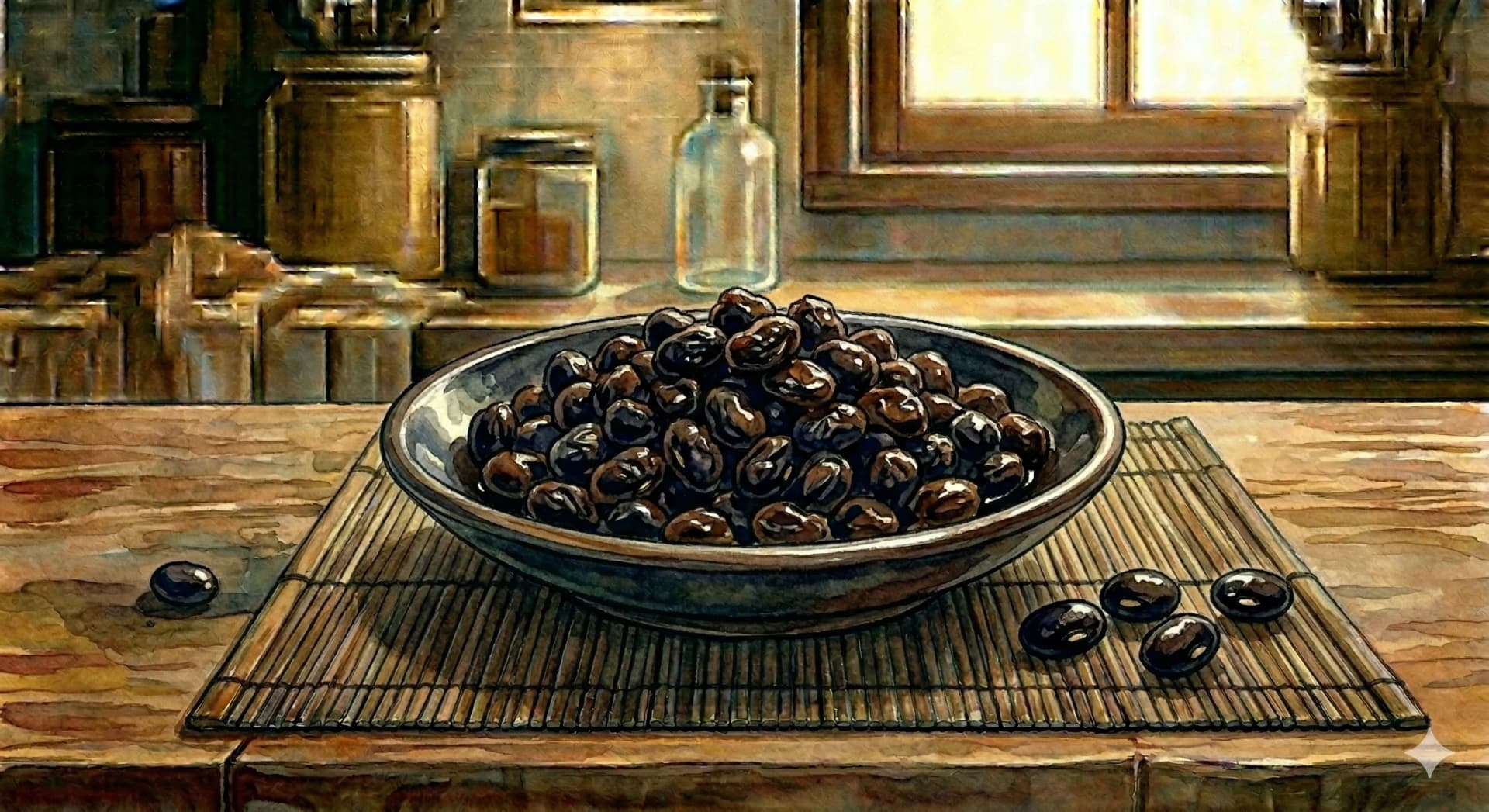
Fermented Black Beans
Also known as: Dou Chi, Salted Black Beans, Black Bean Paste, Douchi
Fermented black beans (dou chi) are small black soybeans that have been salted, steamed, and fermented — one of the oldest condiments in Chinese cooking, with a history stretching back over two thousand years.
The fermentation transforms the beans into intensely savory, earthy, slightly pungent flavor bombs that pack extraordinary umami depth into every dish they touch. Used whole or roughly chopped and combined with garlic and ginger, they create the foundation of one of the great flavor bases in Cantonese cooking.
Key facts at a glance:
- Over 2,000 years old — one of China's oldest condiments
- Fermented soybeans — salted, steamed, and aged for deep umami
- Cantonese foundation — combined with garlic and ginger as a classic flavor base
- Versatile use — works whole or roughly chopped in stir-fries, braises, and steamed dishes
Flavor Profile
Origin
China, Hunan, Cantonese cuisine, Sichuan
Traditional Medicine Perspectives
Traditional Chinese Medicine
Fermented black beans (Dou Chi) are classified as cool to neutral and bitter-sweet in TCM, associated with the Lung and Stomach meridians. Unlike plain black beans (which are warming), the fermentation process creates cooling properties. Dou Chi is prescribed to disperse wind-heat, clear vexation and heat, and resolve exterior conditions. It is used in classical formulas for early-stage fevers and heat patterns.
Modern Scientific Research
Fermented black beans contain bioactive peptides generated during fermentation, studied for ACE-inhibiting (blood pressure-lowering) properties.
The fermentation process reduces phytic acid, increasing mineral bioavailability, and generates antioxidant compounds from soybean isoflavones.
Research on fermented soy products consistently shows cardiovascular-protective, antioxidant, and potentially cancer-preventive effects.
Cultural History
Dou chi is documented in Chinese texts as early as the Han dynasty (206 BCE–220 CE), making it one of the oldest manufactured food products in Chinese history. Its origins likely lie in the accidental fermentation of salted soybeans, which ancient cooks recognized as creating something more flavorful than the original.
In Cantonese dim sum culture, pai gwat (steamed pork ribs with black bean and garlic) is one of the most beloved items.
Fermented black beans became central to Hunanese and Cantonese cooking and spread throughout Southeast Asia.
Culinary Uses
Roughly chop or mash with garlic before using — this helps release flavor. Combine with garlic, ginger, and Shaoxing wine as the flavor base for steamed fish and ribs.
Use in stir-fried shellfish (clams, mussels, lobster) for an unforgettable combination of fermented depth and fresh seafood.
Add to mapo tofu. Use in braised eggplant and bitter melon preparations.
Preparation Methods
Rinse lightly to remove excess salt if overly salty. Roughly chop or lightly mash before using in most applications.
Combine with equal quantities of minced garlic for the classic Cantonese black bean-garlic base.
Comments
Share your thoughts on this ingredient.
Sign in to comment0 Comments