Cross-Cultural · China
Chungking Pork (重庆猪肉)
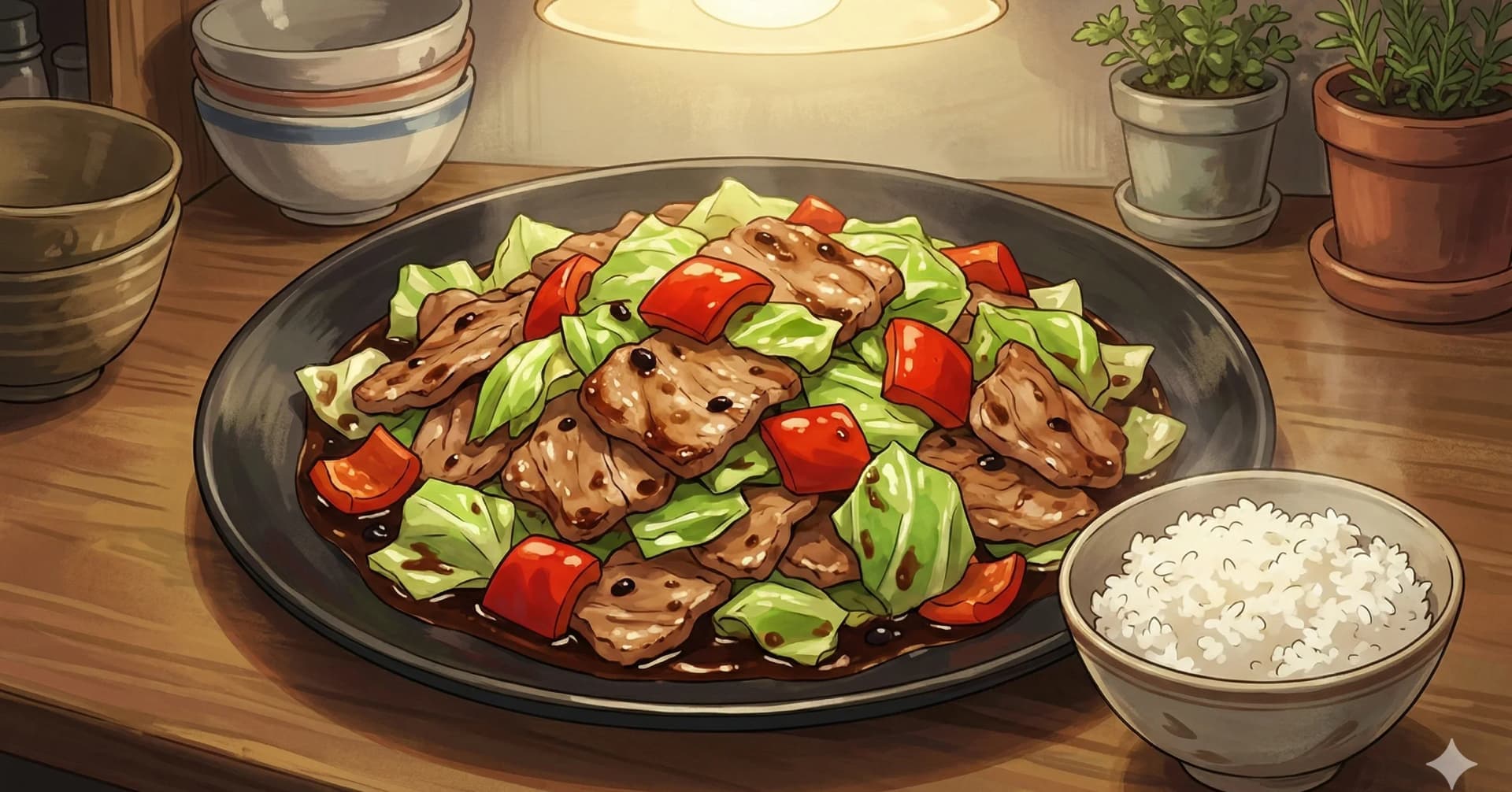
Thin-sliced pork tenderloin stir-fried with fermented black beans, crushed red pepper, cabbage, and bell pepper in a spicy hoisin sauce
Chungking is the old romanization of Chongqing, a massive city in Sichuan province known for food so spicy it makes the rest of Sichuan look mild. This stir-fry captures that spirit in a dish that takes less than thirty minutes from cutting board to table.
The pork tenderloin is sliced thin, tossed with rice wine and cornstarch, and stir-fried fast in a hot wok. Cabbage and bell pepper cook just long enough to soften at the edges while staying crunchy. The sauce is built on fermented black beans and crushed red pepper, finished with hoisin sauce and dark soy sauce. The hoisin adds sweet-savory depth. The dark soy adds color and bitterness that keeps the sweetness in check.
At a Glance
Yield
4 servings
Prep
15 minutes
Cook
12 minutes
Total
27 minutes
Difficulty
Easy
Ingredients
Marinade Ingredients
- 3/4 lbpork tenderloin, sliced crosswise 1/8 inch thick
- 2 tspChinese rice wine or dry sherry
- 4 tspcornstarch, divided
Sauce Ingredients
- 2 tbspfermented black beans, coarsely chopped
- 1 tspcrushed red pepper, or to taste
- 3 tbsphoisin sauce
- 2 tspdark soy sauce
Method
- 1
Marinate pork with wine and 2 tsp cornstarch. Whisk remaining 2 tsp cornstarch with 1/4 cup water.
- 2
Combine black beans + red pepper. Combine hoisin + dark soy.
- 3
Stir-fry cabbage and bell pepper in 2 tbsp oil on high, 5 min. Remove.
- 4
Add 2 tbsp oil. Fry ginger and garlic until sizzling. Add pork, stir 2-3 min until no longer pink.
- 5
Add black bean mixture, stir. Add hoisin mixture. Return vegetables. Add cornstarch water, stir 30 sec. Serve.
Key Ingredient Benefits
Pork tenderloin: The most tender cut of pork, with virtually no connective tissue and very low fat (only about 3 g per 100 g). High-protein (about 26 g per 100 g) and an excellent source of thiamine, selenium, and B6. The lean nature is both an advantage (cooks fast) and a vulnerability (overcooking dries it out instantly), which is why the cornstarch coating and high-heat fast-stir-fry are essential.
Fermented black beans (douchi): The defining seasoning of Sichuan-Chongqing cooking and the source of much of this dish's deep, complex umami. Soybeans fermented with salt and Aspergillus mold for months produce concentrated glutamates, isoflavones, and aromatic compounds. Black beans pair particularly well with pork in Sichuan tradition.
Crushed red pepper flakes / dried chilies: The other defining element of Chongqing cooking. Chongqing is known for some of the spiciest food in China, and the chili here is generous. Capsaicin in chilies has documented metabolic effects and traditional warming properties in Chinese medicine. Use Chinese chili flakes (làjiāo) if available; standard crushed red pepper works.
Hoisin sauce: Adds the sweet, slightly fruity, complex savoriness that balances the heat. Hoisin is made from soybeans, garlic, vinegar, sugar, and various spices. The sweetness here is essential — it provides the contrast that makes the heat tolerable.
Cabbage: Often underrated in Sichuan cooking, cabbage is a frequent partner for spicy pork dishes. Its mild sweetness and high water content temper the heat without diluting the flavor. The crunch provides textural contrast to the silky pork. Green cabbage, napa, or savoy all work.
Bell pepper: Adds color, crunch, and a slight sweetness. Red bell pepper is more traditional for color, but green works equally well. The high vitamin C content survives the brief stir-fry.
Ginger and garlic: The aromatic base of any Chinese stir-fry. Used generously here to balance the funk of the fermented black beans.
Why This Works
Slicing the pork tenderloin thin against the grain is the technique that ensures tender meat. Tenderloin's muscle fibers run lengthwise; slicing perpendicular to those fibers (across the grain) cuts them into short segments that are easy to chew. A 10-minute stint in the freezer before slicing firms the meat just enough that paper-thin slices become possible.
The cornstarch coating (called velveting in some sources) creates a thin protective layer that holds in moisture during the aggressive wok heat. Without this coating, lean pork tenderloin dries out in seconds at high heat. The cornstarch absorbs the marinade liquid and forms a gel-like coating that becomes silky after cooking.
Cooking the fermented black beans briefly in oil with ginger and garlic at the start (before any vegetables go in) is essential. This brief sauté blooms the fermented flavors — releases the aromatic compounds and integrates the umami into the oil. Adding black beans late produces a dish where they sit as discrete chunks rather than infused throughout.
High heat throughout, with no time for any ingredient to release moisture. The wok must be smoking before anything goes in. Pork sears quickly, vegetables go in fast, sauce hits at the end. Total cook time is under 12 minutes from first ingredient to plate. This is essential for the Sichuan stir-fry style — slow cooking would produce stewed pork in muddy sauce.
The hoisin-soy combination at the end provides depth without overwhelming. Hoisin's sweetness counterbalances the heat; soy adds salt and umami. Together they create the sauce that distinguishes this from generic spicy pork — Sichuan-Chongqing flavor profiles always pair heat with sweet and umami, never heat alone.
Substitutions & Variations
Pork tenderloin: Pork shoulder (sliced thin) works but is fattier and chewier. Boneless pork loin chops work but tend to be tougher. Chicken thigh substitutes well and produces a different but excellent dish. Beef sirloin or flank works and pushes the dish toward Hunan rather than Chongqing.
Fermented black beans: Jarred black bean garlic sauce works in a pinch (use 2 tablespoons in place of 1 tablespoon dry beans, and reduce added soy). Doubanjiang (Sichuan chili-bean paste) substitutes for a different but equally Sichuan flavor profile.
Crushed red pepper: Use Chinese chili flakes if available — slightly larger flakes with more fruity heat than standard crushed red pepper. Sichuan chili oil with sediment is an excellent substitute. For extreme heat, add a few dried Tianjin or Sichuan facing-heaven chilies.
Hoisin sauce: Sweet bean sauce (tianmianjiang) is the more authentic Chongqing choice but harder to find. Hoisin is the standard supermarket substitute. Plum sauce is too fruity. A combination of sweet soy and a pinch of sugar approximates.
Cabbage: Napa cabbage, bok choy, or savoy cabbage all work. Some versions use Chinese broccoli or snow peas.
Bell pepper: Any color works. Some versions use celery, green beans, or carrots.
Sichuan peppercorn: Optional but traditional addition — a teaspoon of crushed Sichuan peppercorn (huājiāo) adds the signature numbing tingle that makes Sichuan cooking distinctive. Tianjin chili and Sichuan peppercorn together produce the málà (numbing-spicy) flavor profile.
Soy sauce: Light soy is standard. A teaspoon of dark soy adds color depth. Tamari works for gluten-free needs.
Serving Suggestions
Chungking pork is a classic Sichuan home-style stir-fry, meant to be served over steamed jasmine rice as a one-bowl meal or as part of a larger Chinese spread. The rice is essential — it tempers the heat and catches the flavorful sauce. Plain rice, not seasoned, is the right choice.
For a more elaborate Sichuan dinner, pair with mapo tofu, kung pao chicken, a cold dish like smacked cucumber salad, and a clear soup. The combination of spicy mains and cooling sides is the canonical Sichuan banquet structure.
For a casual home dinner, serve with rice and a quick stir-fried green vegetable like Chinese broccoli or bok choy. A bowl of steamed eggs on the side provides cooling contrast to the heat.
Pair with cold light beer (Tsingtao, Yanjing, or any pilsner) — the canonical pairing for Sichuan food. Carbonation helps with the heat. Hot Chinese tea (jasmine or oolong) also works well. Avoid wine — most clash with the chili-and-fermented-bean flavor profile.
Set out a small dish of Chinese black vinegar for diners who want to drizzle over rice — this is a traditional Sichuan accompaniment that brightens the dish and provides acid contrast to the heat.
Storage & Reheating
Refrigerator: Stores well for up to 4 days in an airtight container. The flavor genuinely improves over 24 hours as the chili and black bean flavors continue to develop and the pork absorbs more sauce.
Reheating: A hot wok or large skillet with a splash of water for 2 to 3 minutes restores most of the texture. Microwaving works in a pinch — cover loosely and heat in 30-second intervals, stirring between.
Make-ahead components: The pork can be sliced and marinated up to 24 hours in advance. The vegetables can be cut and stored separately for up to 2 days. The sauce mixture can be combined a day ahead. The actual cooking is 12 minutes — easily a weeknight meal with prep done.
Freezing: Freezes acceptably for up to 2 months. The pork holds up well; the vegetables suffer slightly in texture. Thaw overnight in the refrigerator and reheat in a hot wok.
Spice management: If reheating leftovers, the heat may seem more intense the next day as the chili has had time to infuse fully. A spoonful of Chinese black vinegar at the end of reheating brightens the dish and balances the accumulated heat.
Cultural Notes
Chongqing cuisine (重慶菜, Chóngqìng cài) is technically a subcategory of broader Sichuan cooking (川菜) but has developed enough distinctive characteristics to be considered a regional style in its own right. The cuisine is famous for some of the spiciest food in China — even more aggressive than the rest of Sichuan — with dishes like Chongqing chicken (làzi jī), hot pot (huǒguō), and noodles in chili oil defining the region's culinary identity.
Chongqing is a massive municipality (one of four direct-controlled cities in China, alongside Beijing, Shanghai, and Tianjin) sitting at the confluence of the Yangtze and Jialing rivers. The hot, humid climate and historic port city status produced a cooking tradition built on dried chilies (more shelf-stable than fresh in the humidity), Sichuan peppercorn (which historically helped preserve food), and fermented bean products (also shelf-stable and umami-rich).
This dish — pork tenderloin with fermented black beans and chili — represents the home-style end of Chongqing cooking. The technique is everyday rather than special-occasion: fast wok stir-frying, minimal special equipment, ingredients available in any Chinese market. It is the kind of dish that any Chongqing home cook makes regularly.
The use of fermented black beans (douchi) and chili together appears in many Sichuan-Chongqing pork preparations, including twice-cooked pork (huíguō ròu) and fish-fragrant pork (yúxiāng ròusī). The combination is one of the foundational flavor pairings of the regional cuisine.
The romanization "Chungking" reflects the older Wade-Giles system that was standard in English-language texts before the adoption of Hanyu Pinyin in the mid-20th century. Most modern English texts use "Chongqing," but "Chungking" survives on many Chinese restaurant menus, particularly older Cantonese-American establishments that adopted the cuisine before pinyin became standard. The dish "Chungking pork" is sometimes considered a Cantonese-American adaptation of Sichuan-Chongqing cooking, but the technique and ingredients are authentic to the region.
Nutrition Facts
Calories: 246kcal (12%)|Total Carbohydrates: 15.3g (6%)|Protein: 19.9g (40%)|Total Fat: 11.3g (14%)|Saturated Fat: 1.7g (9%)|Cholesterol: 55mg (18%)|Sodium: 498mg (22%)|Dietary Fiber: 2.9g (10%)|Total Sugars: 6.5g
You Might Also Like
 Easy
EasyCross-Cultural · China
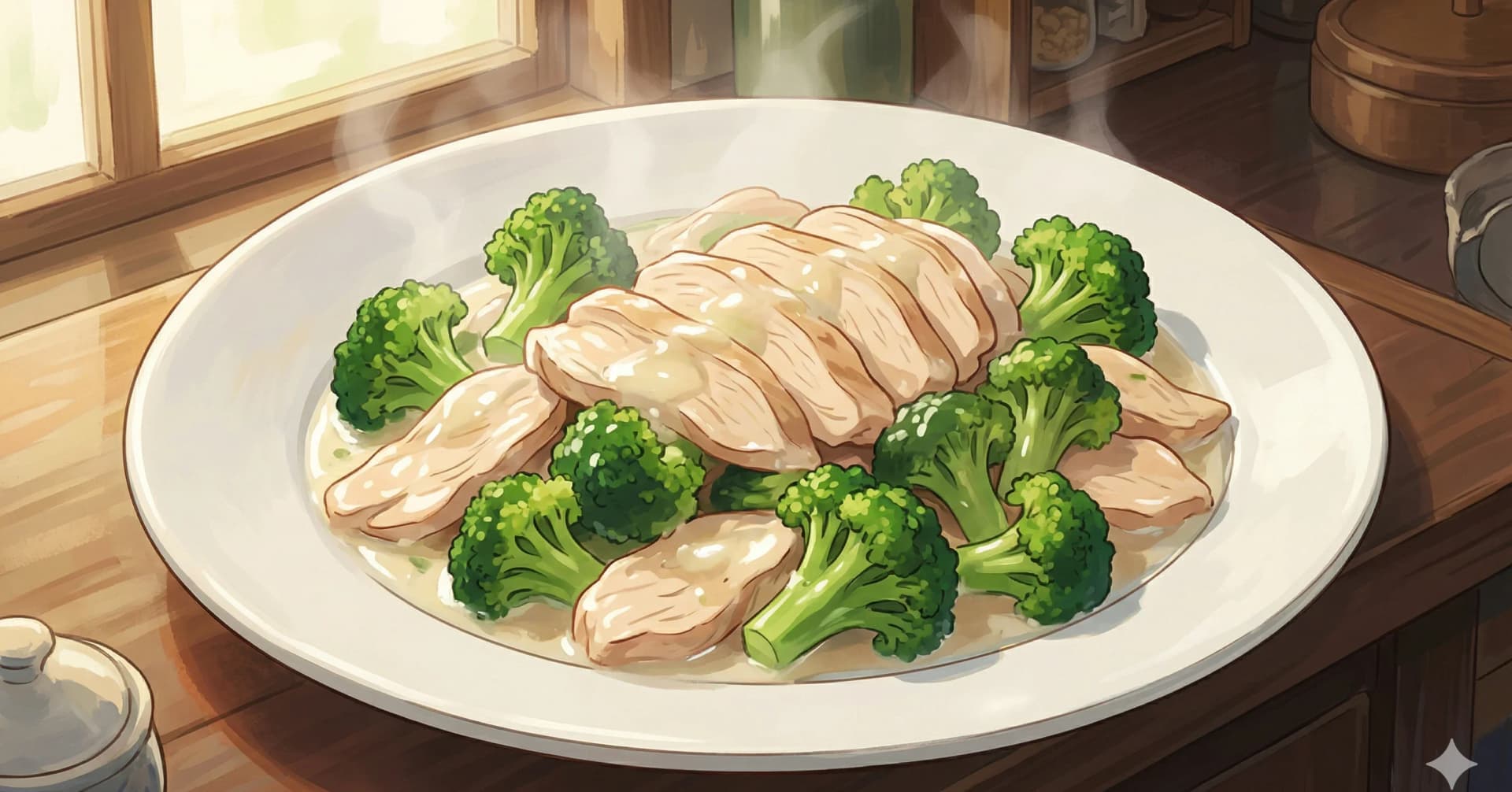
Chicken and Broccoli in White Sauce (白汁鸡花椰)
45 minutes
 Easy
EasyCross-Cultural · China
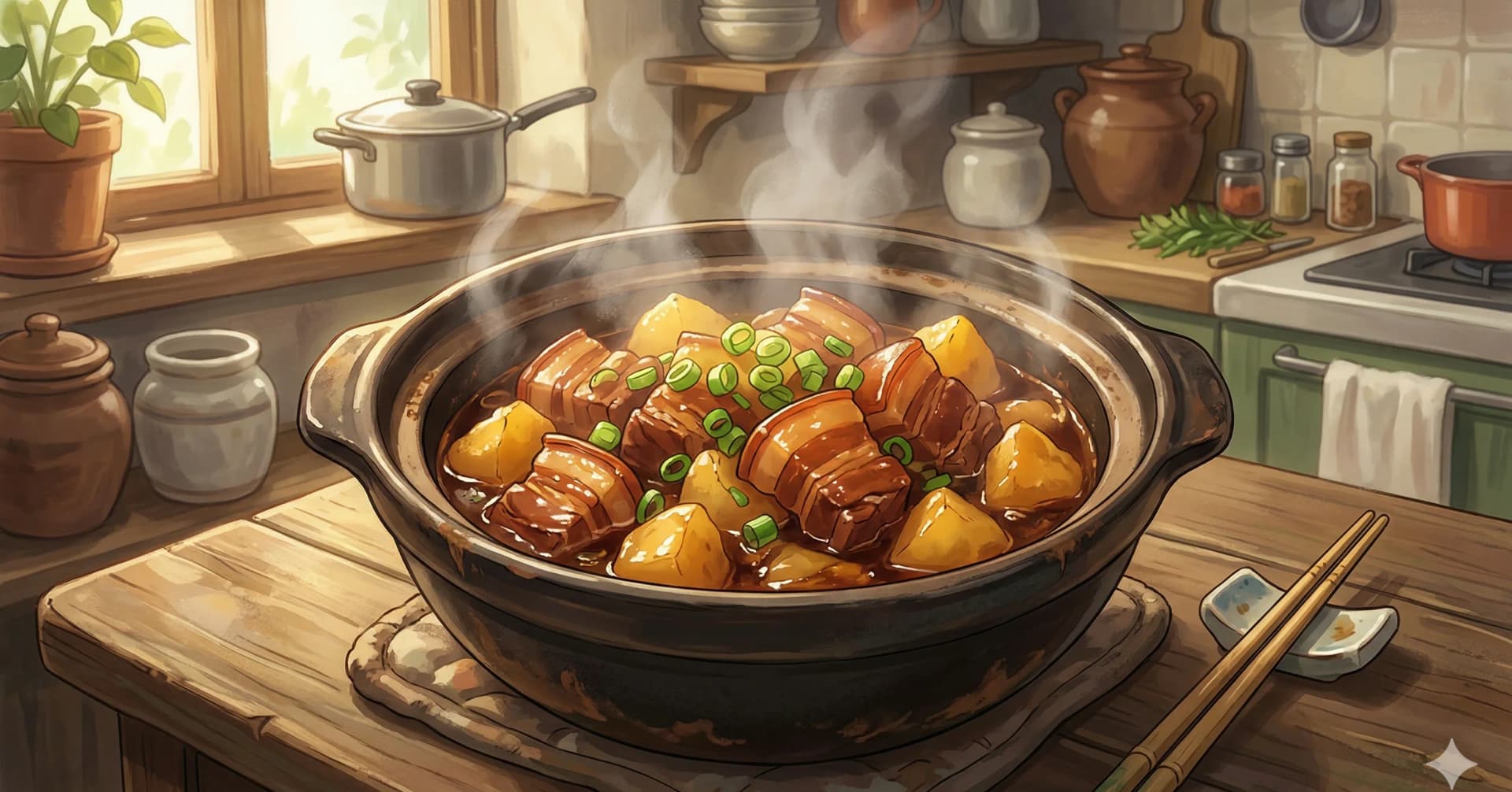
Braised Pork with Potatoes (薯仔炆豬肉)
40 minutes
 Easy
EasyTraditional Chinese Medicine · China
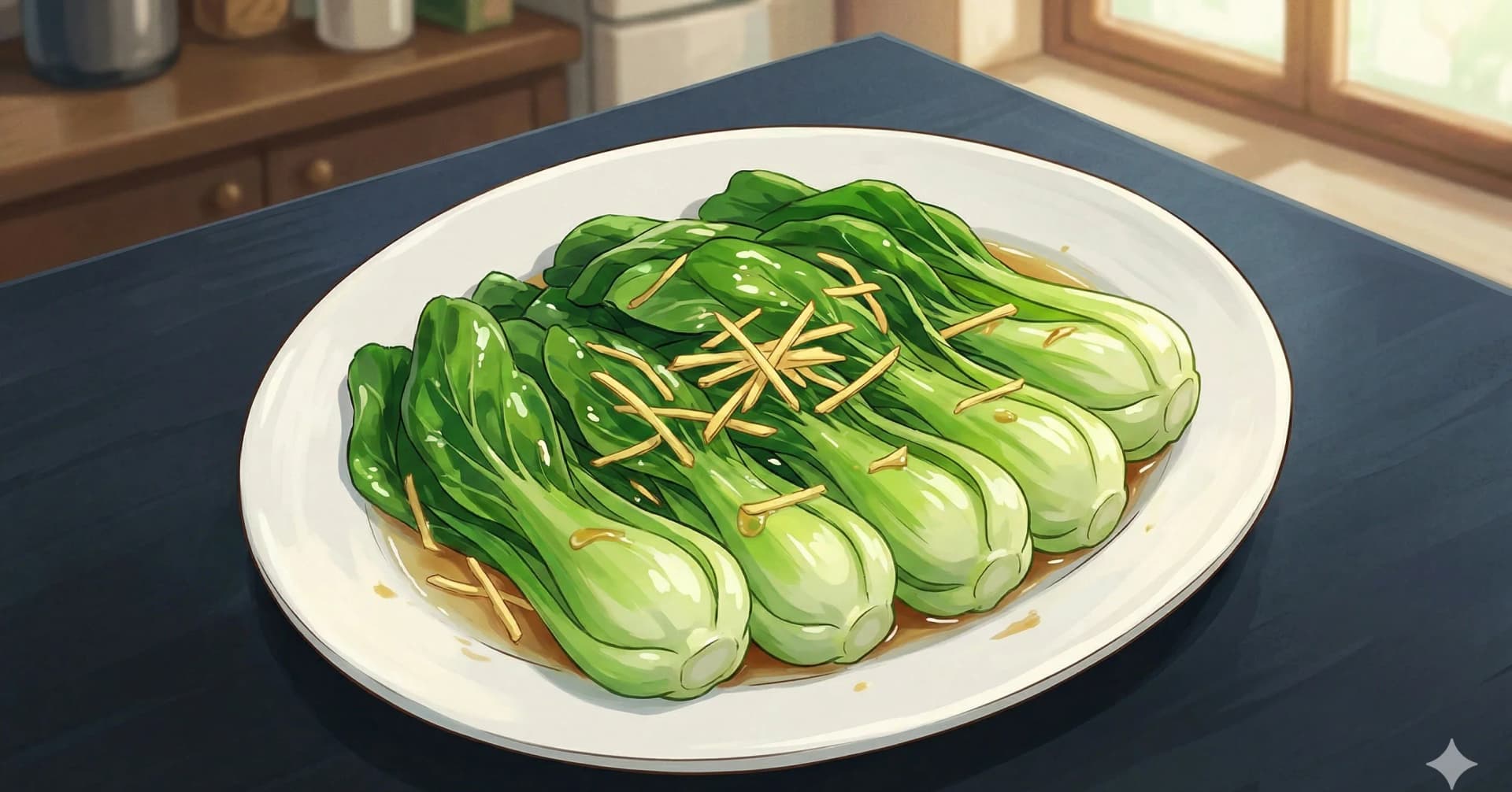
Bok Choy in Ginger Sauce (姜汁白菜)
6 minutes
 Medium
Cross-Cultural · Korea
Braised Black Cod (Eundaegu-jorim / 은대구조림)
45 minutes
Ratings & Comments
Ratings & Comments
Ratings
Share your thoughts on this recipe.
Sign in to rate and comment