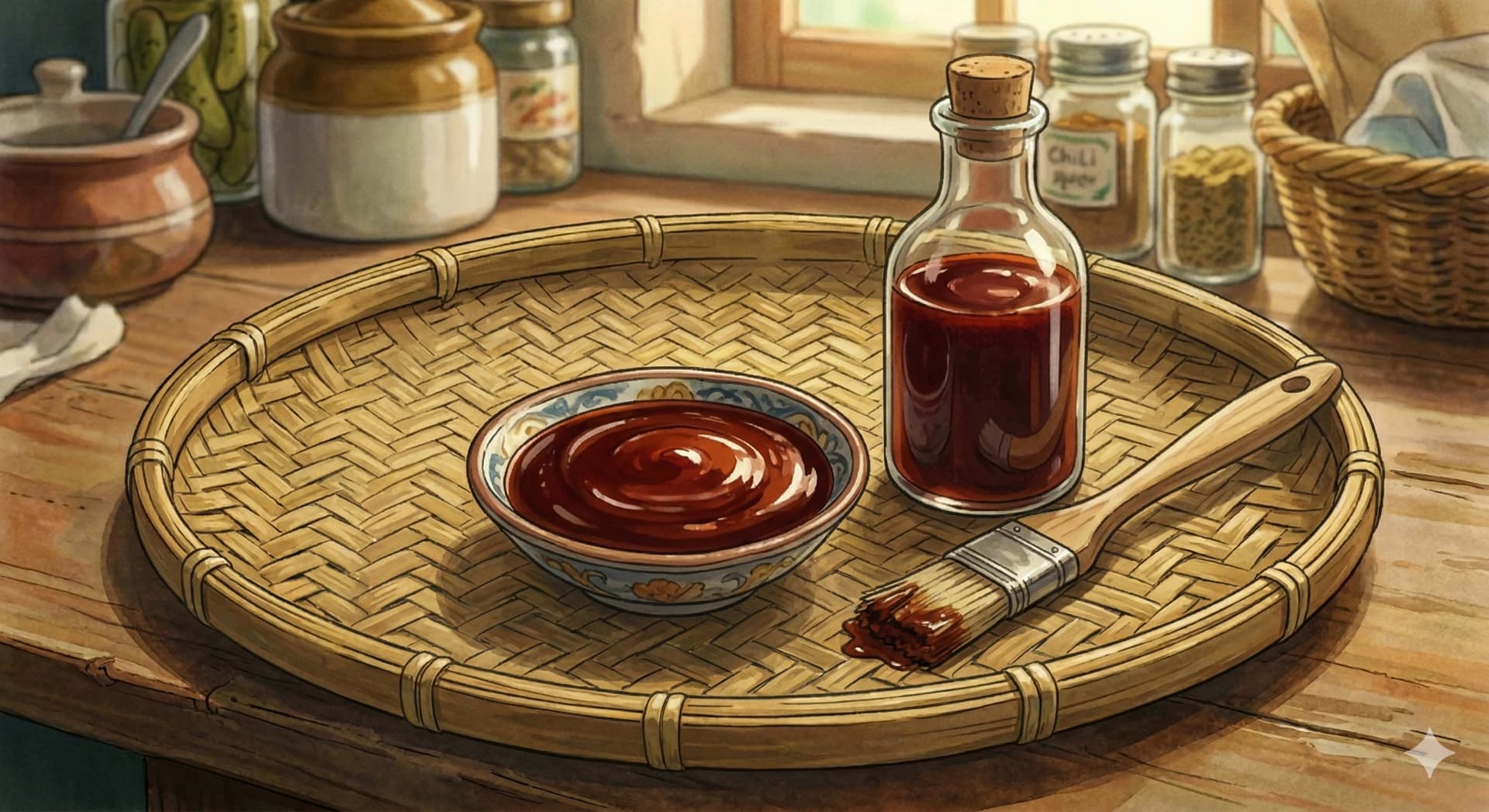
Hoisin Sauce
Also known as: Haixian Jiang, Chinese Barbecue Sauce, Peking Sauce
Hoisin sauce is a thick, fragrant, sweet-savory sauce made from fermented soybean paste, sugar, vinegar, garlic, and spices. Its name means 'seafood' in Cantonese, though it contains no seafood — the name may refer to its original use as a dipping sauce for seafood dishes.
Today it is most widely known as the sauce brushed onto Peking duck pancakes, but it is used in a wide range of dishes across Chinese and Vietnamese cuisine.
Key facts at a glance:
- Fermented soybean base — thick, sweet-savory sauce with garlic and spices
- Name meaning — 'seafood' in Cantonese, despite containing none
- Peking duck essential — the classic pancake sauce
- Cross-cultural — used widely in both Chinese and Vietnamese cuisines
Flavor Profile
Origin
Guangdong, China, Cantonese cuisine
Traditional Medicine Perspectives
Traditional Chinese Medicine
Hoisin sauce's fermented soybean base aligns with TCM's understanding of fermented soy foods as supportive to the Spleen and Stomach. The combination of sweet and savory is considered harmonizing to the digestive system.
Modern Scientific Research
The fermented soybean base of hoisin sauce contributes bioactive peptides and isoflavones associated with antioxidant activity. The vinegar component provides acetic acid, which research suggests may aid blood sugar management.
Hoisin sauce is high in sugar and sodium, so it is best used as a flavoring agent rather than consumed in large quantities.
Cultural History
Hoisin sauce developed in Cantonese cuisine and has been a commercial condiment product for over a century. Its role in Peking duck service made it famous internationally as China's food culture spread globally.
In Vietnamese cuisine, hoisin sauce (tuong den) became a table condiment for pho and other dishes — an example of how Chinese ingredients were adopted and adapted across Southeast Asia through centuries of cultural exchange.
Culinary Uses
Use as a glaze for roasted meats, a dipping sauce for spring rolls and Peking duck, a flavoring agent in stir-fries, and a marinade base for char siu pork.
Thin with water for a lighter glaze. Pair with sesame oil and soy sauce for a versatile sauce.
In Vietnamese cuisine, serve alongside pho as a condiment.
Preparation Methods
Use straight from the jar. For glazing, brush on during the last 10–15 minutes of roasting to caramelize without burning.
Thin with rice vinegar to balance the sweetness for dressings.
Traditional Dishes
- Peking duck
- Char siu pork
- Mu shu pork
- Vietnamese pho (condiment)
- Spring roll dipping sauce
Comments
Share your thoughts on this ingredient.
Sign in to comment0 Comments