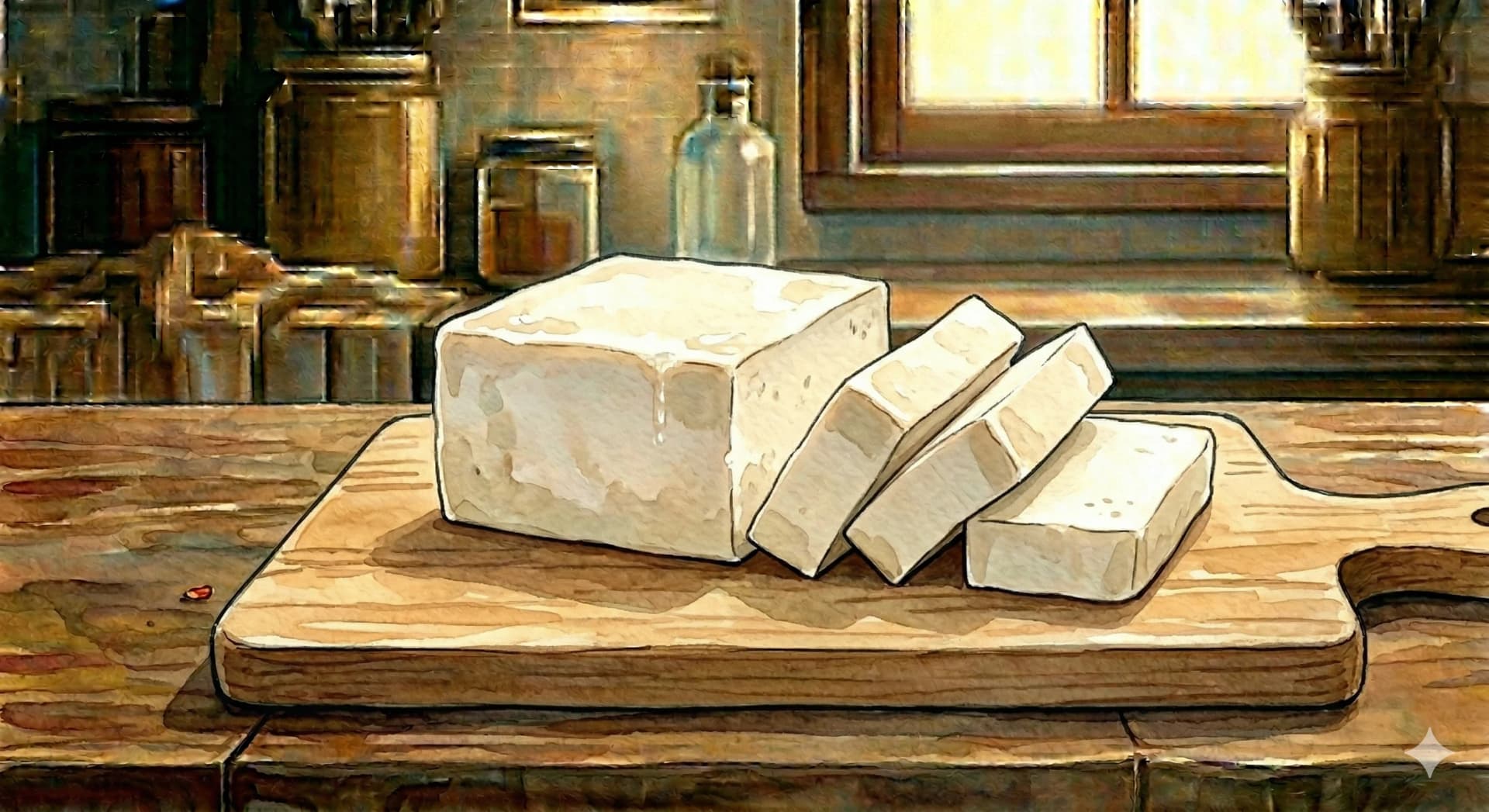
Firm Tofu
Also known as: Lao Doufu, Extra Firm Tofu, Northern Tofu, Cotton Tofu, Old Tofu
Firm tofu is pressed to remove a significant proportion of its water content, resulting in a denser, more cohesive block with a slightly spongy, porous texture ideal for high heat, pressure, or long braising.
It holds its shape when cubed and stir-fried, develops a beautiful golden crust when pan-fried, and absorbs sauces and flavors through its porous structure more effectively than softer varieties. Firm tofu is the workhorse of the Chinese pantry — the everyday protein that appears in stir-fries, braises, hot pots, and simple home dishes across the country.
Key facts at a glance:
- Pressed for density — water removal creates a cohesive, spongy block
- High-heat friendly — holds shape when cubed, develops golden crust when pan-fried
- Sauce absorber — porous structure pulls in flavors from surrounding liquids
- Everyday protein — the most versatile tofu in the Chinese kitchen
Flavor Profile
Origin
China, Japan, Korea, East Asia
Traditional Medicine Perspectives
Traditional Chinese Medicine
Firm tofu shares the TCM profile of tofu generally — cool and sweet, tonifying Qi and Yin, clearing heat, and moistening dryness. The firmer form is considered more Qi-tonifying and substantive than silken tofu, appropriate for those who need more building and nourishment. Paired with warming ingredients like ginger, garlic, and soy sauce, the cooling nature is balanced, making it appropriate for all constitutions.
Modern Scientific Research
Firm tofu has a higher protein density than soft or silken tofu due to reduced water content — approximately 8–10g protein per 100g versus 4–6g for silken.
The pressing process concentrates all nutrients proportionally: calcium, iron, isoflavones, and amino acids are all more concentrated per gram.
Research supports firm tofu as an equivalent protein source to animal proteins in terms of bioavailability.
Cultural History
Firm tofu (lao doufu or 'old tofu' in Cantonese) developed alongside the broader tofu tradition in northern and central China, where the firmer texture and higher protein density suited the heartier cooking of those regions. Northern Chinese tofu tends to be denser than southern styles.
In Korean cooking, firm tofu is pan-fried until golden as banchan or simmered in soy-based braises.
In Japanese cooking, firm cotton tofu (momen) is the standard type used in miso soup, hot pots, and dressed tofu dishes.
Culinary Uses
Pan-fry in oil until golden on both sides before adding to stir-fries, braises, and sauces — the golden crust prevents crumbling and adds flavor.
Press before frying to remove excess water for the crispiest results.
Cube and add to hot pots. Marinate in soy sauce, sesame oil, and five spice, then pan-fry for a standalone dish.
Preparation Methods
Press between kitchen towels under a weighted cutting board for 30–60 minutes to remove water before frying. Pat surface completely dry before adding to a hot, oiled pan.
Do not move until a crust forms. For braising: pan-fry first, then add to simmering sauce.
Comments
Share your thoughts on this ingredient.
Sign in to comment0 Comments