Matcha
Also known as: Powdered green tea, Maccha, 抹茶, Tencha (the unground leaf)
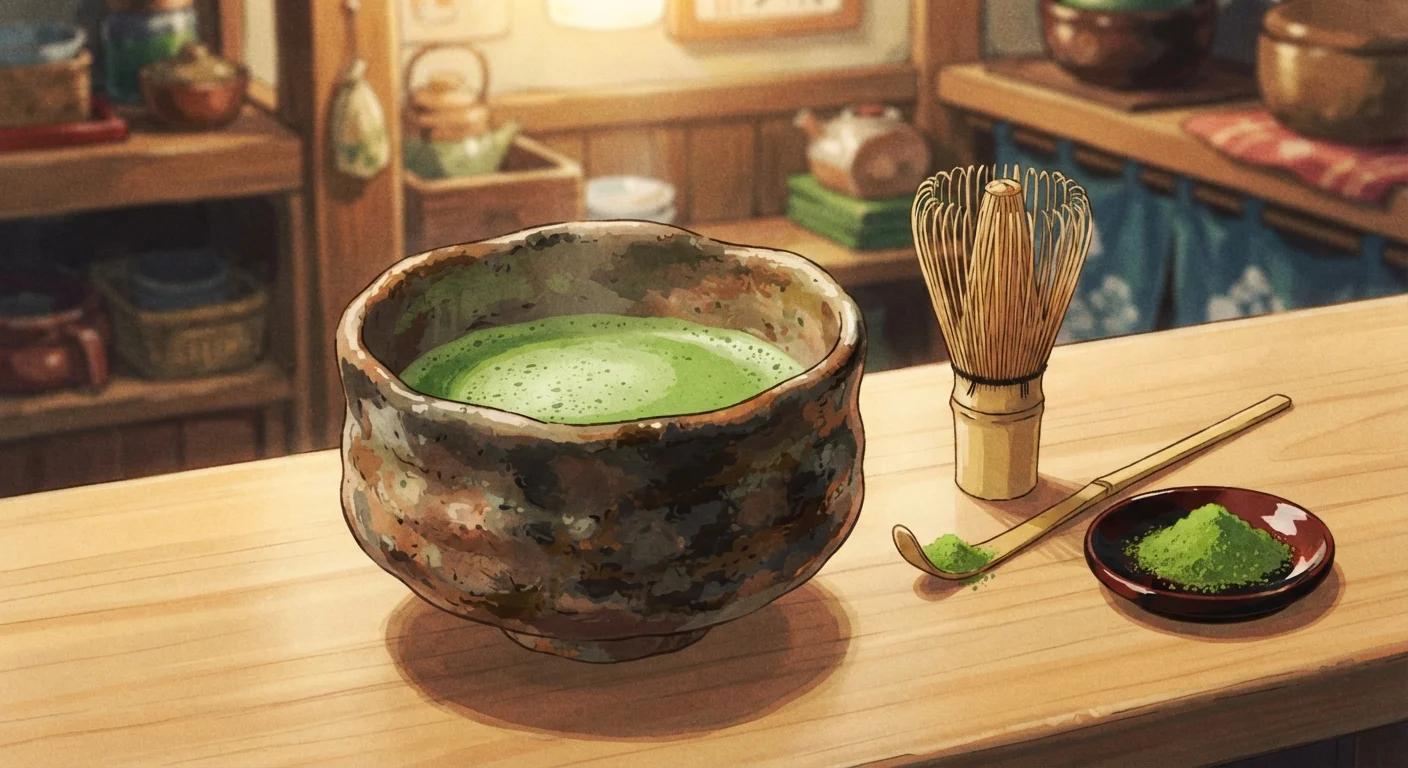
Matcha (抹茶) is green tea ground to a fine powder. You don't steep it and throw the leaves away. You whisk the powder into water and drink the whole leaf, which is why the color is so bright and the flavor so concentrated.
It comes from shade-grown tea. For the last few weeks before harvest the bushes are covered, and the leaves respond by making more chlorophyll and keeping more of their savory amino acids. The result tastes grassy, sweet and deeply savory, with a bitterness that rises if the water is too hot.
Key facts at a glance:
- Whole tea leaf, stone-ground to a powder and whisked, not steeped
- Bushes are shaded for 2 to 3 weeks before harvest
- The center of the Japanese tea ceremony (chanoyu)
- Carries more caffeine per gram than most green teas
- The flavor behind our matcha tiramisu
Flavor Profile
Origin
Japan, China
Traditional Medicine Perspectives
Japanese Zen tradition
In Japan, tea first spread through Buddhist temples, where monks drank powdered tea to stay alert during long meditation. Eisai's Kissa Yōjōki presented tea as a way to keep the body in good health, a belief rooted in the medical thinking of his time rather than modern science.
Traditional Chinese Medicine
In TCM, green tea (lü cha) is classified as cool in nature, with a bitter and sweet taste. It is traditionally used to clear heat, refresh the mind and aid digestion after rich meals, and because of its cooling nature it is traditionally drunk in moderation by people who tend to feel cold.
Modern Scientific Research
A 2020 review in Molecules pulled together what is known about matcha's chemistry. Shading raises the leaf's theanine, an amino acid tied to tea's savory taste, as well as its chlorophyll and caffeine.
Because you drink the whole leaf, you also take in more of everything. The review reports 18.9 to 44.4 mg of caffeine per gram of matcha, against 11.3 to 24.67 mg for green teas in general. Theanine is often credited with taking the edge off that caffeine, which is why matcha comes up in our guide to foods for focus without the coffee crash. For an evening cup, hojicha or one of the teas for sleep is a better choice.
The authors note that much of the evidence on matcha is borrowed from studies of ordinary green tea, and call for more human trials.
Green tea's catechins, especially EGCG, have been studied for antioxidant and anti-inflammatory activity, mostly in cell and animal studies. Matcha is a tea first. Drink it for the flavor and treat any health effect as a possible bonus.
Cultural History
Whisked powdered tea started in Song dynasty China. According to Wikipedia's history of matcha, the Buddhist monk Eisai brought the method to Japan around 1191, and later wrote about tea's virtues in the Kissa Yōjōki (1214).
China eventually moved on to steeped leaf tea, which Chinese medicine still counts among the cooling foods. Japan kept the powder, and it became the heart of chanoyu, the tea ceremony, where a host prepares and serves matcha with set, deliberate movements. There are two styles: usucha, thin tea whisked to a light foam, and koicha, a thick, glossy tea made with about twice the powder and no foam.
Soil analysis of old Uji plantations suggests tea growers were shading their bushes by the first half of the 15th century at the latest.
Uji, near Kyoto, is the historic center of matcha and still the name most people know. Nishio in Aichi and Shizuoka are also major growing regions.
Culinary Uses
To drink it, sift about a teaspoon into a bowl, add a little hot (not boiling) water and whisk in a quick zigzag until a fine foam forms. Water around 80°C keeps the bitterness in check.
In the kitchen, matcha goes wherever its color and grassy bitterness can play against fat and sugar:
- In matcha tiramisu, where it stands in for coffee against mascarpone
- In lattes, ice cream, cheesecake, shortbread and sponge cakes
- In wagashi such as warabi mochi, and dusted over sweets
- Mixed with salt as matcha salt, for tempura
Matcha pairs best with dairy, white chocolate, red bean and black sesame, which all soften its bitterness.
Hojicha, its roasted cousin, works in most of the same desserts if you want something nuttier and less bitter. In Japan, matcha and the original bar are the two best-selling Kit Kat flavors.
Preparation Methods
Sift before using. Matcha clumps easily, and sifting through a small strainer is the difference between a smooth drink and green lumps.
Keep it sealed, cold and dark. Light, air and heat dull the color to olive and flatten the flavor within weeks of opening. Many cooks keep an opened tin in the fridge and use it within a month or two.
Bright green powder that smells fresh and grassy is in good shape. Dull, yellowish powder is past its best and is better used in baking than in the cup.
Traditional Dishes
- Usucha (thin tea)
- Koicha (thick tea)
- Matcha latte
- Matcha tiramisu
- Wagashi
- Matcha ice cream
- Matcha warabi mochi
Comments
Share your thoughts on this ingredient.
Sign in to comment0 Comments