Hojicha
Also known as: Hōjicha, Houjicha, Roasted green tea, ほうじ茶, 焙じ茶
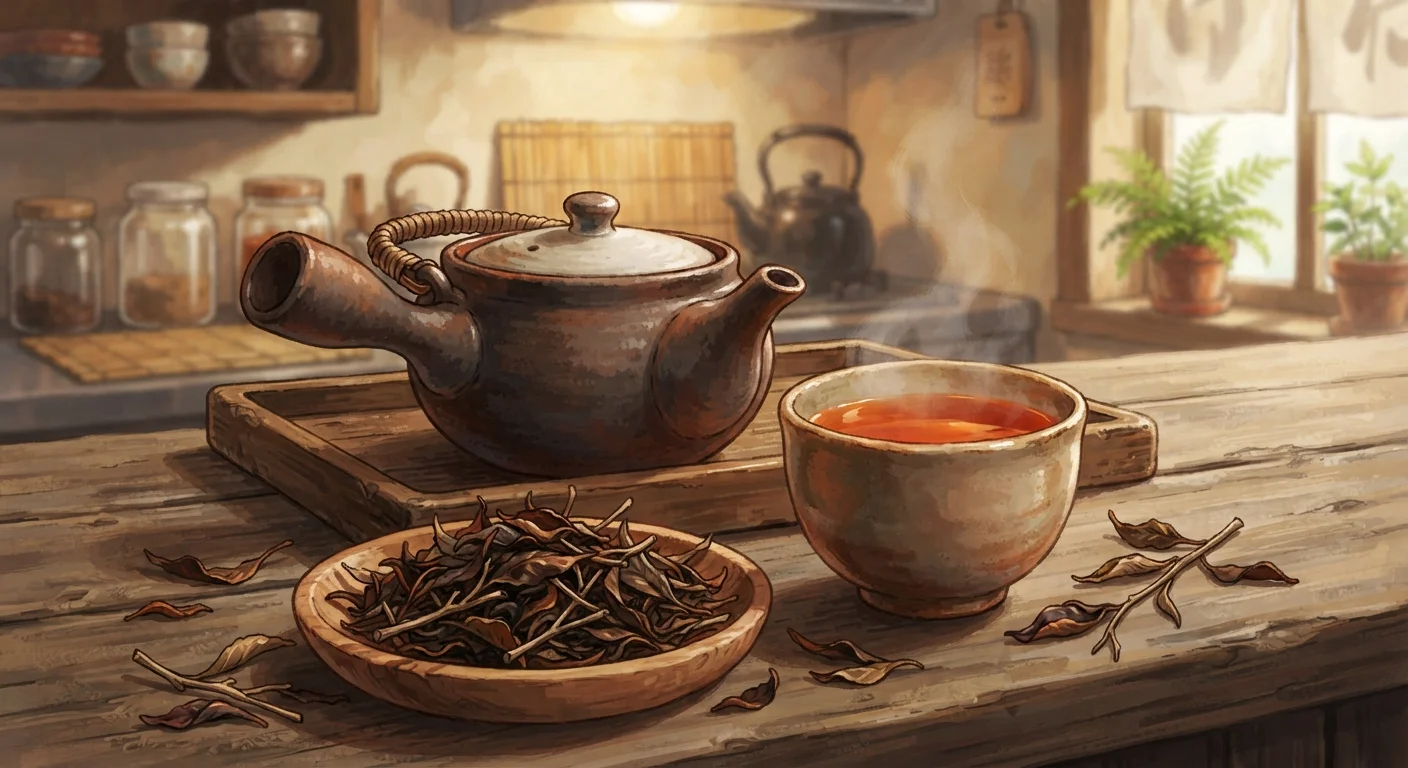
Hojicha (ほうじ茶) is Japanese green tea that has been roasted until the leaves turn reddish brown. The roasting changes everything about it. The grassy, sometimes bitter edge of green tea gives way to something toasty, nutty and mellow, closer to caramel or roasted barley than to fresh leaves.
It is an everyday tea in Japan, the kind poured free alongside a bowl of katsudon or gyudon, and it is gentle enough to drink in the evening, next to the other teas for sleep. It also comes as a powder, used like matcha in lattes and desserts.
Key facts at a glance:
- Roasted green tea, usually made from late-harvest bancha or tea stems
- Toasty and nutty, with very little bitterness
- Brews a clear reddish-brown, not green
- Roasting lowers caffeine and astringency
- Comes as loose leaf or as a powder for lattes and sweets
Flavor Profile
Origin
Japan
Modern Scientific Research
Most of what changes in hojicha happens in the roaster. The same Wikipedia entry notes that high-temperature roasting breaks down catechins, the compounds behind green tea's astringency, which is why hojicha tastes so smooth.
Roasting also lowers the caffeine, though by how much depends on the leaf. Tea made mostly from stems starts lower to begin with.
Fewer catechins means less bitterness, but also less of the compound green tea is most often studied for.
The toasty smell comes from pyrazines and other aroma compounds formed during roasting, the same family of compounds that gives coffee, toasted nuts and toasted sesame oil their smell. Treat hojicha as a pleasant, low-caffeine tea, not a health drink.
Cultural History
Hojicha is young as Japanese teas go. According to Wikipedia's entry on hōjicha, it was first made in Kyoto in 1920, when a tea merchant with a stock of unsaleable bancha roasted it to give it a second life.
Bancha is tea from the later harvests of the season, coarser and cheaper than the spring leaves used for sencha. Hojicha is also made from kukicha, which is mostly stems and twigs, and sometimes from sencha.
Hojicha began as a way to rescue tea nobody wanted to buy.
The traditional method roasts the leaves in a porcelain pot over charcoal at around 150°C. Walk past a tea shop in Kyoto that is roasting hojicha and you smell it from the street.
Culinary Uses
For tea, use water just off the boil, around 80 to 90°C, and steep for 30 seconds to a couple of minutes. Hojicha is forgiving. It won't turn bitter the way sencha does if you get the timing wrong.
Hojicha powder and strong brewed hojicha work in sweets:
- Hojicha lattes, hot or iced, with milk and a little sugar
- Ice cream, panna cotta, custard puddings and cheesecake
- In chocolate, as in the Uji hojicha Kit Kat, a popular souvenir in Japan
- In place of matcha in matcha tiramisu, for a nuttier, coffee-like version
- Poured over leftover Japanese short-grain rice as chazuke
Hojicha goes with brown sugar, black sesame, chestnut and milk the way coffee does.
Cold-brewed hojicha, steeped in the fridge overnight, is a summer staple in Japan and very hard to ruin.
Preparation Methods
Store hojicha airtight and away from light. The roasted aroma is what you are paying for, and it fades faster than the flavor of unroasted tea.
To freshen tired hojicha, toast the leaves in a dry pan for a minute over low heat, shaking constantly, until they smell toasty again.
Powdered hojicha clumps like matcha does, so sift it before whisking it into milk or batter.
Traditional Dishes
- Hojicha tea
- Hojicha latte
- Hojicha ice cream
- Hojicha pudding
- Chazuke
Comments
Share your thoughts on this ingredient.
Sign in to comment0 Comments