Goan · Indian Cuisine
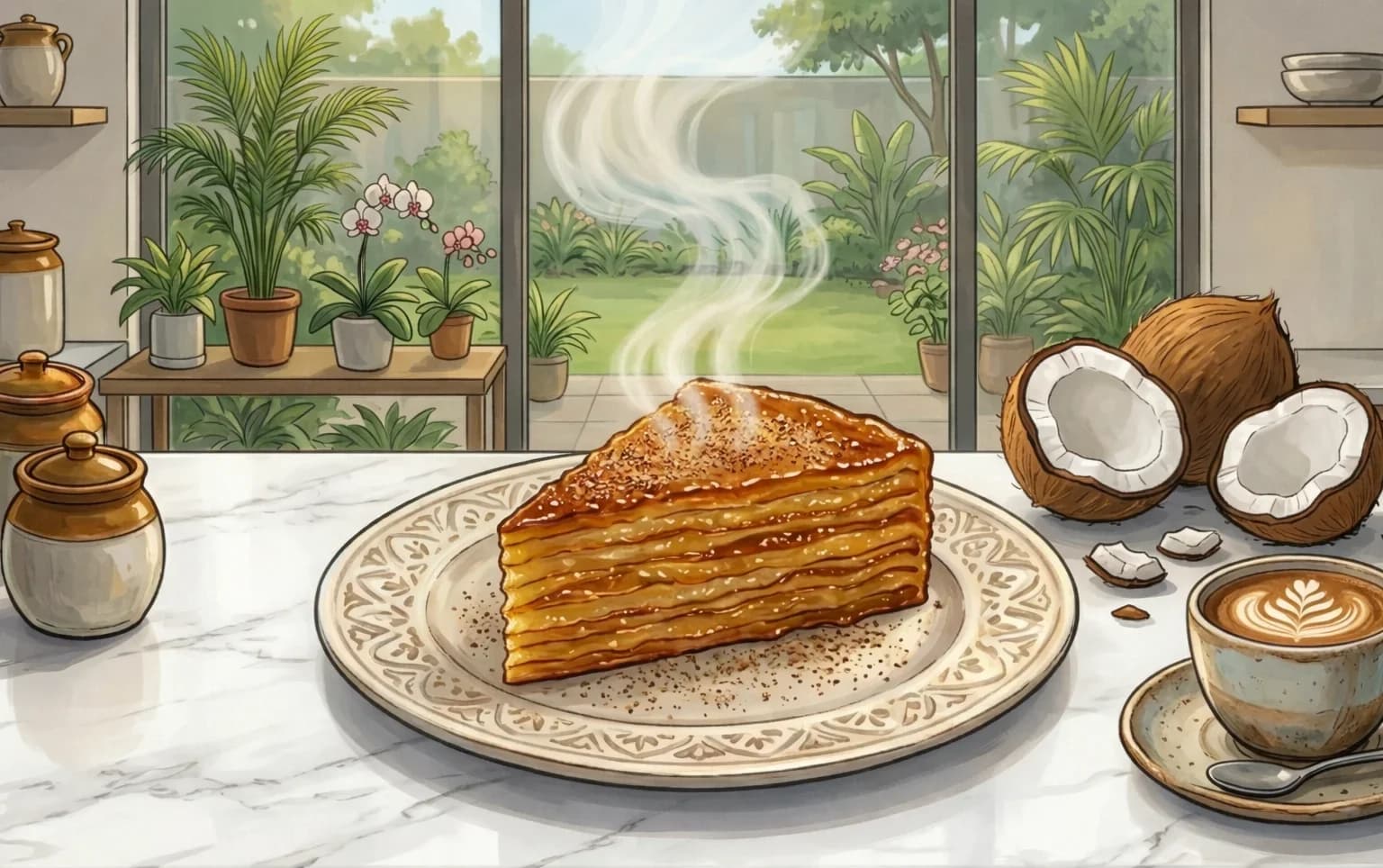
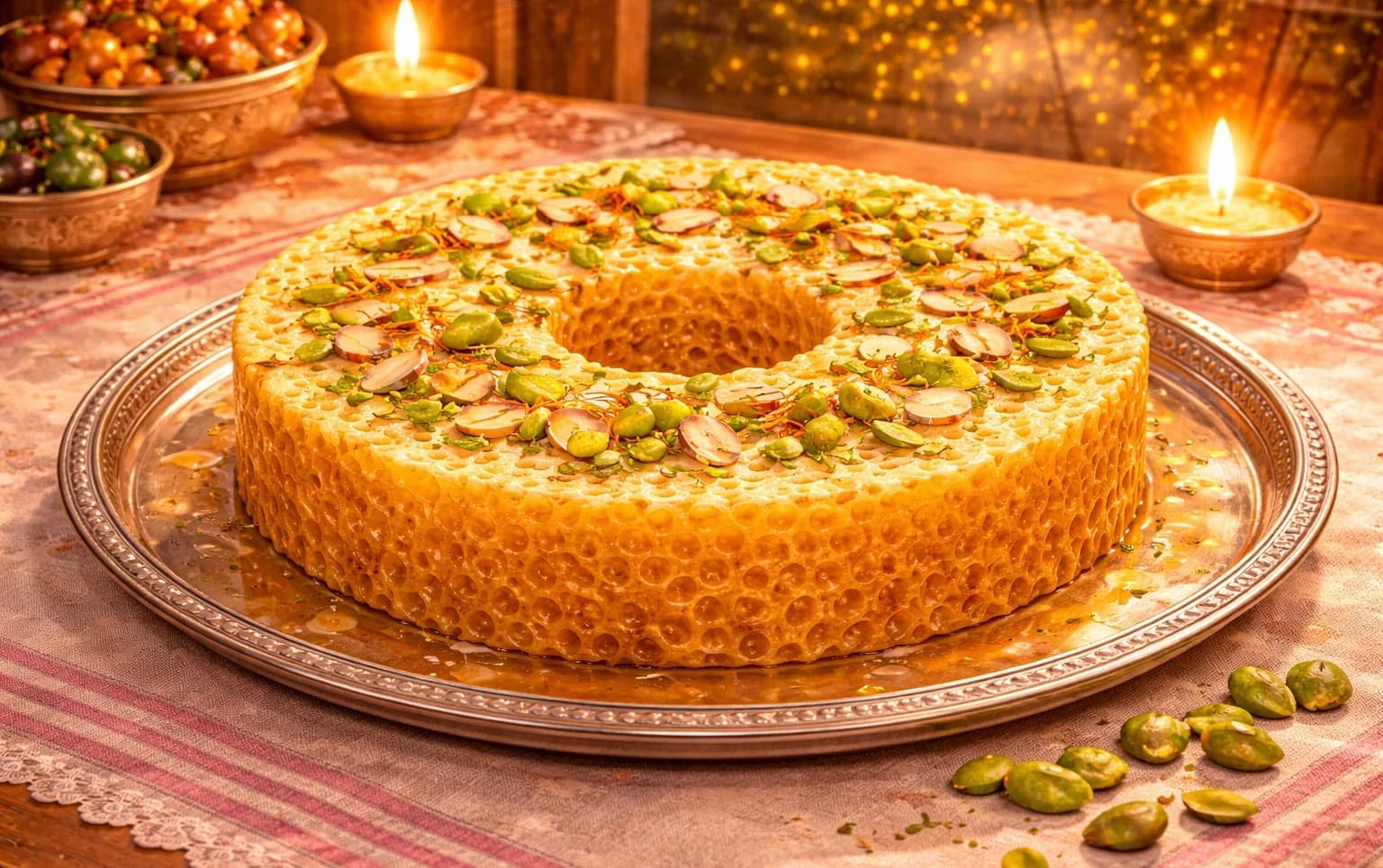
Goan Layered Coconut Cake (Bebinca)
Goa's layered coconut pudding, built one golden stratum at a time
There is a particular kind of patience that belongs to bebinca. You cannot rush it. Each of the seven (or nine, or twelve) layers must be poured thin, slid under heat, and waited upon until the surface goes from pale cream to a deep, burnished amber before the next can begin. The batter smells of coconut and cardamom from the moment you mix it. The kitchen fills with a slow, warm sweetness that deepens as the layers accumulate.
Bebinca is a Goan Catholic dessert, believed to have been developed by the nuns of old Goa, possibly adapting Portuguese layered cake traditions. The bebinca of Goa is a close cousin to the Malay kuih lapis and the Filipino bibingka, all descendants of colonial-era culinary exchange along spice trade routes. In Goa it is the dessert of Christmas and Easter, the thing aunts make weeks ahead and families argue over recipes for. Some households swear by exactly seven layers; others push to twelve or sixteen, each additional layer a point of pride.
What you get is something that sits between pudding and cake. Not airy, not dense, but gently yielding, with each layer offering its own slight chew and caramel edge. The egg yolks give it an extraordinary richness; the coconut milk keeps it tender; the ghee, brushed between layers, builds a subtle, complex depth.
The practical key: spread each layer thin, no more than half a centimetre. A thick layer will be rubbery and won't caramelise evenly. The batter should be smooth as silk before you begin, with no lumps of flour remaining.
At a Glance
Yield
8–10 servings
Prep
20 minutes
Cook
1 hour 30 minutes (approx. 12 min per layer × 7+ layers)
Total
~2 hours
Difficulty
Involved
Ingredients
- 2⅛ cupcoconut milk
- 1½ cupcaster sugar
- 1⅔ cupplain flour (maida)
- 3½ ozegg yolks (approximately 8–9 large yolks)
- 1½ tspcardamom powder
- ½ tspfreshly grated nutmeg, plus extra to finish
- 3⅓ tbspghee, melted, for brushing between layers
Method
- 1
Make the batter. Whisk the egg yolks (100 g) and sugar together in a large bowl until the mixture is pale and the sugar has mostly dissolved, about 2 minutes of steady whisking. Add the coconut milk (500 ml) and whisk to combine. Sift in the flour (200 g), cardamom (1 tsp), and nutmeg, and whisk until completely smooth. The batter should be fluid, with no lumps. Rest for 10 minutes.
- 2
Set up your pan. Use a heavy-bottomed, oven-safe pan approximately 20–22 cm in diameter. A cast-iron skillet or a flat-based cake tin with a solid base works well. Grease generously with ghee (50 g). Position your oven rack about 15 cm from the top grill/broiler element and preheat the grill to its highest setting.
- 3
Pour the first layer. Ladle in enough batter to just cover the base, roughly 80–90 ml, forming a layer about 4–5 mm deep. Tilt to distribute evenly. Place under the grill and cook for 10–13 minutes, watching closely. The layer is ready when the top is deeply golden and the edges are beginning to pull away slightly. It should look like a golden-brown crêpe: caramelised on top, set through.
- 4
Build the layers. Remove from the grill. Brush the surface lightly with melted ghee. Stir the waiting batter well (the flour settles), then pour the next thin layer directly on top. Return to the grill. Repeat this process (grill, brush with ghee, pour next layer) until all the batter is used. You should achieve a minimum of 7 layers; aim for 7–9.
- 5
Final layer. After the final layer is caramelised, remove the bebinca from the oven. Allow to cool completely in the pan, at least 1 hour. It will firm as it cools.
- 6
Unmould and slice. Run a thin knife around the edge of the pan. Invert onto a board. The caramelised bottom layer (which was poured first) will now be on top, the darkest and most fragrant. Dust lightly with freshly grated nutmeg (½ tsp). Slice into wedges or squares to reveal the amber cross-section of layers.
Key Ingredient Benefits
Coconut milk gives bebinca its defining character. The fat carries flavour, keeps each layer moist, and balances the sweetness of the sugar. Research into medium-chain triglycerides in coconut fat is ongoing; traditionally, coconut features prominently in Goan cooking as a foundational cooking fat and flavouring.
Egg yolks are the structural backbone. Their lecithin acts as an emulsifier, binding the fat and liquid into a smooth, cohesive batter. The yolks also drive the deep golden colour through Maillard browning and contribute the characteristic richness. Using whole eggs would thin the batter and produce a spongier result.
Cardamom provides its warm, floral, slightly eucalyptus note. It has been used in South Asian sweets for centuries, and research suggests its volatile oils (primarily 1,8-cineole) may support digestive comfort. In bebinca, it lifts the heaviness of egg and coconut, keeping each bite bright.
Nutmeg in small quantity adds a subtle, almost resinous warmth. Nutmeg was one of the most valuable spices in the Goa trade routes; in Goan cooking it appears in both sweet and savoury dishes as a whisper of complexity. Use freshly grated for the fullest aroma.
Ghee between layers does more than prevent sticking. Clarified of water and milk solids, ghee has a higher smoke point than butter and contributes a clean, toasty fat flavour without any dairy bitterness. Traditionally considered a quality fat in Ayurvedic practice; research suggests its butyrate content may be associated with gut lining support, though bebinca is hardly a medicinal preparation.
Why This Works
The fat in the egg yolks and ghee performs two roles: flavour and texture. Yolk fat emulsifies the batter and gives each layer a silky, tender crumb rather than a rubbery set. The ghee brushed between layers doesn't just add flavour. It creates a slight barrier that allows each layer to develop its own distinct golden edge before the next is added, which is what gives a sliced bebinca its clear striations.
The caramelisation under the grill is Maillard reaction and sugar browning working together. The high direct heat caramelises the sugar on the surface and also drives off moisture quickly, firming each layer enough to support the weight of what follows. If you use too low a heat, the layers steam rather than caramelise and the bebinca will lack its characteristic amber depth and slight chew at each stratum edge.
Full-fat coconut milk is non-negotiable. It provides the fatty richness that keeps the pudding tender and gives it the distinctly Goan tropical sweetness that differentiates bebinca from Portuguese egg-based layered cakes. Light coconut milk produces a thinner batter that caramelises unevenly and results in a drier, less yielding texture.
Substitutions & Variations
- Coconut cream can replace coconut milk for a richer, denser result. Reduce slightly if the batter seems too thick to spread in a thin layer.
- Fresh-pressed coconut milk from grated coconut gives a more fragrant, less processed flavour if you have access to mature coconuts.
- Jaggery can replace a portion of the caster sugar (up to half) for a more molasses-tinged, earthy sweetness that some Goan families prefer.
- Number of layers: Seven is traditional minimum; nine or twelve are considered marks of skill and dedication. Each additional layer adds another 10–12 minutes of cooking time.
- Pan shape: Round gives a traditional presentation; a square or rectangular pan makes slicing easier if serving in uniform pieces for a large gathering.
Serving Suggestions
Bebinca is served at room temperature or very slightly warm, never hot. It slices cleanly once fully cooled. Serve in wedges with a small scoop of vanilla ice cream if serving as a plated dessert; the cold creaminess against the dense, caramelised layers is one of the better pairings in the Goan dessert repertoire. A grating of nutmeg over each plate ties the flavour back. At a Goan Christmas table, it sits alongside dodol, neureos, and bolinhas. It needs no accompaniment beyond good company.
Storage & Reheating
Bebinca keeps exceptionally well, which is part of its traditional value as a make-ahead festive dessert. Store wrapped tightly in cling film or in an airtight container at room temperature for up to 3 days. Refrigerated, it will keep for up to a week; the layers firm considerably when cold, so bring to room temperature for at least 30 minutes before slicing and serving. Bebinca can be frozen in individual slices wrapped in baking paper, then sealed in a freezer bag, for up to 2 months. Thaw overnight in the refrigerator.
Cultural Notes
Bebinca (बेबिंका) is the Goan layered cake of coconut milk, eggs, sugar, flour, and ghee baked one layer at a time in a hot oven for seven, twelve, or sixteen layers depending on the recipe, with each layer baked until just golden before the next batter is poured on top. The dish is the central festival sweet of Goan Catholic Christmas (held on December 25 in Goa with full Catholic religious and culinary traditions) and one of the most distinctly Goan of all Indian sweets, with no clear parallel in the broader Indian sweet tradition.
The Portuguese culinary influence is the foundational layer of the dish's identity. The Portuguese convent baking tradition of the sixteenth through nineteenth centuries developed elaborate egg-yolk-and-sugar desserts (descended from the medieval Iberian tradition of using egg whites for wine clarification and egg yolks for baking), and these techniques traveled to the Portuguese Asian colonies including Macau, Malacca, and Goa. Bebinca is one of the clearest Goan inheritors of this Portuguese convent baking tradition: the heavy use of egg yolks (a traditional bebinca uses ten to twenty egg yolks per cake), the long slow oven baking, and the layered presentation all reflect Portuguese rather than Indian baking heritage.
The technique demands patience. The batter is mixed from coconut milk, egg yolks, sugar, all-purpose flour, ghee, nutmeg, and cardamom. The batter is divided into the number of layers desired (seven or sixteen are the most traditional counts). A small amount of ghee is heated in a heavy round pan, the first ladleful of batter is poured in and baked at moderate heat for ten to fifteen minutes until the surface turns golden and just sets. A second small amount of ghee is brushed over the surface, the next ladleful of batter is poured, and the process repeats. Each layer takes ten to fifteen minutes, and a full sixteen-layer bebinca takes three to four hours of attentive baking. The finished cake is cooled completely, unmolded, and sliced into thin wedges that reveal the alternating dark and light layers when cut. The dish appears at every Goan Catholic Christmas table, distributed in elaborate Christmas sweet boxes (consoada) to neighbors and family alongside the related Goan Christmas sweets doce de grão, kulkuls, neureos, and others.
Nutrition Facts
Calories: 360kcal (18%)|Total Carbohydrates: 49g (18%)|Protein: 5g (10%)|Total Fat: 17g (22%)|Saturated Fat: 13.1g (66%)|Cholesterol: 115mg (38%)|Sodium: 13mg (1%)|Dietary Fiber: 1.7g (6%)|Total Sugars: 31.8g
You Might Also Like
Ratings & Comments
Ratings & Comments
Ratings
Share your thoughts on this recipe.
Sign in to rate and comment