
Vietnamese Cuisine
Vietnamese Egg Coffee (Cà Phê Trứng)
Strong Vietnamese coffee topped with a cloud of whisked egg yolk cream, sweet and velvety
The first sip is a revelation if you have never encountered egg coffee before. The thick, pale yellow cream on top has the texture of liquid custard, impossibly smooth and sweet, with a richness that sits between meringue and tiramisu. Beneath it, the coffee is dark, strong, and slightly bitter, brewed in the traditional Vietnamese phin filter until it is thick enough to leave a trail on the side of the cup. You can drink through the cream to the coffee below, or stir them together into something that tastes like a melted dessert, sweet and savory and deeply caffeinated.
Ca phe trung was invented in Hanoi in the 1940s by Nguyen Van Giang, a bartender at the Metropole Hotel, during a period when fresh milk was scarce due to the First Indochina War. He substituted egg yolks for milk, whisking them with condensed milk and sugar until they formed a thick cream, then spooning it over strong black coffee. The result was so popular that he opened his own cafe, Giang Cafe, which still operates today in Hanoi's Old Quarter, serving egg coffee to locals and visitors in the same small cups that Giang used decades ago.
What makes ca phe trung work is the contrast between the two layers. The egg cream is sweet, rich, and almost cloying on its own. The coffee is dark, bitter, and uncompromising. Together, they achieve a balance that neither could reach alone. The traditional serving method, with the cup set inside a small bowl of hot water to keep the coffee warm, is practical and charming. The drink is best sipped slowly, as the cream and coffee gradually merge with each spoonful.
At a Glance
Yield
2 servings
Prep
10 minutes
Cook
5 minutes
Total
15 minutes
Difficulty
Easy
Ingredients
Coffee Ingredients
- 1½ ozVietnamese ground coffee (Trung Nguyen or similar robusta blend)
- ⅞ cupboiling water
- —Vietnamese phin filter (or use very strong espresso or French press coffee)
Egg Cream Ingredients
- 2egg yolks
- 2 tbspsweetened condensed milk
- 1 tspsugar (optional, adjust to taste)
- —A few drops of vanilla extract (optional)
Method
- 1
Brew the coffee. If using a Vietnamese phin filter, place the filter on top of a cup. Add the ground coffee, press down the inner filter gently, and pour a small amount of boiling water over the grounds. Wait 20 seconds for the coffee to bloom, then fill the filter with the remaining hot water. Let it drip through slowly, about 4 to 5 minutes. The result should be about 80 to 100 ml of very strong, dark coffee per serving. If using espresso, brew a double shot. If using a French press, use 30 g of coffee per 100 ml of water and steep for 4 minutes.
- 2
While the coffee brews, make the egg cream. Place the egg yolks, condensed milk, sugar, and vanilla (if using) in a small bowl. Whisk vigorously with an electric hand mixer or a small whisk for 3 to 5 minutes. The mixture should triple in volume and become pale yellow, thick, and foamy, with a texture similar to soft whipped cream or a light mousse. It should hold soft peaks when the whisk is lifted.
- 3
Pour the hot brewed coffee into small cups or heat-safe glasses, filling each about two-thirds full.
- 4
Spoon the egg cream generously over the coffee. It should sit on top in a thick layer, about 2 cm deep. The cream is lighter than the coffee and will float.
- 5
Prepare the serving bowls. Fill two small bowls with hot water (about 70C). Set each coffee cup inside a bowl of hot water. This is the traditional Hanoi serving method. The hot water bath keeps the coffee warm as you sip slowly, which is important because egg coffee is meant to be lingered over, not gulped.
- 6
Serve immediately. Offer small spoons alongside, as many people prefer to eat the cream first, then sip the coffee, then stir the two together for the final sips. The cream on its own should taste like liquid tiramisu, sweet, eggy, and deeply rich. The coffee beneath should be bold and slightly bitter. Mixed together, they create something balanced and complex.
Key Ingredient Benefits
Egg yolks: Rich in choline, an essential nutrient for brain function and cell membrane integrity, which many adults do not consume in adequate amounts. They also provide vitamins A, D, E, and K, as well as lutein and zeaxanthin, carotenoids associated with eye health in research studies. The fat in the yolks serves as a carrier for these fat-soluble nutrients.
Vietnamese coffee (robusta): Robusta beans contain approximately twice the caffeine of arabica beans and have a stronger, more bitter flavor profile. Research associates moderate coffee consumption with reduced risk of type 2 diabetes, certain neurodegenerative diseases, and liver conditions, though individual caffeine sensitivity varies.
Condensed milk: Provides calcium and protein along with significant sugar content. It was introduced to Vietnam during the French colonial period and became integral to Vietnamese coffee culture due to the scarcity of fresh milk in tropical climates.
Why This Works
Whisking the egg yolks with condensed milk incorporates air and partially denatures the yolk proteins, creating a stable foam that sits on top of the coffee rather than sinking into it. The condensed milk provides both sweetness and fat, which stabilize the foam and prevent the yolks from cooking into scrambles when they meet the hot coffee.
The temperature contrast between the hot coffee and the room-temperature cream is part of the experience. The hot coffee gently warms the bottom of the cream layer, creating a gradient from cool on top to hot at the base. This temperature layering is why the hot water bath matters. Without it, the coffee cools too quickly, and the distinction between the warm bottom and the cool top is lost.
Vietnamese robusta coffee is chosen deliberately. Its higher bitterness and stronger flavor profile stand up to the sweetness of the egg cream, creating a contrast that arabica-based coffee, which is milder and more acidic, cannot match as effectively.
Substitutions & Variations
Coffee: Any strong, dark coffee works. Espresso (double shot) is the closest substitute for phin-brewed Vietnamese coffee. Avoid light roasts, which lack the bitterness needed to balance the sweet egg cream.
Egg concerns: For those uncomfortable with partially raw yolks, use pasteurized egg yolks, which are available at many grocery stores. The result is identical.
Iced version (ca phe trung da): Brew the coffee, let it cool, pour over ice in a glass, and top with the egg cream. The cream sits on top of the ice and coffee, creating a layered iced drink.
Coconut egg coffee: Some Hanoi cafes add a tablespoon of coconut cream to the egg mixture, creating a richer, tropical variation.
Cocoa version: Add 1 teaspoon of unsweetened cocoa powder to the egg yolk mixture before whisking. This creates a mocha-like cream that pairs beautifully with the bitter coffee.
Serving Suggestions
Ca phe trung is a standalone drink, traditionally enjoyed as an afternoon indulgence at a Hanoi cafe. It is too rich to accompany a full meal but pairs well with light Vietnamese pastries or a piece of banh bao (steamed bun).
For a Vietnamese coffee experience at home, serve ca phe trung alongside a cup of traditional ca phe sua da (iced coffee with condensed milk) and let guests compare the two styles. The egg coffee is richer and more dessert-like, while the iced coffee is refreshing and more straightforward.
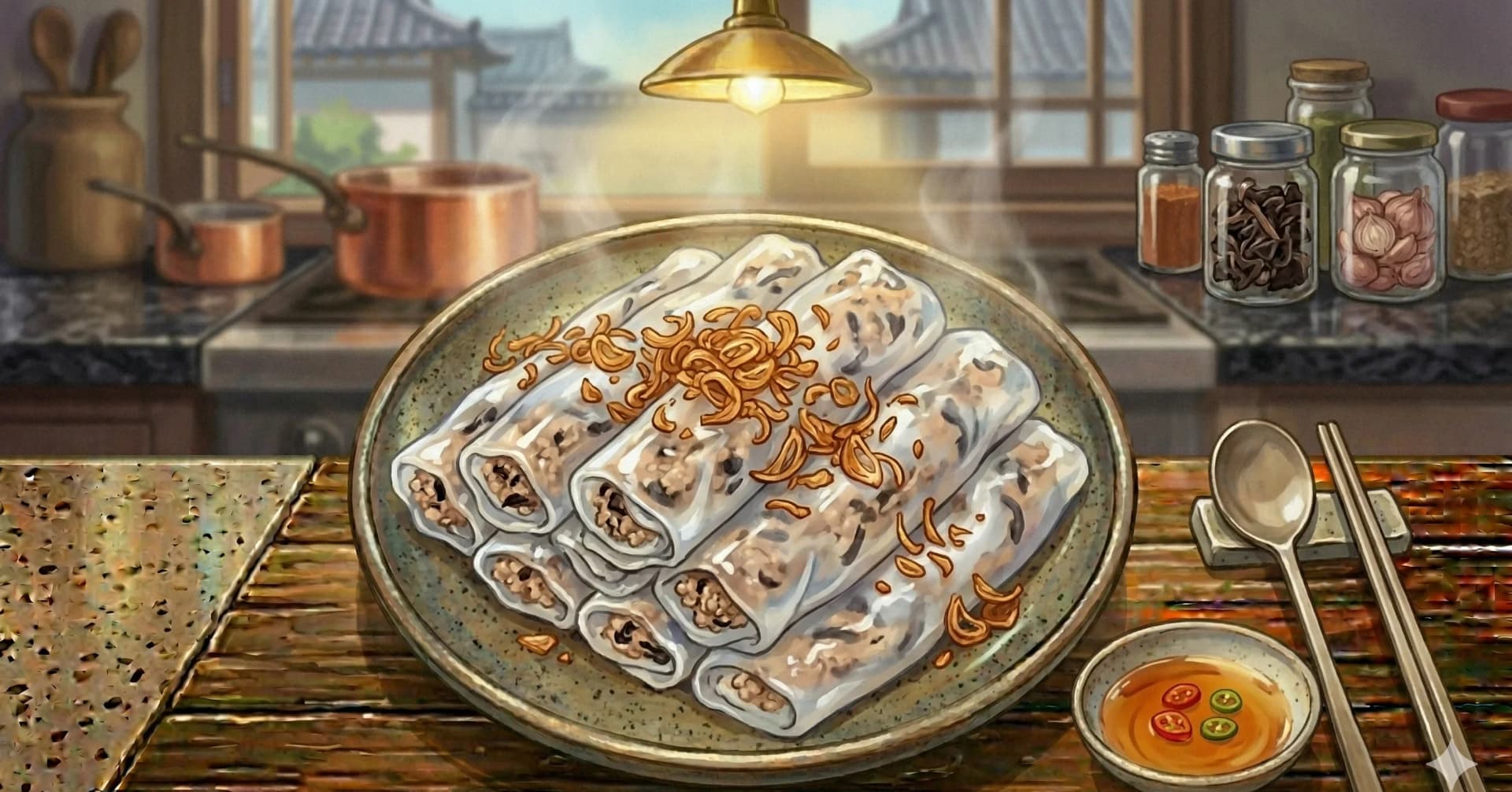
It also works beautifully as an after-dinner drink following a Vietnamese meal, particularly after lighter dishes like banh cuon or goi cuon, where the rich egg cream provides a sweet, satisfying finish.
Storage & Reheating
Egg cream: Must be made fresh and used immediately. It deflates over time and cannot be stored.
Coffee: Brewed coffee can be kept warm for up to 30 minutes. Do not reheat, as the flavor degrades.
Prep ahead: The coffee can be brewed in advance and kept in a thermos. Whisk the egg cream just before serving.
Cultural Notes
Cà phê trứng, Vietnamese egg coffee, was invented in Hanoi in 1946 by a bartender named Nguyễn Văn Giảng at the Sofitel Metropole Hotel. The drink was a workaround. Post-WWII milk was scarce in Vietnam, and Giảng wanted to serve something close to a cappuccino. So he whisked egg yolks with sugar until they thickened into a pale yellow foam and used that as the milk substitute on top of strong Vietnamese coffee. The substitution worked so well that the drink stayed in his repertoire long after milk supply normalized.
Giảng eventually left the Sofitel and opened his own café, Cà Phê Giảng, which became the most famous egg coffee address in the world. The original Cà Phê Giảng is still operated by Giảng's descendants on Nguyễn Hữu Huân Street in Hanoi's Old Quarter and has been pouring the same recipe for almost 80 years. A second branch, Cà Phê Đinh, was opened by a different branch of the Giảng family above a building on Đinh Tiên Hoàng Street near Hoan Kiem Lake. Both branches claim the most authentic version of the original recipe, in one of those quiet family-business arguments that gives Hanoi café culture its particular flavor.
Cà phê trứng has become one of the breakout successes of 21st-century Vietnamese specialty coffee. International coffee writers regularly put it on their lists of the most distinctive coffee preparations in the world. The rise of upscale Vietnamese coffee shops in major Western cities, especially in the United States where Vietnamese-American coffee culture has been flourishing since the 1980s, has carried the drink well beyond Hanoi.
It is also surprisingly easy to make at home. The only specialty ingredient is sweetened condensed milk, which Vietnamese coffee already uses as the standard sweetener anyway. A Vietnamese phin filter helps, but it is not required. Strong espresso works. Even a strong drip pour will give you a recognizable version.
Nutrition Facts
Calories: 130kcal (7%)|Total Carbohydrates: 11g (4%)|Protein: 4g (8%)|Total Fat: 6g (8%)|Saturated Fat: 2.5g (13%)|Cholesterol: 212mg (71%)|Sodium: 30mg (1%)|Dietary Fiber: 0g (0%)|Total Sugars: 11g
You Might Also Like

Ratings & Comments
Ratings & Comments
Ratings
Share your thoughts on this recipe.
Sign in to rate and comment