Thai Cuisine
Nam Prik Ong (Northern Thai Pork and Tomato Dip)
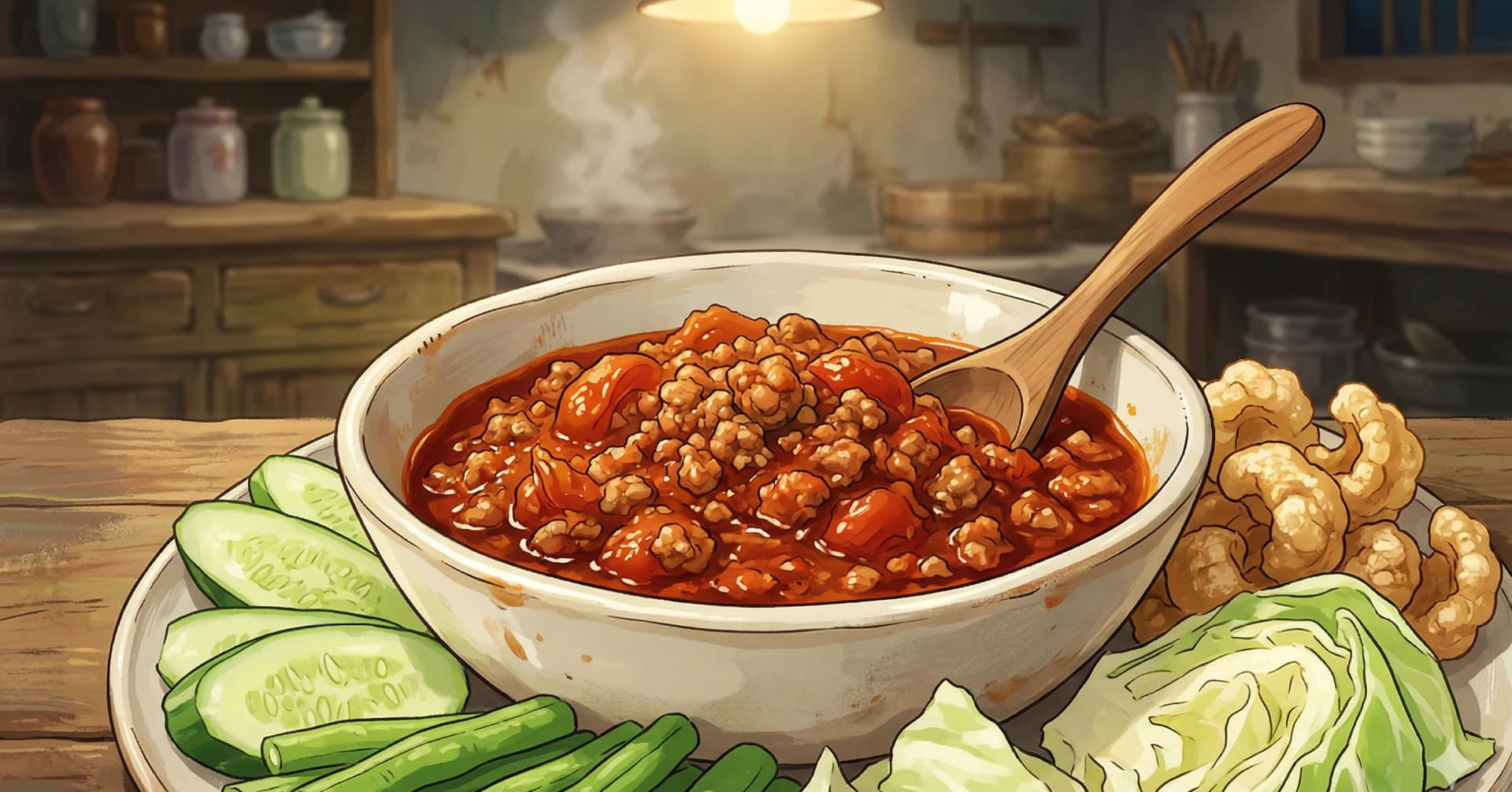
A slow-cooked Chiang Mai chili dip of ground pork, charred tomatoes, and pounded dried chilies, served warm with raw vegetables and sticky rice
Nam prik ong is one of the defining dishes of Lanna cuisine, the food tradition of northern Thailand centered around Chiang Mai and the surrounding provinces. The name tells you almost everything: nam prik means chili relish, the broad family of pounded dips that appear at nearly every Thai meal, and ong refers to this specific version built on tomatoes and pork. It is the rare Thai dip that feels substantial enough to anchor a meal on its own, closer in spirit to a slow-simmered meat sauce than to the lighter, sharper relishes of central and southern Thailand.
The dish begins with a pounded paste of dried chilies, shallots, garlic, shrimp paste, and sometimes lemongrass. That paste gets fried until fragrant, then ground pork goes into the pan and cooks until it breaks down into fine crumbles that absorb the chili oil. Tomatoes follow, and this is where nam prik ong distinguishes itself from every other nam prik in the Thai canon. The ripe fruit collapses into the meat, lending a gentle acidity and a natural sweetness that no amount of sugar or tamarind can replicate on its own. The finished dip should look ruddy and slick, the oil separating to the surface as a sign that the paste has been properly fried.
In Chiang Mai, a plate of nam prik ong arrives alongside a sprawl of raw and blanched vegetables, crispy pork cracklings, and sticky rice. It is party food, family food, and temple fair food all at once. If you have made pad krapow or larb, you already know the Thai instinct for building complex flavor from a handful of ingredients. Nam prik ong works on the same principle, and the mortar and pestle does most of the heavy lifting. The rest is patience in the pan.
At a Glance
Yield
4 to 6 servings
Prep
30 minutes
Cook
20 minutes
Total
50 minutes
Difficulty
Easy
Ingredients
Dip Ingredients
- 6large dried red spur chilies (or guajillo chilies), stems and seeds removed, halved
- 5to 8 small dried Thai chilies, to taste (optional, for more heat)
- ⅞ tspsalt, for soaking
- 2 ozshallots (about 3 small), roughly chopped
- ⅓ cupgarlic (about 6 cloves), roughly chopped
- 1 stalklemongrass, bottom 10 cm only, outer leaves removed, thinly sliced
- ¼ ozshrimp paste
- 1 tbspfermented soybean paste (tao jiao), rinsed lightly with water to reduce salt
- 2 tbspneutral vegetable oil
- ¾ lbground pork
- ½ lbcherry tomatoes or small ripe tomatoes (about 2–2½ tomatoes), quartered
- 2medium plum tomatoes (about 100 g), halved and charred (see step 1)
- 2 tbspfish sauce
- 2 tspthin soy sauce or light soy sauce
- 1 tbsptamarind paste
- 2⅓ tsppalm sugar or light brown sugar
- ¼ cup(1/4 cup) water
- —Pinch of white sugar, to taste
To Serve
- —Cooked sticky rice or steamed jasmine rice
- —Raw vegetables: cucumber rounds, long beans, cabbage wedges, Thai eggplant, lettuce leaves, carrot sticks
- —Crispy pork cracklings (khaep mu)
- —Fried basil leaves (optional garnish)
Method
- 1
Set a dry wok or cast-iron skillet over medium-low heat. Add the large dried chilies and the small dried chilies, if using, and toast them, turning occasionally, until they darken a shade and release a smoky fragrance. This takes about 4 to 5 minutes. The chilies should feel pliable but not blackened. Transfer them to a bowl of warm water with the salt and soak for 20 to 30 minutes, until completely soft. Drain and squeeze out excess water.
- 2
While the chilies soak, place the halved plum tomatoes cut-side down in the same dry wok over medium-high heat. Press them gently with a spatula and let them char without moving for 3 to 4 minutes, until the skins blister and the flesh softens. Flip and char the other side briefly. The tomatoes should smell sweet and faintly smoky, with dark spots on the skin. Set aside.
- 3
Using a mortar and pestle, add the drained chilies and a pinch of salt. Pound steadily until the chilies break down into a rough paste, scraping down the sides as needed. Add the shallots and lemongrass and continue pounding until the fibers break apart and the mixture becomes more cohesive. Add the garlic and pound until smooth. Add the shrimp paste and the rinsed fermented soybean paste and work them in until the paste is even in color and texture. Finally, add the charred plum tomatoes and pound until they are mostly incorporated but a few small pieces remain. The finished paste should feel slightly coarse and smell deeply of toasted chili and fermented aromatics.
- 4
Heat the vegetable oil in a wok or wide skillet over medium heat. Add the chili paste and stir-fry, pressing it against the surface of the pan with a spatula, until the oil takes on a reddish tint and the paste smells fragrant and no longer raw. This takes about 2 to 3 minutes. Keep the heat moderate to avoid scorching the shrimp paste.
- 5
Add the ground pork to the pan. Break it apart with the spatula, stirring constantly, and cook until no pink remains and the meat has crumbled into fine, even pieces that are well coated with the chili paste. This takes 3 to 5 minutes.
- 6
Add the quartered cherry tomatoes, fish sauce, thin soy sauce, tamarind paste, and palm sugar. Stir everything together and continue cooking over medium heat. The cherry tomatoes will begin to soften and release their juice after a few minutes. Press down on them gently with the spatula to help them burst and meld into the pork mixture.
- 7
Pour in the water and bring to a steady simmer. Cook, stirring frequently, until the liquid reduces and the oil begins to separate from the surface of the dip, about 8 to 10 minutes. The consistency should be that of a thick, saucy meat sauce, not a dry crumble and not a loose soup. Taste carefully. Adjust with more fish sauce if it needs salt, a pinch of white sugar if the tomatoes were not sweet enough, or a small squeeze of tamarind if you want sharper acidity. The balance should lean savory with a gentle sourness from the tomatoes and a slow warmth from the chilies.
- 8
Transfer the dip to a serving bowl and set it at the center of a platter. Arrange the raw vegetables, pork cracklings, and sticky rice around it. Nam prik ong is best eaten warm but is also good at room temperature, which makes it well suited to a long table where people graze.
Key Ingredient Benefits
Dried red spur chilies: Large, mild dried chilies common in northern Thai cooking that provide color and a gentle, rounded heat without overwhelming spiciness. They are similar to guajillo chilies found in Mexican cooking. Capsaicin levels are moderate compared to smaller Thai bird's eye chilies, making them suitable for building a chili base where color and flavor matter more than raw heat.
Shrimp paste (kapi): A dense, pungent paste made from fermented shrimp and salt. It is the backbone of Thai curry pastes and many nam prik dips, contributing deep umami through high concentrations of free glutamate and other amino acids. The fermentation process, which can take weeks to months, also produces small amounts of B vitamins. Its intense flavor means a small quantity goes a long way.
Fermented soybean paste (tao jiao): A Thai condiment made from salted, fermented soybeans. It adds a savory, slightly sweet depth similar to miso. Some northern Thai cooks use tua nao, a dried fermented soybean cake specific to the region, in its place. The fermentation produces probiotics and increases the bioavailability of isoflavones present in soybeans.
Lemongrass: The stalks of Cymbopogon citratus, used throughout Southeast Asian cooking for their bright citrus aroma. The primary volatile compound, citral, is concentrated in the tender inner core of the lower portion of the stalk. Lemongrass has been studied for anti-inflammatory and antimicrobial properties in laboratory settings.
Palm sugar: Made from the sap of sugar palms, it has a lower glycemic index than refined white sugar and retains small amounts of minerals including potassium, iron, and zinc. Its caramel-like, slightly butterscotch flavor integrates well with the savory-sour profile of the dip.
Tamarind paste: The pulp of Tamarindus indica fruit, providing a sweet-sour flavor distinct from citrus. Tamarind contains tartaric acid, which gives it a deeper, more rounded sourness than lime juice. It also provides small amounts of potassium, magnesium, and iron.
Why This Works
The mortar and pestle does something a blender cannot. Pounding ruptures cell walls irregularly, releasing aromatic oils from the lemongrass, shallots, and garlic in a way that creates a rough-textured paste with pockets of concentrated flavor. A machine purees everything to a uniform slurry and heats the ingredients slightly from friction, which dulls the fresh aromatics. The coarse paste also fries better, because its uneven surface creates more contact points with the hot oil, allowing Maillard browning to develop across the chili paste in the first minutes of cooking.
Charring the plum tomatoes before pounding them into the paste adds a layer of smoky depth that fresh tomatoes alone cannot provide. The high, dry heat caramelizes the sugars on the cut surface and concentrates the tomato flavor, which is then distributed throughout the paste. The cherry tomatoes, added later during cooking, serve a different purpose: their juice loosens the dip into a saucy consistency and their brighter, less cooked acidity lifts the finished dish.
The oil separating from the surface of the dip is not a flaw but a signal. It means the chili paste has been fried long enough for the fat-soluble flavor compounds in the shrimp paste, dried chilies, and aromatics to dissolve into the oil, creating that characteristic slick, red-tinged layer that carries flavor to every vegetable you dip.
Substitutions & Variations
Dried chilies: If you cannot find dried red spur chilies, guajillo chilies are the closest substitute in terms of mild heat and deep red color. Ancho chilies work but will push the flavor in a slightly sweeter, earthier direction. For more heat, increase the proportion of small dried Thai chilies or add a fresh bird's eye chili to the paste.
Shrimp paste: White miso paste (15 ml) mixed with a few drops of fish sauce approximates the fermented depth. For a fully vegan version, use miso alone and increase the fermented soybean paste slightly. Tua nao, the northern Thai dried fermented soybean cake, is the traditional alternative and worth seeking out at Southeast Asian grocery stores.
Fermented soybean paste (tao jiao): Japanese yellow miso is the closest match. Korean doenjang is stronger in flavor, so use about two-thirds the amount. If you have neither, omit it entirely; the dip will lose a layer of savory complexity but will still be recognizably nam prik ong.
Pork: Ground chicken thigh works well, though the dip will be leaner and lighter in color. Ground turkey is acceptable but drier. For a vegetarian version, crumbled firm tofu, pressed and dry-fried until golden, provides a similar crumbly texture. Increase the fish sauce or add soy sauce to compensate for the lost meatiness.
Tomatoes: Any ripe, juicy tomato works. In winter, canned whole peeled tomatoes (drained and roughly chopped) are a better choice than pale, underripe fresh ones. Roma or plum tomatoes have a good balance of flesh and acidity.
Lemongrass: Not all versions of nam prik ong include lemongrass, so it can be omitted without the dish losing its identity. There is no close substitute for its particular citrus-herbal flavor, though a small strip of lemon zest (about 2 cm) pounded into the paste offers a distant echo.
Mortar and pestle: A food processor or blender will make the paste faster but less texturally interesting. Pulse in short bursts and scrape down the sides often to avoid turning it into a smooth puree. Add a tablespoon of water to help the blades catch the ingredients.
Serving Suggestions
Nam prik ong is traditionally the centerpiece of a Lanna-style meal, surrounded by a generous spread of raw and lightly blanched vegetables. Cucumber, cabbage, long beans, and Thai eggplant are the standards. Crispy pork cracklings (khaep mu) are nearly mandatory in Chiang Mai, where the combination of the warm, meaty dip and the shattering crunch of the pork skin is considered one of the great pairings of northern Thai cooking. A basket of sticky rice rounds out the plate.
The dip works beautifully as part of a larger Thai table. Pair it with gai yang for a smoky grilled chicken that echoes the northern Thai origin, or set it alongside som tam for a sharp, bright counterpoint. Sai krok isan, the fermented pork sausage, is another classic companion from the north and northeast. For a full spread, add a bowl of green curry and a plate of larb to cover the full range of Thai flavors from rich and coconut-laced to lean and herb-forward.
Nam prik ong also makes an excellent party dip for a Western-style gathering. Serve it warm in a bowl surrounded by crudites, pita chips, or even tortilla chips. It holds well at room temperature for an hour or more without losing its appeal. Lettuce wraps are another natural format: spoon the dip into crisp butter lettuce cups and top with fresh cilantro and a squeeze of lime.
Storage & Reheating
Advance preparation: The chili paste can be made a day ahead and stored in an airtight container in the refrigerator. Its flavor will deepen slightly overnight. Bring it to room temperature before frying. The finished dip also reheats well, making it a good candidate for preparing ahead of a gathering.
Leftovers: Nam prik ong keeps in a sealed container in the refrigerator for up to 3 days. The flavors meld and concentrate as it sits, and many cooks in northern Thailand consider the dip better on the second day.
Reheating: Warm the dip gently in a small saucepan or skillet over medium-low heat. Add a splash of water (15 to 30 ml) if it has thickened too much in the refrigerator. Stir frequently and taste once warm, adjusting with a small squeeze of lime or a dash of fish sauce if needed. The acidity of the tomatoes fades slightly after a day, so a touch of tamarind or lime can restore brightness.
Freezing: The finished dip freezes well for up to 1 month. Freeze in portions in airtight containers, leaving a small gap at the top for expansion. Thaw in the refrigerator overnight and reheat as described above. The texture holds up better than most dips because the pork and tomato base is robust enough to survive a freeze-thaw cycle without becoming watery.
Cultural Notes
Nam prik (น้ำพริก, "chili water") is not a single dish but an entire category of pounded chili pastes that anchor Thai home cooking and serve as the central protein-and-seasoning element of a traditional Thai meal. The category includes dozens of regional preparations, each tied to a specific cuisine: nam prik pao (roasted chili paste from central Thailand, sweet and smoky with palm sugar and dried shrimp), nam prik gapi (central Thai shrimp paste chili), nam prik num (northern Thai green chili paste made from roasted green chilies and shallots), nam prik ong (northern Thai tomato-pork chili paste), nam prik pla ra (Isan fermented fish chili paste), and many others.
The structural pattern is consistent across regions. A nam prik meal is built around the chili paste as the central seasoning, served in a small bowl in the middle of the table, alongside steamed jasmine rice, a generous plate of raw vegetables (long beans, cucumber, eggplant, cabbage), blanched vegetables (morning glory, gourd, pumpkin), a fried fish or omelet for richer protein, and sometimes a clear soup. Diners pick up a vegetable, dip it into the nam prik, eat it with a spoonful of rice, and proceed through the meal at their own pace. The format is the original Thai version of dipping-and-snacking eating, predating the curry-and-rice formats that international Thai restaurants emphasize.
The cultural weight of nam prik is significant. The phrase kin khao kin nam prik ("eat rice, eat nam prik") is used in Thai to describe a humble, traditional Thai meal, and nam prik is treated as the dish most directly tied to Thai agricultural and village life. Royal Thai cuisine includes elaborate court versions (such as nam prik long rua with crispy fried fish, sweet pork, and salted egg as garnishes), but the everyday rural and home versions remain the cultural foundation. Northern Thai khan toke meals always feature multiple nam prik varieties as their organizing principle.
Nutrition Facts
Calories: 216kcal (11%)|Total Carbohydrates: 12.7g (5%)|Protein: 11.3g (23%)|Total Fat: 13.6g (17%)|Saturated Fat: 4.3g (22%)|Cholesterol: 38mg (13%)|Sodium: 1100mg (48%)|Dietary Fiber: 1.5g (5%)|Total Sugars: 6.8g
You Might Also Like
Ratings & Comments
Ratings & Comments
Ratings
Share your thoughts on this recipe.
Sign in to rate and comment