Where Korean and Chinese Cooking Overlap
There is a category of restaurant in Korea that serves Chinese food and is not Chinese. Koreans call it junghwa yori or, more casually, Chinese-Korean food, and the dishes on the menu are mostly unavailable in China.
It is one of the clearest examples anywhere of a cuisine that migrated, adapted, and then became something its own country of origin would not recognise. Korea has been eating it for over a century and treats it as comfort food rather than as foreign food.
Where it came from
Chinese merchants, predominantly from Shandong, settled in Incheon from the 1880s onwards when the port opened. Shandong is directly across the Yellow Sea from the Korean west coast, and its cooking is wheat-based, heavy on scallion and soy, which is the foundation everything else was built on.
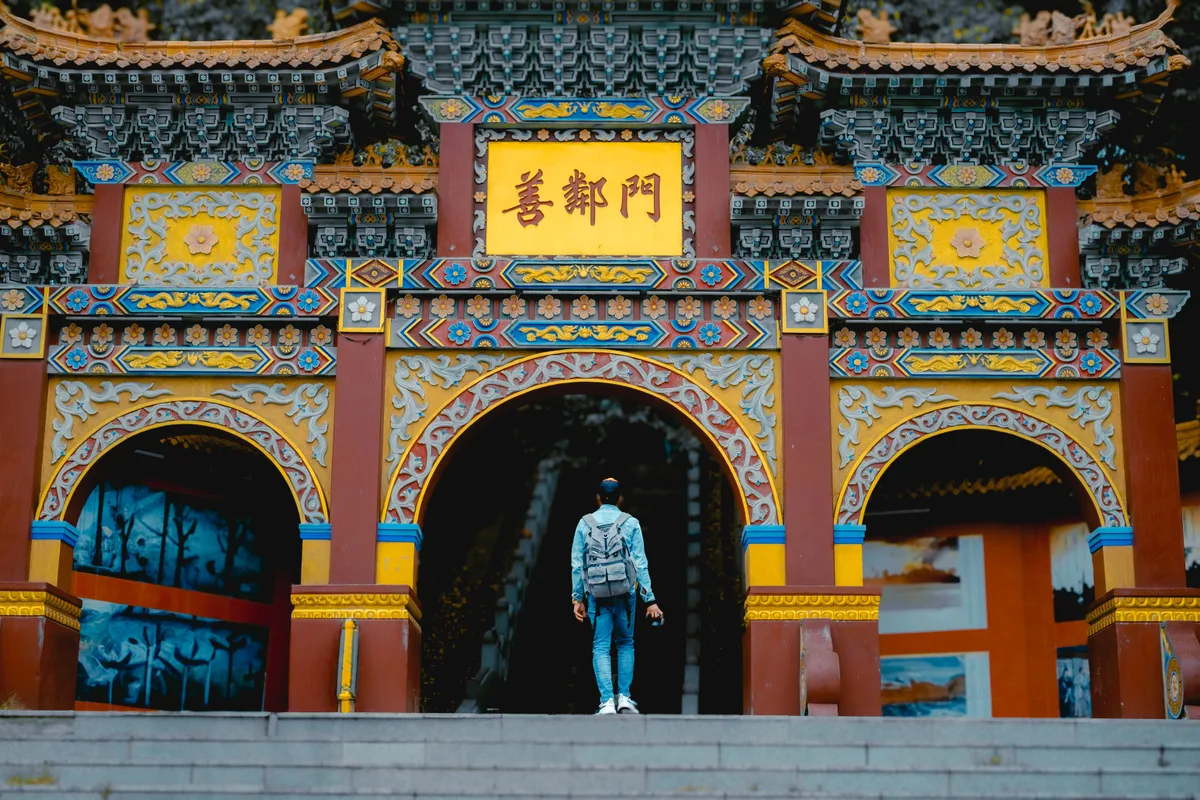
The restaurants those communities opened served Shandong food adapted to what was available and to Korean tastes. Over decades the adaptation went far enough that the dishes stopped being Chinese in anything but ancestry.
Jjajangmyeon, the national dish that is not Korean or Chinese
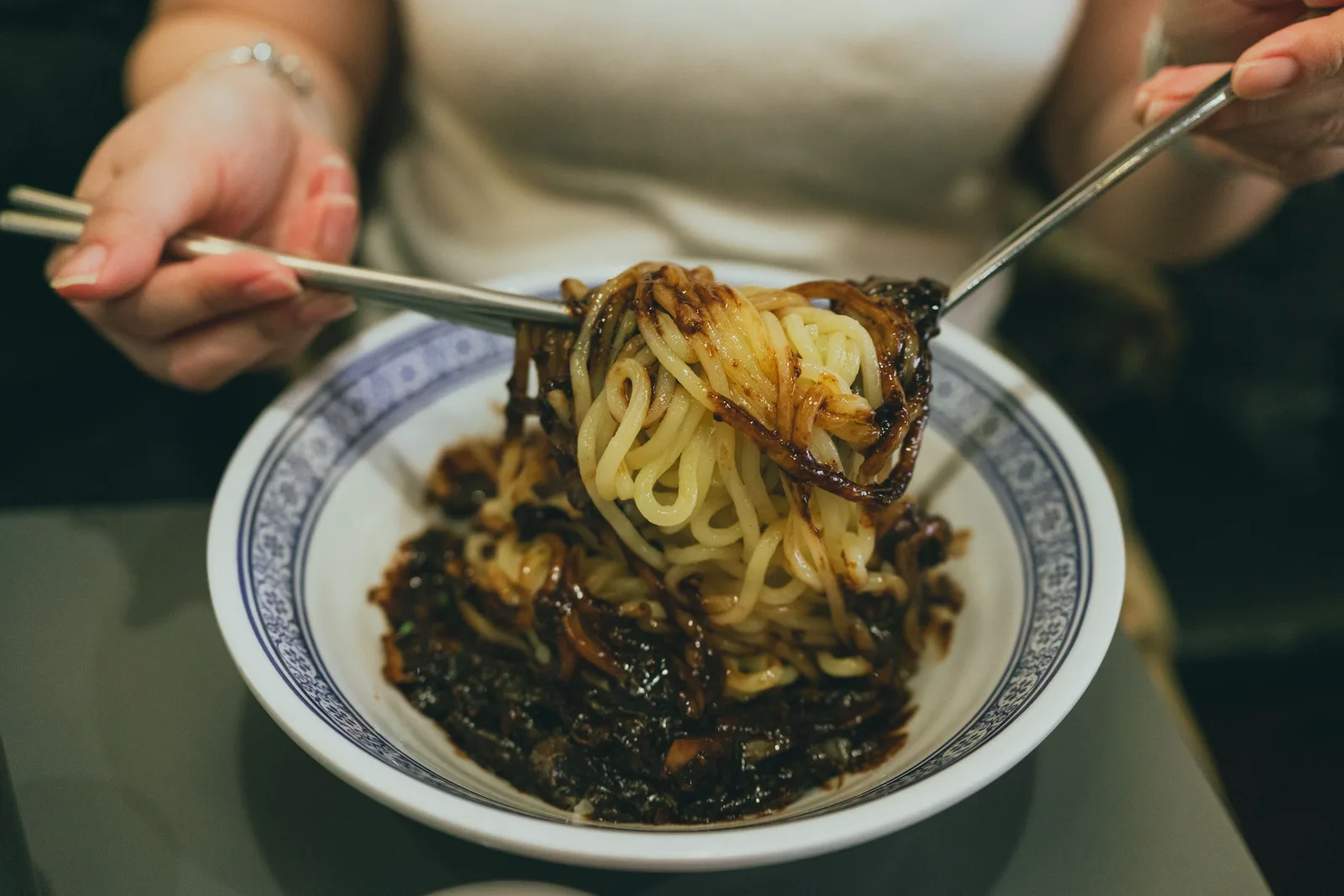
Jjajangmyeon is the defining example. Wheat noodles under a thick black sauce of fried onion, pork and chunjang, a dark fermented soybean paste.
Its ancestor is zhajiangmian from northern China, which uses a salty brown bean sauce and is much drier. The Korean version is sweeter, darker, glossier and far more heavily sauced, and the chunjang it uses is caramelised, which is a Korean modification. Put a bowl of each side by side and they look like different dishes.
It is also, by a distance, the most ordered delivery food in Korea. It is what you eat on moving day. It is what students eat. And on Black Day, 14 April, single people who received nothing on Valentine's Day or White Day traditionally eat it together, which is a custom built entirely around this one bowl of noodles.
Jjamppong, the red one
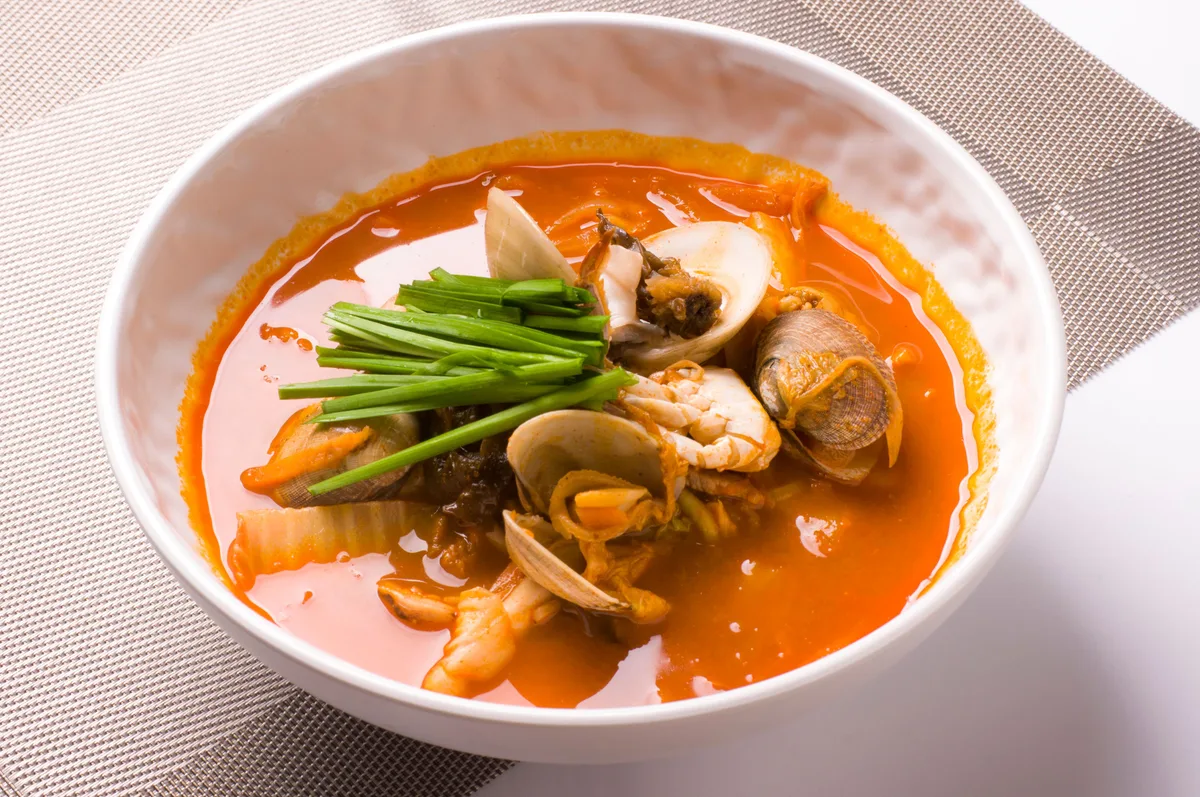
Jjamppong is the other half of the standard order, a spicy seafood noodle soup with a red broth built on gochugaru and stock.
Its lineage runs through Nagasaki champon in Japan, itself created by a Chinese cook for Chinese students, and then into Korea where the chilli arrived. The original Japanese version is mild and milky. The Korean one is fiery and full of squid, mussels and cabbage, and the two are related only genealogically.
Ordering in a Chinese-Korean restaurant usually means choosing between these two, which is enough of a dilemma that restaurants sell jjamppong and jjajangmyeon in a divided bowl specifically to resolve it.
Tangsuyuk and the sauce argument
Tangsuyuk is battered fried pork or beef with a sweet and sour sauce, descended from Chinese sweet and sour pork but with a distinctly chewier, glassier batter made with potato or sweet potato starch.
It carries Korea's most persistent food argument: whether the sauce should be poured over the meat in the kitchen, buemuk, or served on the side for dipping, jjikmuk. People have strong positions. It comes up in conversation more often than the dish is eaten.
Kkanpunggi, garlic fried chicken in a sweet and spicy sauce, is the other menu staple and is likewise a Korean elaboration of a Chinese dish.
What actually crossed in each direction
Going into Korea: wheat noodles, the fermented bean paste technique, deep frying in batter, and the entire concept of a stir fried noodle dish.
Coming the other way is less discussed but real. Korean-Chinese communities in northeastern China, the Joseonjok, have had a significant influence on food in Jilin and Liaoning provinces, and Korean grilled meat and cold noodles are widely eaten there.
And at the pantry level the two cuisines have always shared foundations. Doenjang and Chinese bean pastes come from the same fermentation tradition, and soy sauce, sesame oil and garlic do similar jobs in both kitchens.
How to spot the difference on a menu
Chinese-Korean restaurants are usually identifiable by the short menu: jjajangmyeon, jjamppong, tangsuyuk, fried rice, and a handful of others. Prices are low, delivery is fast, and the interiors have not changed much in thirty years.
Actual Chinese restaurants in Korea, serving Sichuan or Cantonese food to a Chinese-speaking clientele, are a separate and newer category, and the two do not overlap much.
Frequently asked questions
Can I get jjajangmyeon in China?
Not readily. You can get zhajiangmian, its ancestor, which is a different dish. Some restaurants in northeastern China serve the Korean version specifically for Korean customers.
Why is Chinese-Korean food so popular in Korea?
It is cheap, fast, delivered everywhere, and it has been part of everyday Korean eating for over a century. Most Koreans grew up on it, so it functions as nostalgia food rather than as a cuisine you choose for novelty.
Is chunjang the same as Chinese bean paste?
Related but not identical. Chunjang is a Korean product, darker and caramelised, and it is fried in oil before use to remove bitterness. Chinese sweet bean sauce and jjajang sauce are not interchangeable.
What is Black Day?
14 April, an informal Korean custom on which people who are single eat jjajangmyeon, the black noodles standing in for the absence of Valentine's Day chocolate and White Day sweets.
What to cook
Jjajangmyeon is the one to make, and the step that matters is frying the chunjang in oil before it goes near anything else. Jjamppong is the spicy alternative and a good use for mixed seafood. Tangsuyuk will let you settle the sauce question for yourself. And for the shelves behind all of it, see the Korean pantry and the Chinese one.
Comments
Share your thoughts on this post.
Sign in to comment0 Comments