The Korean Pantry: Eight Things Worth Buying First
The first trip to a Korean grocery store usually goes badly. There is a wall of red tubs with almost identical labels, a freezer case of things you cannot identify, and eleven varieties of dried anchovy sorted by size. Most people leave with a bottle of something and a vague sense of defeat.
The Korean pantry is smaller than the aisle makes it look. A home cook in Seoul builds most of a week's dinners out of eight things, and once those eight are on your shelf, the recipes stop feeling like shopping lists and start feeling like cooking. Here they are, in the order I would buy them.
1. Gochugaru, the chilli flake everything starts from
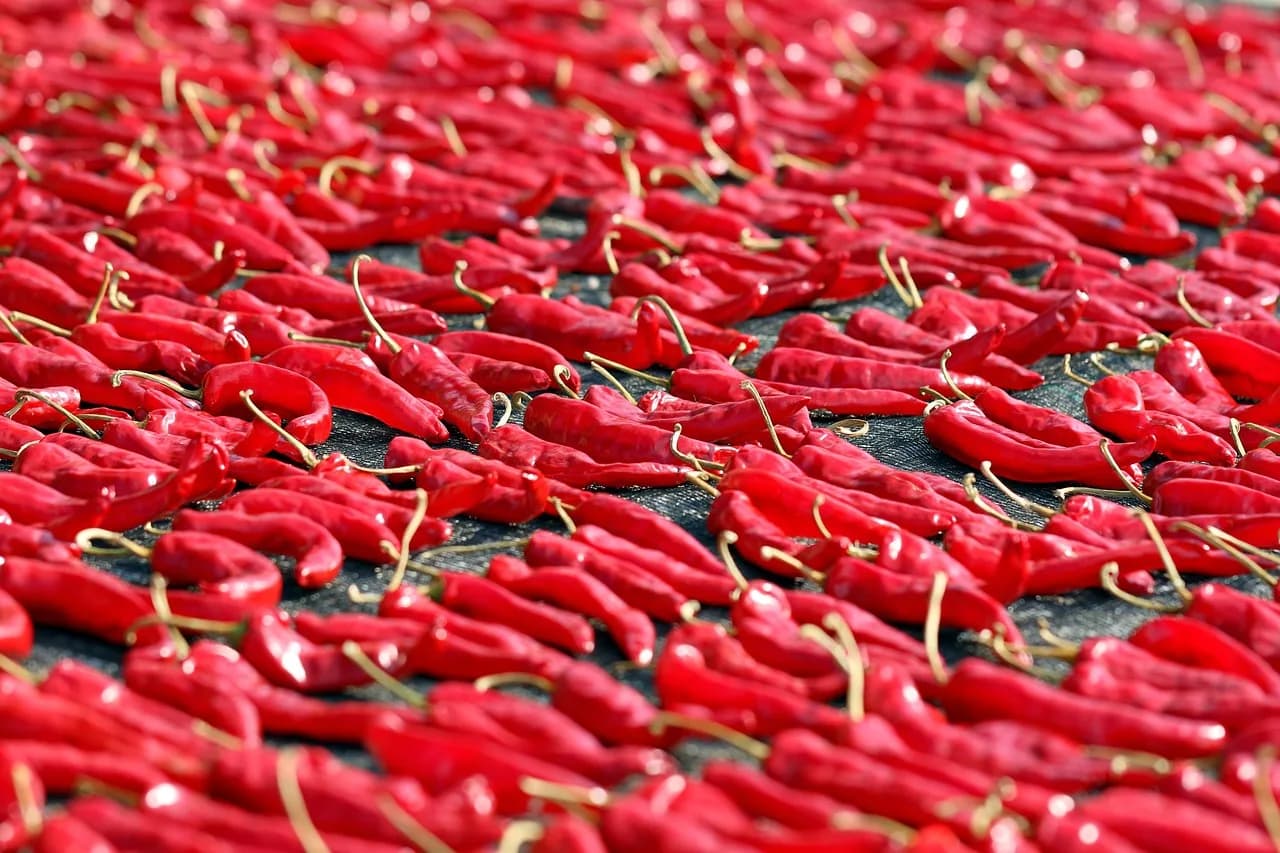
Not chilli powder. Not cayenne. Gochugaru is sun-dried Korean red pepper, deseeded and coarsely ground, and it behaves differently from every other ground chilli in the shop. It is bright red rather than brown, fruity rather than sharp, and the heat arrives late and leaves quickly.
Buy the coarse grind, which is what most recipes assume, and buy a bag that feels soft rather than dusty. Keep it in the freezer. Gochugaru fades fast at room temperature, and faded gochugaru turns kimchi a sad orange instead of the deep red you want.
2. Gochujang, the paste people misuse
Gochujang is fermented chilli paste built on glutinous rice, soybean and gochugaru, and it is sweet before it is hot. That sweetness is the part people miss. Treating it as a hot sauce leads to cloying, one-note food.
It works best cut with something sharp or savoury: vinegar for a dressing, soy sauce and sugar for a braise, sesame oil and garlic for the sauce that goes over bibimbap. Tubs keep for months in the fridge and slowly get darker and funkier, which is not a problem.
3. Doenjang, the one that does the quiet work
If gochujang is the loud paste, doenjang is the one Korean food actually rests on. Fermented soybean, salty, deep, a little barnyard. It is the backbone of doenjang jjigae, the stew that shows up on more Korean tables on more weeknights than anything else.
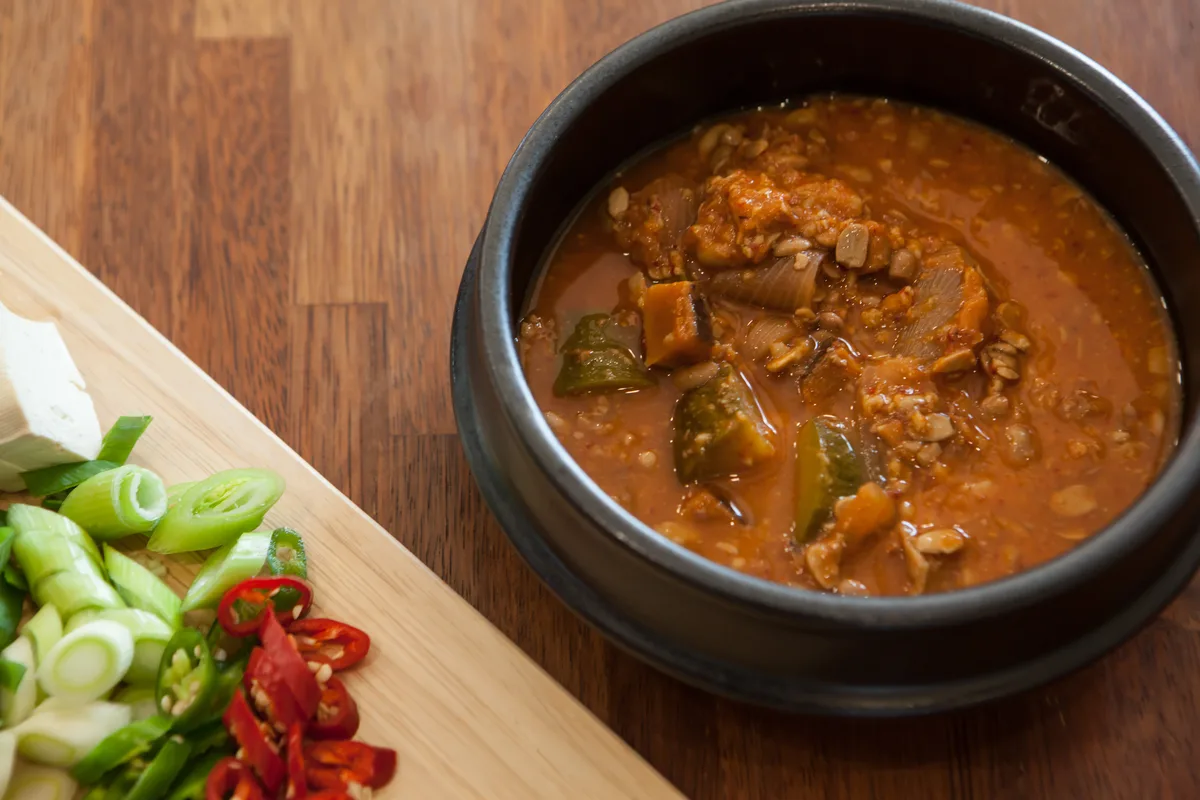
Western palates sometimes read it as aggressive on first taste. Cook it into a broth and that edge turns into savoury depth. Buy a tub with visible texture rather than a smooth paste, and do not substitute Japanese miso one for one, because doenjang is saltier and much less sweet.
4. Soy sauce, and the one Koreans keep separate
An all-purpose Korean or Japanese soy sauce handles marinades, braises and dipping. What surprises people is the second bottle: guk-ganjang, or soup soy sauce, which is saltier, thinner and lighter in colour. It seasons soups without turning them brown.
You can cook Korean food for a year with one bottle. But the day your kongnamul guk tastes right and looks right at the same time is the day the second bottle justifies itself.
5. Toasted sesame oil
Sesame oil in Korean cooking is a finishing oil, not a cooking oil. It goes in at the end, off the heat, in quantities that look small on the spoon and taste enormous in the bowl. Heat destroys it, so a wok full of smoking sesame oil is money burned.
Buy a small dark bottle and replace it more often than you think. Toasted sesame oil goes stale in a way that is hard to notice until you taste a fresh bottle next to the old one.
6. Toasted sesame seeds
Sesame seeds are not a garnish in Korean food, or not only a garnish. Crushed between your fingers as they go on, they release an aroma that reads as unmistakably Korean on dishes like sigeumchi namul and japchae.
Buy them raw and toast them yourself in a dry pan, four minutes, shaking constantly, until they smell nutty and a few start to jump. Pre-toasted seeds are fine and taste about eighty percent as good.
7. Garlic, in quantities that look like a typo
Korea eats more garlic per person than almost anywhere on earth, and Korean recipes are not being dramatic when they ask for ten cloves. This is not a background aromatic. It is a primary flavour, often raw or barely cooked, in the seasoning pastes that dress vegetables and in the marinade for bulgogi.
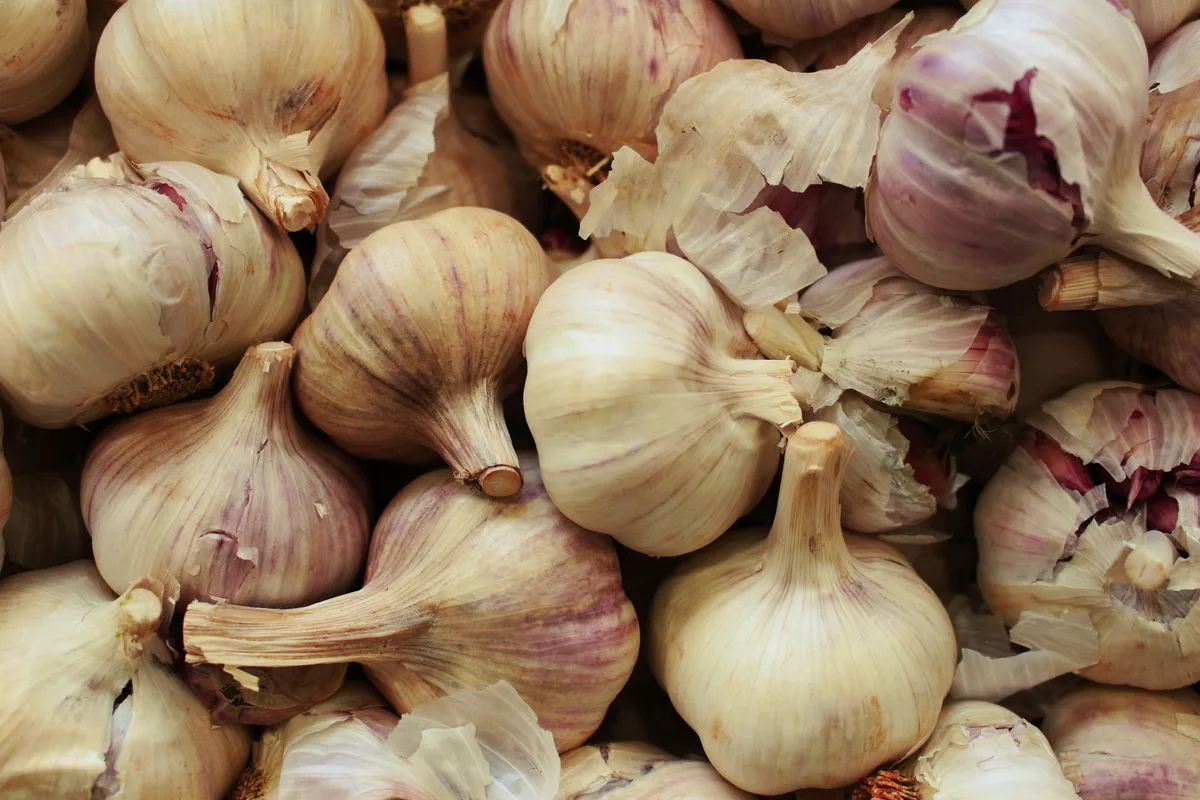
Buy a lot. Peel a lot at once. Many Korean home cooks keep a jar of minced garlic in the fridge for exactly this reason.
8. A sweetener that is not sugar
Korean seasoning almost always carries a sweet edge, and it usually comes from rice syrup, which adds gloss along with sweetness. It is what gives braised dishes and tteokbokki their lacquered look.
Maesil cheong, a syrup made from green plums, does a similar job with a fruity sourness underneath, and many households keep a jar their grandmother made. Honey works in a pinch. White sugar works too, but the finished dish will look flatter.
What you can leave for later
Dried anchovies and kelp for stock, perilla leaves, fermented shrimp for kimchi, Korean sweet potato starch noodles for japchae, and rice cakes for tteokbokki are all worth owning eventually. None of them are the reason your first attempt does not taste right. The eight above are.
Frequently asked questions
Can I substitute miso for doenjang?
At a push, and only in a stew where other strong flavours are present. Doenjang is saltier, coarser and more pungent, so start with about two thirds the amount and taste before adding more. The result will be recognisably Japanese rather than Korean.
Does gochujang go bad?
Not quickly. An opened tub keeps six months to a year in the fridge, darkening and deepening as it goes. Discard it if you see fuzzy mould rather than the normal darkened surface.
Is gochugaru interchangeable with regular chilli flakes?
No. Standard crushed red pepper is hotter, seedier and sharper, and it will make kimchi taste wrong and look wrong. If you truly cannot find gochugaru, a mild ancho or Kashmiri chilli ground coarse is closer than anything in the Italian aisle.
Where to start cooking
With those eight, the obvious first cook is doenjang jjigae, which uses three of them and takes twenty minutes. After that, kongnamul muchim will teach you what sesame oil, garlic and seeds do together, and tteokbokki will show you why the sweetener matters. The rest of the Korean recipes on the site assume this shelf and nothing more.
Comments
Share your thoughts on this post.
Sign in to comment0 Comments