Korean Cuisine
Tteokbokki (Spicy Rice Cakes)
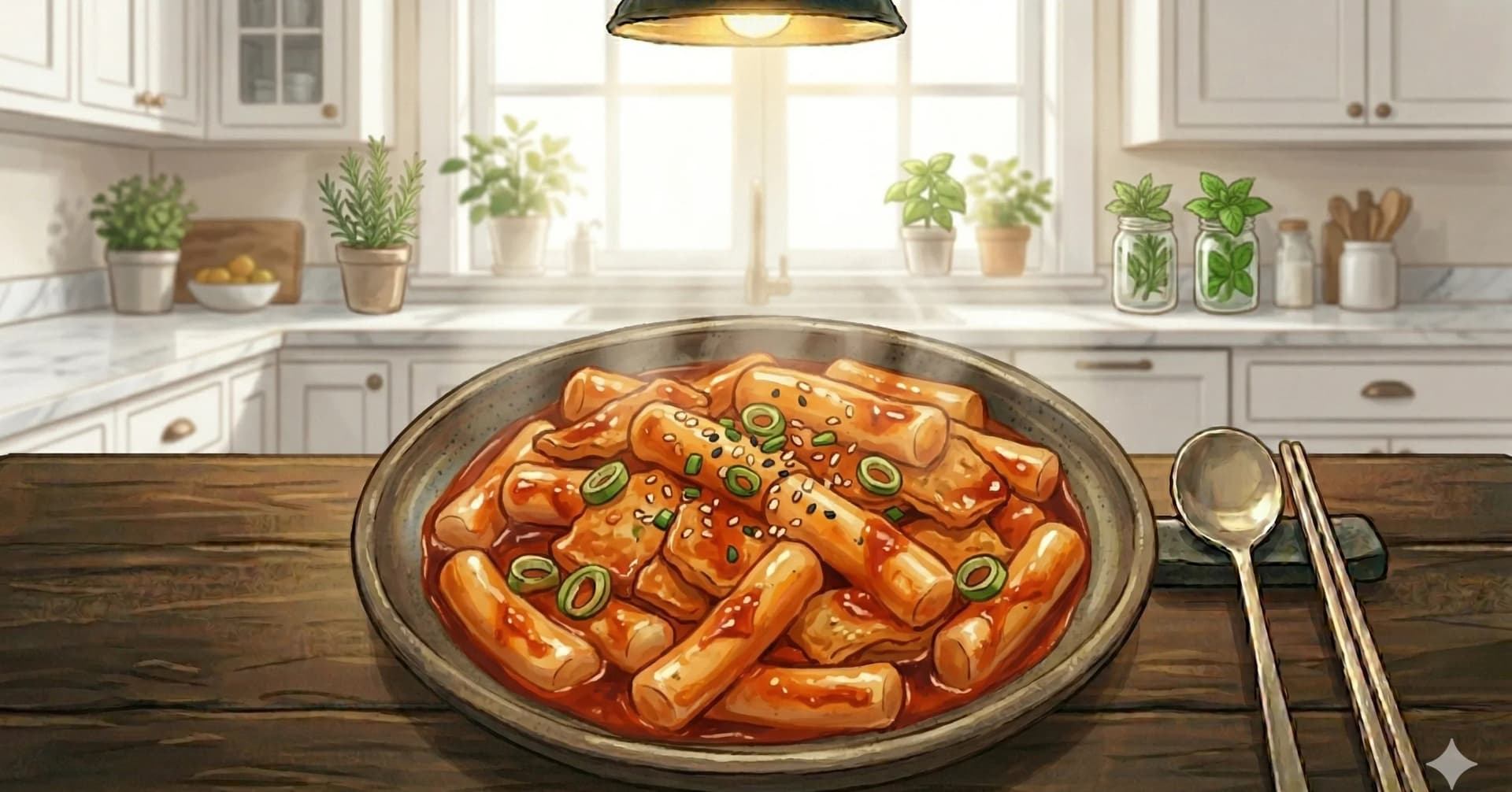
Chewy rice cakes swimming in a fiery, sweet gochujang sauce
The first bite of tteokbokki is always a small negotiation between teeth and rice cake, that satisfying resistance before the chewy center gives way, releasing a wave of sweet heat from the gochujang sauce clinging to its surface. It is one of Korea's most iconic street foods, and the smell of it bubbling at pojangmacha (street stalls) in Seoul is enough to stop anyone mid-stride.
Tteokbokki traces its roots back to the Joseon dynasty, though the original version was a soy-sauce-based stir-fry served in the royal court. The fiery red version that dominates today is a relatively modern creation, popularized in the 1950s when gochujang became the sauce of choice. It turned a refined court dish into democratic street food, available on nearly every corner and loved by every generation.
What the dish delivers is pure comfort. The sauce is a balance of sweet, spicy, and savory, built on a quick anchovy and kelp broth that gives it depth beyond what gochujang alone can offer. The rice cakes soak up the sauce as they cook, becoming tender on the outside while keeping their characteristic chew. Fish cake adds a mild, briny contrast and soaks up the sauce like a sponge.
The key practical insight is timing. Rice cakes go from perfectly chewy to mushy in a matter of minutes once they soften, so the window for serving is narrow. Pull the pot from the heat as soon as the sauce coats the rice cakes in a glossy, thick layer and the tteok yields easily to a spoon.
At a Glance
Yield
3 servings
Prep
10 minutes
Cook
20 minutes
Total
30 minutes
Difficulty
Easy
Ingredients
- 2½ cupwater
- 6large dried anchovies, heads and intestines removed
- 1 piecedried kelp (about 10 cm square)
- 1 lbgaraetteok (cylindrical rice cakes), separated if stuck together
- 5½ ozeomuk (Korean fish cake), cut into triangles or bite-sized pieces
- 3 tbspgochujang
- 1 tbspgochugaru (Korean red pepper flakes)
- 1¼ tbspsugar
- 1 tbspsoy sauce
- 2½ tspminced garlic
- 1 tspdashida (Korean beef bouillon)
- 2scallions, cut into 5 cm lengths
- —Toasted sesame seeds
- —Sliced scallion
Method
- 1
Soak the rice cakes if using dried or refrigerated ones. Place them in warm water for about 10 minutes until they are pliable and separate easily. Fresh room-temperature rice cakes can skip this step.
- 2
Make the anchovy kelp broth. Combine the water, dried anchovies, and kelp in a medium pot. Bring to a gentle boil over medium heat. Let it simmer for 7 to 8 minutes until the liquid smells briny and faintly sweet. Remove and discard the anchovies and kelp.
- 3
Stir the gochujang, gochugaru, sugar, soy sauce, garlic, and dashida into the broth. Whisk until the gochujang dissolves completely and the broth turns a deep, even red.
- 4
Add the rice cakes to the pot. Arrange them in a single layer as much as possible so they cook evenly. Bring the liquid to a steady boil over medium-high heat.
- 5
Cook the rice cakes for about 8 to 10 minutes, stirring frequently to prevent them from sticking to the bottom of the pot. As they cook, they will begin to soften and the sauce will start to thicken.
- 6
Add the fish cake pieces after the rice cakes have been cooking for about 5 minutes. The fish cake needs less time and will absorb the sauce quickly.
- 7
Watch the sauce carefully as it reduces. Stir more frequently during the last few minutes. The sauce should become glossy and coat each rice cake in a thick, clinging layer rather than pooling at the bottom.
- 8
Test a rice cake by pressing it with a spoon. It should yield easily and feel tender throughout, with no hard center remaining. If the sauce has thickened but the rice cakes are still firm, add a splash of water and continue cooking.
- 9
Add the scallion pieces during the last minute of cooking. They should soften slightly but retain their color and a mild bite.
- 10
Remove from heat immediately once the rice cakes are tender and the sauce is thick. The residual heat will continue to soften the tteok, so pulling it a touch early is better than overcooking.
- 11
Transfer to a shallow serving dish. The sauce should pool slightly around the rice cakes, thick enough to cling but still glossy.
- 12
Scatter toasted sesame seeds and sliced scallion over the top. Serve immediately while the rice cakes are at their chewiest.
Key Ingredient Benefits
Garaetteok (rice cakes): Made from short-grain rice that is soaked, steamed, and pounded. The pounding process creates a dense, chewy texture distinct from other rice preparations. Rice cakes are a significant source of carbohydrates and have been a staple in Korean celebrations and daily eating for centuries.
Gochujang: A fermented paste made from red chili peppers, glutinous rice, meju (fermented soybean powder), and salt. The fermentation process, traditionally lasting months to years in earthenware pots, produces complex flavors and beneficial enzymes. Research suggests that fermented chili pastes may have antioxidant properties.
Dried anchovies and kelp: The base for many Korean soups and stews. Dried anchovies are traditionally used as a calcium source, and kelp provides iodine and trace minerals. Together they form the quick, clean-tasting broth called yuksu that underpins much of Korean cooking.
Why This Works
Building the sauce on an anchovy and kelp broth rather than plain water gives the dish an underlying savory depth. The dried anchovies contribute glutamate and inosinate, while the kelp adds its own glutamate, creating a simple but effective umami foundation that supports the gochujang rather than competing with it.
The balance of gochujang and gochugaru matters. Gochujang provides fermented sweetness, body, and a rounded heat. Gochugaru adds a brighter, more direct chili flavor and a touch of fruity warmth. Together they create a layered spiciness that is more interesting than either alone.
Stirring frequently during the last few minutes serves two purposes. It prevents the starchy sauce from scorching on the bottom of the pot, and it encourages the starch released from the rice cakes to further thicken the sauce into its signature glossy consistency.
Substitutions & Variations
Rice cakes: If garaetteok is unavailable, sliced tteok (the kind used in tteokguk) can work, though the cooking time will be shorter due to their thinner shape. Avoid substituting with non-rice-based alternatives, as the chew is essential.
Fish cake: Omit for a simpler version. Some variations add boiled eggs, ramen noodles (rabokki), or cheese on top during the last minute of cooking.
Heat level: Reduce the gochugaru or omit it entirely for a milder version. Increase both gochugaru and gochujang for more heat. A drizzle of honey can soften the spice further.
Cheese tteokbokki: A popular modern variation. Lay slices of mozzarella over the finished dish and cover the pot for 30 seconds until the cheese melts into stretchy threads.
Serving Suggestions
Tteokbokki is traditionally eaten as a snack or light meal on its own, served directly from the pot with wooden chopsticks or small skewers. In Korea, it is commonly paired with eomuk soup and soondae (blood sausage) at street stalls. Fried mandu (dumplings) dipped into the leftover sauce are another classic pairing. For a more substantial meal, serve alongside gimbap rolls.
Storage & Reheating
Leftover tteokbokki: Store in an airtight container in the refrigerator for up to 2 days. The rice cakes will harden as they cool, which is normal.
Reheating: Add 60 to 80 ml of water to the pot and reheat over medium-low heat, stirring frequently. The rice cakes will soften again as they warm through. The sauce may need a small adjustment of gochujang or sugar after reheating, as flavors concentrate when stored.
Not recommended for freezing: The rice cakes become crumbly and lose their chew after freezing and thawing.
Cultural Notes
Tteokbokki (떡볶이) is the defining Korean street food of the modern era. The chewy rice cakes glazed in fiery gochujang sauce show up at bunsik (분식) snack stalls in every Korean neighborhood, at school-uniform-clad teenager gatherings in front of Sindang-dong's famous tteokbokki street, at convenience-store warmers as a quick lunch, and on home stovetops in countless DIY variations. The dish has been called the single most-eaten Korean snack food. One industry estimate places total daily Korean tteokbokki consumption at over 10 million servings.
The dish has a surprisingly recent history. The original gungjung tteokbokki (궁중떡볶이, "royal court tteokbokki") that modern tteokbokki descends from was a soy-sauce-based dish from the Joseon dynasty. Savory. Slightly sweet. Entirely non-spicy. Served at royal banquets alongside thinly sliced beef and vegetables. The transformation to the fiery red gochujang version is credited to a Sindang-dong street vendor named Ma Bok-rim. In 1953, the year the Korean War ended, she accidentally dropped a rice cake into a bowl of chajangmyeon-style sauce, then iterated through different sauces until landing on the gochujang version that defined the modern dish.
Sindang-dong's "Tteokbokki Town" (떡볶이 타운) emerged from Ma's stall in the 1960s and 1970s, and the neighborhood remains the most iconic tteokbokki destination today. The streets there are lined with restaurants serving variations on the original Ma Bok-rim recipe, and several have been running continuously for more than 50 years.
Modern variations on tteokbokki run wide. Rabokki adds instant ramyeon noodles. Cheese tteokbokki covers the rice cakes in melted cheese. Cream tteokbokki uses a dairy-based sauce. Jjajang tteokbokki swaps the gochujang for black bean sauce. Gungjung tteokbokki is the deliberate revival of the older royal-court soy-sauce style. The dish has become a defining export of contemporary Korean food culture worldwide.
Nutrition Facts
Calories: 481kcal (24%)|Total Carbohydrates: 95.3g (35%)|Protein: 17.7g (35%)|Total Fat: 3.2g (4%)|Saturated Fat: 0.6g (3%)|Cholesterol: 22mg (7%)|Sodium: 1675mg (73%)|Dietary Fiber: 2.5g (9%)|Total Sugars: 12.1g
You Might Also Like
Ratings & Comments
Ratings & Comments
Ratings
Share your thoughts on this recipe.
Sign in to rate and comment