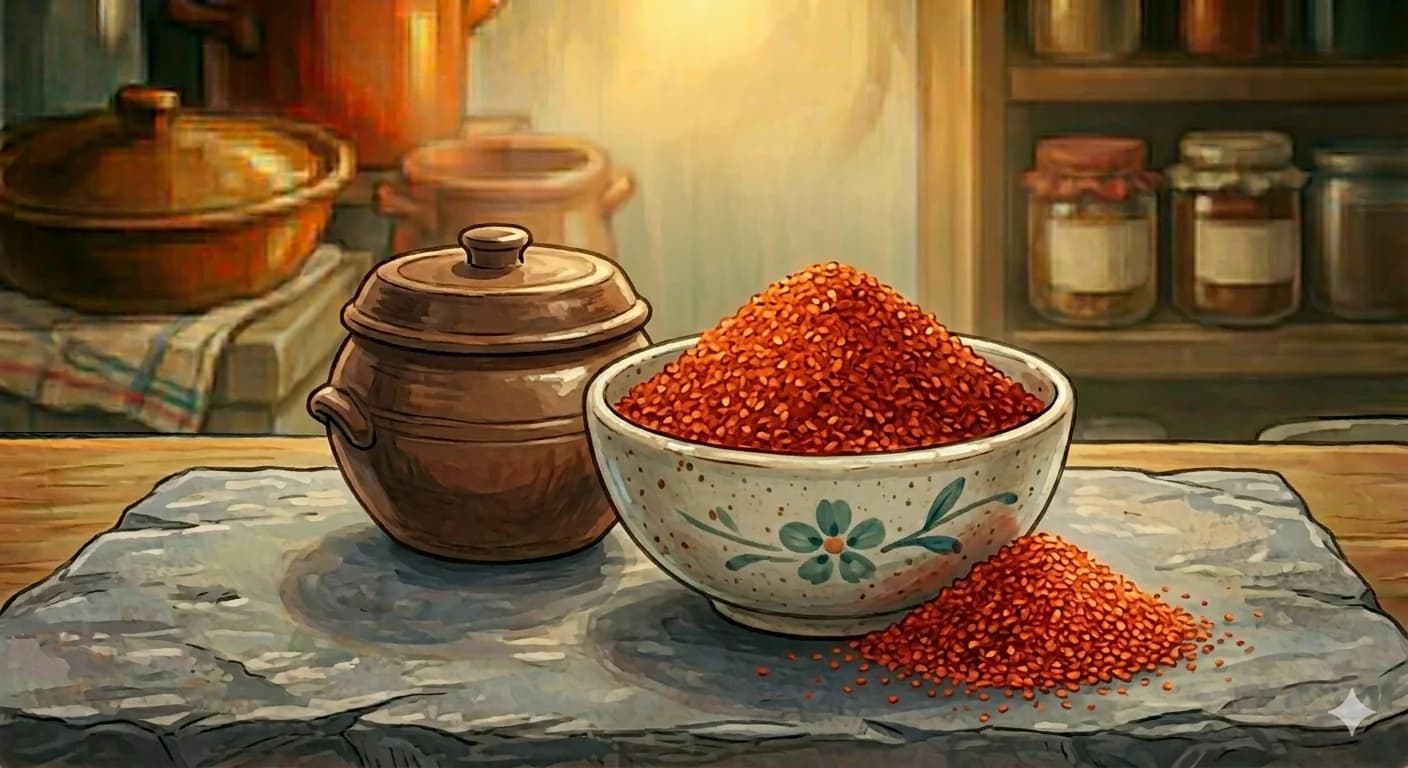
Gochugaru
Also known as: Korean Red Pepper Flakes, Korean Chili Flakes, Gochu Garu, Korean Red Chili Powder, Taeyang-cho Gochu
Gochugaru is the vibrant red chili flake that defines Korean cooking, and nothing else tastes quite like it. Made from sun-dried Korean red peppers (taeyang-cho gochu) that are seeded and crushed, gochugaru has a flavor profile that sets it apart from every other chili product on the shelf.
What makes gochugaru special is its balance. It brings moderate heat, yes, but also a subtle sweetness, a hint of smokiness from the sun-drying process, and a fruity complexity that generic red pepper flakes simply do not have. This balance is why kimchi tastes like kimchi and not just like spicy cabbage.
Gochugaru comes in two textures: coarse flakes (gutge gochugaru) for kimchi and stews, and fine powder (gouge gochugaru) for sauces and seasoning pastes. The coarse flakes have a slightly sticky, almost oily quality that clings to vegetables and distributes color and heat evenly. Most Korean home cooks keep both forms on hand.
Key facts at a glance:
- Sun-dried and crushed Korean red peppers — seeded before grinding
- Moderate heat with fruity sweetness and subtle smoke
- Two textures — coarse flakes for kimchi, fine powder for sauces
- Signature ingredient in kimchi, gochujang, and most Korean stews
- Rich in capsaicin and vitamin A — the deep red color indicates high carotenoid content
Flavor Profile
Origin
Korea, East Asia
Traditional Medicine Perspectives
Traditional Chinese Medicine
Chili peppers are classified as hot and pungent in TCM, entering the Heart and Spleen meridians. They are used to warm the middle burner, promote appetite, dispel cold-dampness, and invigorate blood circulation. They are considered useful for conditions associated with cold stagnation but are cautioned against in heat-pattern conditions.
Korean Traditional Medicine (Hanbang)
In Korean traditional medicine, red pepper is considered warming and is associated with improving circulation and dispelling internal cold. Capsaicin-rich foods were traditionally consumed during cold months to promote warmth and stimulate appetite. External pepper plasters were applied to sore muscles and joints to encourage blood flow to the affected area.
Modern Scientific Research
Gochugaru is rich in capsaicin, the compound responsible for its heat, which has been extensively studied for its effects on metabolism and pain signaling. Research suggests capsaicin may increase energy expenditure through thermogenesis and influence appetite regulation, though effects vary between individuals.
The deep red color of quality gochugaru indicates high levels of carotenoids, particularly beta-carotene and capsanthin. These compounds function as antioxidants, and studies have linked dietary carotenoid intake to support of eye health and immune function.
Korean researchers have studied gochugaru specifically in the context of kimchi fermentation, finding that the capsaicin content influences the microbial ecology of the ferment. The interaction between gochugaru compounds and lactic acid bacteria during kimchi fermentation is an active area of food science research, with implications for understanding how traditional food preparation methods affect probiotic activity.
Cultural History
Chili peppers arrived in Korea in the late 16th or early 17th century, likely through trade with Japan or Portuguese merchants. Before chilies, Korean cuisine relied on black pepper, Sichuan peppercorn, and garlic for pungency. The adoption of the red chili transformed Korean food profoundly — it made modern kimchi possible and gave birth to the fiery red palette that now defines the cuisine.
The making of gochugaru was traditionally a communal autumn activity. Families would harvest peppers, thread them onto strings to dry in the sun, and gather to seed and grind them before the winter kimjang (kimchi-making) season. The quality of a household’s gochugaru was a matter of pride, and regional pepper varieties produced distinctive local flavors.
Today, gochugaru remains so central to Korean identity that the Korean government monitors chili pepper prices as an economic indicator. The annual kimjang tradition — making kimchi as a community in late autumn — was designated a UNESCO Intangible Cultural Heritage in 2013, and gochugaru is its single most defining ingredient.
Culinary Uses
Kimchi is where gochugaru does its most important work. The coarse flakes are mixed with garlic, ginger, fish sauce, and salted shrimp to create the paste that coats napa cabbage, radish, and dozens of other vegetables. The flakes hydrate in the vegetable juices and create the characteristic red coating that ferments into something extraordinary.
For stews and braises (jjigae, tang), gochugaru provides the red-tinged heat base. In kimchi jjigae, tteokbokki, and dakdoritang, a generous amount of gochugaru bloomed in oil at the start of cooking builds deep, rounded heat that permeates the whole dish. This is different from adding heat at the end — the flavor integrates and mellows.
Gochugaru shines in quick-pickled and dressed dishes too. Toss it with sesame oil, garlic, and a splash of rice vinegar for a simple but punchy dressing for blanched vegetables. Sprinkle it over fried eggs, stir it into soup broth at the table, or use it in yangnyeom (seasoning sauce) for fried chicken.
The fine powder form is essential for making gochujang at home and for seasoning where you want heat without visible flakes — in dipping sauces, in bibimbap sauce, and mixed into marinades where a smooth texture matters.
Preparation Methods
Gochugaru requires no cooking or toasting before use — it goes in as-is. For kimchi, mix the coarse flakes directly into your paste of garlic, ginger, fish sauce, and other seasonings. The flakes will hydrate as they sit with the salted vegetables, releasing color and heat gradually.
When building flavor in stews and stir-fries, add gochugaru to hot oil along with garlic and let it bloom briefly — 30 seconds to a minute, stirring constantly. This step deepens the color and mellows the raw heat. Be careful not to burn it; scorched gochugaru turns bitter quickly.
Store gochugaru in an airtight container in the freezer for the best longevity. It keeps its color, heat, and flavor for up to a year frozen. At room temperature or in the pantry, it fades to a dull brown within a few months and loses its characteristic sweetness. Good gochugaru should smell fruity and slightly sweet when you open the bag — if it smells flat or dusty, it is past its prime.
Traditional Dishes
Recipes Using Gochugaru
- Napa Cabbage Kimchi (통배추김치)
- Braised Black Cod (Eundaegu-jorim / 은대구조림)
- Bibim Naengmyeon (Spicy Mixed Cold Noodles)
- Spicy Pork Bulgogi (Dwaeji Bulgogi / 돼지불고기)
- Bossam (Boiled Pork Belly Wraps)
- Spicy Pork Rice Bowl (Jeyuk-Deopbap / 제육덮밥)
- Sweet-Spicy Fried Chicken (Kkanpunggi / 깐풍기)
- Spicy Fish Stew (Maeuntang / 매운탕)
- Braised Spicy Tofu (Dubu-jorim / 두부조림)
- Braised Pig's Feet (Jokbal / 족발)
Comments
Share your thoughts on this ingredient.
Sign in to comment0 Comments