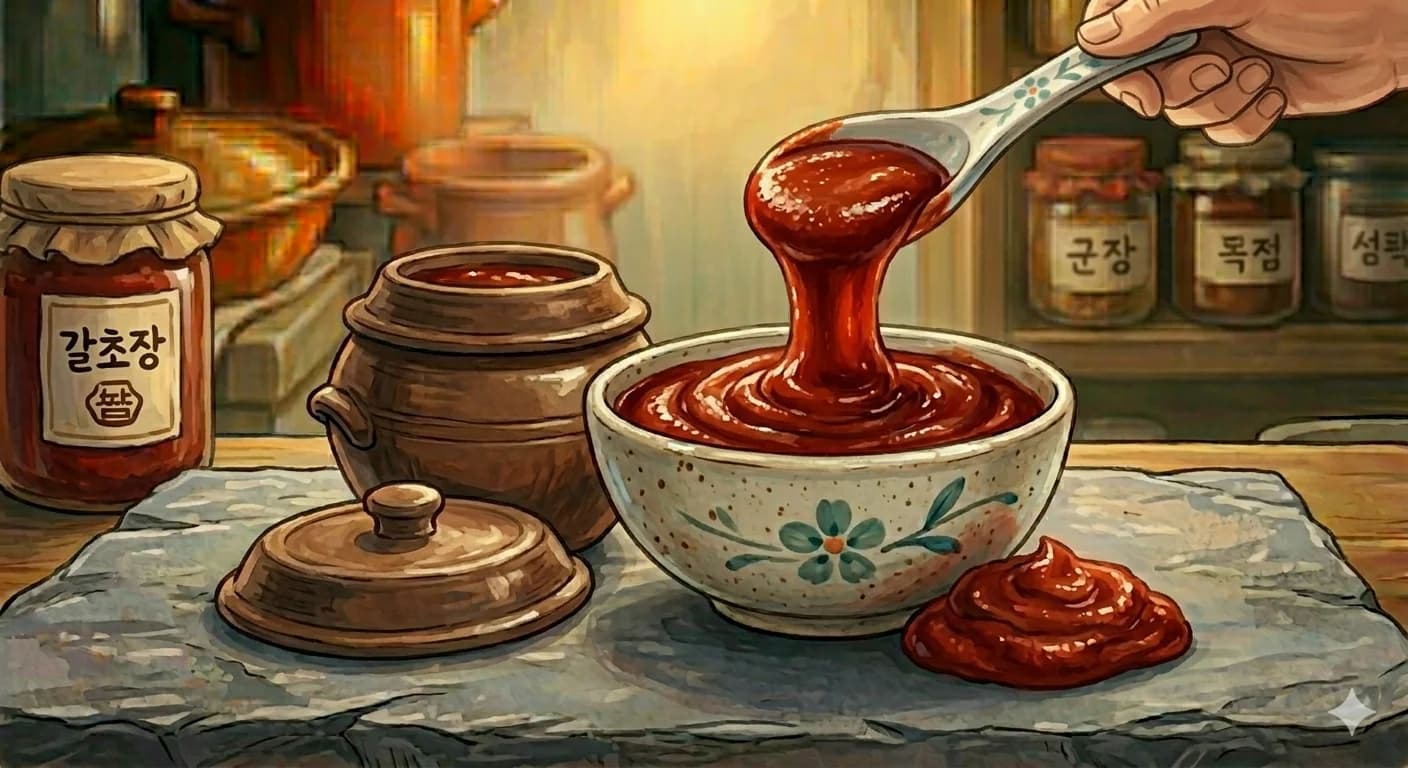
Gochujang
Also known as: Korean Red Chili Paste, Red Pepper Paste, Gochu Jang, Hot Pepper Paste
Gochujang is a thick, dark-red fermented chili paste that is one of the defining condiments of Korean cuisine. Made from gochugaru (Korean red chili flakes), glutinous rice, fermented soybean powder (meju), and salt, it delivers a flavor that no other chili paste in the world replicates — simultaneously sweet, spicy, savory, and deeply funky from fermentation.
What sets gochujang apart from other chili pastes is the presence of fermented grains and soybeans. The glutinous rice provides a natural sweetness and thick, sticky body. The meju (fermented soybean) adds an umami depth reminiscent of miso. And the gochugaru brings a fruity, moderately spicy heat that warms without overwhelming. These elements ferment together for months, developing a complexity that single-ingredient hot sauces cannot approach.
Gochujang has moved from being an obscure Korean pantry item to a globally recognized ingredient, and for good reason. Its balanced heat and inherent sweetness make it incredibly versatile — it works in marinades, stews, dipping sauces, fried chicken glazes, and even salad dressings. It is the secret ingredient that makes Korean food taste unmistakably Korean.
Key facts at a glance:
- Fermented paste of gochugaru, glutinous rice, meju, and salt — a complex, living condiment
- Capsaicin from gochugaru — provides moderate, fruity heat
- Traditionally fermented in earthenware jangdok on outdoor terraces for months to years
- Sweet, spicy, savory, and umami — all in one paste
- Featured in 16 recipes on this site — from tteokbokki to bibimbap to yangnyeom chicken
Flavor Profile
Origin
Korea, Sunchang, North Jeolla Province
Traditional Medicine Perspectives
Traditional Chinese Medicine
Fermented chili preparations share some TCM classifications with other warming, pungent foods. They are considered to dispel cold, promote circulation, and stimulate the digestive fire. The fermented soybean component adds properties associated with strengthening the spleen and stomach.
Traditional Korean Medicine (Hanbang)
In Korean traditional medicine, gochujang is considered a warming food that promotes circulation and aids digestion. The chili component is valued for its ability to stimulate metabolism and warm the body during cold months. Fermented foods in general hold an important place in Korean health philosophy, viewed as supporting gut health and overall vitality. Gochujang is traditionally believed to help invigorate the appetite and support the body's energy.
Modern Scientific Research
As a fermented food, gochujang contains bioactive compounds produced during its extended fermentation process. Research has identified that traditionally fermented gochujang contains various organic acids, free amino acids, and beneficial microorganisms — including species of Bacillus and lactic acid bacteria.
The capsaicin from gochugaru has been extensively studied for its effects on metabolism, pain perception, and inflammation. Research suggests capsaicin may support metabolic activity and has demonstrated anti-inflammatory properties in laboratory settings. However, the capsaicin content in gochujang is moderate compared to pure chili preparations, delivered alongside the buffering sweetness of rice.
Studies on Korean fermented pastes have shown they contain isoflavones from the soybean component, as well as melanoidins (Maillard reaction products formed during fermentation) that demonstrate antioxidant activity in laboratory tests. Some research has explored the potential of fermented chili pastes to positively influence gut microbiome diversity, though this field of study is still developing.
Cultural History
Gochujang's history is intertwined with the arrival of chili peppers in Korea, which came from the Americas via Japanese or Portuguese traders in the late 16th or early 17th century. Before chilies, Korean fermented pastes were built on soybeans and grains alone (doenjang and ganjang). The addition of dried red chilies to the existing fermentation tradition created something entirely new.
By the 18th century, gochujang had become a staple of Korean households, traditionally made at home and fermented in large earthenware crocks called jangdok. These crocks were kept on outdoor terraces (jangdokdae), exposed to sunlight and seasonal temperature changes that guided the fermentation. Every family had its own recipe, passed through generations, and the quality of a household's jang (fermented pastes) was a point of pride.
Today, most gochujang is commercially produced, but artisanal traditions survive, particularly in regions like Sunchang in North Jeolla Province, which is renowned for its gochujang and has a dedicated gochujang village and festival. The Korean government has recognized traditional jang-making as an important cultural heritage, and interest in traditionally fermented gochujang — with its longer fermentation and more complex flavor — is growing both in Korea and internationally.
Culinary Uses
Gochujang is the backbone of Korean flavor in the same way that miso defines Japanese cooking or fish sauce defines Thai. Understanding how to use it opens up an entire cuisine.
The most iconic use is in tteokbokki (spicy rice cakes), where gochujang is dissolved into a broth with sugar, soy sauce, and gochugaru to create the addictive sweet-spicy sauce that coats the chewy rice cakes. In bibimbap, a spoonful of gochujang is mixed into the rice bowl at the table, binding all the toppings together with its sticky heat. For dak galbi (spicy stir-fried chicken), gochujang forms the base of the marinade alongside gochugaru, soy sauce, garlic, and ginger.
Gochujang is also essential in yangnyeom chicken (Korean fried chicken), where it is mixed into the glaze that coats the double-fried chicken — sweet, sticky, spicy, and impossibly addictive. In budae jjigae (army stew), gochujang provides the red, spicy base that unifies the eclectic mix of ingredients.
Beyond traditional Korean dishes, gochujang is a remarkable flavor booster in any kitchen. Mix it into mayo for a spicy sandwich spread, whisk it into salad dressings, stir it into marinades for grilled meat, or add a spoonful to tomato-based soups and stews for an umami-rich heat that deepens rather than dominates.
Preparation Methods
Gochujang is used directly from the container — no preparation needed. However, because it is very thick and sticky, it needs to be dissolved or thinned for most applications.
For sauces and stews, dissolve gochujang in a small amount of warm water, broth, or other liquid before adding it to the pot. This ensures even distribution rather than clumps of paste. For bibimbap sauce, mix gochujang with sesame oil, a little sugar or honey, rice vinegar, and minced garlic — this diluted form is what gets mixed into the rice bowl.
For marinades, combine gochujang with soy sauce, sesame oil, garlic, ginger, and sugar. The soy sauce helps thin the paste while adding complementary flavors. Gochujang-based marinades benefit from at least 30 minutes to several hours of marinating time, as the sugars in the paste promote excellent caramelization when grilled or pan-fried. Store gochujang in the refrigerator after opening — it will keep for many months due to its salt content and fermented nature. The flavor may deepen over time, which is a good thing.
Traditional Dishes
Recipes Using Gochujang
- Bibimbap (Mixed Rice Bowl)
- Bibim Naengmyeon (Spicy Mixed Cold Noodles)
- Gochujang Chicken (Spicy Korean Glazed Chicken)
- Spicy Pork Bulgogi (Dwaeji Bulgogi / 돼지불고기)
- Budae Jjigae (Army Stew)
- Bossam (Boiled Pork Belly Wraps)
- Spicy Pork Rice Bowl (Jeyuk-Deopbap / 제육덮밥)
- Gamjatang (Pork Bone Soup)
- Yukgaejang (Spicy Beef and Vegetable Soup)
- Tteokbokki (Spicy Rice Cakes)
- Spicy Dried Squid Salad (Ojingeochae Muchim / 오징어채무침)
- Yangnyeom Chicken (Korean Fried Chicken)
- Spicy Fish Stew (Maeuntang / 매운탕)
- Spicy Dried Pollock (Bugeopo Gochujang-Muchim / 북어포 고추장무침)
Comments
Share your thoughts on this ingredient.
Sign in to comment0 Comments