Cross-Cultural · Korea
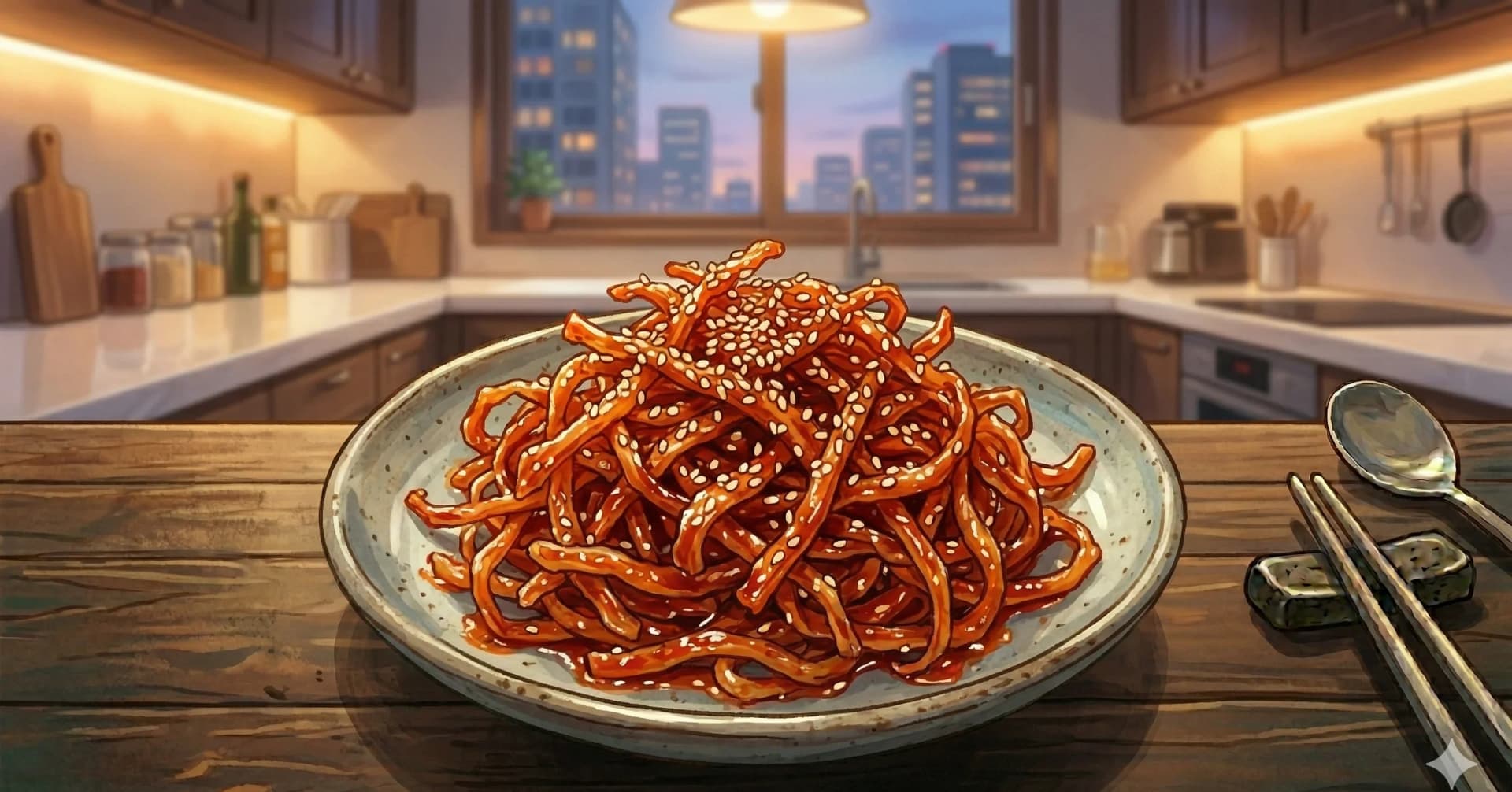
Spicy Dried Squid Salad (Ojingeochae Muchim / 오징어채무침)
Sweet and spicy dried shredded squid tossed in gochujang, garlic, sesame oil, and rice syrup, a no-cook banchan that keeps for weeks
Ojingeochae muchim is the banchan that lives in every Korean refrigerator. It takes ten minutes to make, requires no cooking, and keeps for weeks in an airtight container, which makes it the perfect side dish for people who want Korean food at home but do not want to cook a new banchan every night. Open the container, spoon some onto your plate next to your rice, and dinner has a side dish.
The base is dried shredded squid, which you can find in any Korean or Asian grocery store in clear packages. The squid is already cooked and dried, so all you do is cut it into bite-sized pieces with scissors and toss it with the sauce. The sauce is gochujang for sweet-spicy heat, rice syrup for sticky sweetness, oil for richness, garlic for punch, and sesame oil for nuttiness. You mix it until the sauce is shiny and red, toss the squid in, and put it in the fridge. The squid absorbs the sauce slowly over the next day, and by the second day it is even better than the first.
The texture is what makes it addictive. Dried squid is chewy in a way that is deeply satisfying, almost like jerky but softer and sweeter. The gochujang coating makes each strand sticky and spicy. It is one of the most popular snacks in Korea, eaten with beer or soju, packed into lunchboxes, and served alongside rice at nearly every meal.
At a Glance
Yield
multiple servings
Prep
10 minutes
Cook
0 minutes
Total
10 minutes
Difficulty
Easy
Ingredients
- 1 lbdried shredded squid (ojingeochae), 450g
- 1/2 cupgochujang
- 4garlic cloves, minced
- 1/3 cupolive or vegetable oil
- 1/3 cuprice syrup or corn syrup
- 2 tbsptoasted sesame oil
- —roasted sesame seeds, for garnish
Method
- 1
Cut dried shredded squid into bite-sized pieces with kitchen scissors.
- 2
Make sauce: combine gochujang, garlic, oil, rice syrup, and sesame oil. Mix with a spoon until shiny and red.
- 3
Add squid to the sauce and mix thoroughly until every piece is coated.
- 4
Transfer to an airtight container. Sprinkle sesame seeds on top before serving. Store in refrigerator.
Key Ingredient Benefits
Dried shredded squid (ojingeochae): Squid that has been sliced into thin strips, sun-dried, and packaged. The drying process concentrates the squid's natural umami compounds (free amino acids and nucleotides) and creates the chewy, slightly leathery texture that defines the dish. Dried squid is extremely high in protein (about 65% by weight) and contains significant amounts of taurine, an amino acid associated with cardiovascular and neurological function.
Gochujang: The fermented chili paste that provides heat, sweetness, and the deep umami backbone of the seasoning. Without gochujang, this would be a different dish entirely. The paste's natural stickiness also helps it coat every shred of squid evenly.
Rice syrup or corn syrup: A surprisingly large amount of sweetener is used to balance the chewy, intensely savory squid. The syrup also helps the gochujang sauce cling to the dried squid strips and gives the finished dish a glossy, almost candy-like appearance.
Sesame oil and sesame seeds: Added at the end for nutty fragrance and crunch. The oil also softens the dried squid slightly, making it more pleasant to chew.
Garlic: Raw, minced, added to the sauce. The raw garlic's pungency cuts through the heavy gochujang and provides a sharp, fresh contrast.
Why This Works
Soaking or steaming the dried squid briefly before tossing it in sauce is the technique that separates this dish from being uncomfortably tough. Even 30 seconds of steam or a quick rinse in warm water rehydrates the surface of the squid enough to make it pleasantly chewy rather than leathery. Skip this step and you have a banchan that requires real jaw work to eat.
The gochujang and rice syrup combination is intentionally sweet — much sweeter than most savory Korean dishes. The sweetness is necessary to balance the intense, almost briny umami of dried squid, which can become overwhelming if not tempered with sugar. The same principle applies to other dried-seafood banchan like bugeopo gochujang muchim (dried pollock).
Adding the oil to the gochujang sauce is what creates the glossy, candy-like coating. Oil and water-based sauces would separate; the oil-and-syrup combination produces an emulsion that adheres beautifully to the squid and stays glossy in the fridge.
Letting the seasoned squid rest for 30 minutes to an hour before serving lets the flavors meld and the squid absorb the sauce. Eaten immediately, the dish tastes harsh; rested, the flavors round out and the dish reaches its full character.
Substitutions & Variations
Dried shredded squid (ojingeochae): Available at Korean and Asian grocery stores, often in the dried seafood aisle. There is no real substitute — the dish depends on the specific chewy, dried-out texture and concentrated umami of dried squid. Pre-shredded versions are easiest; whole dried squid can be cut into strips by hand but is laborious.
Gochujang: No genuine substitute exists. A blend of miso paste and sriracha gets you in the neighborhood but the flavor is meaningfully different.
Rice syrup: Corn syrup is the most common substitute and is what many Korean home cooks actually use. Honey works but adds a strong floral note. Brown sugar dissolved in oil can substitute in a pinch.
Olive oil: Korean recipes traditionally use vegetable oil, but olive oil has become popular for its richer flavor and slightly higher viscosity. Either works.
Garlic: Cannot be skipped without significantly changing the character.
Serving Suggestions
Ojingeochae muchim is a quintessential Korean banchan — a small side dish meant to be eaten in modest portions alongside rice and other dishes. It pairs especially well with milder, less-seasoned mains, where its intense sweet-spicy flavor provides contrast. Try it alongside doenjang jjigae (soybean paste stew), galbitang (clear short rib soup), or simple grilled fish.
Serve a small mound on a saucer-sized plate with chopsticks. A pinch goes a long way. This banchan is also a popular anju (drinking food) in Korea, served alongside chilled soju or makgeolli at home or in pojangmacha (street tents). The salty-sweet-spicy combination is famously compatible with cold alcohol.
For a lunch box (dosirak), ojingeochae muchim is one of the best choices — it travels well, holds up at room temperature, and adds vivid color and flavor to an otherwise simple rice-and-vegetables meal.
Storage & Reheating
Refrigerator: Stores beautifully in an airtight container for 2 to 3 weeks. This is one of the longest-keeping Korean banchan, which is part of why it appears in so many Korean refrigerators as a "always-on" side dish.
Serving temperature: Always served cold or at room temperature. Never heated.
Texture over time: The dish actually improves over the first 2 to 3 days as the sauce penetrates the squid more deeply. After about a week, the squid can become slightly drier as it continues to absorb sauce; a quick toss with a teaspoon of additional sesame oil revives it.
Make-ahead: This is a make-ahead dish by design. Korean families often make a large batch and portion it out over weeks.
Freezing: Not recommended. The dried squid texture suffers and the sauce can crystallize.
Cultural Notes
Muchim (무침) means "seasoned" or "dressed" — any Korean banchan made by tossing a main ingredient with a flavorful sauce or dressing. It is one of the most common banchan techniques in Korean cooking, applied to vegetables (oi muchim, cucumber), greens (sigeumchi namul, spinach), seafood (ojingeochae muchim, dried squid), and many other ingredients.
Dried seafood banchan are a distinctive feature of Korean home cooking, reflecting Korea's long coastline and the historical importance of preserving seafood for inland transport. Before refrigeration, drying was one of the few ways to make ocean fish and shellfish available year-round to people living in the mountains and the interior. Dried pollock (bugeopo gochujang muchim), dried anchovies, and dried squid all became central to Korean banchan culture for the same reason.
The combination of dried seafood with sweet-spicy gochujang dressing is a relatively modern Korean development, dating to the post-Korean War era when commercial gochujang and refined sweeteners became widely available. Earlier Korean dried-seafood banchan used soy sauce, sesame oil, and minimal sweetener. The modern sticky-sweet style became standardized in the 1970s and 80s and is now the version most Koreans know.
Nutrition Facts
Calories: 484kcal (24%)|Total Carbohydrates: 27.6g (10%)|Protein: 40.6g (81%)|Total Fat: 22.5g (29%)|Saturated Fat: 2.7g (14%)|Cholesterol: 586mg (195%)|Sodium: 663mg (29%)|Dietary Fiber: 0.9g (3%)|Total Sugars: 7.8g
You Might Also Like

Ratings & Comments
Ratings & Comments
Ratings
Share your thoughts on this recipe.
Sign in to rate and comment