Malaysian Food Is Three Cuisines in One
Ask what Malaysian food is and the honest answer is that it is three cuisines that have been living in the same kitchen for two hundred years and have stopped being able to tell where one ends.
Malay, Chinese and Indian, plus the Peranakan cooking that came out of the overlap, plus indigenous Bornean traditions and a Portuguese Eurasian thread in Melaka. A single hawker centre will have all of it, and no dish on any of those stalls is quite what it would be in its country of origin.
The Malay base
The foundational layer. Coconut, chilli, lemongrass, galangal, turmeric and belacan, the fermented shrimp paste that is the cuisine's backbone and its most divisive ingredient.
The organising technique is the rempah, a wet spice paste of aromatics pounded together and then fried in oil until the oil separates and the paste darkens. This is the same principle as an Indian masala base or a Thai curry paste, and it is where a Malay dish gets most of its depth.
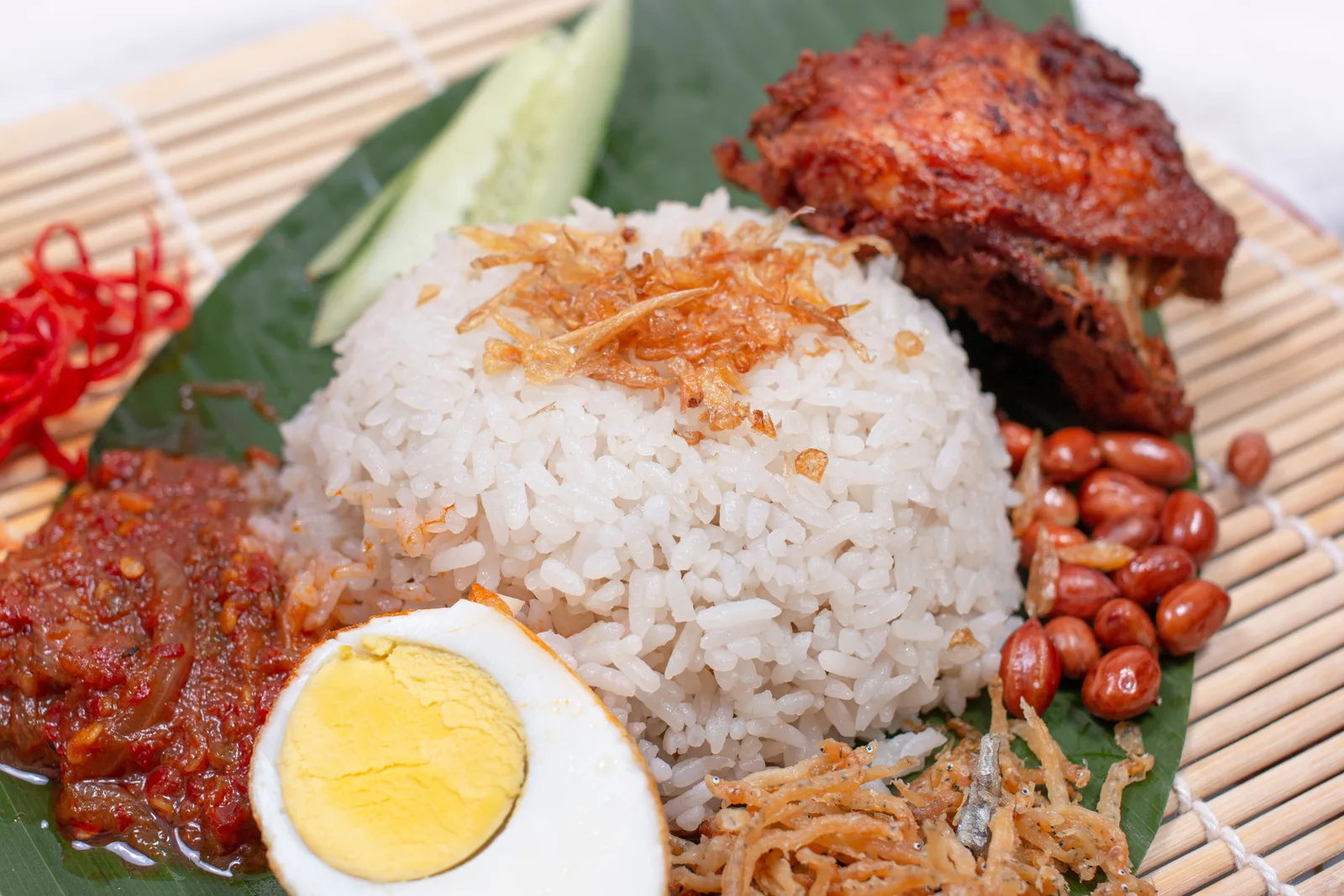
Nasi lemak is the national dish and the clearest example: rice cooked in coconut milk with pandan, served with sambal, fried anchovies, peanuts, cucumber and egg. It is breakfast, and it is eaten off a banana leaf parcel.
Beef rendang is the other one everyone knows, though its origin is Minangkabau from Sumatra rather than peninsular Malaysia. Slow cooked until the coconut milk breaks and the meat fries in its own oil, which is a preservation technique before it is a flavour one.
The Chinese layer
Southern Chinese, overwhelmingly Hokkien, Cantonese, Hakka and Teochew, arriving in large numbers in the nineteenth century for tin and rubber.
What happened next is the interesting part. Chinese cooking in Malaysia did not stay Chinese. It picked up chilli, belacan, tamarind and coconut, and produced dishes that exist nowhere in China.
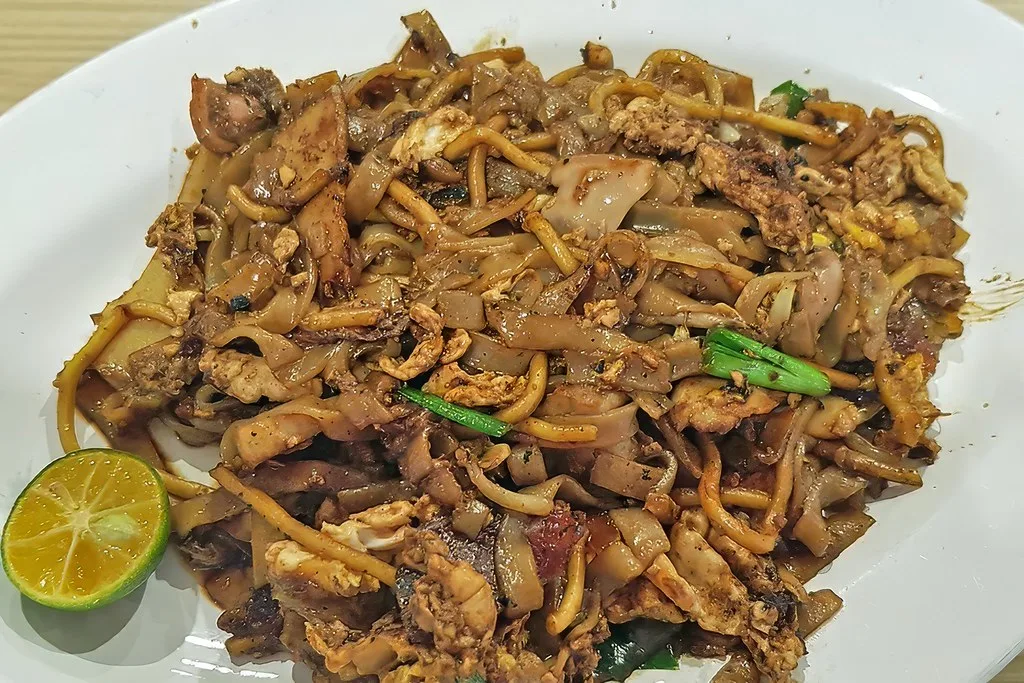
Char kway teow is flat rice noodles stir fried hard with prawns, cockles, egg and Chinese sausage, and its soul is wok hei, the seared smoky note that comes off a properly hot wok. The technique is Chinese; the chilli paste is not.
Hokkien mee means different things in different cities, which is itself a useful lesson about Malaysian food. Bak kut teh, pork ribs in a herbal broth, is Hokkien cooking that became a Klang institution.
The Indian layer
Mostly Tamil, also from the colonial labour migration, and it produced the mamak stall, which is Indian Muslim food and is open at three in the morning.
Roti canai is the emblem: dough stretched thin, folded, and cooked on a flat griddle until layered and crisp, served with dal or curry. Its relative roti jala, the lacy net pancake, is eaten with curry too.
Mamak food is its own hybrid rather than transplanted Indian food. Mee goreng mamak is Chinese noodles with Indian spicing and Malay chilli. Teh tarik, pulled tea, is the drink that goes with all of it.
Peranakan, where the layers fused
The Straits Chinese communities of Penang, Melaka and Singapore, descended from Chinese men who married local Malay women, produced a genuinely distinct cuisine rather than a blend.
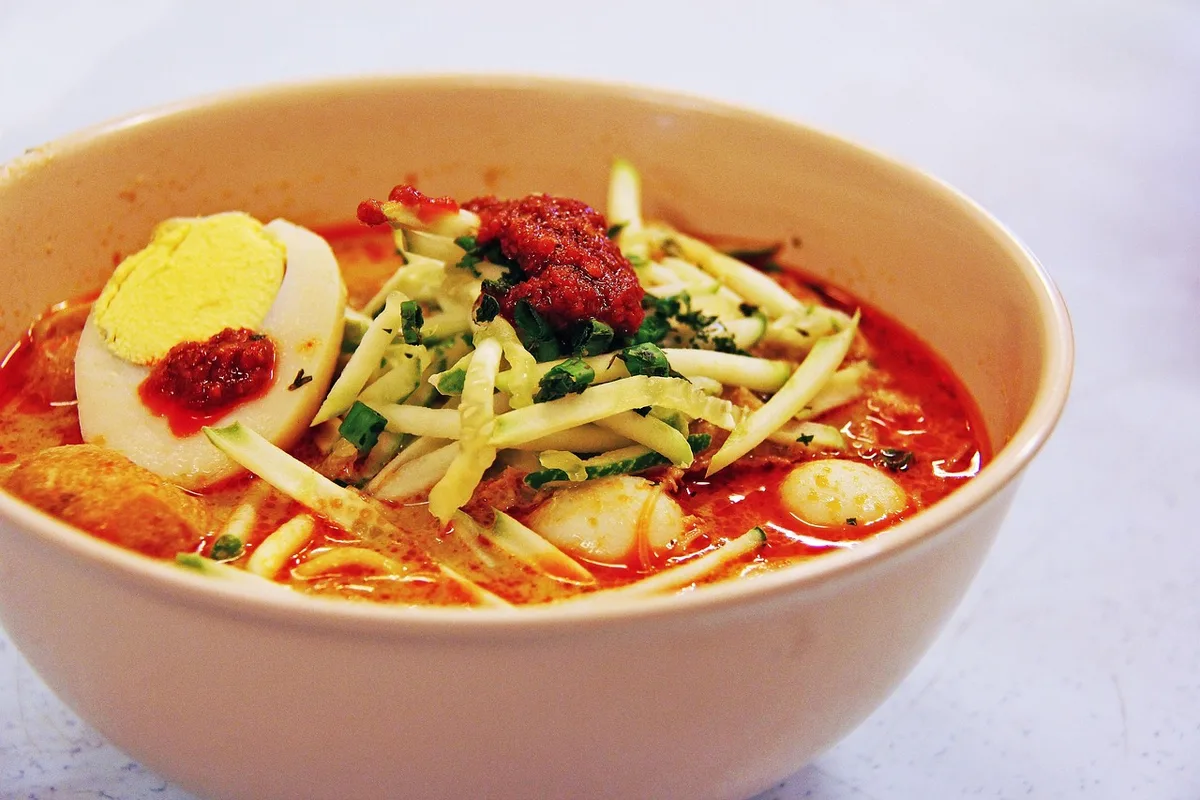
Nyonya cooking uses Chinese ingredients and techniques with Malay rempah, tamarind and coconut. Laksa is the most famous result, and it splits into two families that are barely related: the coconut-rich curry laksa, and Penang's asam laksa, which is sour, fish-based and has no coconut in it at all.
Nasi kerabu, the blue rice dish of Kelantan, sits on the Malay side but shows the same instinct for combining a dozen elements on one plate.
What makes it recognisably Malaysian
Four things run through all of it.
Belacan, somewhere, in almost everything savoury. Sambal, which is a category rather than a recipe and which appears on the side of nearly every plate.
Sourness from tamarind, asam gelugor or lime, used more heavily than in most Chinese cooking and differently from Thai cooking.
Coconut in three forms, milk, cream and grated, doing structural work rather than just adding richness.
And a general comfort with combining registers that would stay separate elsewhere. A single plate routinely carries Chinese noodles, Indian spice and a Malay chilli paste, and nobody finds that remarkable.
Frequently asked questions
Is Malaysian food the same as Singaporean food?
Very largely the same tradition, with the same three communities and many of the same dishes, and a long running argument about who does each one better. Regional variation within Malaysia is often wider than the difference between the two countries.
What is the difference between Malaysian and Indonesian food?
Considerable overlap, particularly with Sumatra, and rendang and satay belong to both. Indonesian cooking is more sweet-leaning, with kecap manis and palm sugar used heavily, and has a far wider range because of the number of islands involved.
Is Malaysian food very spicy?
Moderately. Sambal is usually served alongside so the eater controls the heat, which means most dishes arrive at a level almost anyone can eat.
What should I try first?
Nasi lemak for the Malay base, char kway teow for the Chinese layer, and roti canai for the Indian one. Those three cover the structure of the cuisine.
What to cook
Nasi lemak is the whole country on one plate and the sambal is where the work is. Laksa shows the Peranakan fusion at its most developed. Roti canai is a weekend project and the stretching is genuinely fun. And satay is the easiest entry point of the four. For the pantry that supports this kind of cooking, the Thai shelf overlaps heavily.
Comments
Share your thoughts on this post.
Sign in to comment0 Comments