The Four Flavours of Thai Cooking, in Balance
A Thai cook tasting a dish does not ask whether it needs salt. They ask which of four things it is short of, and the answer is usually not the one a Western cook would reach for.
Salty, sour, sweet, spicy. Every Thai dish is a position on those four axes, and the cooking is a continuous act of adjustment until the position is right. This is why Thai recipes are so often wrong when written down. The quantities are a starting point, not an instruction.
The four, and what supplies each
Salty comes from fish sauce almost always, sometimes from shrimp paste or light soy in a vegetarian dish. It is the base, and it goes in first and largest.
Sour comes from lime for brightness, tamarind for depth, and sometimes from green mango or pickled things. Lime is added at the end because heat destroys it. Tamarind can be cooked.
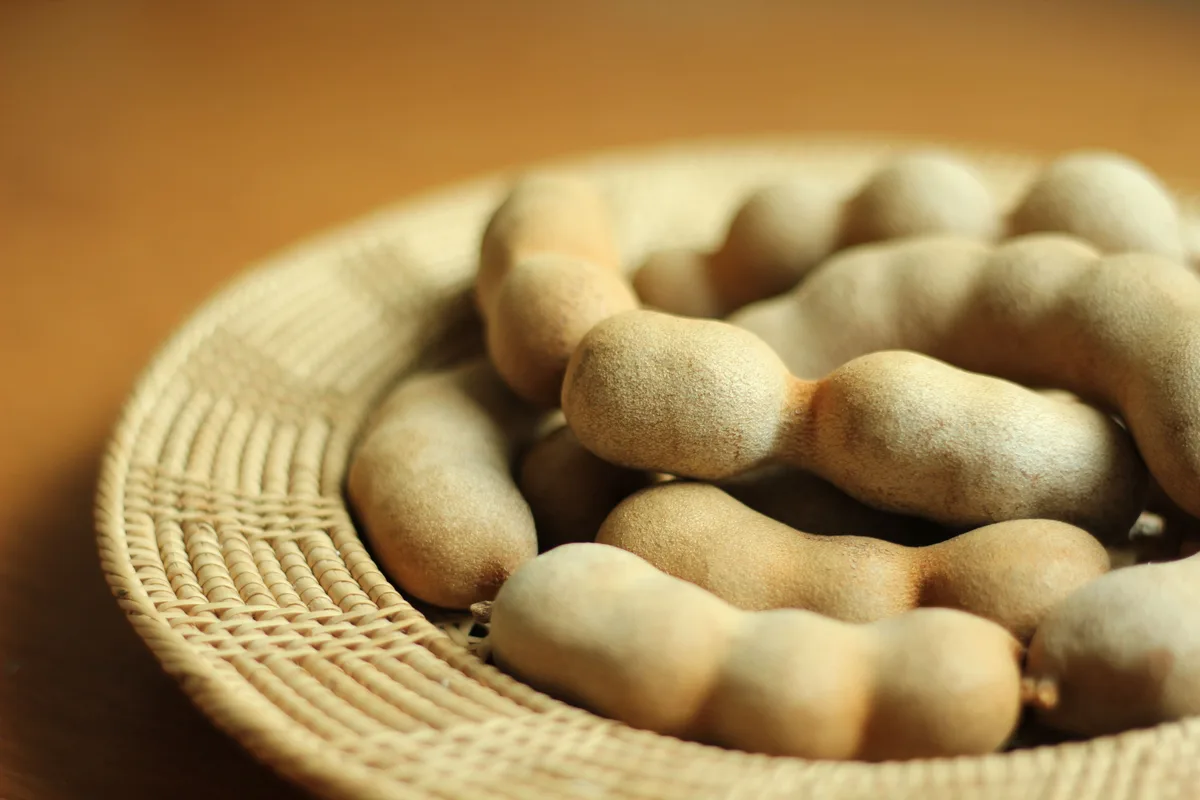
Sweet comes from palm sugar, and it is not there to make the dish sweet. Sugar rounds the salt and makes sourness readable instead of harsh, the way a pinch of sugar in a tomato sauce works. Take it out and the same dish tastes thin and aggressive.
Spicy comes from fresh chillies, dried chillies, or the paste, and it is the axis Westerners fixate on and Thai cooks treat as the most adjustable of the four.
Bitter is the fifth one nobody mentions
There is a bitter element in Thai food that rarely gets listed with the others, and it is doing real work.
It arrives through bitter greens, green papaya, the charred edges of grilled food, and in some dishes through bitter melon. It keeps the sweet and the rich from becoming cloying, and it is much more present in northern and northeastern cooking than in the Bangkok food that travelled.
A dish that tastes correct but somehow exhausting after five bites is usually missing this.
The balance moves by dish, not by cook
The four are not held at equal strength. Each dish has a characteristic weighting, and knowing it is most of the skill.
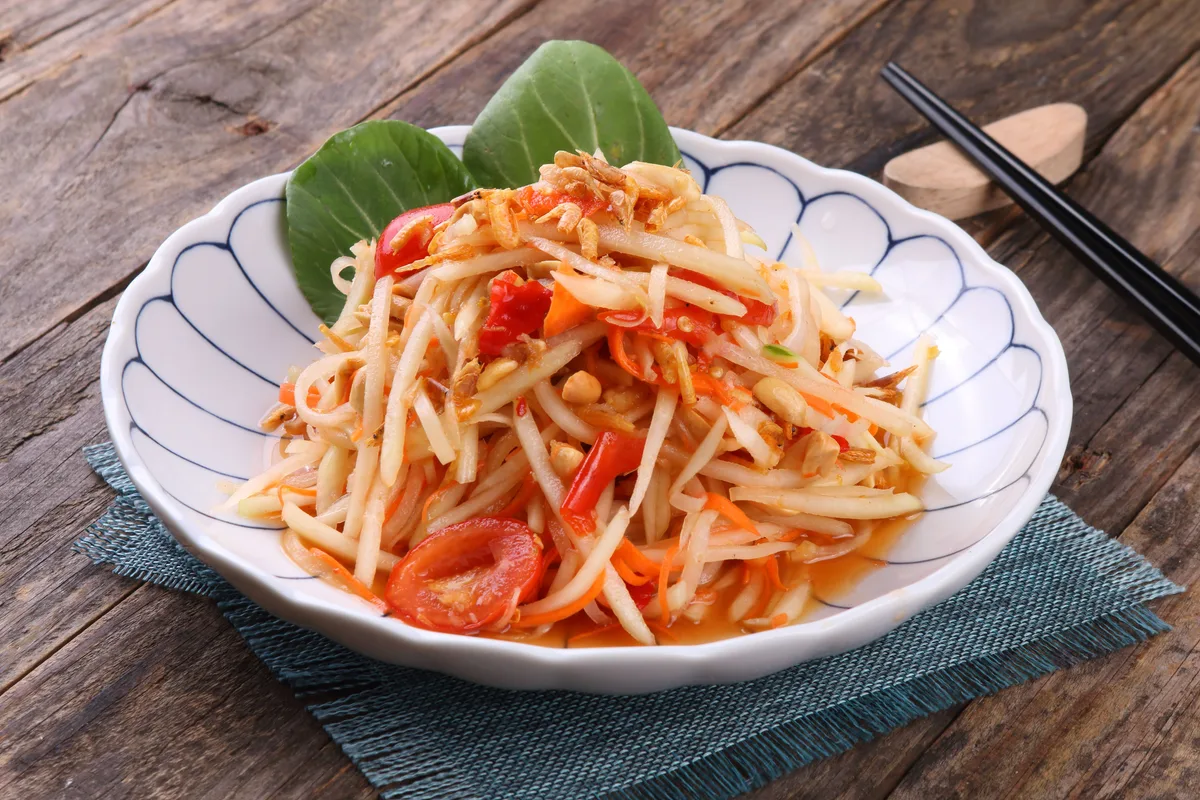
Som tam is sour first, then salty, then hot, with sweetness only there to make the other three readable. Get it wrong towards sweet and you have a fruit salad.
Massaman curry is sweet and rich first, mildly sour underneath, with heat almost absent. It is the gentlest curry in the repertoire and the one that reveals its Persian and Indian ancestry.
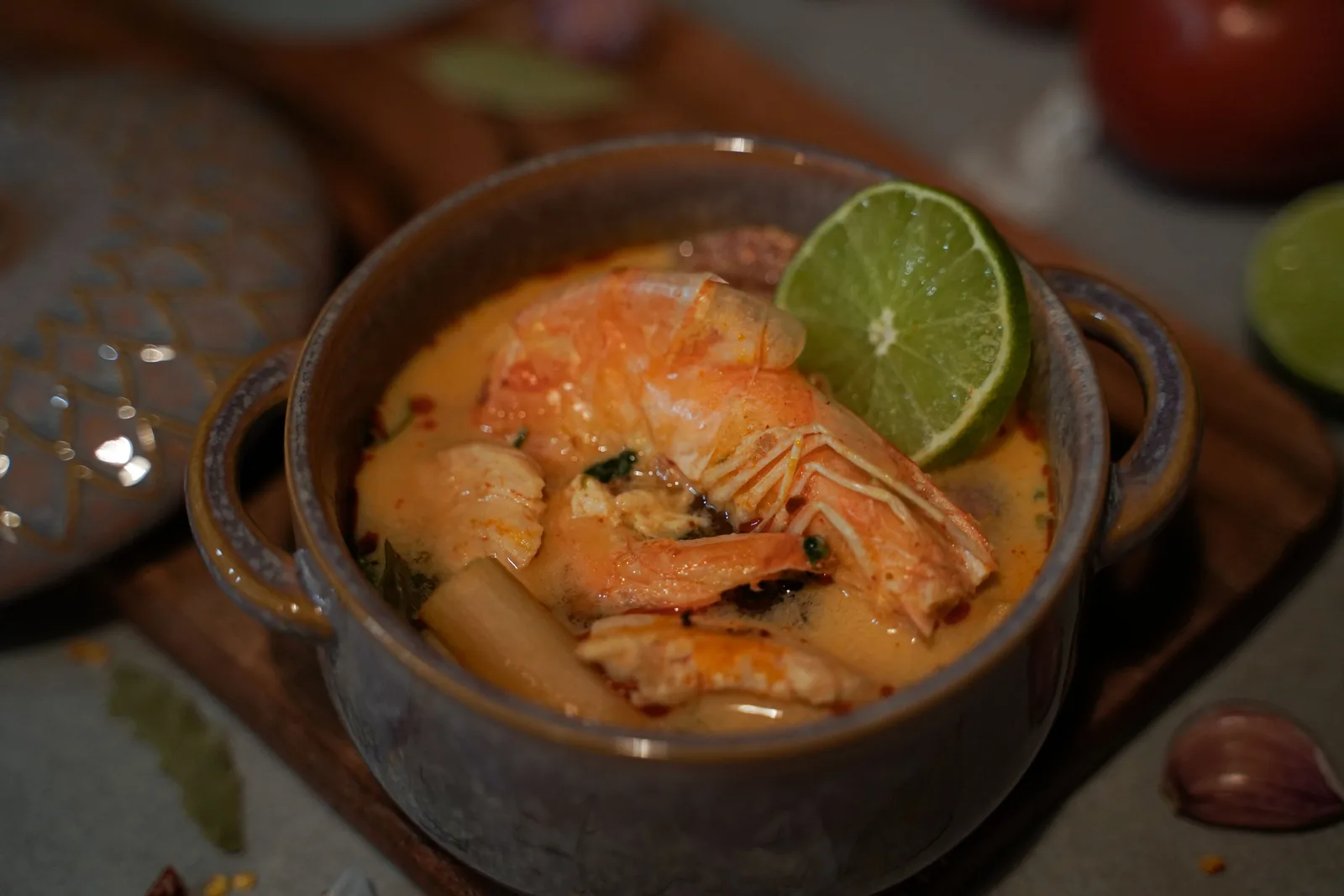
Tom yum is sour and hot with the salt pushed high and almost no sweetness. It is the most aggressive of the famous dishes and it should make you sit up.
Pad thai is sweet and sour in near balance with salt behind them, which is why it is the gateway dish for people who have not eaten Thai food before, and why the version served abroad drifts sweeter every year.
Gaeng som, the southern sour curry, is sour and hot at levels that startle first time eaters, with no coconut milk anywhere to soften it.
The four regions weight them differently
Central Thailand, around Bangkok, is the most balanced and the sweetest, and it is the version that travelled abroad.
The south is the hottest and the most sour, with more turmeric, more shrimp paste and heavy use of coconut.
The northeast, Isan, is salty and sour with fermented fish and sticky rice, and it is where larb and som tam come from. The chilli level here is not a joke.
The north is the mildest, with more herbs, less coconut and clear Burmese influence, which is what khao soi is a product of.
How to actually do it at the stove
Season in layers rather than all at once, and taste after each.
Start with the salty. Get the dish to the point where it tastes savoury but a little flat. Then add sour, which will suddenly make the salt legible. Then a small amount of sweet, which will round both. Adjust heat last, because it is the easiest to add and impossible to remove.
If a finished dish is wrong and you cannot say why, run through the four in order and ask which is missing. In practice the answer is sour or sweet far more often than it is salt, because Western cooks under-use lime and are nervous about sugar in savoury food.
Frequently asked questions
Why does my Thai food taste flat even though I followed the recipe?
Almost always too little fish sauce and too little lime. Both go in at roughly double what an unfamiliar cook expects. Written quantities are conservative because recipe writers know that too much is unrecoverable.
Should Thai food be very spicy?
Only some of it. Massaman, khao soi and most coconut curries are mild. Som tam, gaeng som and Isan food are hot. Heat is a dish property, not a cuisine property.
Can I balance a dish after it is finished?
Sour and salty, yes, and both can be added off the heat. Sweet, mostly. Heat, yes. What you cannot undo is over-sweetening, which is why palm sugar goes in slowly.
What about umami?
It is there, but it arrives inside the salty axis rather than as its own category. Fish sauce and shrimp paste carry it, which is part of why fish sauce cannot simply be swapped for salt.
What to cook
Make tom yum and massaman curry in the same week. They use an overlapping pantry and sit at opposite corners of the four, and cooking both teaches the range faster than any single dish. Then som tam, pounded to order, where you adjust the dressing in front of yourself and taste the balance move. And for the ingredients that supply each axis, we listed the Thai pantry.
Comments
Share your thoughts on this post.
Sign in to comment0 Comments