The Herb Plate That Comes With Everything in Vietnam
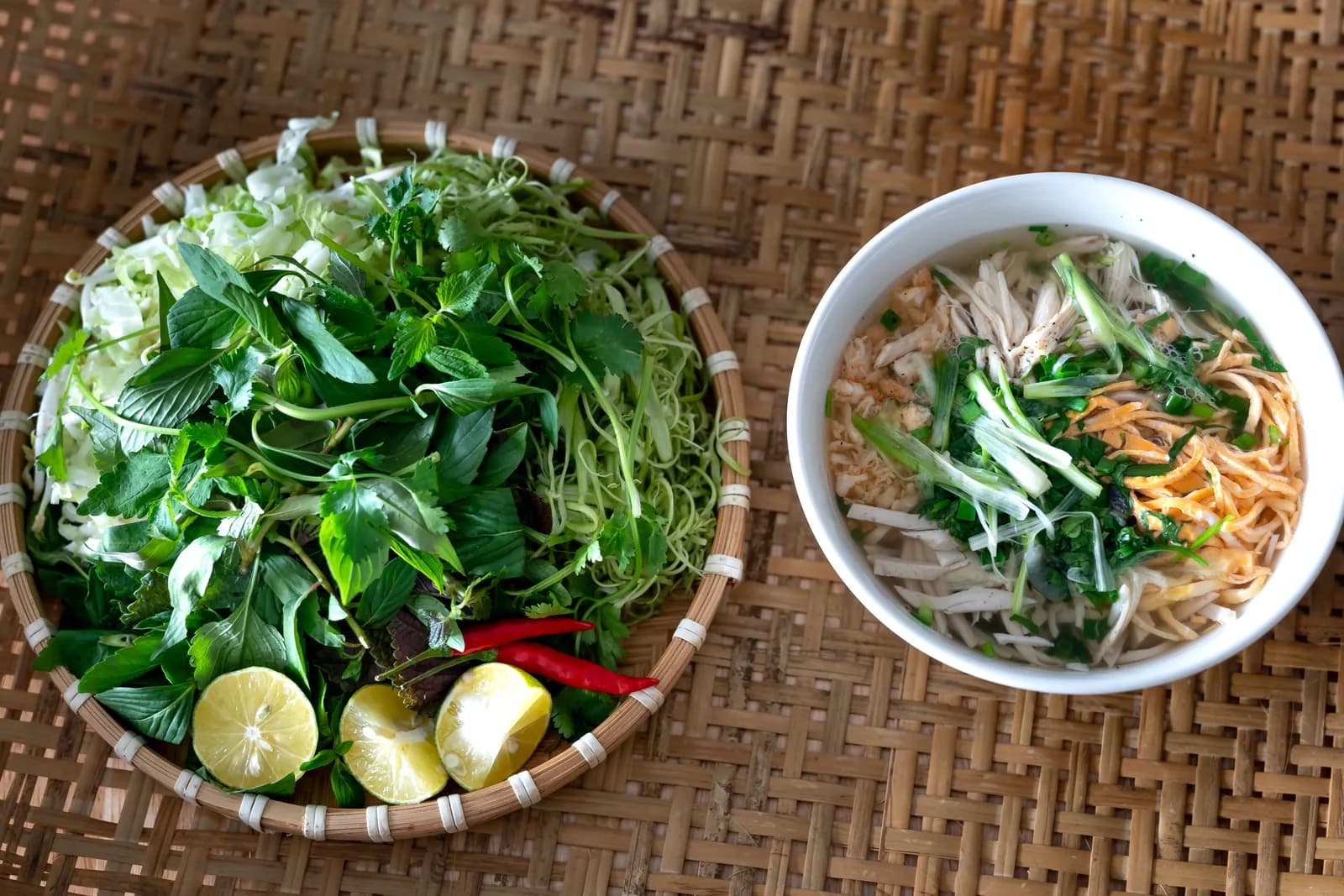
Order almost anything in Vietnam and a second plate arrives that you did not order. It is piled with whole herbs, still on their stems, plus lettuce leaves, bean sprouts, sliced chilli and a wedge of lime. Nobody explains it. It is not a garnish and it is not a salad, and leaving it untouched means eating the dish wrong.
The plate is called rau song, raw greens, or rau thom, fragrant greens. It is an ingredient the diner is expected to cook with at the table.
What the plate is for
Vietnamese dishes are deliberately built incomplete. The bowl that arrives from the kitchen is the fixed part: broth, noodles, protein, the elements that need heat and time. The herbs are the variable part, and they are handed over so the eater decides the final balance.
This is why two people at the same table eating the same dish can produce meaningfully different bowls. One tears in a fistful of basil, one adds only a little mint and a lot of lime, and both are correct.
It also solves a practical problem. Delicate herbs collapse in hot liquid within seconds. Put them in the kitchen and they are grey and dead by the time the bowl crosses the room. Put them on a side plate and they go in at the last possible moment, which is the only way they keep their volatile oils.
The herbs you will actually meet
Vietnamese cooking uses far more distinct herbs than any other Southeast Asian cuisine, and a handful come up constantly.
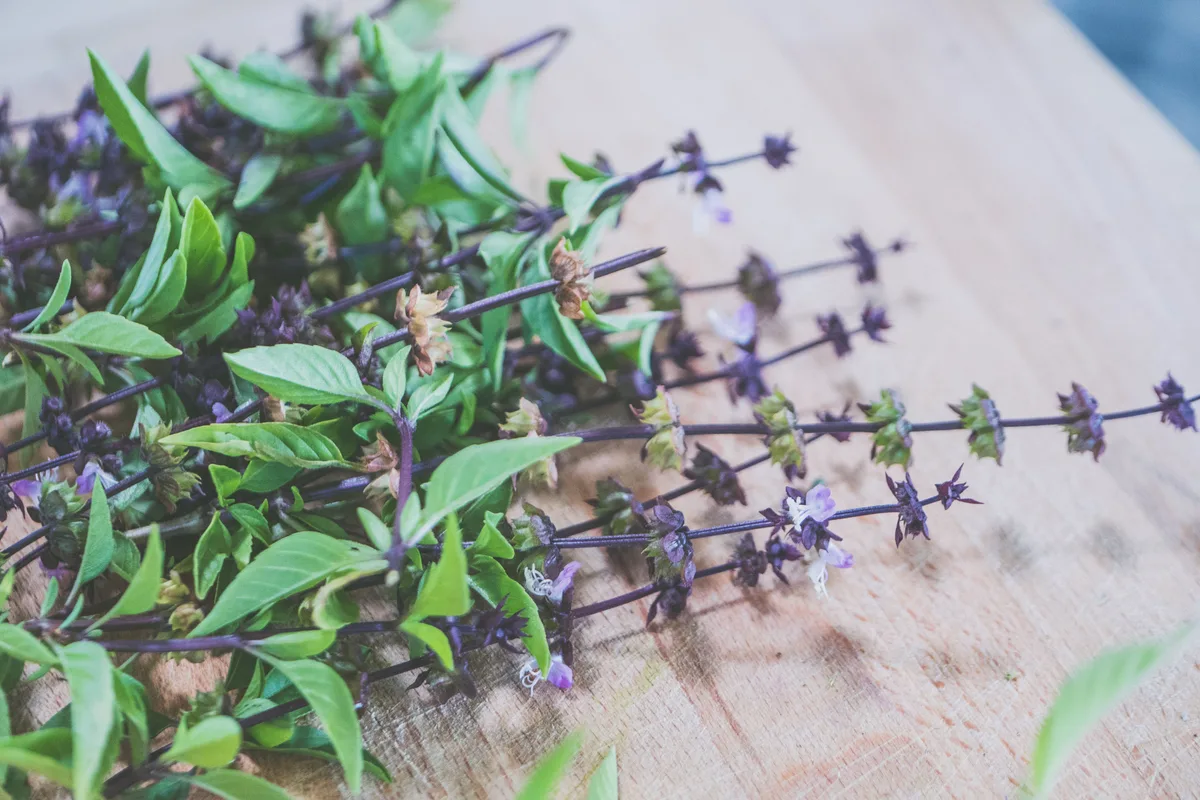
Thai basil, called rau que, with purple stems and a clear aniseed note. It is the one that comes with pho and it is added at the end, torn, so the heat releases it.
Mint, rau hung lui, sharper and more cooling than the herbs around it. It goes into fresh rolls and onto grilled meat plates.
Coriander, rau mui, which is coriander leaf and is the herb most people already know.
Sawtooth herb, ngo gai, a long serrated leaf with a much more intense coriander flavour. It is the one that gives bun bo Hue its distinct aroma and it survives heat better than soft coriander does.
Vietnamese coriander, rau ram, which despite the name is not coriander at all. Peppery, slightly soapy, with a lemon edge, and it is the herb that surprises people. It goes with duck, with fermented dishes, and into salads.
Perilla, tia to, purple on the underside, with a flavour somewhere between mint and cumin. Fish dishes and noodle bowls.
Fish mint, diep ca, which is genuinely divisive. It has a strong fishy metallic flavour that Vietnamese eaters either love or avoid entirely, and there is no middle position on it.
How to actually use it
Tear rather than chop. Chopping bruises the leaf and releases oils onto the board instead of into the food. Stems come off, leaves go in whole or roughly torn.
Add in stages rather than all at once. Put in a small handful, eat a few mouthfuls, add more. Herbs added at the start of a bowl of hot soup will be spent by halfway through.
Use the lime and chilli as adjustment, not decoration. A bowl that tastes flat needs lime. A bowl that tastes heavy needs more herb, not more sauce.
Put the sprouts in early if you want them soft and late if you want them crunchy. In pho, most Vietnamese eaters add them early and let the broth wilt them slightly.
The dishes that depend on it
Goi cuon, fresh spring rolls, have the herbs rolled inside rather than served alongside, and the proportion is far higher than most Western versions use. A proper one is mostly herb and lettuce with a little pork and prawn for weight.
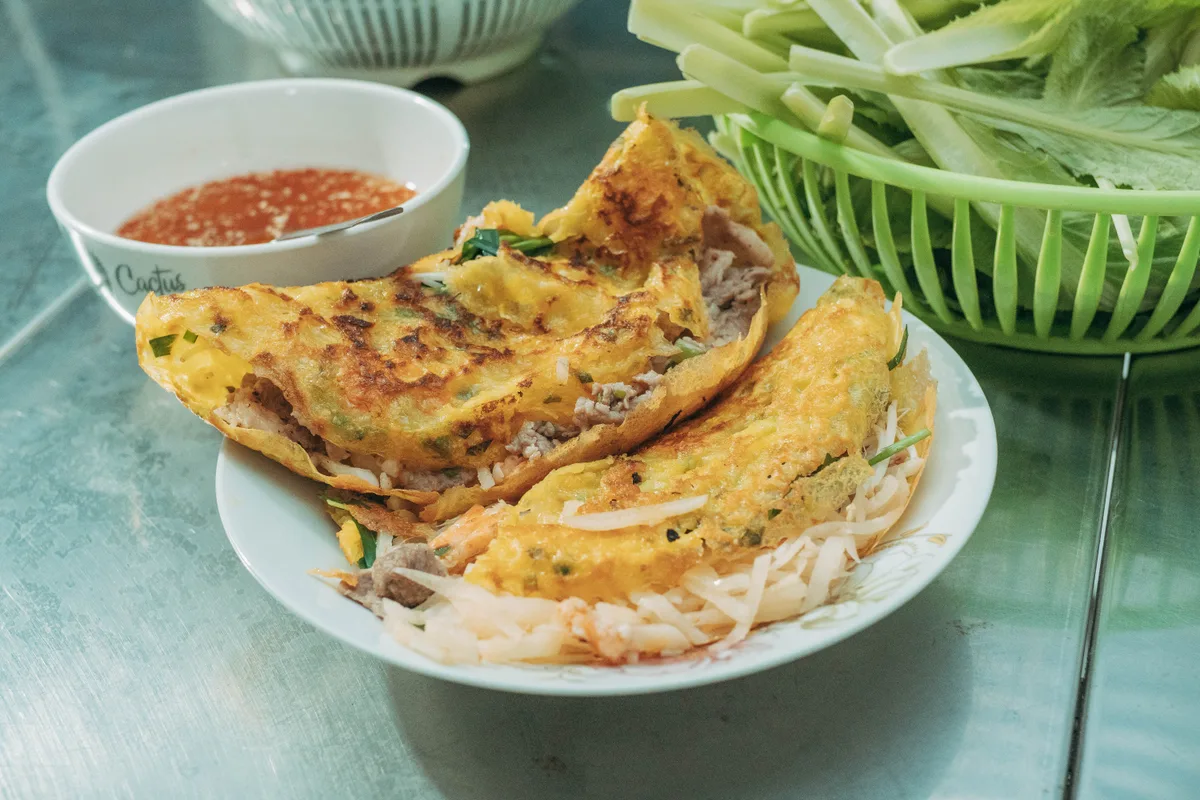
Banh xeo, the turmeric crepe, is not eaten with a knife and fork. You tear off a piece, wrap it in a lettuce leaf with a pile of herbs, and dip the parcel in nuoc mam cham. The herb is structural, and eating the crepe alone is missing the dish entirely.
Bun cha, grilled pork with noodles, arrives as four separate components, and assembly at the table is the whole format.
Frequently asked questions
What can I substitute if I cannot find Vietnamese herbs?
Thai basil, mint and coriander are widely available and cover most of the ground. Sawtooth herb can be approximated with extra coriander. Rau ram has no real substitute, and a dish that needs it will taste incomplete without it.
Should I put all the herbs in at once?
No. Add in small amounts as you eat. This is the entire reason they are served separately rather than in the bowl.
Is it safe to eat raw herbs in Vietnam?
The same care applies as with any raw produce when travelling. Busy places with high turnover are the safer bet, which is true of street food generally.
How do I keep herbs fresh at home?
Stand them in a glass of water like cut flowers, cover loosely with a bag, and refrigerate. Most will keep for a week. Do not wash them until you use them.
What to cook
Goi cuon is the fastest way to understand how much herb a Vietnamese dish actually wants, because you build each roll yourself and can see the ratio. Banh xeo is the best argument for the wrapping habit. And pho ga with a proper plate on the side shows what the herbs do to a broth you have already spent hours on.
Comments
Share your thoughts on this post.
Sign in to comment0 Comments