Vietnamese Cuisine
Canh Khổ Qua (Vietnamese Stuffed Bitter Melon Soup)
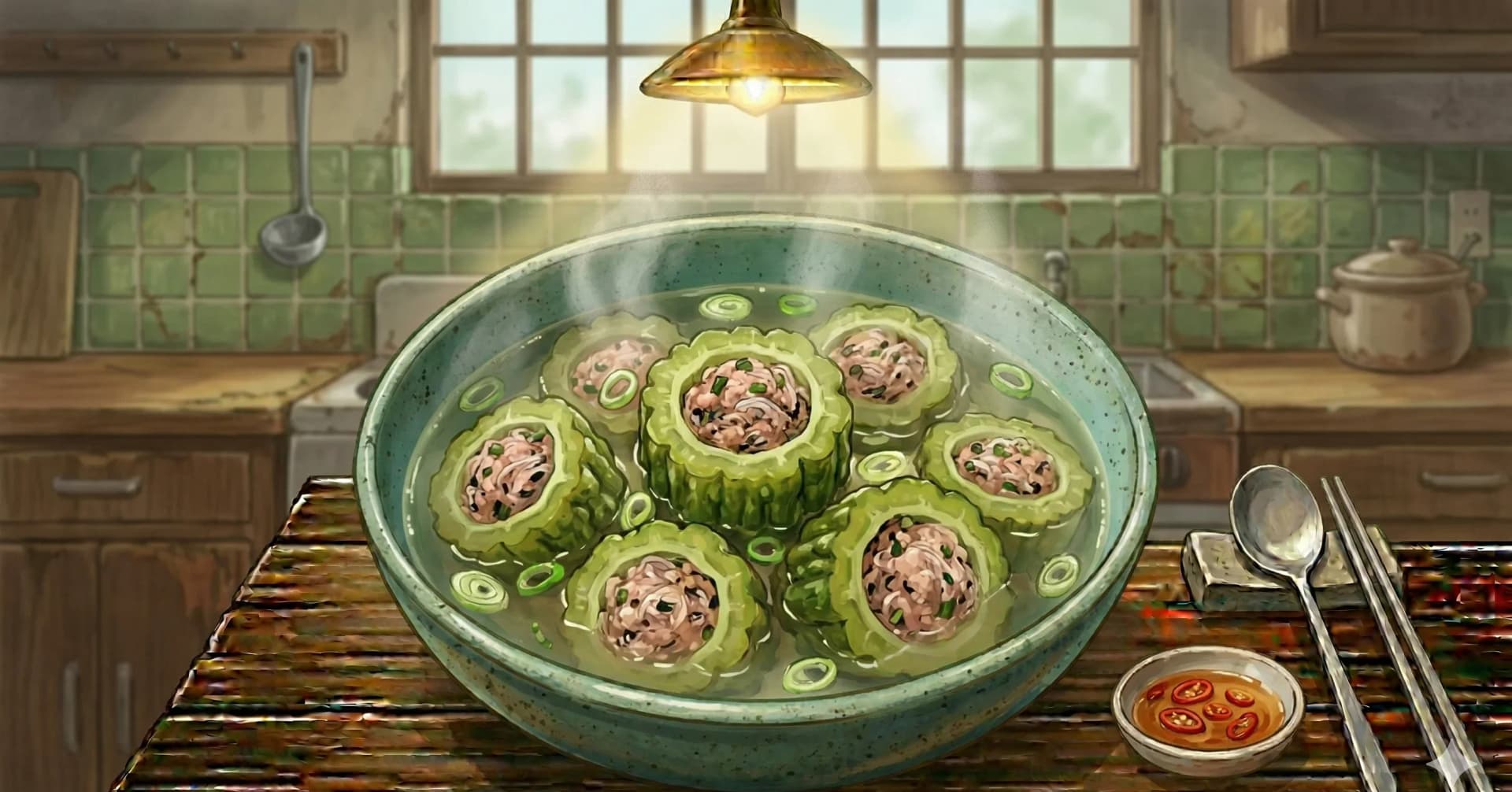
Rings of jade-green bitter melon stuffed with a pork and glass noodle filling, simmered in a clean pork broth until tender and faintly sweet
If there is one dish that Vietnamese families argue about gently at the dinner table, it is canh khổ qua. Children push their bowls away. Grandparents insist that the bitterness is the whole point. Parents find themselves somewhere in between, grateful for the filling and the broth even as the distinctive taste of the melon makes them pause. This is a dish that people grow into, and the moment you begin to crave it rather than tolerate it is a small, quiet milestone in any Vietnamese household.
The name tells the story directly: canh means soup, and khổ qua translates literally to "bitter melon" but also carries a poetic double meaning of "bitterness passing through." This wordplay is why canh khổ qua appears on nearly every Tet (Lunar New Year) table in southern Vietnam. Eating it symbolizes letting the hardships of the old year pass and welcoming something better ahead. It is one of the few dishes where the bitterness is not a flaw to be corrected but the entire reason the dish exists.
The technique is straightforward and almost meditative. You hollow out sections of bitter melon, stuff them with a seasoned pork and glass noodle filling, then simmer everything in a light broth until the melon softens and its bitterness mellows into something more complex. The filling absorbs the broth and swells slightly, holding together in neat rounds. The broth itself takes on a pale green tint and a gentle bitterness that grows on you with every spoonful. It belongs to the same family of Vietnamese soups served alongside rice as part of a shared meal, sitting naturally beside canh chua (sour tamarind soup) or canh gà gừng (chicken ginger soup). If you enjoy the interplay of bitter and savory flavors in gaeng som or the clean vegetable broths of gaeng liang, this soup will feel familiar in spirit, even as the flavor is entirely its own.
At a Glance
Yield
4 to 6 servings
Prep
30 minutes
Cook
25 minutes
Total
55 minutes
Difficulty
Medium
Ingredients
Filling Ingredients
- ¾ lbground pork (not lean; 15 to 20 percent fat works best)
- 1 ozdried glass noodles (mung bean vermicelli)
- ¼ ozdried wood ear mushrooms (about 3–4 pieces)
- 1medium shallot, finely minced
- 2 clovesgarlic, finely minced
- 1 tbspfish sauce
- 1/2 tspgranulated sugar
- 1/2 tspfine sea salt
- 1/2 tspfreshly ground black pepper
- 1egg yolk (optional, for binding)
Bitter Melon Ingredients
- 3to 4 medium bitter melons (about 600 g total), firm and pale green
- 1 tspfine sea salt (for rubbing)
Broth Ingredients
- 1½ qtwater or light pork stock
- 1 tbspfish sauce, plus more to taste
- 1/2 tspgranulated sugar
- 1/2 tspfine sea salt, plus more to taste
To Serve
- 2scallions, thinly sliced
- —Freshly ground black pepper
- —Fried shallots (optional)
- 1to 2 fresh red chilies, thinly sliced (optional)
- —Fish sauce with sliced chilies (optional)
Method
- 1
Soak the dried ingredients. Place the glass noodles and wood ear mushrooms in separate bowls of room-temperature water. Let them soak for 15 to 20 minutes until the noodles are pliable and the mushrooms have softened and expanded to roughly three times their dried size. Drain both thoroughly. Cut the glass noodles into short lengths, about 2 to 3 cm, so they distribute evenly through the filling. Trim any hard knobs from the mushrooms and chop them finely.
- 2
Prepare the bitter melon. Trim both ends of each melon, then cut crosswise into rings about 3 to 4 cm thick. Use a teaspoon or small knife to scrape out the seeds and the white pith from the center of each ring. The cavity should be clean and smooth. Rub the inside and outside of the rings with the salt, working it into the flesh, and let them sit for 10 minutes. Rinse under cold water and squeeze gently to remove excess moisture. This step tempers some of the raw bitterness while leaving enough to give the soup its character.
- 3
Mix the filling. In a mixing bowl, combine the ground pork, chopped glass noodles, chopped wood ear mushrooms, minced shallot, minced garlic, fish sauce, sugar, salt, black pepper, and egg yolk if using. Mix with your hands or a fork until everything is evenly distributed. The mixture should feel cohesive but not overworked. To check the seasoning, pinch off a small piece, flatten it, and cook it in a dry pan or the microwave for 15 seconds. Taste and adjust the fish sauce or salt as needed before stuffing.
- 4
Stuff the bitter melon. Take each ring and press the filling firmly into the cavity with your fingers or a small spoon, packing it until it is flush with the surface or mounds very slightly above. The filling will shrink slightly as it cooks, so pack it firmly without worrying about overstuffing. Set the stuffed rings on a plate as you work.
- 5
Build the broth. Bring the water or pork stock to a boil in a large stockpot over high heat. Add the fish sauce, sugar, and salt. Stir to dissolve.
- 6
Simmer the soup. Gently lower the stuffed bitter melon rings into the broth. Reduce the heat to maintain a gentle, steady simmer. Do not boil aggressively, or the filling may loosen and fall out of the rings. Cook uncovered for 20 to 25 minutes. The soup is ready when the bitter melon is tender enough to pierce easily with a chopstick and has turned from bright green to a softer, more translucent jade. The filling should be cooked through with no pink remaining. Skim any foam or impurities that rise to the surface during the first few minutes.
- 7
Season and serve. Taste the broth and adjust with more fish sauce for depth or a small pinch of sugar if the bitterness feels too sharp. Ladle the soup into deep bowls, dividing the stuffed rings evenly. Scatter sliced scallions over the top and finish with a crack of black pepper and fried shallots if using. Set sliced chilies and a small dish of fish sauce on the table for individual adjustment. Serve with steamed jasmine rice.
Key Ingredient Benefits
Bitter melon (khổ qua/mướp đắng): A tropical gourd in the Cucurbitaceae family, recognizable by its bumpy, ridged skin and hollow center. The bitterness comes from momordicin and other cucurbitane-type triterpenoids. Bitter melon has been the subject of considerable research for its potential effects on blood sugar. Some studies suggest that compounds in the fruit may improve glucose uptake and insulin sensitivity, though clinical evidence in humans remains mixed. In Vietnamese, Chinese, and Ayurvedic medicine traditions, it is classified as a cooling food used to clear heat, support liver function, and aid digestion. Choose melons that are firm, pale green, and no longer than about 20 cm; darker, larger specimens tend to be more intensely bitter.
Ground pork: The primary protein in the filling. Pork with some fat (15 to 20 percent) produces a filling that stays moist and tender after simmering. Very lean pork dries out and compacts into a dense, chewy mass. The fat also contributes flavor to the broth and helps carry the aromatics from the garlic and shallots.
Glass noodles (miến): Made from mung bean starch, these translucent noodles are virtually flavorless on their own but excel at absorbing surrounding liquids. In the filling, they act as both a binder and a textural element, creating a slightly springy quality that lightens the density of the pork.
Wood ear mushrooms (nấm mèo): A dried fungus prized in Vietnamese and Chinese cooking more for texture than flavor. They rehydrate into thin, wavy sheets with a distinctive crunch. They contribute small amounts of iron and fiber and have been used in traditional Chinese medicine to support circulation.
Fish sauce: The essential seasoning in both the filling and the broth. It provides sodium, glutamic acid, and the complex savory depth that ties the mild pork filling to the assertive melon. Season gradually, tasting as you go. A tablespoon contains roughly 1,400 mg of sodium.
Why This Works
The filling is designed to complement and absorb the bitter melon rather than mask it. Ground pork with a moderate fat content stays moist during the simmer and releases just enough rendered fat into the broth to give it body without heaviness. The glass noodles serve a dual purpose: they absorb broth as they cook, swelling inside the filling and helping it hold together, while also creating small pockets of texture that contrast with the smooth pork. Wood ear mushrooms add a subtle crunch that persists even after simmering, giving each bite of filling a more interesting mouthfeel.
Salting and rinsing the bitter melon before stuffing removes a portion of the momordicin compounds responsible for the most aggressive bitterness, while preserving enough to give the soup its distinctive flavor. Skipping this step results in a soup that can be overwhelmingly bitter, particularly if the melons are dark green and mature. The brief salt cure also firms the melon slightly, making it easier to handle and stuff without cracking.
Simmering rather than boiling is critical for two reasons. A gentle simmer allows the filling to set gradually, bonding to the inner walls of the melon ring as the proteins in the pork coagulate. A rolling boil agitates the rings and can shake the filling loose, leaving you with empty melon shells and a murky broth full of pork crumbles. The low heat also keeps the broth clear and allows the subtle sweetness that emerges from the melon during long, gentle cooking to develop fully.
The egg yolk in the filling is optional but useful. It acts as a binder, helping the raw filling stick together during the transition from bowl to melon ring to pot. Once cooked, the proteins in the yolk set and reinforce the structure. If you prefer a lighter filling or are cooking without eggs, the mixture will still hold together as long as you pack it firmly and lower the rings into the broth carefully.
Substitutions & Variations
Filling protein: Ground chicken or a mixture of pork and shrimp (roughly 250 g pork and 100 g finely chopped raw shrimp) are both common variations. The shrimp version is popular in southern Vietnam and adds a subtle sweetness that pairs well with the bitterness. If using shrimp, chop it finely rather than pureeing, so the pieces are visible in the filling.
Reducing bitterness further: For those new to bitter melon, blanch the hollowed rings in boiling salted water for 2 minutes before stuffing. This removes more bitterness but also softens the melon, so reduce the final simmering time by 5 minutes. Some cooks soak the rings in salted water for 30 minutes instead of the quick rub described in the method.
Without glass noodles: Replace with 25 g of finely diced jicama or water chestnuts for a similar textural contrast. The filling will be slightly less cohesive but still holds together well if packed firmly.
Without wood ear mushrooms: Substitute with 2 to 3 finely chopped dried shiitake mushrooms, soaked until soft. They bring more flavor than wood ear but change the character of the filling toward something earthier.
Vegetarian version: Replace the pork with firm tofu (about 300 g, crumbled and squeezed dry) mixed with the glass noodles, mushrooms, and aromatics. Season the filling with soy sauce instead of fish sauce and use vegetable stock for the broth. The tofu version is lighter and benefits from the addition of a tablespoon of tapioca starch to help the filling bind.
Pork rib broth: For a richer soup, simmer 300 g of pork spare ribs in the water for 20 minutes before adding the stuffed melon. Skim well. The rib broth adds a deeper pork flavor and more body. This approach is common in home-style versions and is the method used by many southern Vietnamese cooks.
Serving Suggestions
Canh khổ qua is served as part of a Vietnamese family-style meal (cơm nhà), where it takes its place alongside rice and several other dishes. A pot of steamed jasmine rice is essential. The broth is spooned over the rice, and the stuffed melon rings are eaten in alternating bites with whatever else is on the table.
For a complete Vietnamese soup-centered meal, pair it with phở bò as a first course followed by the canh khổ qua with rice, or serve alongside cháo gà for a comforting spread of broths and rice. The clean, bitter broth makes a natural contrast to richer dishes like braised pork belly or caramelized clay pot fish.
During Tet, canh khổ qua traditionally appears alongside bánh tét (sticky rice cakes), thịt kho trứng (caramelized pork and eggs), and pickled vegetables. Its symbolic role as the dish that carries bitterness away means it is typically served early in the holiday meal.
For a broader Asian soup table, pair with gaeng som (Thai sour curry soup) and gaeng liang (Thai peppery vegetable soup) to explore how different culinary traditions build light, vegetable-forward broths with strong, distinctive flavors.
Storage & Reheating
Refrigerator: Store the soup with the stuffed melon in an airtight container for up to 3 days. The melon will continue to soften and the broth will absorb more bitterness as it sits, which some people prefer.
Reheating: Warm gently on the stovetop over medium-low heat until the broth is steaming. Handle the stuffed rings carefully when stirring, as they become more fragile after a day in the refrigerator. If the broth has reduced, add a splash of water to restore its consistency.
Freezing: The soup freezes adequately for up to 1 month, though the bitter melon will lose some of its texture and become quite soft when thawed. The filling holds up better. Freeze in portions and thaw overnight in the refrigerator before reheating on the stovetop.
Leftover filling: If you have extra filling, shape it into small meatballs and simmer them in the broth alongside the stuffed rings, or pan-fry them and serve with rice and a dipping sauce of fish sauce, lime juice, sugar, and sliced chilies.
Cultural Notes
Canh khổ qua, Vietnamese stuffed bitter melon soup, carries one of the most direct symbolic meanings in the entire Vietnamese culinary canon. The name itself does the work. Khổ qua translates literally as "bitterness passes" or "suffering passes" (khổ means bitter or suffering, qua means to pass or cross over), and the dish is an essential food of Vietnamese Lunar New Year (Tết). You eat it as a wish: that the difficulties of the year just ended will pass, that the new year will arrive cleaner. The wordplay between the literal taste of bitter melon and the metaphor of leaving suffering behind is one of the more intentional culinary traditions in Vietnam.
The dish appears most often at Tết family gatherings, especially on the third or fourth day of the holiday. By that point, the heavier traditional foods like thịt kho tàu have started to feel oppressive, and a lighter, palate-cleansing soup becomes welcome. The classic preparation, bitter melon stuffed with pork and glass noodle and simmered until tender, gives you substantial nutrition while the clean herbal bitterness of the melon resets the palate. The dish also carries medicinal associations in Vietnamese folk tradition. Bitter melon is believed to support liver function, blood sugar regulation, and overall digestive health, which fits comfortably with the symbolic meaning.
Outside Tết, canh khổ qua appears throughout the year in southern Vietnamese home cooking as a moderately frequent dinner soup. It is less common in northern Vietnam, where bitter melon is used less broadly and the symbolic Tết associations are weaker. Inside Vietnamese-American restaurants, the dish shows up mostly during Tết season, late January through mid-February, at places serving primarily Vietnamese clientele. Most non-Vietnamese diners find bitter melon too challenging for casual ordering.
Canh khổ qua belongs to the small set of Vietnamese dishes that requires acquired-taste appreciation. First-time eaters often dislike it. The bitter notes usually grow on people over repeated exposures, the same way coffee or pickled herring does.
Nutrition Facts
Calories: 235kcal (12%)|Total Carbohydrates: 8g (3%)|Protein: 11g (22%)|Total Fat: 15g (19%)|Saturated Fat: 5g (25%)|Cholesterol: 91mg (30%)|Sodium: 470mg (20%)|Dietary Fiber: 2g (7%)|Total Sugars: 1g
You Might Also Like
 Easy
EasyVietnamese Cuisine
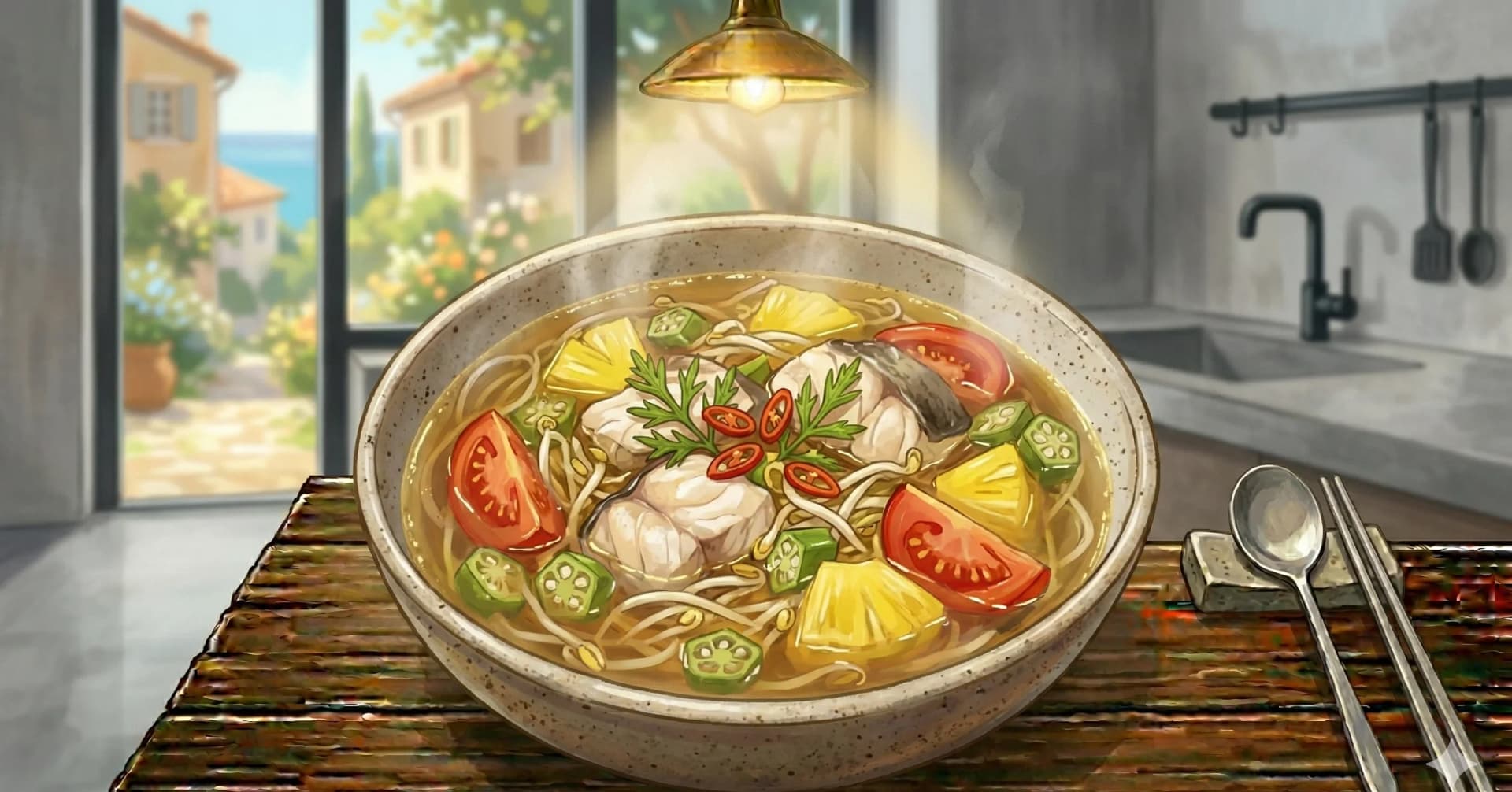
Canh Chua Cá (Vietnamese Sweet and Sour Fish Soup)
35 minutes
 Medium
Vietnamese Cuisine
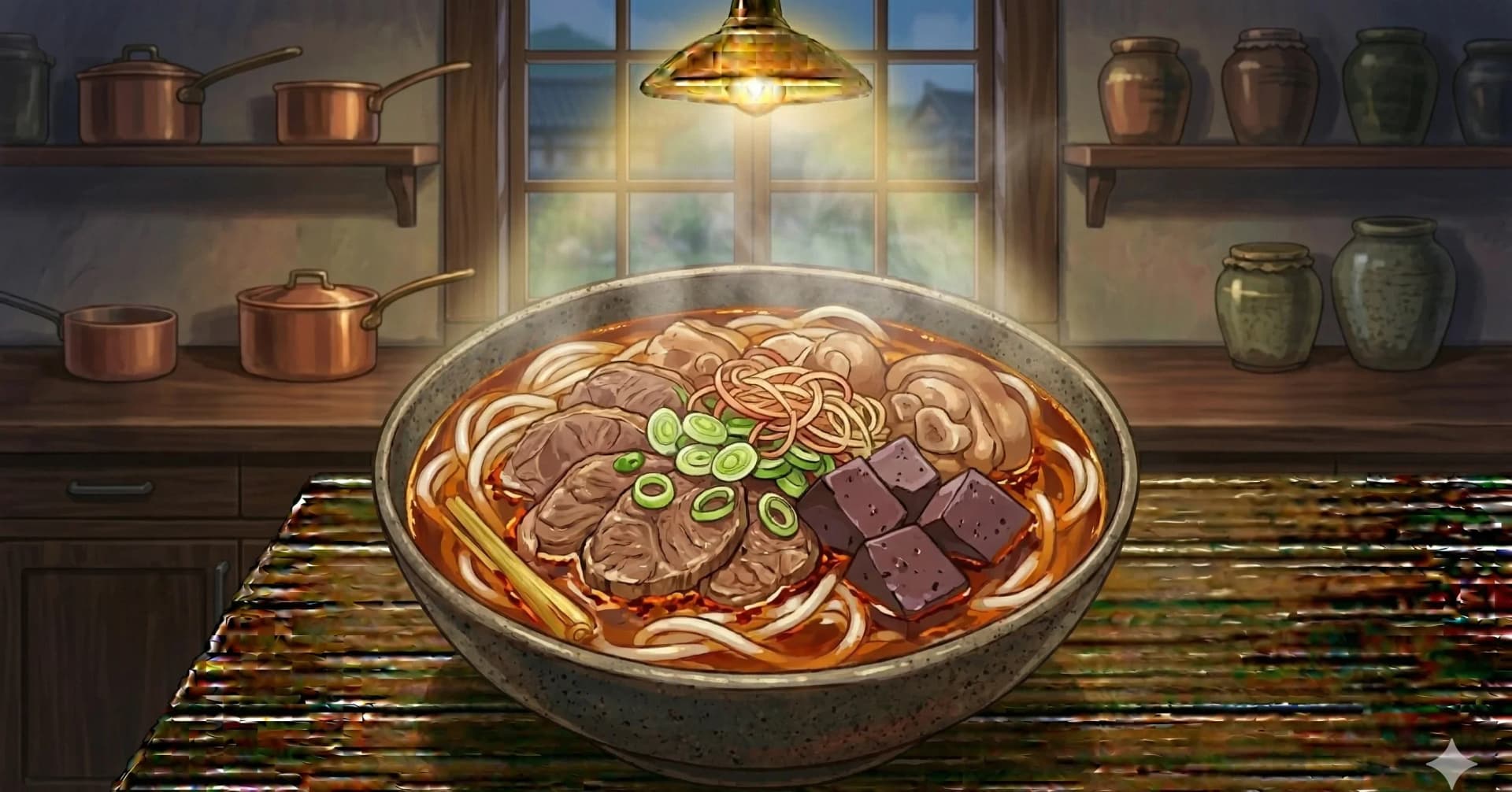
Spicy Beef Noodle Soup (Bún Bò Huế)
3 hours 45 minutes
 Medium
Vietnamese Cuisine
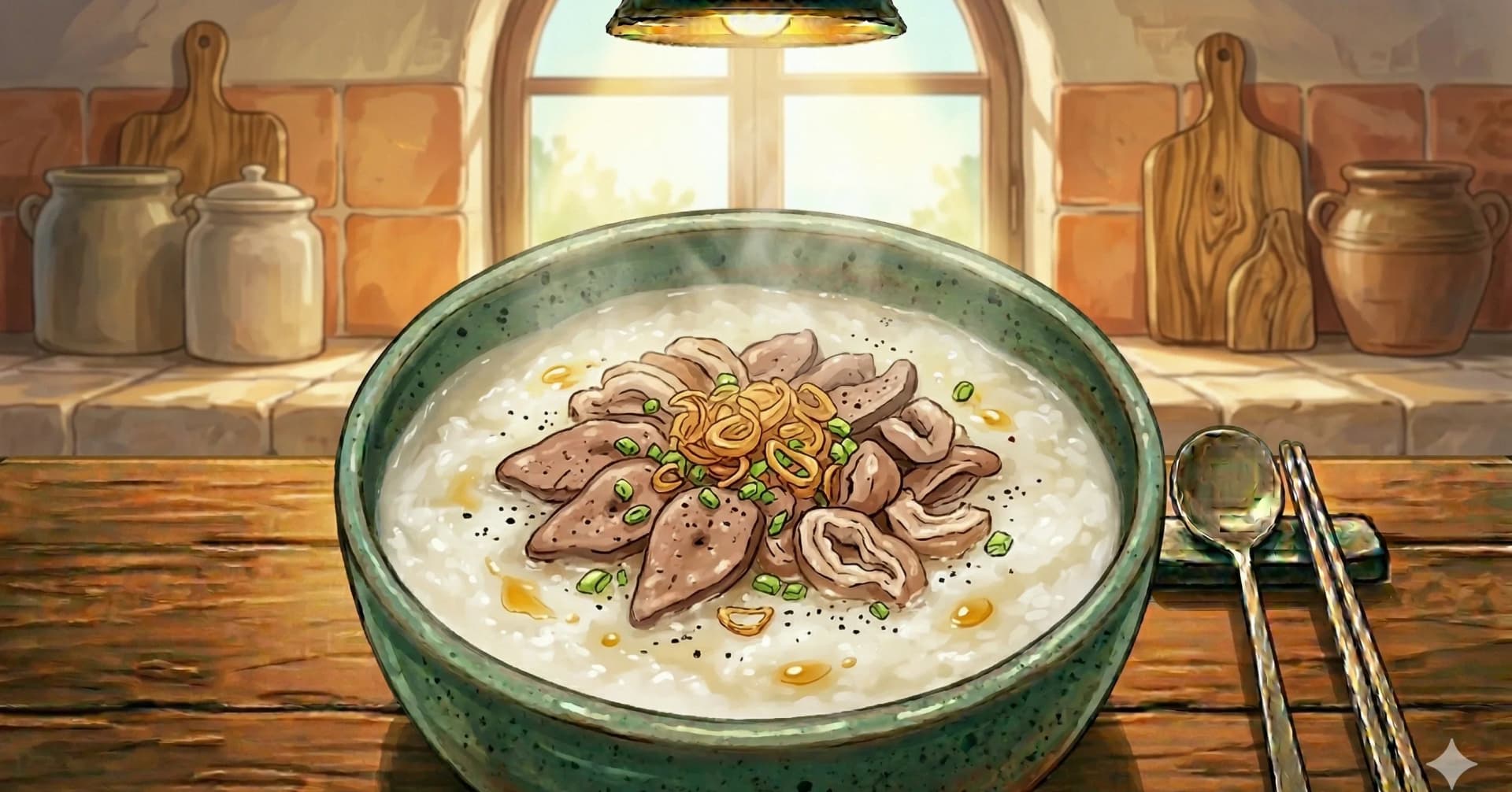
Cháo Lòng (Vietnamese Pork Organ Rice Porridge)
2 hours 15 minutes
 Easy
EasyVietnamese Cuisine
Cháo Gà (Vietnamese Chicken Rice Porridge)
1 hour 30 minutes
Ratings & Comments
Ratings & Comments
Ratings
Share your thoughts on this recipe.
Sign in to rate and comment